
Table of Contents
ToggleTiny Holes in Your Wooden Cabinet? The Dust May Be the Important Clue
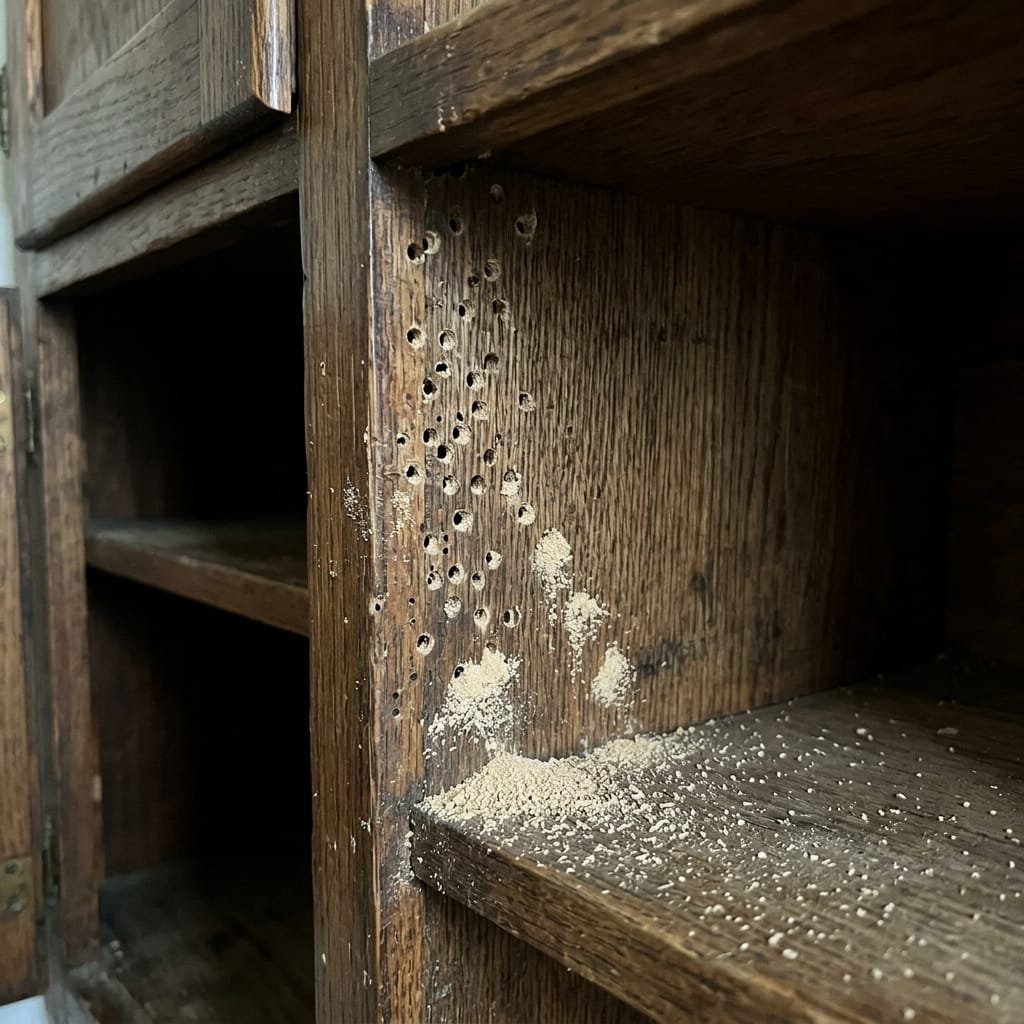
You notice several tiny round holes in an old wooden cabinet and initially think they’re just part of the cabinet’s age.
Then you see something else:
A small pile of fresh, powder-like wood dust underneath the holes.
That second detail is much more important.
Small round holes accompanied by fine powder or sawdust-like material can be a sign of wood-boring insects, including powderpost beetles. These insects can live and develop inside wood, sometimes remaining hidden until adults emerge through small holes.
What Are Those Tiny Holes?
Some wood-boring beetles create tunnels inside seasoned wood during their larval stage.
The larvae feed within the wood and produce a fine material called frass. When mature insects eventually emerge, they leave small holes through the surface. Powderpost beetles, for example, commonly produce round exit holes roughly 1/16 to 1/8 inch across, accompanied by fine powder-like material.
That’s why a pattern of small holes + fresh powder deserves closer inspection.
However, the holes alone aren’t enough to identify the exact insect.
Why Is the Powder Important?
The powder can be one of the most useful clues.
As wood-boring larvae tunnel through wood, they produce waste and tiny particles from their feeding activity. This material can accumulate around holes or beneath infested wood.
Extension guidance describes the material associated with some beetle infestations as fine, flour-like frass or powder.
So if you clean the cabinet and fresh powder appears again later, that is more concerning than simply finding old holes covered in dust.
It suggests that something may still be active inside the wood.
Could the Holes Simply Be Old?
Absolutely.
Not every hole means there is an active infestation.
Some insects may have emerged from wood years ago, leaving permanent exit holes behind. University of Minnesota Extension notes that some nuisance wood-boring insects emerge from lumber after it has already been brought indoors and generally do not reinfest seasoned structural wood after emergence.
This creates an important distinction:
Old holes alone ≠ proof of an active infestation.
Fresh frass, newly appearing holes, or continuing signs of activity are more useful clues.
What Does an Active Infestation Look Like?
Possible signs include:
- New small holes appearing
- Fresh powder underneath holes
- Multiple holes concentrated in one section
- Frass appearing after the area has been cleaned
- Visible beetles around the wood
- Increasing damage over time
Different wood-boring insects create different types and sizes of holes, so these signs should not be used to identify a species by themselves.
Is the Insect Actually Inside the Cabinet?
Possibly.
One reason these infestations can go unnoticed is that the immature insects may spend much of their development inside the wood.
With powderpost beetles, the larvae develop within hardwood and produce the fine powder associated with their tunneling. Adult beetles later emerge through small holes in the wood surface.
That means you may see the evidence before you ever see the insect.
What About Termites?
Tiny holes and wood dust should not automatically be called termites.
Termites have different signs and behaviors, and other insects—including beetles, carpenter bees, and certain ants—can damage wood as well.
For example, carpenter bees create relatively large, round entrance holes and excavate tunnels for nesting rather than eating the wood as food.
So the size and appearance of the holes matter.
A cluster of very small holes with fine powder points toward a different problem than a single large, clean entrance hole.
Could the Cabinet Be Damaged?
Potentially.
Some wood-boring insects cause mostly cosmetic damage, while others can significantly damage wooden objects.
Powderpost beetles can attack finished wood products and furniture, and heavy or repeated infestations can progressively damage susceptible wood.
The seriousness depends on the insect, the type of wood, how extensive the infestation is, and whether the activity is still continuing.
A few old holes in a sturdy cabinet are very different from widespread fresh damage.
What Should You Do First?
Don’t immediately spray an unidentified insecticide into the cabinet.
Instead, inspect the area carefully.
1. Clean the existing dust
Carefully remove the powder from beneath the holes.
2. Photograph the holes
Take close-up photographs showing the size and shape of the holes.
3. Check again later
If new powder appears after cleaning, document it.
4. Inspect nearby wood
Look at adjacent cabinets, shelves, wooden trim, and other susceptible wood for similar signs.
5. Look for actual insects
If you find an insect near the holes, don’t assume its identity. A clear photograph can make identification much easier.
Don’t Start Treating the Wood Without Identification
This is especially important because different wood-boring insects require different approaches.
University of Minnesota Extension specifically notes that small beetles can be difficult to identify from pictures and recommends correct identification before attempting control because different insects may require different treatments.
Some nuisance insects that emerge from wood don’t reinfest seasoned wood and don’t require pesticide treatment.
Other infestations can require professional assessment and treatment.
When Should You Take It More Seriously?
Pay particular attention if you notice fresh powder continuing to appear, especially after cleaning.
It’s also worth getting professional help if:
- Holes are appearing in several areas.
- The amount of frass is increasing.
- Wooden surfaces are becoming weakened or damaged.
- You find live beetles repeatedly.
- Multiple pieces of furniture show similar signs.
- You live in an older property with extensive woodwork.
The goal isn’t simply to kill an insect you happen to see. The important question is whether there is an active population developing inside the wood.
Don’t Panic Over Every Old Hole
An old cabinet can naturally accumulate marks, holes, scratches, and damage over many years.
A previous repair may have left holes. Old hardware may have been removed. An insect may have emerged long ago.
That’s why the combination of evidence matters.
A few old holes with no fresh material may be insignificant.
A cluster of small holes accompanied by newly appearing fine powder is much more worth investigating.
What Does the Photo Suggest?
The combination shown in the image—multiple small round holes and fine pale wood dust—is consistent with the kind of evidence commonly associated with some wood-boring beetles, particularly powderpost beetles. But the photograph alone cannot establish which insect caused it or whether the infestation is currently active.
The most useful next clue would be whether fresh frass continues to appear after the existing dust is removed.
Final Takeaway
Tiny holes in an old wooden cabinet aren’t necessarily a reason to panic.
But if those holes are accompanied by fresh, flour-like wood dust, don’t simply wipe it away and forget about it.
Wood-boring insects can spend much of their life hidden inside wood, and the small holes they leave behind may be the first visible evidence that they were there.
Old holes may tell you something happened in the past. Fresh powder can be a clue that something may still be happening now.
If you keep finding new dust or additional holes, have the wood properly inspected rather than guessing at the cause or applying pesticide blindly.