
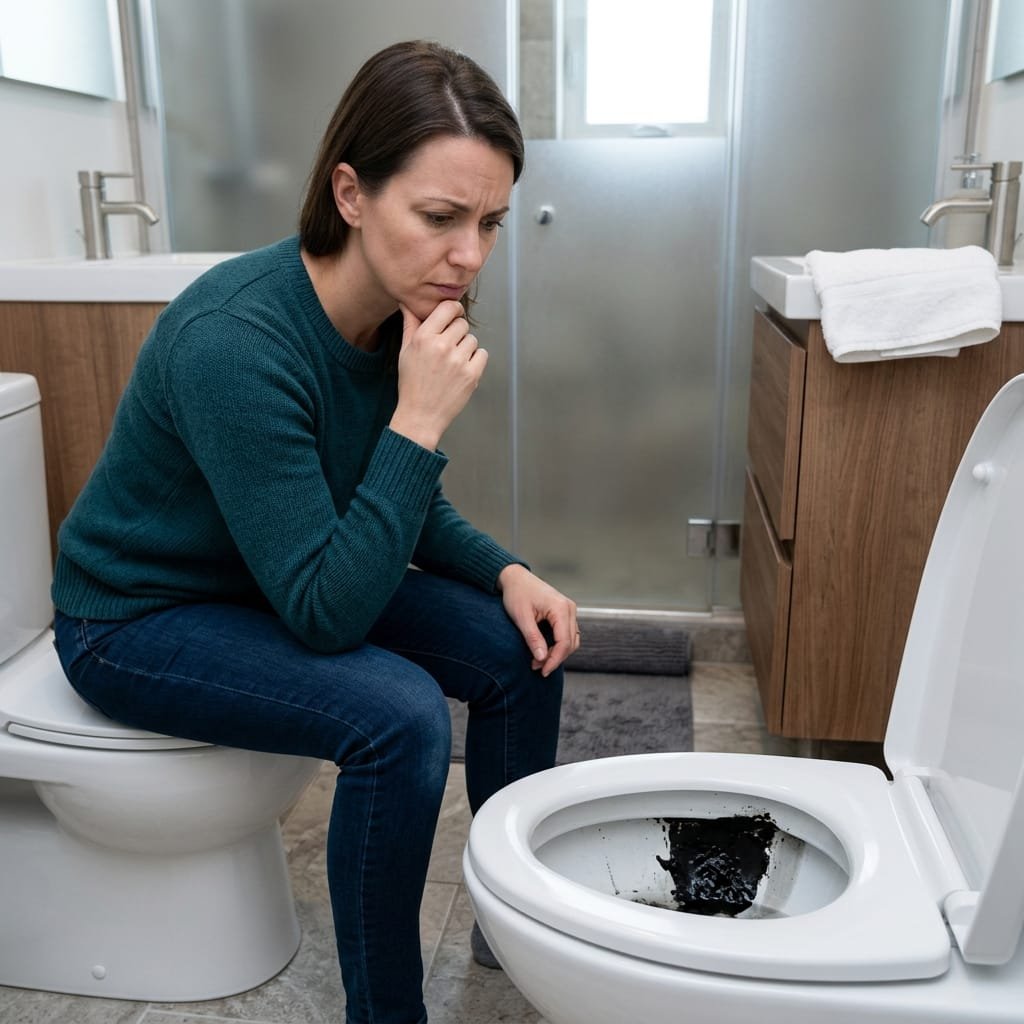
If Your Stool Suddenly Looks Black Like This, Don’t Ignore It
Seeing black stool can be alarming. But there is an important distinction: not every dark or black-looking stool means internal bleeding.
Iron supplements, bismuth-containing medicines such as Pepto-Bismol, activated charcoal and some very dark foods can temporarily turn stool black. On the other hand, stool that is jet-black, sticky, tar-like and unusually foul-smelling can be a sign of digested blood from bleeding in the upper digestive tract.
Understanding that difference is important because the two situations require very different responses.
What Does Black, Tarry Stool Mean?
The medical term for black, tarry stool caused by gastrointestinal bleeding is melena.
When bleeding happens high in the digestive system—often in the esophagus, stomach or first part of the small intestine—the blood travels through the digestive tract before leaving the body.
During that journey, digestive enzymes and other digestive chemicals break down the blood. This changes the blood from its usual red color into a dark black, sticky, tar-like material.
That’s why you may not see obvious red blood.
The blood has already been altered by the time it reaches the toilet.
Black Stool Doesn’t Always Mean Bleeding
This is one of the most important things to understand.
You can have black stool without having gastrointestinal bleeding.
For example, iron supplements commonly make stool dark or black. Medicines containing bismuth, including Pepto-Bismol, can also turn stool black. Activated charcoal may do the same. Certain very dark foods can temporarily change stool color as well.
So the color by itself isn’t enough to determine what’s happening.
Instead, consider:
What does it look like?
Is it sticky or tar-like?
Does it have an unusually strong odor?
Are you taking anything that can turn stool black?
Are you experiencing other symptoms?
Those details are much more useful.
1. A Bleeding Stomach Ulcer
One of the important causes of black, tarry stool is a bleeding peptic ulcer.
Peptic ulcers are open sores that develop in the lining of the stomach or the first part of the small intestine. If an ulcer damages a blood vessel, bleeding can occur. When that blood travels through the digestive tract, it can produce melena.
Two of the most common causes of peptic ulcers are:
- Helicobacter pylori (H. pylori) infection
- Regular use of certain nonsteroidal anti-inflammatory drugs, or NSAIDs, such as aspirin, ibuprofen and naproxen.
An ulcer doesn’t always produce dramatic pain.
Some people have stomach discomfort, burning or nausea. Others may have little or no warning before bleeding occurs.
That’s one reason unexplained black, tarry stool deserves attention.
2. Gastritis Can Cause Bleeding
Gastritis means inflammation or damage involving the stomach lining.
When the stomach lining becomes significantly irritated or develops erosions or ulcers, bleeding can occur.
Causes can include H. pylori infection, NSAID use, blood-thinning medicines and alcohol, among others.
If bleeding occurs high enough in the digestive tract, the stool may become black and tar-like rather than bright red.
You might also experience:
- Upper abdominal discomfort
- Nausea
- Feeling unusually full
- Vomiting
- Loss of appetite
But symptoms vary, and some people may have little pain.
3. Esophagus Problems Can Also Cause Black Stool
Bleeding doesn’t necessarily have to begin in the stomach.
Inflammation or injury in the esophagus can sometimes cause upper gastrointestinal bleeding, which may result in melena.
For example, severe inflammation of the esophagus can create areas that bleed.
Another possibility is a tear caused by repeated or forceful vomiting, known as a Mallory-Weiss tear. This can cause vomiting of blood and may also produce black, tarry stool.
4. Enlarged Veins Can Bleed
People with certain serious liver conditions can develop enlarged veins called varices in the esophagus or stomach.
These veins can rupture and cause significant gastrointestinal bleeding.
Because blood is traveling through the digestive system, it may appear as black, tar-like stool. Vomiting blood can also occur.
This is an example of why black, tarry stool shouldn’t automatically be blamed on something you ate.
5. Certain Medicines Increase Bleeding Risk
Some medications don’t simply change stool color—they can increase the risk of gastrointestinal bleeding.
NSAIDs such as ibuprofen and naproxen can contribute to ulcers and bleeding. Blood-thinning medications can also increase bleeding risk.
This doesn’t mean you should suddenly stop a prescribed blood thinner or other medication.
Instead, if you develop unexplained black, tarry stool, tell the healthcare professional exactly what medications and supplements you’re taking.
6. Iron Supplements Can Make Stool Black
Now for the less frightening explanation.
If you’ve recently started taking iron, black stool can be a normal side effect.
Iron can make stool appear very dark or black without there being blood in it.
This is one reason doctors ask about supplements when someone reports black stool.
However, don’t assume every black stool is caused by iron just because you’re taking it. If the stool is distinctly tar-like or you’re experiencing other concerning symptoms, contact a healthcare professional.
7. Bismuth Medicines Can Do the Same
Bismuth subsalicylate, commonly found in products such as Pepto-Bismol, can also make stool black.
This can be completely harmless and is different from melena caused by internal bleeding.
If you recently took a bismuth-containing medicine and noticed dark stool afterward, tell your healthcare professional.
What Does Melena Usually Look Like?
Classic melena isn’t simply “dark brown.”
It is often described as:
- Jet black
- Sticky
- Tarry
- Difficult to flush
- Associated with a particularly strong or unpleasant smell
The distinctive appearance occurs because blood has been digested as it travels through the gastrointestinal tract.
However, appearance alone cannot reliably prove that bleeding is occurring.
A healthcare professional may need to test the stool and investigate the underlying cause.
What Other Symptoms Should You Watch For?
Black stool becomes much more concerning when it occurs alongside symptoms suggesting blood loss.
These can include:
- Dizziness
- Lightheadedness
- Fainting
- Unusual weakness
- Shortness of breath
- Rapid heartbeat
- Pale skin
- Cold or clammy skin
- Abdominal pain
- Vomiting blood
- Vomit that resembles coffee grounds
These symptoms can indicate significant gastrointestinal bleeding.
🚨 When Black Stool Is an Emergency
If your stool is black and tar-like and you also feel faint, weak, dizzy or short of breath, don’t simply wait to see whether it improves.
Severe gastrointestinal bleeding can lead to dangerously low blood volume and, in extreme cases, shock. Signs of shock can include confusion, loss of consciousness, rapid heartbeat, pale skin, cold hands and feet and sweating.
If these symptoms occur, seek emergency medical care immediately.
Similarly, vomiting blood or vomit that looks like coffee grounds along with black stool requires urgent medical attention.
Can Black Stool Happen Without Pain?
Yes.
This is an important detail that many people don’t realize.
A person can have gastrointestinal bleeding without severe stomach pain. For example, some ulcers can bleed without producing obvious pain beforehand.
So the absence of pain does not automatically make black, tarry stool harmless.
If there is no obvious explanation such as iron or bismuth, it’s safer to have unexplained black stool evaluated.
What If It Happens Only Once?
One isolated dark bowel movement isn’t automatically an emergency.
Think about what happened beforehand.
Did you:
- Take an iron supplement?
- Take Pepto-Bismol or another bismuth medicine?
- Eat a large amount of very dark food?
- Start a new medication?
- Have any stomach symptoms?
If there is a clear explanation and the stool returns to its normal color, it may be harmless.
But if the stool is truly tar-like, keeps happening, or you have other symptoms, don’t assume it’s dietary.
What About Chronic, Small Amounts of Bleeding?
Not all gastrointestinal bleeding is dramatic.
Sometimes bleeding happens slowly in very small amounts that aren’t visible.
Over time, chronic blood loss can lead to iron-deficiency anemia, which may cause tiredness, pale skin and shortness of breath.
This is another reason persistent changes in stool shouldn’t simply be ignored.
A healthcare professional can order blood and stool tests if necessary.
How Do Doctors Find the Cause?
The first step is usually understanding exactly what you’re experiencing.
A doctor may ask:
- When did the black stool begin?
- How many times has it happened?
- Is it sticky or tar-like?
- What medications are you taking?
- Are you taking iron?
- Have you taken bismuth?
- Do you have abdominal pain?
- Have you vomited?
- Have you felt dizzy or weak?
- Do you have a history of ulcers or digestive problems?
A stool test can help determine whether blood is present. Blood tests may also check for anemia or other signs of blood loss.
Depending on the situation, doctors may use imaging or an upper endoscopy to look for the source of bleeding. During an upper endoscopy, a thin camera is used to examine the esophagus, stomach and upper small intestine, and certain bleeding sources can sometimes be treated during the procedure.
Treatment Depends on the Cause
There isn’t one treatment for “black stool.”
If the color is caused by iron, no treatment for internal bleeding is needed.
If a bleeding ulcer is responsible, doctors need to stop the bleeding and treat the ulcer’s cause.
Treatment for significant gastrointestinal bleeding may include IV fluids, blood transfusion when necessary, medications and procedures to stop active bleeding.
That’s why trying to treat unexplained black stool at home isn’t a good idea.
Don’t Panic—But Don’t Ignore Tarry Stool
The most important message is not to panic every time stool looks dark.
Black stool can have completely harmless explanations.
But there’s a major difference between:
“My stool is darker than usual.”
and
“My stool is jet-black, sticky and tar-like.”
The second description is much more concerning for melena and possible upper gastrointestinal bleeding.
Final Takeaway
If you notice black stool, first consider whether there is an obvious explanation such as iron supplements, bismuth medication or certain dark foods.
But if your stool suddenly becomes black, sticky, tar-like and unusually foul-smelling, particularly if you aren’t taking anything known to cause black stool, don’t simply wait for it to disappear.
It may indicate bleeding somewhere in the upper digestive tract.
And if you also have dizziness, fainting, weakness, shortness of breath, rapid heartbeat, abdominal pain or vomiting blood, seek urgent medical attention.