
110
Oh, my dear friend, living out here in my cozy farmhouse, I spend a wonderful amount of time tending to my garden and taking peaceful walks in the surrounding woods. Thanks to my hip replacement surgery a few years ago, I have been blessed to resume an active lifestyle, including hiking in the mountains, which brings me immense joy. However, sharing the outdoors means sharing it with wildlife, and encountering a snake can be startling.
A snake bite is a medical emergency, and the actions you take in the first few minutes can profoundly influence the outcome. But as a physician who completed my residency many decades ago, I can assure you of one absolute truth: while fear is a completely natural response, knowledge is your greatest ally.
So, I put the kettle on, poured myself a warm mug of my grandmother’s traditional Southern “church coffee” (you know, the kind with a tiny pinch of salt and an egg to smooth out the flavor!), and decided to gently walk you through the science-backed, medically sound steps for snake bite first aid. Let’s separate the Hollywood myths from the medical facts, so you can face the outdoors with confidence and peace of mind.
The Science of the Bite: Why Calmness is Crucial
When a venomous snake bites, the venom is typically injected into the subcutaneous tissue or muscle. From there, it primarily travels through the lymphatic system, not the bloodstream. The lymphatic system relies on muscle movement and heart rate to circulate fluid.
This is why staying calm is not just good advice; it is a physiological necessity. Panic spikes your heart rate and increases your breathing, which can accelerate the circulation of venom through your body. By consciously choosing to remain calm, you are actively slowing down that process and buying yourself precious time.
Your “Calm Response” Toolkit
Since we are focusing on proactive, compassionate self-care, think of this as your essential, heart-centered toolkit for handling an outdoor emergency with grace and wisdom.
- 1 part Deep Breathing: The immediate habit of taking slow, deliberate breaths to lower your heart rate and keep your mind clear.
- 1 part Prompt Action: The understanding that calling for professional help is always the first and most important step, even if you feel fine.
- 1 dash of Careful Observation: Noting the snake’s appearance from a safe distance to aid medical professionals, without ever putting yourself in further danger.
- A generous measure of Self-Compassion: Releasing any guilt or panic. Accidents happen in nature, and responding with informed care is the best thing you can do.
Step-by-Step Guide to Snake Bite First Aid
Let’s walk through a simple, methodical routine to handle a bite so you can protect yourself or a loved one effectively.
Step 1: Stay Calm and Call for Help Immediately Contact emergency services (911 or your local equivalent) right away. Venom effects can be delayed, and symptoms may not appear for hours. If you are in a remote location, focus on reaching a vehicle or signaling for rescue. Do not attempt to hike out alone, as exertion speeds up venom circulation.
Step 2: Keep the Bite Below Heart Level Sit or lie down and position the bitten limb lower than your heart. This uses gravity to help slow the circulation of venom through your lymphatic system. Avoid elevating the limb, as this can increase blood flow to the area and accelerate the spread.
Step 3: Remove Tight Clothing or Jewelry Swelling can develop rapidly and become severe. Rings, watches, bracelets, or tight sleeves may restrict circulation as tissues expand. Remove these items gently but promptly before the swelling begins.
Step 4: Clean the Wound Gently (If Possible) If you have access to clean water, lightly rinse the bite area to reduce the risk of secondary infection. Do not scrub, soak, or apply any substances (like alcohol or herbal remedies) to the wound. The goal is minimal, gentle cleansing—not aggressive treatment.
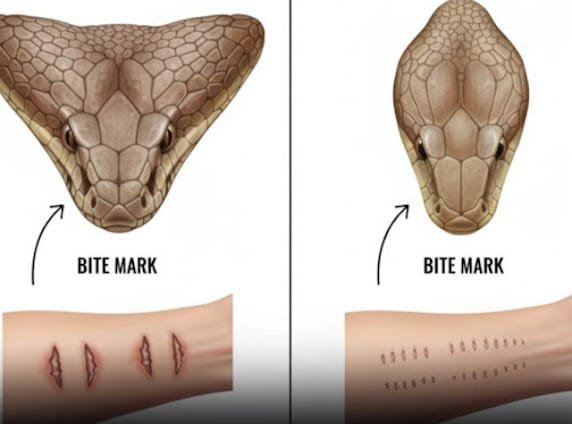
Step 5: Note the Snake’s Appearance—From a Safe Distance Observe the snake’s color, pattern, head shape, or distinctive features (such as a rattle) without approaching it. This information can help medical staff identify the species and select the appropriate antivenom. Never attempt to catch, kill, or handle the snake. Many secondary bites occur during these well-intentioned but dangerous efforts.
What Not to Do: Common Myths That Can Cause Harm
As a former doctor, I must be very firm about this: certain well-intentioned actions seen in movies can severely worsen outcomes. Please avoid the following:
- Do not cut the wound. Incising the bite site increases the risk of infection, tissue damage, and bleeding without removing meaningful amounts of venom.
- Do not attempt to suck out venom. Oral suction is entirely ineffective and introduces dangerous mouth bacteria directly into the wound.
- Do not apply ice, cold packs, or tourniquets. These can restrict blood flow too severely, increasing the risk of permanent tissue death (necrosis) and complicating medical treatment.
- Do not consume alcohol or caffeine. Both can accelerate your heart rate and circulation, potentially speeding up venom absorption.
- Do not take aspirin, ibuprofen, or other blood-thinning pain relievers. These medications can increase bleeding risk. If pain relief is necessary, wait for medical guidance.
Pro-Tips for Everyday Outdoor Wellness
- The “Petticoat” Safety Rule: I always make sure to wear my favorite old-school housedress with a soft petticoat and a large, flowing skirt when I am at home, but when I am gardening or hiking in snake-prone areas, I always pair it with sturdy, closed-toe boots and thick socks. It is a wonderful way to feel elegant while ensuring my ankles and lower legs are protected from unexpected encounters!
- The “Leo” Teachable Moment: When my wonderful 19-year-old stepson, Leo, and I go for walks, I use the opportunity to gently teach him about wildlife respect. I remind him to observe snakes from a distance and never to handle them, as most bites occur when people attempt to interact with or provoke a curious animal.
- The “Carla Hall” Perspective: Just as I enjoy following chefs like Carla Hall for her bright, joyful, and approachable perspective on life, I appreciate her philosophy of being prepared and present. Being mindful of your surroundings—like using a flashlight after dark or avoiding reaching blindly into woodpiles—is a joyful way to respect the space you share with nature.
- The Nostalgic Comfort Ritual: After a safe, productive day outdoors, I still find profound joy in making my upgraded tuna sandwich with pickles, fresh dill, and a few crunchy potato chips. It is a staple in my kitchen that never fails to bring me joy, reminding me to treat myself with kindness and ground myself in the comfort of my own home.
Frequently Asked Questions
What is a “dry bite”? A “dry bite” occurs when a venomous snake bites but does not inject any venom. While this sounds like good news, medical observation for six to twelve hours is still typically recommended. Venom delivery can sometimes be delayed, and the puncture wounds still carry a risk of bacterial infection that requires professional evaluation.
Will I need antivenom? Antivenom remains the only proven, effective treatment for venomous snake bites. Most hospitals in the United States maintain appropriate antivenom for regionally common species (like rattlesnakes, copperheads, cottonmouths, or coral snakes). The medical team will evaluate your symptoms to determine if it is necessary.
How can I best prevent snake bites? Prevention is always the best medicine! Wear sturdy boots and long pants when hiking or gardening. Use a flashlight after dark, as snakes are more active at night in warm weather. Avoid reaching into rock crevices, woodpiles, or tall grass without first checking visually, and always give wildlife a wide, respectful berth.
A Final Thought
Living alone has taught me that the small, everyday choices we make are the true foundation of our physical and emotional well-being. Choosing to educate yourself about outdoor safety is a quiet, powerful act of self-care.
Fear can paralyze, but knowledge empowers. The vast majority of snake bites are highly survivable with prompt, appropriate care. Your priority is not to play hero, identify the snake, or treat the wound yourself—it is to reach professional medical help as quickly and safely as possible.
Stay calm. Act deliberately. Trust the experts. Because in an emergency, the most powerful tool you have is not a knife, a tourniquet, or a home remedy—it is the wise, informed decision to seek help without delay.
Have you ever had to rely on calm, informed action during an unexpected outdoor moment? Or do you have a favorite, grounding ritual for when you need to steady your nerves? Drop a comment below and share your wisdom—I would absolutely love to read your stories and support each other. And if you know a friend who loves spending time in nature, please share this gentle guide with them. Here’s to calm minds, safe adventures, and many more peaceful, beautiful days outdoors!