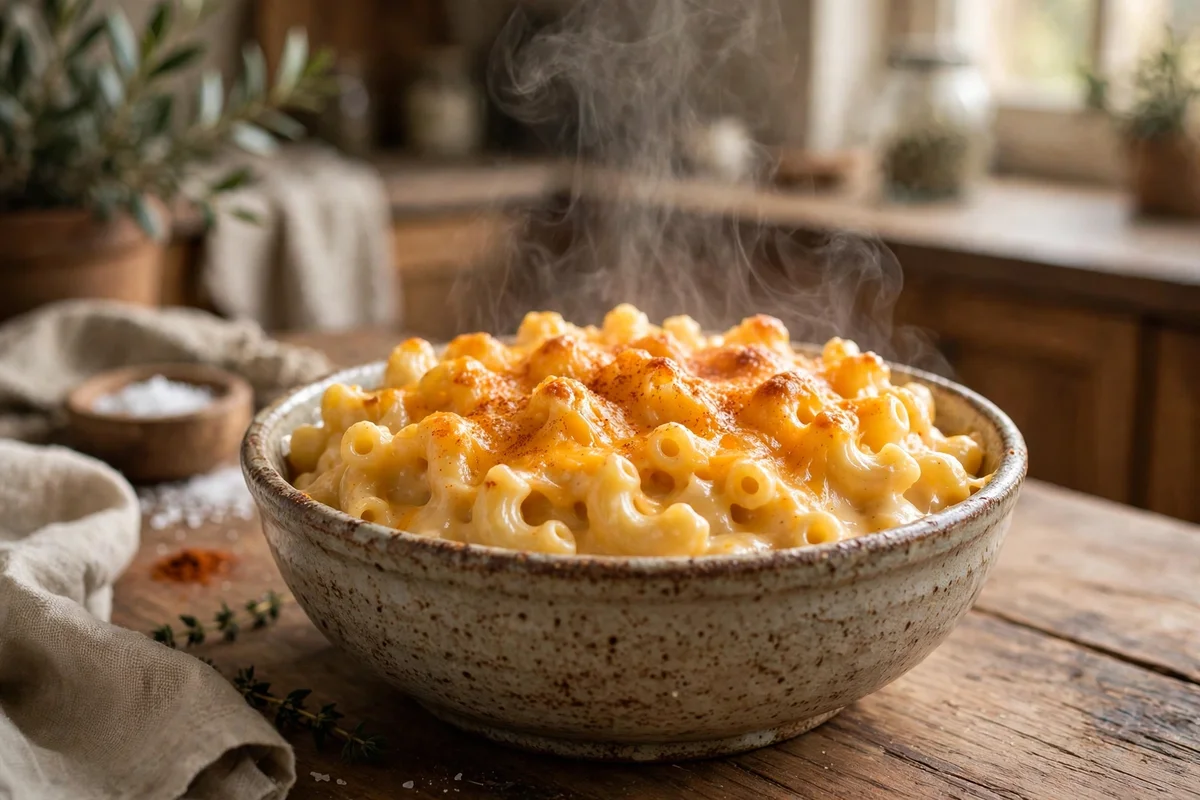
Mac and cheese is the ultimate comfort food — but the classic version is mostly refined pasta and butter, leaving you hungry an hour later. This High-Protein Mac and Cheese keeps everything you love about the original — the velvety cheese sauce, the golden bubbly top — while packing 17g of protein per serving and trimming the heaviness. No heavy cream, no flour-butter roux loaded with fat, and dinner is on the table in 25 minutes.
The secret is a two-part protein strategy: chickpea pasta replaces regular elbows, and the sauce gets its creaminess from blended cottage cheese instead of cups of cream. The result tastes rich and indulgent, but each bowl works as hard as a proper post-workout meal. If your family is skeptical, don’t tell them what’s in it until after the first bite.
It also reheats like a dream — a splash of milk brings the sauce right back to life — which makes it a genuinely practical meal-prep option, not just a one-night novelty. One pot of pasta, one blender, one skillet: that is the entire cleanup.
Why This Recipe Works
Traditional mac and cheese leans on starch and fat for texture. This version rebuilds that texture with protein:
- Chickpea pasta — with 11g of protein per 2-ounce serving (versus about 7g in regular pasta), it nearly doubles the protein of the base while adding fiber that keeps you full.
- Cottage cheese, blended smooth — disappears completely into the sauce, adding 24g of protein to the pot plus a tangy richness. Once blended, no one can detect it.
- Sharp cheddar — using a well-aged sharp cheddar means you need less cheese for big flavor. A little goes a long way.
- Cornstarch instead of a butter roux — one tablespoon thickens the whole sauce, so you skip the classic 4-tablespoon butter-and-flour base without losing silkiness.
Together, these swaps deliver 17g of protein and about 270 calories per serving — numbers a regular boxed mac and cheese can’t touch.
Ingredients
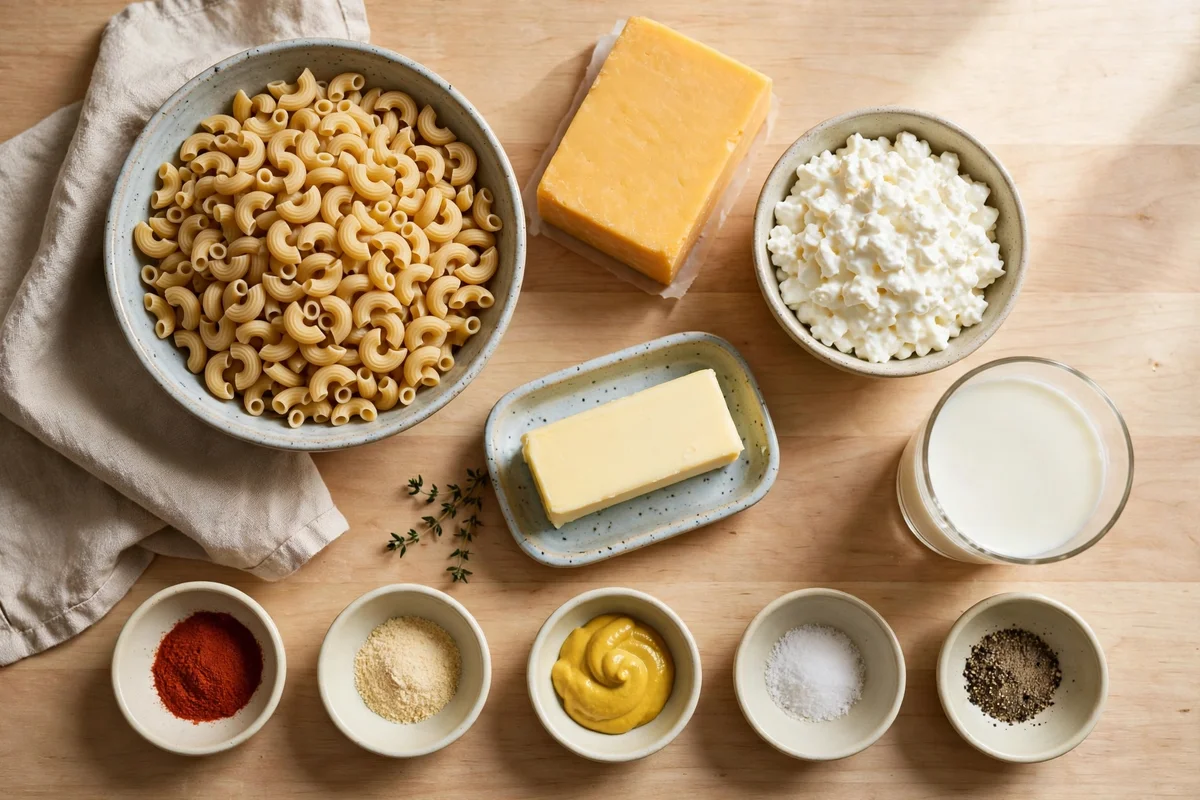
- 8 oz (225g) chickpea elbow macaroni
- 1 cup (240g) low-fat (2%) cottage cheese
- 1 cup (120g) shredded sharp cheddar cheese
- 1/2 cup (120ml) low-fat milk
- 1 tbsp (14g) butter
- 1 tbsp (8g) cornstarch
- 1 tsp Dijon mustard
- 1/2 tsp garlic powder
- 1/2 tsp paprika, plus more for topping
- 3/4 tsp salt
- 1/4 tsp black pepper
Makes 6 servings (about 1 cup each).
Equipment
- Large pot for boiling pasta
- Blender or food processor
- Large skillet or saucepan
- Whisk
- Colander
- 9×13-inch baking dish (if baking, optional)
How to Make High-Protein Mac and Cheese
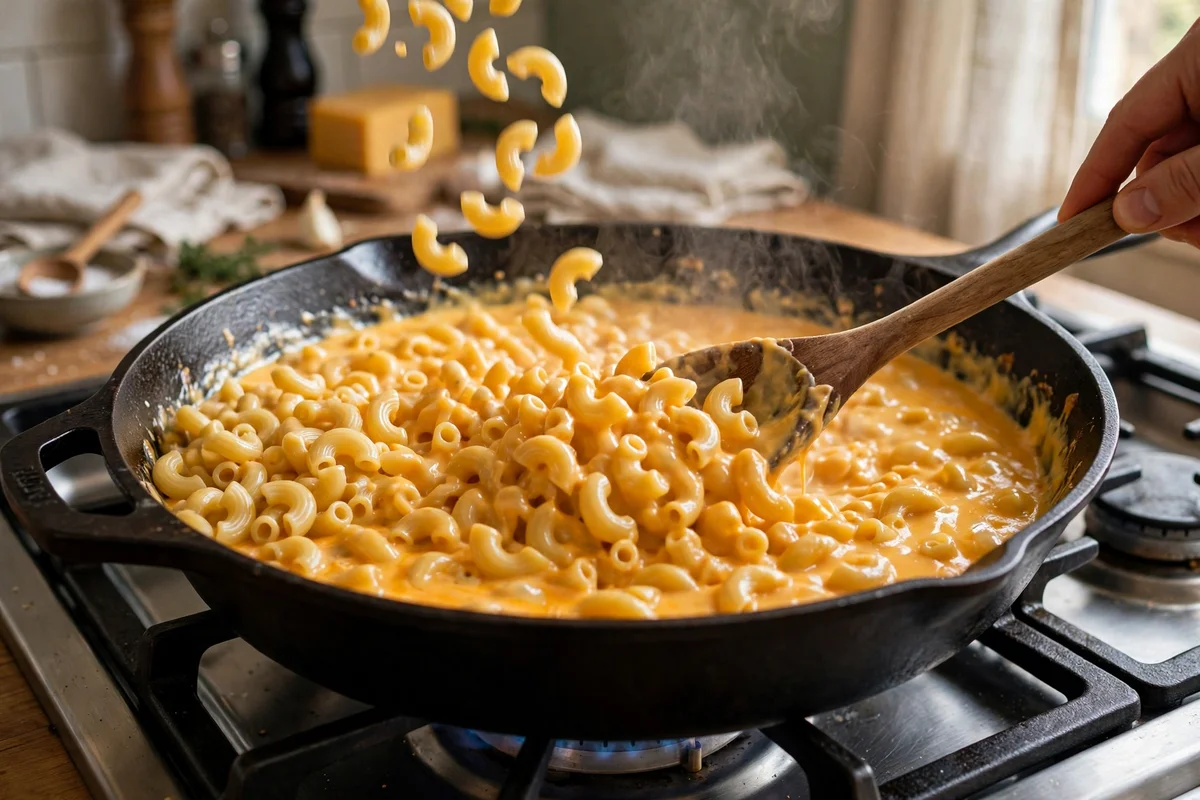
- Cook the pasta. Bring a large pot of salted water to a boil. Cook the chickpea elbows 1 minute less than the package directs (they continue cooking in the sauce). Reserve 1/2 cup of pasta water, then drain.
- Blend the cottage cheese. While the pasta cooks, blend the cottage cheese with the milk until completely smooth and silky, 30–45 seconds. No lumps should remain — this is what makes the sauce creamy instead of curdled.
- Start the sauce. In a large skillet over medium heat, melt the butter. Whisk in the cornstarch and cook 1 minute, stirring, until it forms a pale paste.
- Add the blended mixture. Slowly pour in the cottage cheese–milk blend, whisking constantly. Bring to a gentle simmer (do not boil hard) and cook 2–3 minutes until slightly thickened.
- Melt the cheddar. Reduce heat to low. Add the shredded cheddar a handful at a time, stirring until each addition melts before adding the next. Stir in the Dijon, garlic powder, paprika, salt, and pepper.
- Combine. Add the drained pasta to the sauce and toss to coat. If the sauce is too thick, loosen with splashes of the reserved pasta water until glossy.
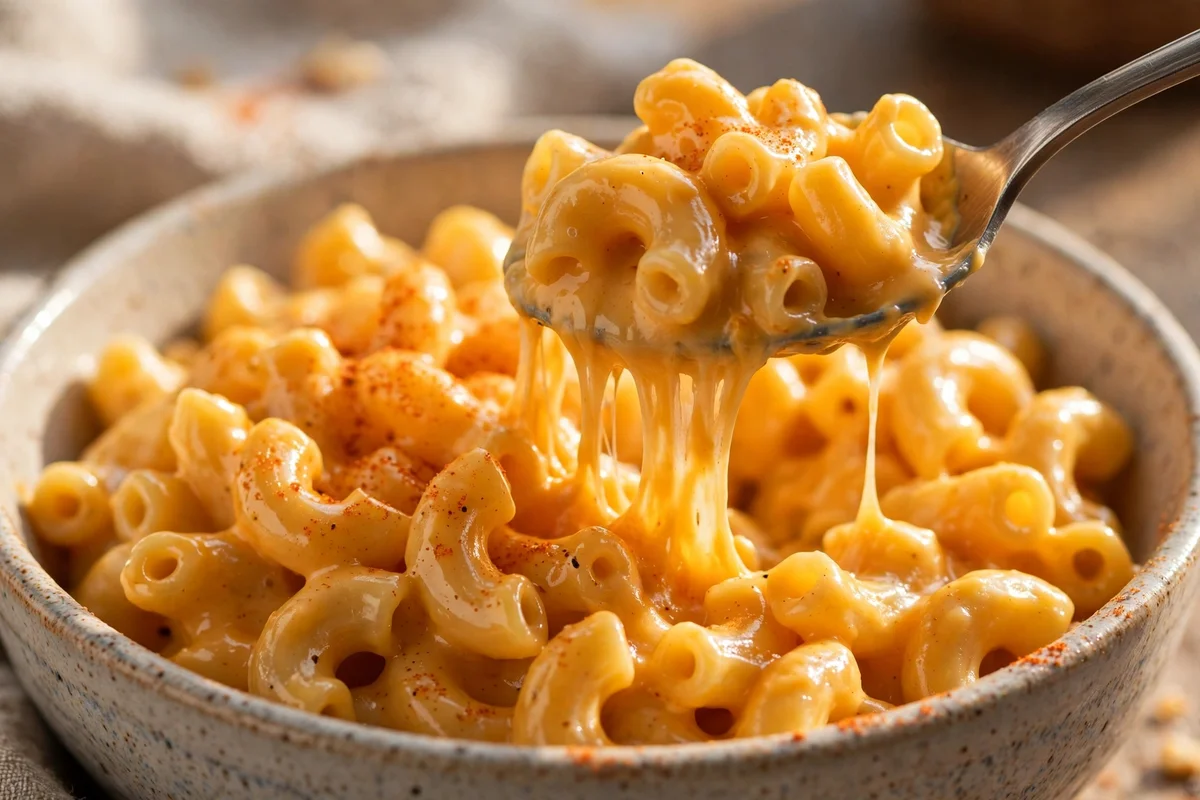
- Serve or bake. Serve immediately as stovetop mac and cheese, or transfer to a baking dish, dust with paprika, and broil 2–3 minutes for a golden top.
Nutrition (Per Serving)
Each serving (about 1 cup, recipe makes 6) contains approximately:
- Calories: 270
- Protein: 17g
- Carbs: 27g
- Fat: 12g
- Fiber: 5g
- Sugar: 4g
Estimates only — values vary with your pasta and cheese brands.
Tips for the Best Protein Mac and Cheese
- Blend the cottage cheese thoroughly. Any remaining curds will show up in the sauce. A full 45 seconds in a decent blender makes it indistinguishable from cream.
- Shred your own cheddar. Pre-shredded cheese is coated with anti-caking starch that makes sauces grainy. A block and a box grater take two minutes and melt far better.
- Don’t overcook the pasta. Chickpea pasta goes from perfect to mushy fast. Pull it a minute early — it finishes in the hot sauce.
- Keep the heat gentle. Once the cheese goes in, stay on low. High heat makes dairy sauces split and turn oily.
- Save the pasta water. Its starch is liquid gold for adjusting sauce consistency without adding calories.
- Salt the boiling water well. Pasta absorbs its first layer of seasoning here; unsalted water means bland noodles no sauce can fully fix.
5 Delicious Variations
- Buffalo Chicken — fold in 2 cups shredded rotisserie chicken and 3 tbsp buffalo sauce; drizzle with light ranch.
- Broccoli Cheddar — stir in 2 cups steamed broccoli florets at the end for a classic pairing with extra fiber.
- Smoky Bacon — top with 4 slices of crumbled turkey bacon and a pinch of smoked paprika.
- Three-Cheese — swap half the cheddar for Gruyère and Parmesan for a deeper, nuttier sauce.
- Spicy Jalapeño — add 1 diced jalapeño with the butter and finish with pickled jalapeño slices.
Storage
Store leftovers in an airtight container in the refrigerator for up to 4 days. Reheat gently on the stove or in the microwave with a splash of milk, stirring halfway — the sauce re-creams beautifully. Freezing is not recommended; dairy-based sauces can turn grainy after thawing.
FAQs
Can I use regular pasta instead of chickpea pasta?
Yes. The sauce works with any short pasta. You’ll lose about 4g of protein per serving, bringing it to roughly 13g — still respectable.
Will I taste the cottage cheese?
No — once blended smooth and melted with cheddar, it’s undetectable. It reads as tangy richness, the same way cream cheese does in restaurant sauces.
Can I make it gluten-free?
Chickpea pasta is already gluten-free. Just confirm your cornstarch and mustard are certified gluten-free, and you’re set.
Why did my sauce turn grainy?
Almost always heat: the sauce boiled after the cheddar went in, or pre-shredded cheese was used. Keep it low and shred your own.
Can I bake it with a breadcrumb topping?
Absolutely. Transfer to a baking dish, top with 1/2 cup panko tossed in 1 tsp olive oil, and bake at 400°F (200°C) for 12–15 minutes until golden.
How do I lighten it further?
Use fat-free cottage cheese and reduce the cheddar to 3/4 cup, adding 2 tbsp nutritional yeast for cheesy flavor. That trims roughly 40 calories and 3g fat per serving.
Final Thoughts
This High-Protein Mac and Cheese proves comfort food doesn’t have to be a nutritional write-off. With 17g of protein per serving, a genuinely creamy sauce, and 25 minutes from pot to plate, it’s the rare weeknight dinner that satisfies both a craving and a macro target. Make it once, and the blue box won’t stand a chance.
You May Also Like
- High-Protein Cottage Cheese Alfredo Pasta (Creamy & Light!)
- Fluffy High-Protein Pancakes (25g+ Protein, No Protein Powder!)
- Viral Protein Overnight Oats (5-Minute Prep, 30g+ Protein!)