The TikTok Eggs That Changed Breakfast Forever
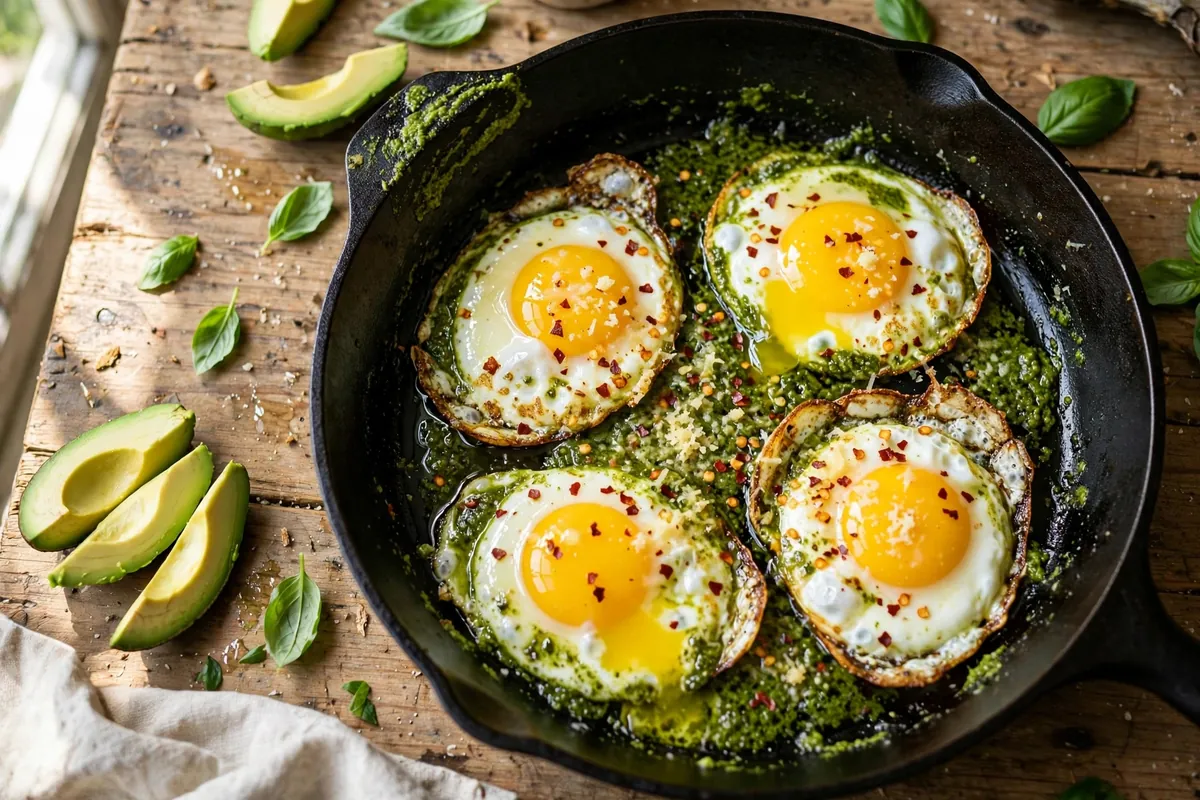
If you have spent any time on food TikTok, you have already seen them: golden eggs frying right in a slick of bright-green pesto, yolks glossy, whites crisped at the edges in that fragrant basil oil. Viral Pesto Eggs racked up hundreds of millions of views for a simple reason — they turn the two most basic ingredients in your fridge into a breakfast that tastes like a café plate, with 18 grams of protein per serving, about 420 calories, and only 5 grams of net carbs. And it is ready in 10 minutes, in one skillet.
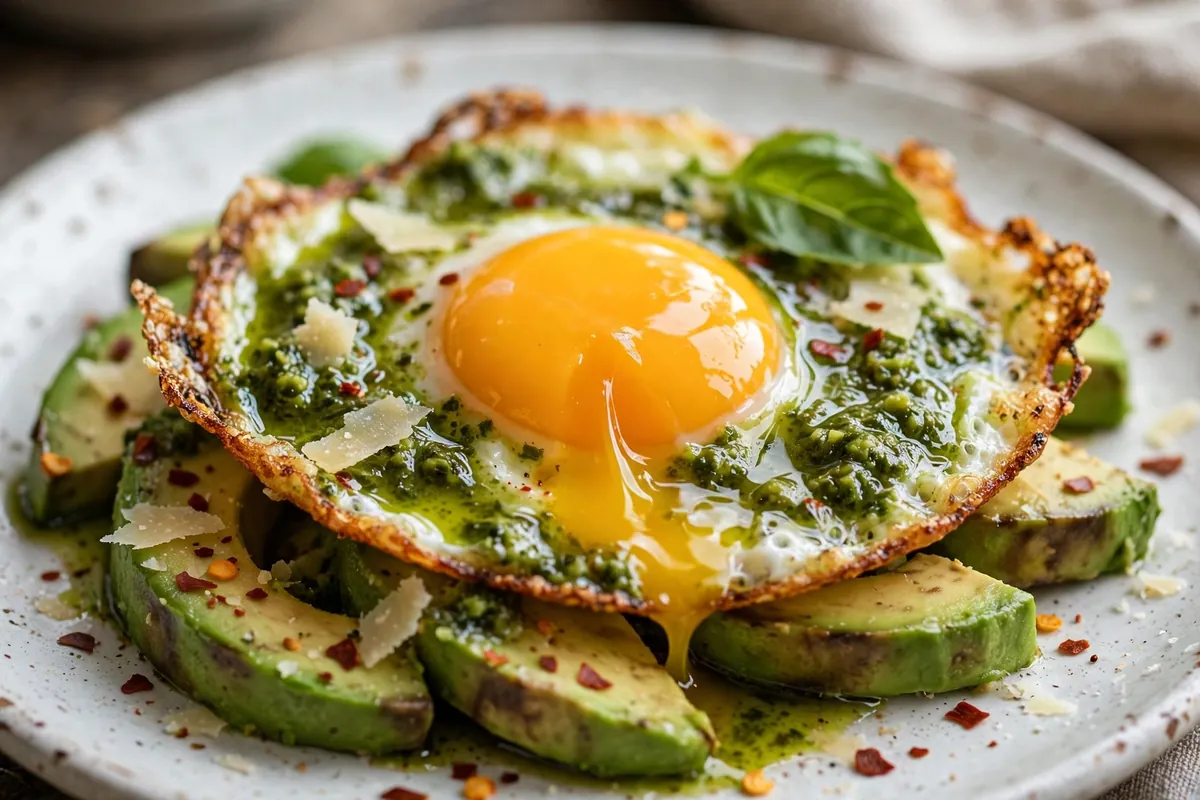
The trick is gloriously simple: instead of frying eggs in butter or olive oil, you fry them in pesto. The oil separates as it heats, the basil and Parmesan toast lightly in the pan, and the eggs absorb all of that flavor. Serve them over creamy avocado slices with a snowfall of Parmesan and a pinch of chili flakes, and you have a keto breakfast that needs no bread to feel complete.
Why It Works: The Protein Sources
This plate looks indulgent, but its macros are built on solid protein:
- Eggs (the backbone): Four large eggs contribute about 24 grams of protein to the batch — roughly 70% of the recipe’s total. Eggs also supply all nine essential amino acids, plus choline and vitamin D.
- Basil pesto (the flavor engine): A quarter cup of pesto adds about 6 grams of protein from pine nuts, Parmesan, and olive oil, along with the toasty basil-garlic flavor that makes the dish famous.
- Parmesan (the finisher): Just one tablespoon adds about 2 grams of protein and a salty, nutty punch with almost no carbs.
- Avocado (the creamy base): About 3 grams of protein per avocado, plus 10 grams of fiber that keeps you full for hours — most of the recipe’s fiber comes from here.
Ingredients
Serves 2 · Prep 5 minutes · Cook 5 minutes · Total 10 minutes
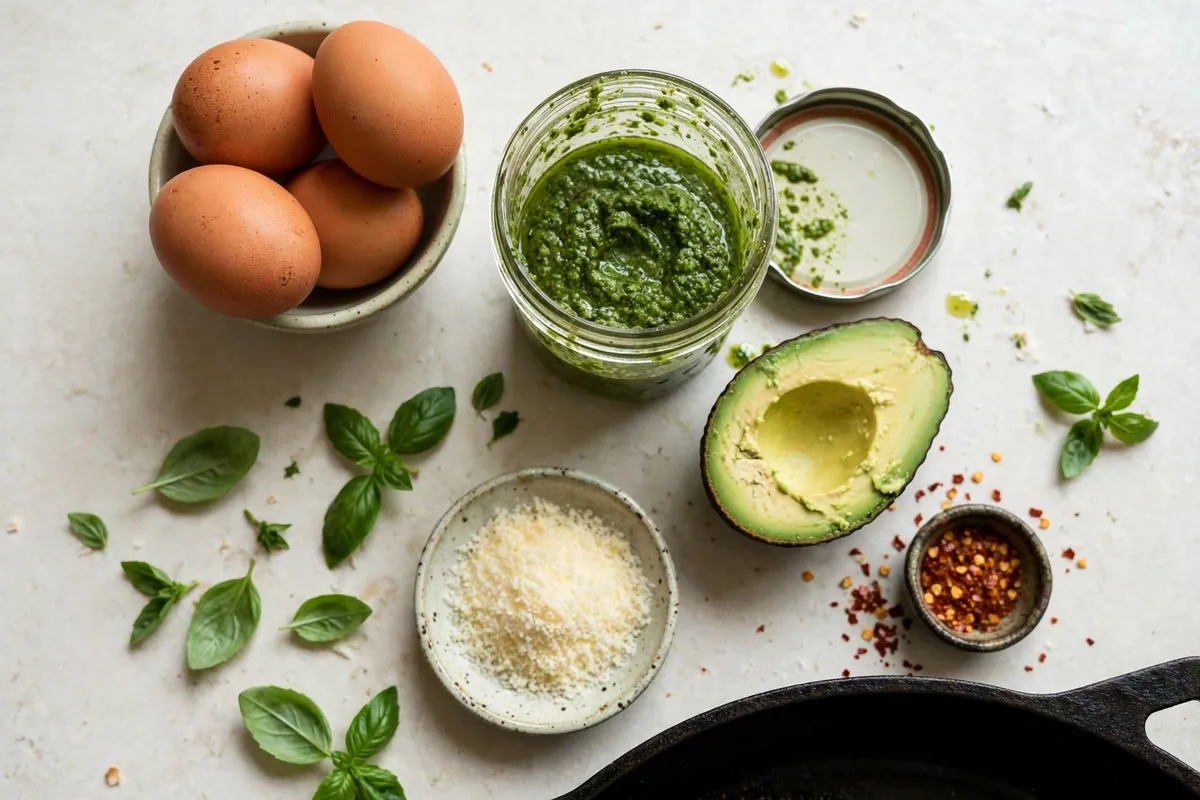
- 4 tbsp basil pesto (1/4 cup / 60g), store-bought or homemade
- 4 large eggs
- 1 medium ripe avocado, sliced
- 1 tbsp grated Parmesan cheese
- 1/2 tsp chili flakes (optional)
- Salt and freshly cracked black pepper, to taste
- A few fresh basil leaves, to serve
Equipment
- Medium nonstick or cast-iron skillet with a lid
- Silicone spatula
- Small spoon for basting
Step-by-Step Method
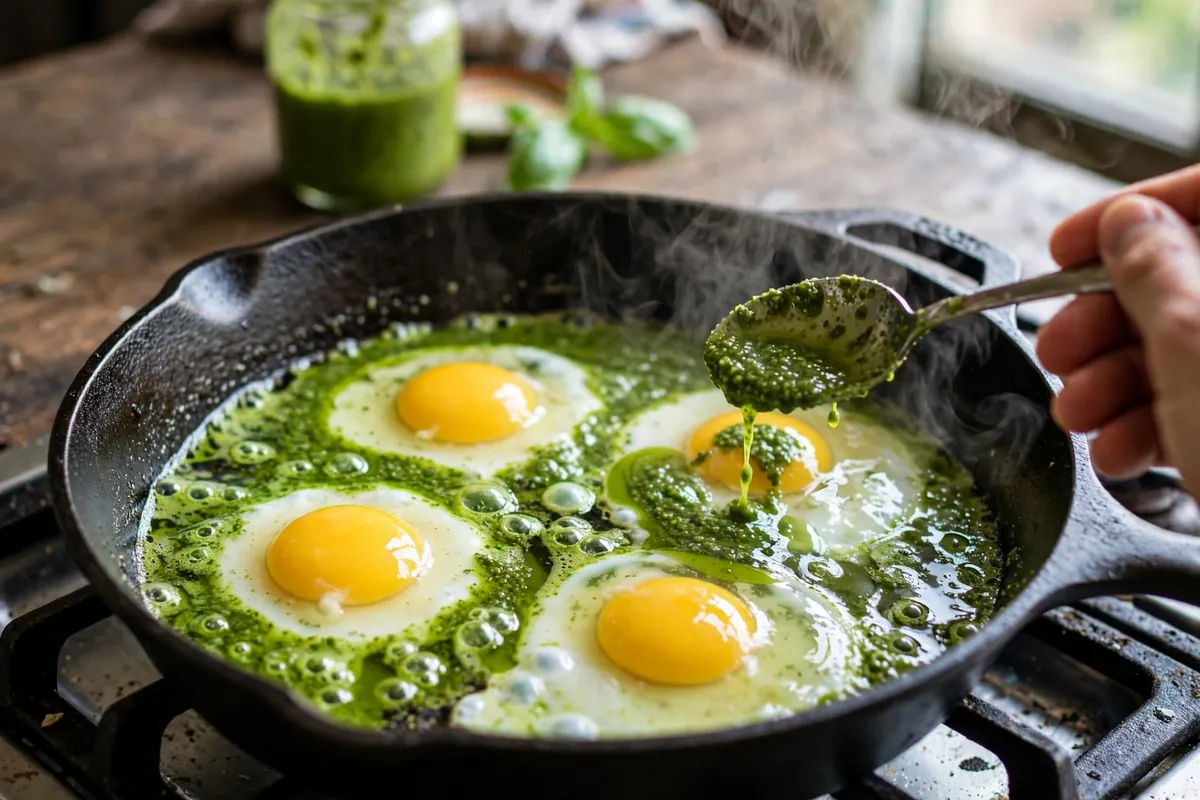
- Heat the pesto. Set the skillet over medium heat. Spoon in the pesto and let it sizzle for 30–45 seconds, swirling the pan, until it smells fragrant and the oil begins to glisten around the edges. Do not walk away — pesto burns faster than butter.
- Crack in the eggs. Lower the heat to medium-low. Crack the eggs one at a time into the pesto, keeping the yolks intact. Use the spoon to scoop a little of the hot pesto oil over each white — this is what sets them fast and flavors every bite.
- Cover and cook. Put the lid on and cook for 3–4 minutes. The whites should be fully set with crisped, golden edges; the yolks should still look glossy and jammy. For fully set yolks, cook 1 minute longer.
- Season. Remove the skillet from the heat. Sprinkle with salt, black pepper, chili flakes, and the grated Parmesan while the eggs are still hot so the cheese melts slightly.
- Serve over avocado. Arrange the avocado slices on two warm plates, slide two eggs onto each plate over the avocado, spoon over any extra pesto oil from the pan, and finish with fresh basil leaves. Serve immediately.
Nutrition Estimates (Per Serving)
Calculated from the ingredient amounts above, for 2 servings (2 eggs + half an avocado each):
- Calories: ~420
- Protein: 18g
- Fat: 37g
- Total carbs: 11g
- Fiber: 6g
- Net carbs: 5g
- Sugar: 2g
That is roughly 17% of calories from protein, with net carbs low enough for most keto and low-carb plans. For a lighter plate, drop the avocado and save about 120 calories per serving.
Tips for Perfect Pesto Eggs
- Medium heat is the rule. Pesto’s cheese and pine nuts scorch quickly. If your skillet runs hot, start at medium-low from the beginning.
- Use a pesto you love eating. Since the pesto is the cooking fat AND the seasoning, a thin, fresh-tasting pesto gives the best result. Thick, dry pesto works too — just stir in a teaspoon of olive oil before heating.
- Room-temperature eggs spread less. Cold eggs straight from the fridge are fine, but eggs that sat on the counter for 15 minutes give you tighter, prettier whites.
- Lid on, always. Trapped steam sets the tops of the whites in 3–4 minutes without flipping, keeping the yolks runny.
- Serve on warm plates. A cold plate kills the silkiness fast. Run your plates under hot water for a minute before serving.
5 Variations to Try
- Caprese pesto eggs: Add halved cherry tomatoes and torn mozzarella to the pan in the last 2 minutes, and finish with a balsamic drizzle. Carbs stay nearly identical.
- Spicy chili-crisp pesto eggs: Swap the chili flakes for a teaspoon of chili crisp spooned over the finished eggs for extra crunch and heat.
- Greek pesto eggs: Finish with crumbled feta, diced cucumber, and kalamata olives instead of avocado for a Mediterranean twist (~1g net carbs less).
- Smoked salmon pesto eggs: Lay two slices of smoked salmon under the eggs on the plate — adds about 10g protein per serving for a 28g-protein breakfast.
- Mushroom and spinach pesto eggs: Sauté a handful of sliced mushrooms and spinach in the pesto for 2 minutes before cracking in the eggs for extra volume and nutrients.
Storage
Pesto eggs are at their best the minute they leave the pan — the yolks and the toasted pesto oil lose their magic on reheating. If you do have leftovers, refrigerate in an airtight container for up to 1–2 days and warm gently in a covered skillet over low heat for 2–3 minutes. The yolks will set fully on reheating, so this dish is not a great candidate for meal prep or freezing. The sliced avocado will brown overnight, so keep any extras separate with a squeeze of lemon.
FAQs
Can I use store-bought pesto?
Absolutely — the original viral recipe was made with jarred pesto, and it works perfectly. Choose one with olive oil near the top of the ingredient list for the best frying behavior. Homemade pesto is wonderful too but not required.
Is this recipe really keto?
Yes. At about 5 grams of net carbs per serving, it fits comfortably into a standard keto day (usually 20–50g net carbs). The avocado provides most of the total carbs, but its fiber cancels out the majority of them.
Can I make it dairy-free?
Yes. Use a dairy-free pesto (many store brands exist) and skip the Parmesan finish, or replace it with a pinch of nutritional yeast for a similar savory note. The macros barely change.
Can I cook more eggs in one pan?
You can cook up to 6 eggs in a 12-inch skillet — just add one more tablespoon of pesto per extra two eggs so every egg sits in enough pesto oil. Keep the eggs in a single layer so the whites set evenly.
What can I serve with it besides avocado?
For a low-carb spread, serve alongside cloud bread, crispy cheese chips, or a simple tomato and cucumber salad. If carbs are not a concern, sourdough toast is the classic partner for mopping up the pesto oil.
Why are my pesto eggs bitter?
Almost always the heat. If the pesto browns past golden or smells acrid, the cheese and basil have scorched. Next time, use medium-low heat, keep the eggs moving the pesto around in the first minute, and never preheat the pesto for more than a minute before the eggs go in.
Final Thoughts
Some viral recipes earn their fame and quietly disappear; pesto eggs earned theirs and stayed. It is one of those rare internet sensations that is genuinely faster, easier, and better than the breakfast it replaces — no separate sauce to make, no extra pan, no skills required beyond cracking an egg. Make it once exactly as written, then start riffing: this is a formula (fat + eggs + lid + 4 minutes), not a strict recipe. Your skillet, your rules.
You May Also Like
- Cloud Bread (Flourless, Low-Carb, 3 Ingredients!) — the perfect light bread to mop up that pesto oil
- Crispy Cheese Chips (Zero-Carb Snack) — a crunchy, zero-carb side for the plate
- Viral Chicken Crust Pizza (49g Protein Per Slice!) — another protein-packed viral sensation