
What Your Tongue Is Trying to Tell You
Doctors call the tongue a “window into your body” — and for good reason. Its color, coating, and texture can reveal surprising things about your health long before other symptoms appear.
Grab a mirror and check. Here are 7 tongue signs you should know.
1. Thick White Coating
A tongue covered in a thick white layer is one of the most common things people notice. It often points to oral thrush — an overgrowth of yeast in the mouth — or simply a buildup of bacteria from poor oral hygiene. In some cases, it can also signal dehydration or a weakened immune system.
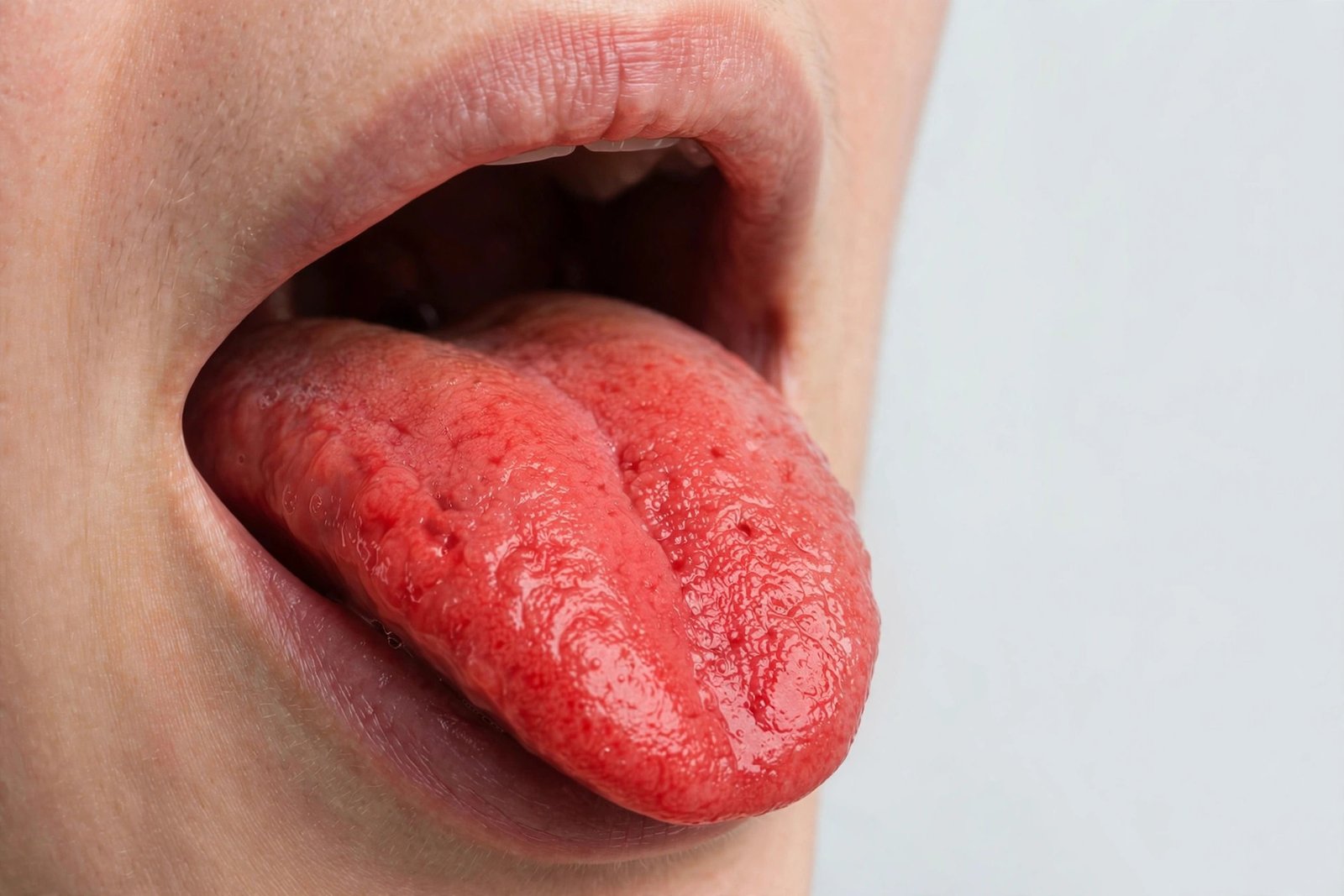
2. Bright Red, “Strawberry” Tongue
A tongue that looks unusually red and bumpy — sometimes called “strawberry tongue” — can indicate a vitamin B12 or iron deficiency. The tiny bumps (papillae) become inflamed and swollen, giving the tongue that vivid red look. It can also appear during high fevers.
3. Yellow Coating
A yellowish tint on the tongue often relates to digestive issues or liver strain. Smoking, poor diet, and certain mouth bacteria can also turn the coating yellow. If the yellow color is deep and persistent, doctors say it’s worth paying attention to.
4. Deep Cracks and Grooves
A fissured tongue — one with deep cracks running across its surface — is usually harmless and often genetic. But when cracks appear suddenly, they can signal dehydration or nutrient deficiencies. Food particles trapped in deep grooves can also cause irritation and bad breath.
5. Unusually Pale Tongue
A healthy tongue is pinkish-red. If yours looks pale or almost white underneath the coating, it may indicate low iron levels or anemia. When the body lacks enough healthy red blood cells, the tongue loses its rich color — one of the earliest visible clues.
6. Black or “Hairy” Appearance
It sounds alarming, but “black hairy tongue” is a real condition where the papillae grow longer than normal and trap bacteria, giving a dark, fuzzy look. It’s commonly linked to smoking, certain medications, or poor oral hygiene — and while it looks scary, it’s usually reversible.
7. Purple or Bluish Tint
A tongue with a purple or bluish hue can suggest circulation problems — meaning oxygen isn’t reaching tissues efficiently. In traditional medicine systems, tongue color diagnosis has been used for centuries, and a purplish tongue is considered a sign the body’s circulation needs attention.
What Should You Do?
Your tongue changes daily based on what you eat, drink, and how hydrated you are — so one odd morning doesn’t mean much. But persistent changes in color, coating, or texture that last more than two weeks deserve a closer look.
The simplest habit? Check your tongue every morning while brushing your teeth. It takes five seconds — and it might tell you something important.
Frequently Asked Questions
What does a healthy tongue look like?
A healthy tongue is pinkish-red, with a thin white coating and small bumps (papillae) across its surface. It should look moist, not dry or cracked.
Can dehydration change tongue color?
Yes — dehydration often causes a white coating or a dry, cracked appearance. Drinking enough water is the simplest fix.
Is a white tongue always a problem?
No. A thin white coating is normal. It’s the thick, heavy coating that doesn’t brush away that deserves attention.
Why is my tongue yellow in the morning?
Morning yellowing is often from bacteria buildup overnight, smoking, or certain foods. If it persists through the day, it may relate to digestive or liver issues.
Should I brush my tongue?
Yes — gently brushing or scraping your tongue daily removes bacteria buildup and keeps the coating thin and healthy.
Final Thoughts
Your tongue is talking every single day. White coating, strange colors, deep cracks — these small changes are messages worth reading.
Share this with someone who never checks. They might be surprised what they find.