
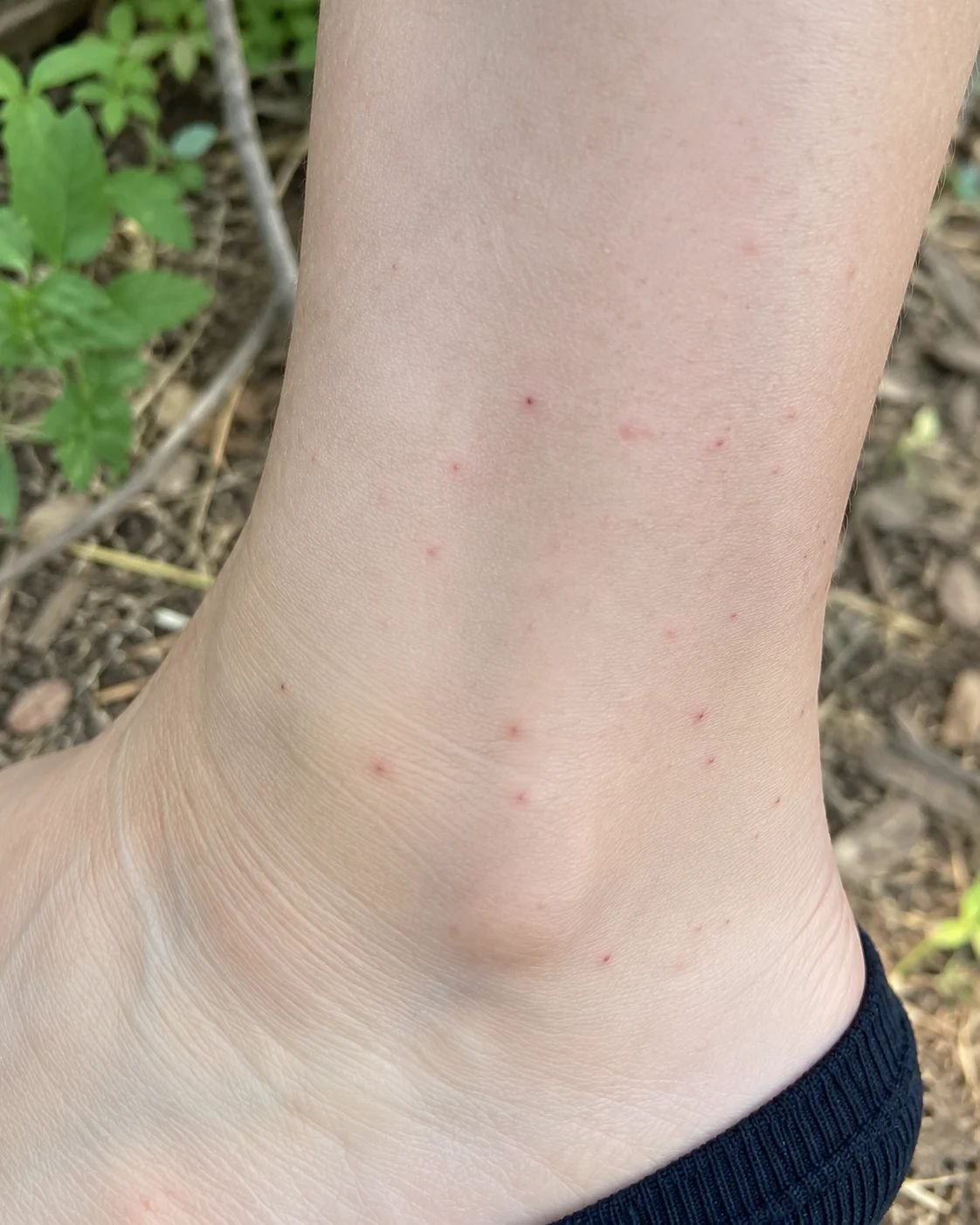
Tiny Red Dots on Your Ankle After Gardening: What Could They Mean?
You finish working in the garden, come back inside, and notice something unusual: several tiny red dots scattered across your ankle.
They may be easy to ignore at first. But when the marks appear after spending time outdoors, it is natural to wonder whether they came from an insect, plant, or something else you encountered in the garden.
The good news is that many minor insect bites and skin reactions are harmless and improve on their own. However, the appearance of small red marks alone usually isn’t enough to identify exactly what caused them. Different bites, stings, and skin irritations can look surprisingly similar.
Why Do Small Red Dots Appear After Gardening?
Gardening puts your skin in contact with soil, plants, grass, insects, and other outdoor materials. Mosquitoes, mites, fleas, ticks, and other arthropods can cause localized skin reactions.
A minor bite may appear as a small red or pink bump. Some marks itch, while others may barely be noticeable. A few may appear close together, while others are scattered across the ankle or lower leg.
The location can also make sense. Ankles and feet are often exposed when people garden in sandals, shorts, or low socks.
However, you shouldn’t automatically assume that every red spot is an insect bite. Skin irritation can also have other causes, including contact with plants or environmental materials.
What Do Bug Bites Usually Look Like?
There isn’t one universal appearance for an insect bite.
A typical mild reaction can include:
- A small red or pink bump
- Mild swelling
- Itching
- Slight tenderness or stinging
- Several spots appearing close together
Some bites are barely noticeable, while others can become quite itchy or swollen. Even spider bites can resemble ordinary insect bites, which is why identifying the exact insect from a photograph or skin mark alone can be difficult.
If you didn’t actually see an insect bite you, it is better to describe the marks as “possible insect bites” rather than assuming which insect caused them.
What Should You Do After Noticing the Marks?
If the spots are small and you otherwise feel well, simple skin care may be enough.
Start by gently washing the area with soap and water. Avoid repeatedly rubbing or scratching the marks.
For itching or mild swelling, a cool compress can provide relief. The American Academy of Dermatology also notes that over-the-counter anti-itch treatments, such as hydrocortisone, may help some people when used according to the product directions.
Try not to scratch. Scratching can further irritate the skin and can increase the risk of infection.
It can also be useful to take a photograph when you first notice the marks. If they change over the following days, having an earlier photograph can help you describe the progression to a healthcare professional.
Check Yourself After Working Outdoors
If you regularly spend time gardening, especially around tall grass, bushes, or wooded areas, make checking your skin part of your routine.
Ticks are particularly important to look for because they can remain attached to the skin and may transmit disease. The American Academy of Dermatology recommends checking your skin after spending time in heavily wooded or brushy areas, including commonly missed areas such as the armpits, groin, and hair.
Don’t forget to check clothing, shoes, outdoor equipment, and pets when appropriate.
For general protection, wearing long pants, long sleeves, socks, and closed shoes can reduce exposed skin. Insect repellent can provide additional protection when used according to its label.
When Should You Get Medical Advice?
Most minor insect bites and stings cause temporary symptoms such as itching, redness, swelling, or mild discomfort. But you should pay attention if the reaction is becoming worse rather than better.
Contact a healthcare professional if the area develops increasing redness, warmth, pain, swelling, or other signs that could indicate infection. Fever or feeling generally unwell is another reason to seek medical advice.
You should also get medical advice if a rash continues to develop, doesn’t improve, or appears after a known tick bite. Symptoms such as a rash, fever, or body aches occurring after a tick bite should be discussed with a healthcare professional.
Know the Emergency Warning Signs
A small cluster of red dots is usually not an emergency by itself.
However, insect stings can occasionally cause a serious allergic reaction. Get emergency medical help if you develop symptoms such as difficulty breathing, swelling of the lips, face, eyelids, or throat, dizziness or fainting, widespread hives, or other signs of a severe allergic reaction.
Rapidly spreading redness, severe pain, significant swelling, or a rapidly changing wound also deserves prompt medical attention.
How to Reduce Bites While Gardening
A few simple habits can make outdoor work more comfortable.
Wear clothing that covers your legs and ankles when possible, particularly when working around tall grass or dense vegetation. Closed shoes and socks provide more protection than sandals.
Use an appropriate insect repellent on exposed skin or clothing according to the product’s instructions. The American Academy of Dermatology recommends repellents containing 20–30% DEET for protection against mosquitoes, ticks, and other bugs.
After gardening, change clothing and check your skin for crawling insects or attached ticks. Washing outdoor clothing can also be helpful.
The Bottom Line
A few tiny red dots appearing around your ankle after gardening may simply be a mild reaction to an insect or another outdoor exposure. The marks themselves usually cannot tell you exactly what caused them.
Pay attention to how they develop. Mild itching and small areas of redness may settle with basic care, while increasing redness, swelling, pain, fever, or other concerning symptoms deserve medical attention.
And next time you head into the garden, remember the simplest protection: cover exposed skin, use appropriate insect repellent, and give yourself a quick tick and insect check when you’re finished.
Important: A photograph or written description cannot reliably diagnose the cause of a skin reaction. If the marks are severe, spreading, persistent, or accompanied by other symptoms, consult a qualified healthcare professional.