
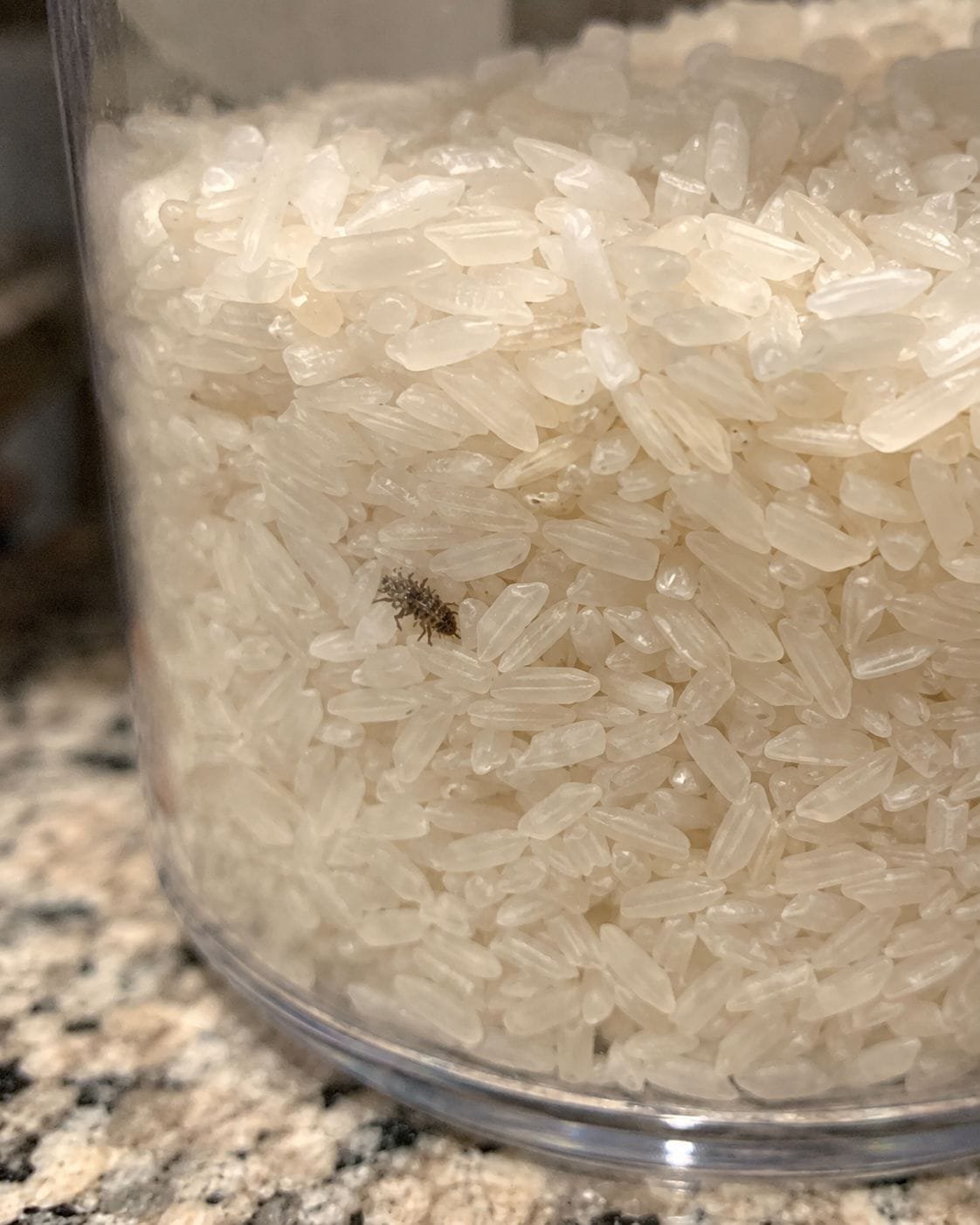
What Is That Tiny Bug in Your Rice? Common Pantry Pests Explained
Opening a container of rice and noticing a tiny dark insect moving between the grains can be an unpleasant surprise. You may immediately wonder where it came from, whether the rice is still safe, and whether the rest of your pantry has been affected.
A small insect found among uncooked rice is often associated with stored-food or pantry pests. Possible culprits include rice weevils, grain beetles, flour beetles, and other insects that feed on or develop in stored grains and dry foods.
However, it is important not to identify an insect from a photograph alone. Several pantry pests are very small and can look surprisingly similar.
Why Do Bugs Appear in Rice?
Rice and other dry grains can provide an excellent food source for certain insects.
Sometimes an infestation begins before the food reaches your kitchen. Insects can enter products during processing, storage, transportation, or while food is sitting on store shelves. This means discovering a bug in rice does not automatically mean your kitchen is dirty.
Some pantry pests can also spread after an infested package is brought home. Once established, they may move into other susceptible dry foods stored nearby.
Is It a Rice Weevil?
One of the insects people commonly associate with rice is the rice weevil.
Rice weevils are small beetles with a distinctive elongated snout. Adults are generally dark brown to nearly black and may have lighter markings. They commonly infest whole grains such as rice, wheat, corn, oats, and other cereal grains.
What makes weevils particularly interesting is that their larvae can develop inside individual grains. Because of this, an infestation may not always be obvious when the food is first purchased.
Other species, including granary and maize weevils, can also infest stored grains.
So while a dark insect crawling among rice grains could be a weevil, the exact species requires a closer look.
Other Bugs Can Live in Rice Too
Not every insect found in rice is a rice weevil.
Stored grains can attract several different pantry pests.
Grain Beetles
Small grain beetles may be found around rice, cereal, flour, pasta, and other dry foods. Some species are reddish-brown or dark in color and are small enough to be overlooked initially.
Flour Beetles
Despite their name, flour beetles aren’t restricted to flour. They can also occur in cereal products, grains, nuts, dried foods, and other stored products.
Pantry Moths
Pantry moths are another possibility. Their larvae can infest rice, cereal, flour, dried fruits, nuts, pet food, and other dry products.
If you notice silky webbing, clumping, or small caterpillar-like larvae, a moth infestation may be involved rather than a beetle.
How Do You Know If Rice Is Infested?
One visible insect is a good reason to inspect the entire container.
Look closely for:
- More live insects
- Dead insects
- Small larvae
- Tiny holes in individual grains
- Unusual dust or debris
- Webbing
- Clumping
- Insects around the lid or container
- Multiple affected packages
Don’t just examine the surface.
If the rice has been stored for some time, gently move the grains around and inspect different areas of the container.
It is also worth checking other dry foods stored nearby.
Check Your Pantry
If you find an insect in rice, don’t assume the rice is the only affected food.
Inspect nearby:
- Flour
- Pasta
- Cereal
- Oats
- Cornmeal
- Baking mixes
- Beans
- Lentils
- Nuts
- Seeds
- Dried fruit
- Spices
- Pet food
- Birdseed
Many stored-food pests can infest more than one type of dry food.
This is particularly important if you notice several insects rather than just one.
What Should You Do With Infested Rice?
If you find clear evidence of an infestation, the simplest option is to discard the affected rice.
Trying to pick out visible insects isn’t enough because there may be eggs, larvae, or insects hidden deeper in the food.
Place the affected food in a sealed bag before putting it in the garbage so that insects don’t have an opportunity to spread.
Then inspect the shelf or cabinet where the rice was stored.
Clean the Pantry
After removing an infested product, clean the storage area thoroughly.
Vacuum crumbs, spilled grains, and food particles from shelves and corners. Pay particular attention to cracks and crevices where small insects could remain.
Wipe the shelves and make sure the area is completely dry before putting food back.
Simply cleaning the visible insect without removing an infested food source usually won’t solve the problem.
Should You Spray Insecticide?
Generally, don’t spray insecticide directly onto food or food-storage surfaces to deal with pantry pests.
The most effective approach is usually to identify and remove the infested food source, inspect nearby products, and clean the storage area.
If an infestation continues despite removing affected products and cleaning, professional pest-control or local agricultural extension advice may be appropriate.
How to Prevent Bugs in Rice
Good storage practices can make a big difference.
Use Airtight Containers
After opening rice, store it in a tightly sealed container.
Glass, metal, or heavy-duty plastic containers with secure lids can help prevent insects from spreading between foods.
Airtight storage also makes it easier to notice an infestation early because insects are less likely to move freely between different packages.
Don’t Store Huge Quantities for Too Long
Buying rice in large quantities may be economical, but keeping dry foods for very long periods can give stored-food pests more time to develop.
If you don’t use rice frequently, smaller quantities may be easier to manage.
Check New Packages
Before transferring rice into a storage container, quickly inspect the grains and packaging.
Look for insects, damaged packaging, unusual dust, or anything that doesn’t look normal.
This won’t guarantee that a product is pest-free, but it can help you notice obvious problems before placing the food in your pantry.
Rotate Older Food
Use older packages before opening newer ones.
This simple habit prevents dry goods from sitting forgotten at the back of a cupboard for months.
Can You Prevent Rice Weevils Completely?
Unfortunately, there is no guarantee that you will never encounter a pantry pest.
Some infestations begin before food reaches the home, so even careful housekeeping cannot completely eliminate the possibility.
However, storing dry foods properly, regularly checking older products, cleaning spills quickly, and avoiding unnecessary food buildup can greatly reduce the opportunity for pantry pests to spread.
Are These Bugs Dangerous to People?
The sight of a tiny insect crawling through rice can certainly be disturbing, but common pantry pests are primarily a food-storage problem, not insects that normally bite or sting people.
The bigger issue is whether the food has become contaminated or infested.
For that reason, visibly infested food should not be used.
And remember that uncooked rice isn’t the only raw food that requires proper preparation. Many foods should be thoroughly cooked according to safe food-handling practices.
What If You Only Find One Bug?
Finding one insect doesn’t necessarily mean your entire pantry is infested.
It could have entered the food recently, or it could be the first visible sign of a larger problem.
The sensible approach is to inspect the container carefully and check nearby dry foods.
If everything else looks normal and you don’t find additional insects or signs of infestation, continue monitoring your pantry.
Why Does Rice Sometimes Have Tiny Holes?
Small holes in individual grains can be an important clue.
Some weevils lay eggs in grains, and their developing larvae can feed inside the grain. As a result, damaged grains may show small holes after the insect develops and emerges.
However, damaged or broken rice grains can also occur for completely ordinary reasons, so holes alone don’t prove that an infestation is present.
The Bottom Line
A tiny dark insect crawling among uncooked rice can be alarming, but it doesn’t automatically mean something dangerous has entered your home.
It may be a rice weevil or another stored-food pest, but identifying the exact insect requires looking closely at its body shape, markings, size, and behavior.
If you discover one, inspect the entire rice container and nearby dry foods. If you find clear signs of infestation, discard the affected food, clean the storage area, and transfer unaffected dry goods into tightly sealed containers.
And the next time you open a rice container and notice something moving between the grains, don’t simply brush it away.