White Stuff Coming Out of Air-Fryer Chicken: Should You Be Worried?
You take the chicken out of the air fryer and notice something strange.
There are white patches and little white streaks sitting on the surface.
If you’ve never seen it before, it can look like the chicken is spoiled—or that something went seriously wrong during cooking.
The good news is that this white material is usually a normal result of cooking chicken. It doesn’t automatically mean the chicken was bad.
But there is an important distinction between harmless cooking residue and actual signs of spoilage.
So, What Is the White Stuff?
The white material is mainly cooked-out protein and moisture from the chicken.
As chicken heats up, its muscle proteins change and the muscle fibers tighten. That process can push some water and dissolved proteins toward the surface. Once exposed to the heat, those proteins become opaque and white.
That’s why you may see a white, creamy-looking substance appearing on an otherwise perfectly normal chicken breast.
It can look surprising, but the appearance itself isn’t evidence that the chicken has gone bad.
Why Does It Happen More With Some Chicken?
You may cook chicken one day and see almost nothing.
Then you cook another piece and suddenly find white patches everywhere.
That’s normal variation.
The amount of liquid and protein that comes out can depend on the chicken itself, how it was stored and handled, and how it cooks.
Chicken that has previously been frozen and thawed can also release more moisture during cooking because freezing can damage some of the muscle structure.
So don’t assume that a large amount of white residue automatically means you bought bad chicken.
Does It Mean the Chicken Is Overcooked?
Not necessarily.
However, very high heat or prolonged cooking can make chicken lose more moisture, which can leave the meat drier and tougher.
If your chicken repeatedly comes out dry and has lots of white protein collecting on the surface, you may be cooking it longer than necessary.
The better goal isn’t simply “cook until the white stuff disappears.”
The goal is to cook the chicken safely without unnecessarily drying it out.
Is the White Stuff Safe to Eat?
If the chicken was fresh, properly stored, and cooked safely, the white protein that appears during cooking is not itself a reason to throw the chicken away.
Think of it as a visible part of the cooking process.
It isn’t the same thing as mold.
It isn’t automatically spoiled chicken.
And it isn’t proof that the air fryer is malfunctioning.
The appearance can certainly be unpleasant, but appearance and food safety are two different questions.
The Most Important Question: Did the Chicken Reach a Safe Temperature?
This is where you should focus your attention.
USDA recommends cooking poultry to a minimum internal temperature of 165°F (73.9°C), measured with a food thermometer. For chicken breasts, the thermometer should be inserted into the thickest part of the meat.
That’s much more useful than judging the chicken by its color or by whether white protein appears on the surface.
In other words:
White stuff doesn’t tell you whether chicken is safely cooked.
A thermometer does.
What If the Chicken Is Pink Inside?
This is another common air-fryer question.
Chicken can sometimes remain slightly pink even after cooking safely. USDA explains that the color of cooked poultry can range from white to pink to tan, so color alone isn’t a reliable safety test.
If you’re worried about the center, check the thickest part with a food thermometer.
If it reaches 165°F, you’ve got a much more reliable answer than simply looking at the meat.
What If the Chicken Smells Bad?
That’s different.
The white protein produced during cooking is one thing.
Chicken that has an obviously unpleasant odor, slimy/sticky texture, or other clear signs of spoilage is another.
USDA notes that spoilage can involve changes such as an off odor and sticky or slimy texture.
If raw chicken already smells noticeably wrong or feels unusually slimy before cooking, don’t assume the air fryer will “fix” it.
When food shows clear signs of spoilage, it’s safer to discard it.
Does the White Stuff Mean the Chicken Is High in Protein?
The white material does come from proteins and moisture in the chicken, but don’t use the amount of white residue as a way to judge how much protein your meal contains.
A chicken breast producing more white residue doesn’t necessarily mean it has more protein.
The amount can vary because of the meat’s composition, moisture, handling, freezing, and cooking conditions.
For people eating chicken as a high-protein food, the important thing is the chicken’s actual nutritional content—not how much white material appears on the surface.
Can You Prevent So Much White Residue?
You may be able to reduce how noticeable it is, although you can’t always eliminate it.
Try these simple steps:
1. Don’t overcook the chicken
Use a thermometer and remove the chicken once it reaches the safe internal temperature rather than cooking far beyond it.
2. Avoid repeatedly freezing and thawing
Repeated freezing and thawing can affect the structure of meat and increase moisture loss during cooking.
3. Pat the surface dry before cooking
Excess surface moisture can interfere with browning.
4. Give the chicken enough space
Don’t overcrowd the air-fryer basket. Good airflow helps the surface cook and brown more evenly.
5. Let the chicken rest briefly
After cooking, giving the chicken a short rest can help the juices redistribute through the meat.
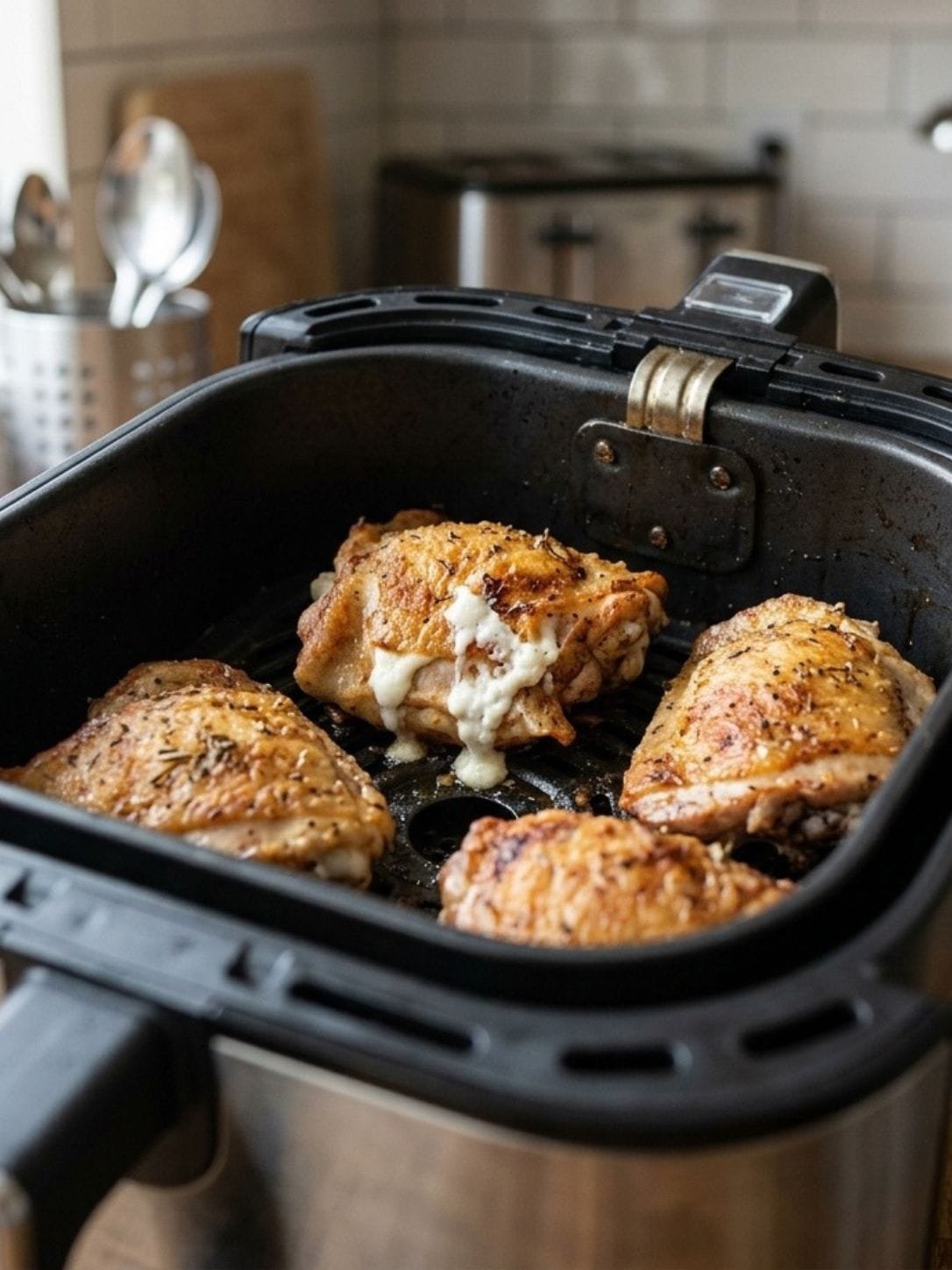
What About the Chicken in the Image?
The chicken shown here has visible white protein-like material on the surface after air frying.
That is exactly the kind of thing that can make people stop and wonder:
“What is that?”
The image alone cannot tell us the chicken’s storage history or internal temperature.
But the white material itself can be a normal result of proteins and moisture being pushed out during cooking.
So if you see something similar in your own air fryer, you don’t need to panic simply because the chicken has developed white patches.
Instead, check the things that actually matter for food safety.
A Quick Chicken Safety Checklist
Before eating air-fried chicken, ask:
Was it stored properly?
Did it smell normal before cooking?
Was the surface free from obvious spoilage signs?
Did the thickest part reach 165°F?
Was it handled separately from ready-to-eat foods?
If the answers are reassuring, the white residue by itself isn’t a reason to assume something is wrong.
One More Important Air-Fryer Tip
Don’t judge chicken solely by how brown it looks.
An air fryer can brown the outside quickly while the center is still catching up.
That’s why the outside can look beautifully golden before the thickest part has reached a safe temperature.
USDA specifically recommends using a food thermometer because visual appearance isn’t a reliable way to determine poultry safety.
For a thick chicken breast, insert the thermometer into the center of the thickest area, avoiding the bone if there is one.
Final Answer
So, what is that strange white stuff coming out of your air-fried chicken?
Usually, it’s cooked protein and moisture being pushed out of the meat as it heats.
It may look strange, but the white residue itself doesn’t mean the chicken is spoiled.
The real food-safety test is whether the chicken was handled and stored properly and whether the thickest part reached 165°F (73.9°C).
And if you’re using an air fryer for high-protein meals, this is actually a useful little thing to know:
Don’t throw away perfectly good chicken just because you see white protein on the surface.
Check the temperature, check for genuine spoilage signs, and then enjoy your chicken with confidence. 🍗