
Table of Contents
ToggleStrange Color in Raw Ground Beef: Is It Still Safe to Cook?
You open a package of ground beef and notice something strange.
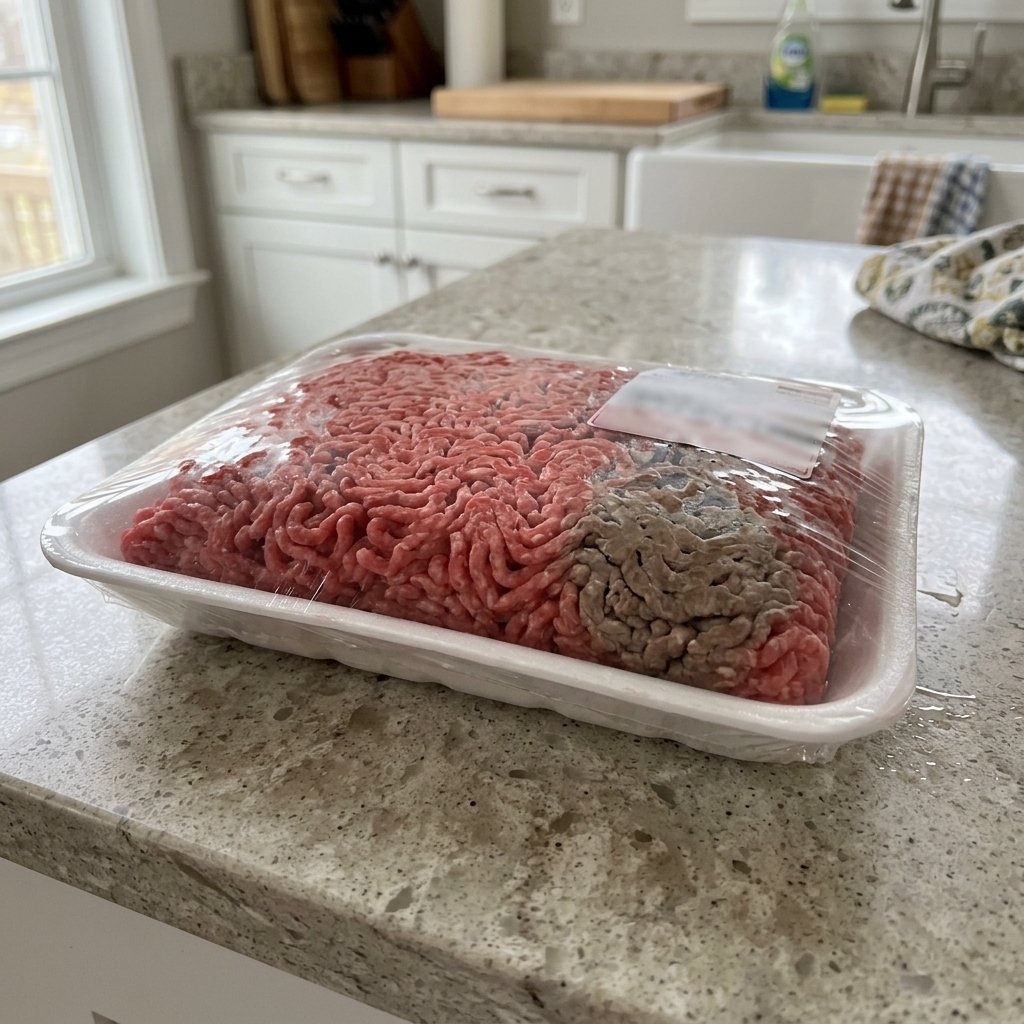
Most of the meat is bright red, but the center looks grayish-brown.
At first, it can look like the meat has spoiled. But there’s an important detail many people don’t know:
Gray or brown ground beef is not automatically spoiled.
The color can change because of how oxygen interacts with the pigments in meat. However, if the entire package has turned gray or brown, or the meat also has other signs of spoilage, it’s time to be more cautious.
Why Is Ground Beef Usually Red?
Freshly cut meat can naturally look purplish because of the way oxygen interacts with a pigment called myoglobin.
When the meat is exposed to oxygen, the surface can develop the familiar bright-red color people associate with fresh beef.
This is why the outside of packaged ground beef can look red while the interior looks darker or grayish-brown.
A lack of oxygen inside the package can cause that difference in color.
So seeing a darker center doesn’t automatically mean something is wrong.
What If the Center Looks Gray?
This is one of the most confusing things about packaged ground beef.
If the inside is grayish-brown while the outside remains red, oxygen exposure can explain the difference.
That alone isn’t enough to say the beef is spoiled.
However, if the meat has turned gray or brown throughout the entire package, USDA says it may be beginning to spoil.
That’s why looking at the whole package is more useful than focusing on one small section.
What About a Greenish Color?
A clearly green or unusual discoloration deserves more caution.
Color alone still cannot tell you exactly what happened, but unusual discoloration combined with other signs—such as an unpleasant odor or deteriorated texture—is a reason not to take chances.
Don’t simply scrape away a questionable area and assume the remaining meat is safe.
Smell Can Be Another Clue
If ground beef has an obviously unpleasant or abnormal odor, that’s more concerning than a simple color difference.
Spoilage can affect the smell and texture of meat.
But remember:
A normal smell does not prove that raw ground beef is free from harmful bacteria.
Foodborne bacteria aren’t necessarily detectable by smell, appearance, or taste.
So don’t taste raw beef to test it.
What About Slimy or Sticky Beef?
Raw ground beef naturally has moisture, but an unusually sticky or slimy surface—especially when combined with an unpleasant odor or extensive discoloration—is a reason to be cautious.
The more warning signs you see together, the less sensible it is to gamble with the food.
When you’re unsure whether meat has spoiled, throwing it away is safer than trying to rescue it.
How Long Can Raw Ground Beef Stay in the Refrigerator?
Proper refrigeration is extremely important.
USDA recommends keeping raw ground beef at 40°F (4.4°C) or below and using it within 1–2 days when refrigerated. If you aren’t planning to use it within that period, freezing it is a better option.
So don’t rely on color alone.
Think about how long the meat has been refrigerated and how it has been handled.
Can Cooking Make Spoiled Beef Safe?
Cooking is essential for killing harmful bacteria, but that doesn’t mean you should use cooking to “fix” meat that already shows obvious signs of spoilage.
If the beef has clearly deteriorated, don’t assume that cooking it thoroughly will turn it back into fresh meat.
When in doubt about the condition of the raw meat, the safest option is to discard it.
Don’t Wash Raw Ground Beef
There’s also no need to wash raw ground beef before cooking.
Washing raw meat can spread contaminated droplets around your sink and surrounding surfaces.
Instead, keep the raw meat contained, wash your hands after handling it, and clean surfaces and utensils that come into contact with it.
What Temperature Should Ground Beef Reach?
This is one of the most important points.
Don’t judge whether ground beef is safely cooked by its color.
Ground beef can become brown before it reaches a temperature sufficient to destroy harmful bacteria. Conversely, properly cooked ground beef can sometimes remain pink.
USDA recommends cooking ground beef to an internal temperature of 160°F (71.1°C), measured with a food thermometer.
A thermometer is much more reliable than looking at the center of a burger.
Why Is Ground Beef a Special Food-Safety Concern?
Grinding meat changes the situation compared with an intact piece of beef.
Bacteria that may be present on the surface of meat can become distributed throughout ground meat during grinding.
That’s why ground beef needs to be cooked thoroughly.
Certain bacteria, including Shiga toxin-producing E. coli, have been associated with undercooked ground beef.
This is especially important when preparing burgers for children, older adults, pregnant people, or anyone with a weakened immune system.
What Should You Check Before Cooking?
If you’re unsure about a package of ground beef, consider several things together:
Color:
Is only the interior darker, or has the entire package changed color?
Smell:
Does it have an obviously unpleasant odor?
Texture:
Does it feel unusually sticky or slimy?
Storage:
Has it stayed properly refrigerated?
Time:
Has it been refrigerated for more than the recommended 1–2 days?
No single clue gives you a perfect answer, but together they can help you make a safer decision.
What About the Ground Beef in the Photo?
The gray-brown center shown in the image does not automatically prove that the meat is spoiled.
In packaged ground beef, the interior can become grayish-brown because it has had less exposure to oxygen than the surface.
The more important question is whether there are additional signs of spoilage and whether the beef has been stored safely.
So don’t panic just because you see a gray patch.
But don’t ignore obvious spoilage signs either.
The Biggest Mistake to Avoid
One of the biggest mistakes is thinking:
“If it turns brown, it’s bad.”
That’s not necessarily true.
Another mistake is thinking:
“It smells fine, so it’s definitely safe.”
That’s also not reliable.
And finally:
“It’s brown, so it’s cooked.”
Color cannot reliably tell you whether ground beef has reached a safe cooking temperature.
Use proper refrigeration and a food thermometer instead.
Final Takeaway
If you open ground beef and see a grayish-brown area in the middle, don’t automatically throw it away based on color alone.
The interior can look darker because it has had less oxygen exposure.
But if the entire package has turned gray or brown, or you notice an unpleasant smell, unusual texture, or other signs of spoilage, it’s safer not to eat it.
And when you do cook ground beef, remember one number:
160°F (71.1°C).
Use a food thermometer rather than judging safety by whether the meat looks brown or pink.
A strange color can be harmless—but knowing why it happened is what helps you make the safer decision.