Strange Color in Raw Chicken: Should You Still Cook It?
You open a package of raw chicken expecting to see the usual pink or pale color.
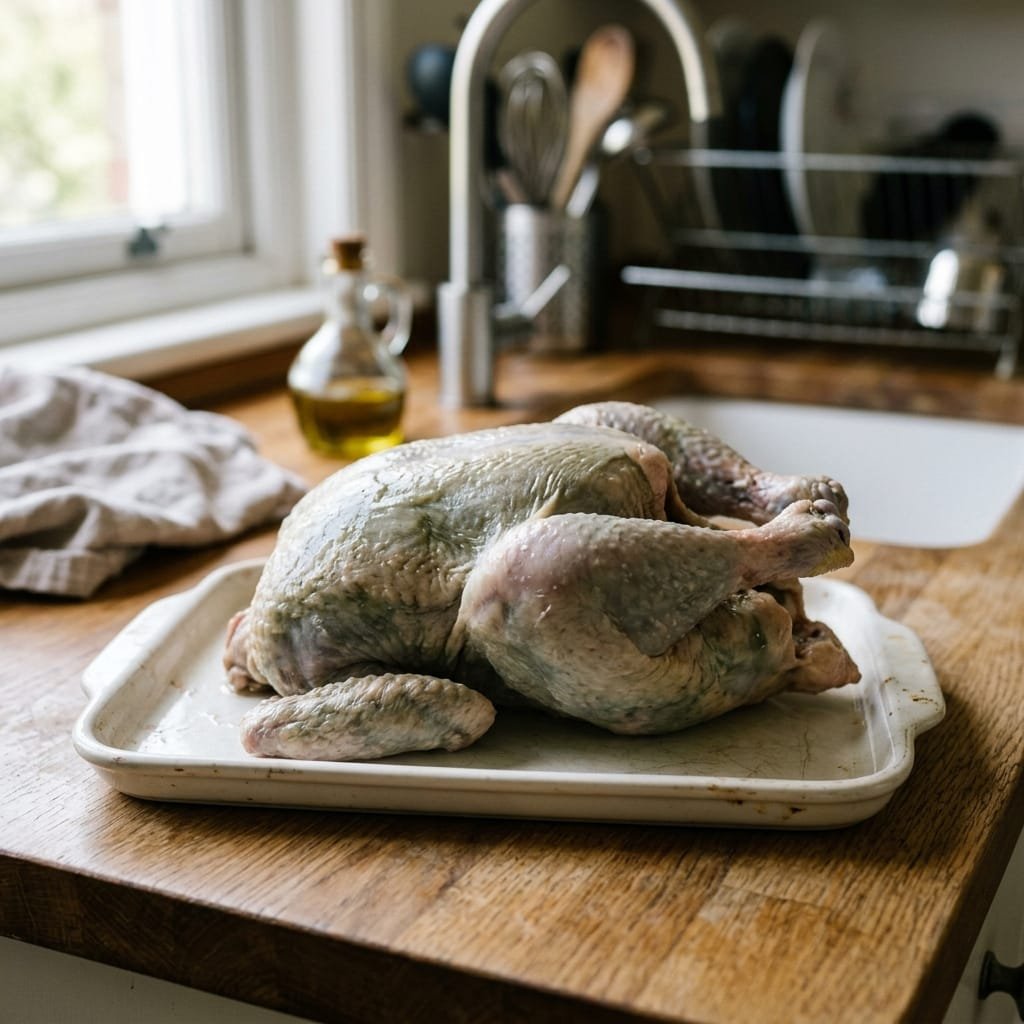
Instead, one section looks grayish, greenish, or noticeably different from the rest.
That can immediately raise an important question:
Is the chicken still safe to eat?
The answer isn’t as simple as “any color change means the chicken is bad.” Raw poultry can naturally vary in color, and color alone cannot reliably determine whether meat is safe. However, an unusual greenish or grayish appearance—especially when combined with other signs of spoilage—should not be ignored.
Raw Chicken Is Not Always the Same Color
Fresh poultry doesn’t necessarily have one perfectly uniform shade.
Chicken can naturally range from pink to pale pink, white, or slightly darker depending on the muscle and other factors. USDA explains that poultry color is influenced largely by myoglobin, a pigment in muscle tissue. Muscles that are used more can contain more myoglobin and therefore appear darker.
So seeing a slightly different shade in one part of a chicken breast doesn’t automatically mean the meat has spoiled.
The situation becomes more concerning when the unusual color is accompanied by other changes.
What About a Greenish Color?
A distinctly green or gray-green area deserves caution.
Color changes can occur for different reasons, and you cannot identify the cause simply by looking at one photograph.
If the chicken also has an unpleasant odor, sticky or slimy texture, or other obvious signs of deterioration, it is better not to eat it.
USDA notes that spoilage bacteria can cause foods to deteriorate and develop unpleasant odors, tastes, and textures.
Don’t Use Color Alone to Decide Whether Chicken Is Safe
This is one of the most important food-safety points.
A chicken piece can look normal and still contain harmful bacteria.
Likewise, a color difference doesn’t necessarily mean harmful bacteria are present.
USDA specifically states that visual indicators such as color and texture are not reliable ways to determine whether food has reached a safe cooking temperature. A food thermometer is the reliable method for checking doneness.
That’s why “it looks fine” isn’t a food-safety test.
What About Smell?
Smell can provide information about spoilage, but it isn’t a guarantee of safety.
If raw chicken has an obviously unpleasant or abnormal odor, don’t try to mask it with seasoning or cooking.
However, the absence of a bad smell does not prove that the chicken is safe, because disease-causing bacteria may not produce an obvious odor.
Food safety therefore depends on proper storage and handling as well as cooking.
What If the Chicken Feels Slimy?
Texture is another useful warning sign.
Raw chicken naturally feels moist, but meat that has developed an unusually sticky or slimy surface can indicate deterioration, particularly when combined with an unpleasant smell or abnormal appearance.
If the chicken has multiple signs of spoilage, the safest choice is to discard it rather than attempting to “cook the problem away.”
Could Packaging Affect the Color?
Yes.
The appearance of raw poultry can change depending on how it has been packaged and stored.
Changes in oxygen exposure can affect the appearance of meat pigments. That’s one reason color should always be interpreted alongside storage conditions and the overall condition of the product.
A small color difference doesn’t automatically establish spoilage.
How Cold Should Raw Chicken Be?
Raw poultry is a perishable food and should be kept refrigerated at 40°F (4.4°C) or below, according to USDA guidance. Refrigeration slows the growth of harmful bacteria.
If chicken has been left at unsafe temperatures for too long, don’t rely on its appearance to decide whether it is safe.
When in doubt about how the food was stored, it’s safer to follow food-safety guidance rather than judging it by color.
Don’t Taste Raw Chicken to “Check” It
Never taste raw chicken to determine whether it is safe.
Raw poultry can carry bacteria that cause foodborne illness, and tasting a tiny amount doesn’t provide a reliable safety test.
Instead, follow proper storage, handling, and cooking practices.
How Should Raw Chicken Be Handled?
Raw chicken should be kept separate from foods that will be eaten without cooking.
USDA recommends washing hands, utensils, cutting boards, countertops, and other surfaces after handling raw poultry to reduce cross-contamination.
That means you shouldn’t place cooked food on the same plate that previously held raw chicken unless the plate has been properly washed.
Also keep raw chicken juices away from salads, fruit, bread, and other ready-to-eat foods.
What Temperature Should Chicken Reach?
When cooking chicken, don’t rely on the meat’s color to determine whether it is done.
USDA recommends cooking poultry to an internal temperature of 165°F (73.9°C). A food thermometer should be placed in the thickest part of the meat to check the temperature.
This is much more reliable than judging the center by whether it looks white or pink.
What If You Notice the Strange Color Before Cooking?
Take a moment to evaluate the entire package.
Ask:
- Does the chicken have an unusual odor?
- Is the surface unusually sticky or slimy?
- Is the discoloration extensive or getting worse?
- Has the chicken been properly refrigerated?
- Is the packaging damaged or leaking?
- Has it been stored longer than recommended?
- Are there several signs of deterioration rather than just a color difference?
If you have multiple concerns about the product, don’t take the risk.
When Should You Throw It Away?
If raw chicken has obvious spoilage characteristics—particularly a combination of unusual discoloration, unpleasant odor, and deteriorated texture—the safest decision is to discard it.
Don’t try to remove the discolored section and cook the rest as though nothing happened.
And don’t assume that cooking spoiled food automatically makes it acceptable to eat.
Cooking is essential for killing harmful bacteria, but it isn’t a method for turning obviously spoiled food back into fresh food.
The Chicken in the Photo
The grayish-green discoloration shown in the example is not enough by itself to identify the cause.
It could represent a visual change that needs to be evaluated in context rather than automatically being labeled as bacterial contamination.
The important food-safety lesson is this:
Don’t use one visual clue to decide whether raw chicken is safe.
Consider its storage history, appearance, odor, and texture, and always cook poultry to the recommended internal temperature.
Final Takeaway
A strange color in raw chicken can be alarming, but color alone cannot tell you whether poultry is safe or unsafe.
Some natural color variation is normal. But if unusual discoloration appears together with an unpleasant odor, slimy texture, or other obvious signs of spoilage, it’s not worth taking a chance.
Keep raw chicken properly refrigerated, prevent cross-contamination, and use a food thermometer when cooking.
If your chicken looks noticeably different and you aren’t confident about its storage or condition, the safest choice is to throw it away rather than gamble with food poisoning.