
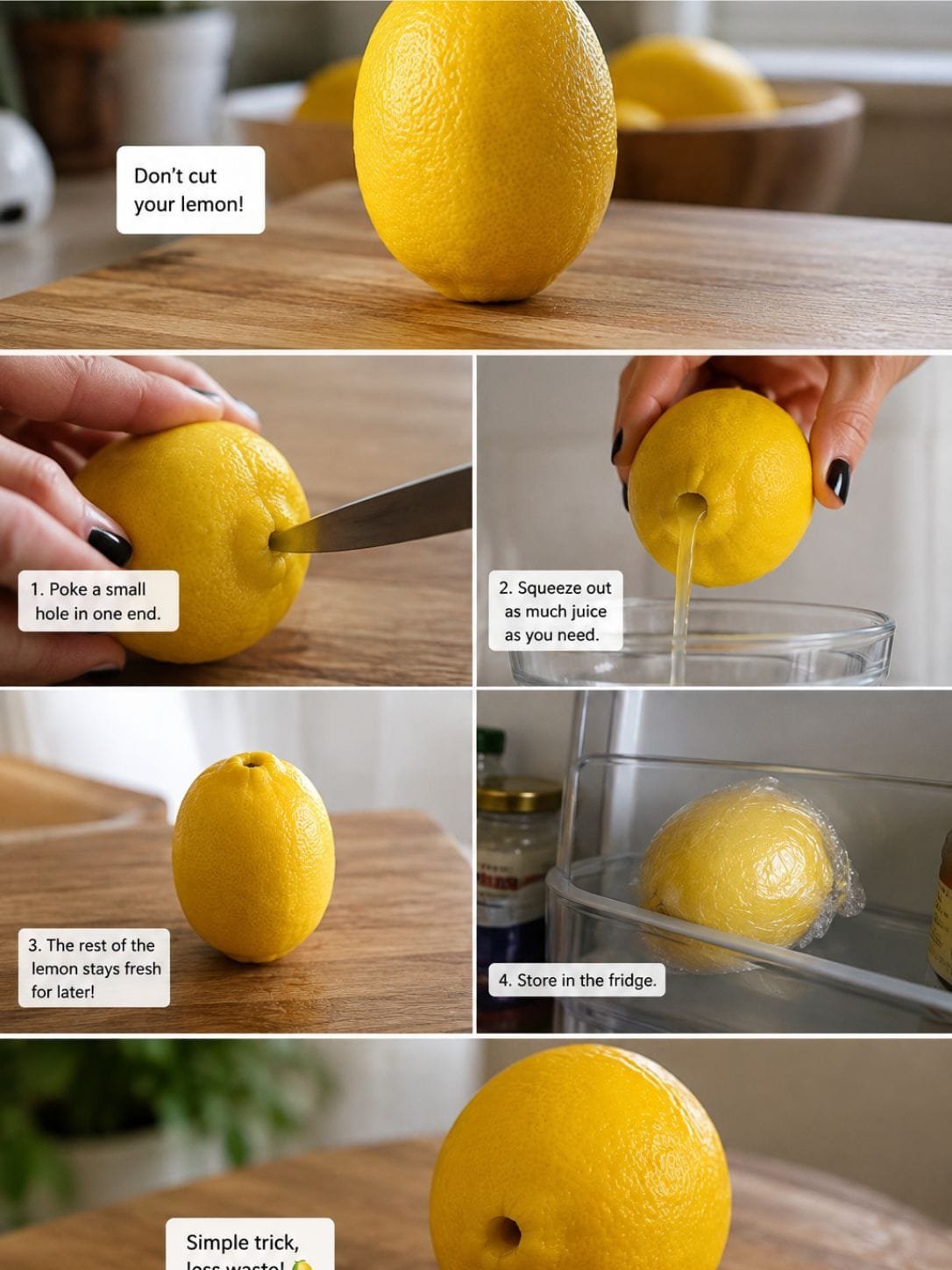
There’s a simple kitchen trick that can help you use just the amount of juice you need while keeping the remaining lemon intact.
It looks almost too simple—but once you see how it works, you may wonder why you were always cutting lemons the traditional way.
Table of Contents
ToggleThe problem with cutting the whole lemon
When you cut a lemon in half, a large amount of the juicy interior becomes exposed to air.
That exposed surface can gradually lose moisture, and the cut side can dry out or become less appealing. The lemon may still be usable, but you often end up with a half lemon sitting in the refrigerator that gets forgotten.
And if you only needed a tablespoon or two of juice, you’ve exposed an entire half of the fruit for a very small amount of juice.
That’s where this little trick comes in.
The simple lemon trick
Instead of slicing the lemon completely in half, make a small opening near one end of the whole lemon.
Then gently squeeze the lemon over a bowl, glass, or directly into whatever you’re preparing.
Because you’re taking juice through a small opening rather than exposing an entire cut surface, you can take only what you need and leave the rest of the lemon whole.
It’s especially handy when a recipe calls for just a little lemon juice.
Here’s the basic idea:
1. Start with a clean lemon.
Wash the outside of the lemon under running water and dry it.
2. Make a small opening.
Using a clean, sharp utensil, make a small hole near one end of the lemon.
You don’t need to cut the lemon in half.
3. Squeeze out what you need.
Hold the lemon over a clean bowl and gently squeeze. Depending on the lemon, you may get a surprisingly useful amount of juice.
4. Store the remaining lemon properly.
Once you’ve finished, cover the opening and refrigerate the lemon rather than leaving it on the counter.
And that’s it.
Why this trick is useful
The biggest advantage isn’t some magical preservation effect.
It’s portion control.
If you regularly use small amounts of lemon juice, this method can help you avoid unnecessarily cutting an entire lemon.
Think about how often you might use just:
- A squeeze over grilled fish
- A little juice in tea
- A few drops in a salad dressing
- Lemon juice for avocado
- A splash in homemade sauces
- A little juice in a marinade
- A few drops for cooking vegetables
For those situations, cutting a whole lemon in half can feel excessive.
The small-opening method gives you another option.
But does it really keep the lemon fresh longer?
This is where viral kitchen hacks often get exaggerated.
Making a tiny hole doesn’t guarantee that a lemon will stay fresh for a specific number of days, and it shouldn’t be treated as a scientifically proven preservation method.
What does make sense is that you’re leaving much less of the interior exposed than you would after cutting the lemon completely in half.
Proper storage still matters.
The FDA recommends keeping perishable produce appropriately refrigerated and advises storing cut produce in the refrigerator. A refrigerator should be at 40°F (4°C) or below.
So think of this trick as a convenient way to use less of the lemon at once, rather than a miracle method for making lemons last indefinitely.
The part most people forget
If you’ve already made an opening in the lemon, don’t just throw it back into the refrigerator uncovered.
Place it in a clean container or sealed food-storage bag, or otherwise protect the exposed area from contact with other foods.
Keeping produce covered also helps prevent it from picking up odors and reduces opportunities for cross-contamination.
And remember: refrigeration slows bacterial growth; it doesn’t make food immune to spoilage.
A small trick that can reduce waste
There’s another reason this idea is appealing: you may waste less lemon.
A common kitchen situation goes like this:
You need one tablespoon of lemon juice.
You cut the lemon in half.
You squeeze one half.
You put the other half in the refrigerator.
A few days later, you discover the forgotten lemon half sitting behind something else.
Now compare that with using only a small opening and taking what you need.
The entire lemon remains available for later use.
It’s a tiny change, but small habits like this can make a difference when you’re trying to use ingredients more efficiently.
What if you need a lot of lemon juice?
Then don’t force the hack.
If you’re making lemonade, a large batch of dressing, lemon bars, or another recipe requiring lots of juice, cutting and juicing several lemons normally is much easier.
This trick makes the most sense when you only need a small amount.
That’s what makes it a practical kitchen hack rather than a rule you have to follow every time you use a lemon.
One more important tip: clean the lemon first
Before cutting, piercing, or squeezing any fresh produce, wash your hands and use clean kitchen tools.
The FDA recommends rinsing produce under running water before preparing it and notes that washing the outside first helps prevent dirt or bacteria from being transferred to the inside when the fruit is cut.
Don’t use soap or household cleaners on the lemon.
Plain running water is enough for cleaning the outside.
And don’t leave the lemon sitting out forever
Once you’ve started preparing fresh produce, don’t treat the kitchen counter like a refrigerator.
For foods that require refrigeration, FDA guidance recommends refrigerating promptly, and the commonly used two-hour rule is important for foods that can support bacterial growth.
So after getting the juice you need, cover the lemon and put it in the refrigerator.
The traditional method isn’t wrong
This is worth saying because social-media hacks often make ordinary methods sound dangerous.
There is absolutely nothing wrong with cutting a lemon in half.
It’s quick, easy, and perfectly practical when you need a lot of juice.
The small-hole method is simply an alternative for those moments when you need a little juice but want to leave most of the lemon intact.
Sometimes the best kitchen hacks aren’t complicated.
They’re just small changes to something you’ve been doing the same way for years.
Would you try this?
The next time a recipe asks for only a teaspoon or two of lemon juice, you don’t necessarily have to sacrifice half the lemon.
Try the small-opening method and see whether it works well for the way you cook.
You might find that it’s especially convenient for everyday things like tea, salads, fish, vegetables, and quick homemade dressings.
And if you already use this trick, there’s a good chance someone else in your family will say:
“Why didn’t you show me this years ago?” 🍋
One important note: the method is a practical kitchen trick, not a guarantee that the lemon will remain fresh indefinitely. Keep the partially used lemon covered and refrigerated, and discard it if you notice mold, an unusual smell, or obvious spoilage.