
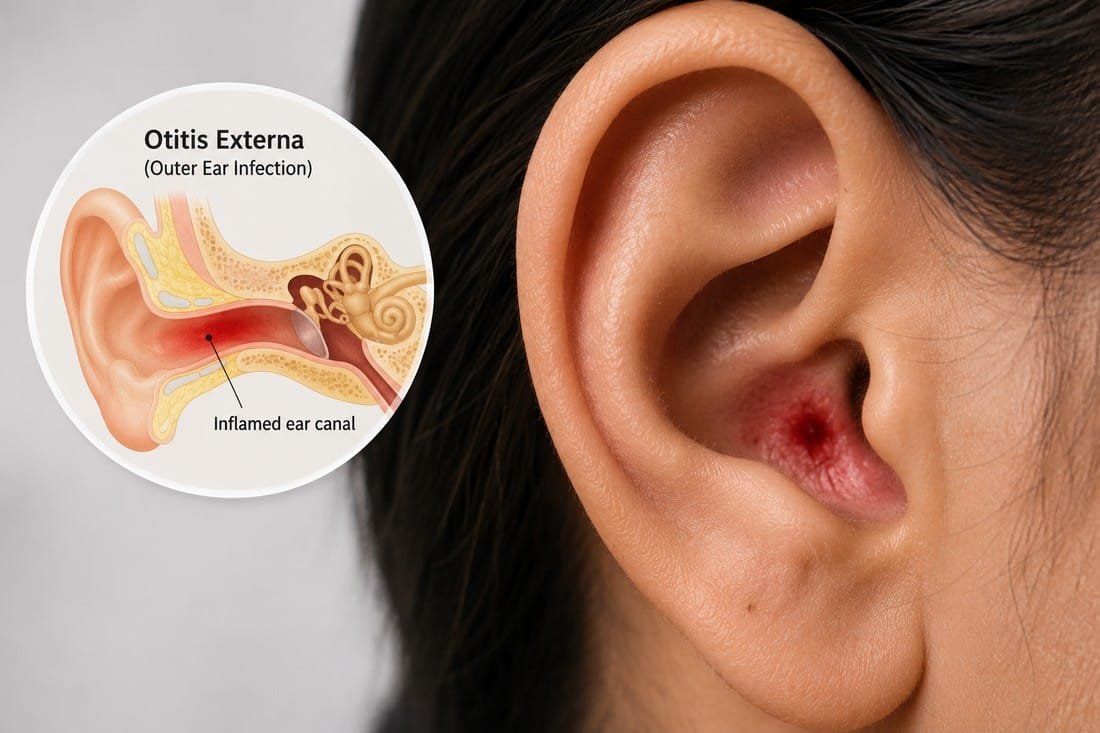
A Red Spot Inside Your Ear Can Mean Your Body Is… Here’s What It Could Be
A red, irritated area inside the ear canal can have several causes, but one of the most common is otitis externa, also known as an outer-ear infection or swimmer’s ear.
Otitis externa happens when the skin lining the ear canal becomes inflamed, sometimes because of bacteria or fungi and sometimes because the skin has simply become irritated or damaged.
The condition can start with something that seems minor—water entering the ear, scratching, using cotton buds, or irritating the skin—but inflammation can develop afterward.
What Is Otitis Externa?
Otitis externa affects the ear canal between the outer ear and the eardrum. Unlike a middle-ear infection, it involves the skin of the ear canal itself.
Bacterial infections are a common cause, although fungal infections, allergies and skin irritation can also produce inflammation.
This is why a red or inflamed area inside the ear should not automatically be assumed to be one particular disease. Several conditions can look similar.
However, when redness is accompanied by ear pain, itching, swelling or discharge, otitis externa becomes an important possibility.
Why Does Otitis Externa Happen?
The ear canal has a natural protective environment. Problems can develop when that protection is disrupted.
Water trapped inside the ear
Frequent exposure to water can leave the ear canal moist. This can make it easier for bacteria or fungi to multiply, which is why the condition is commonly called “swimmer’s ear.”
You don’t have to be a regular swimmer to develop it. Repeated exposure to water during bathing or showering can also contribute.
Scratching the ear
An itchy ear often leads people to scratch it with a finger or another object.
That can create tiny injuries in the skin. Once the protective skin barrier is damaged, inflammation and infection can become more likely.
Cotton buds and ear cleaning
One of the most common mistakes is trying to clean deep inside the ear with cotton buds.
They can irritate or scratch the delicate skin and can also push earwax farther into the canal. Repeated trauma can contribute to inflammation and infection.
Shampoo, soap and hair products
Soap, shampoo, hair dye and other products can irritate the skin of the ear canal in some people.
This irritation can sometimes trigger inflammation even when there isn’t a bacterial infection.
Eczema or psoriasis
People with eczema, psoriasis or other skin conditions may be more prone to inflammation of the ear canal.
What Symptoms Usually Come With It?
A red or inflamed ear canal is usually more meaningful when it occurs together with other symptoms.
Common symptoms of otitis externa include:
- Ear pain or tenderness
- Itching inside the ear
- Redness and swelling
- Fluid or discharge
- A blocked sensation
- Temporary hearing reduction
- Discomfort when moving the jaw
- Sometimes ringing in the ear
Pain can sometimes become surprisingly strong because the ear canal is narrow and swelling can put pressure on the surrounding tissue.
It Could Also Be a Small Boil
Not every localized red bump inside the ear is generalized otitis externa.
A furuncle, essentially a boil involving a hair follicle, can develop in the ear canal. It typically appears as a localized, painful, red swelling rather than redness throughout the entire canal.
These can become extremely tender and may eventually drain pus or blood.
A painful localized bump should not be squeezed or punctured at home, particularly inside the ear.
What About a Fungal Infection?
Fungal infection of the ear canal, called otomycosis, is another possibility.
Fungal infections can cause considerable itching, a feeling of fullness and inflammation. Some fungal infections can also produce visible debris inside the canal.
The treatment is different from that used for many bacterial infections, which is another reason not to assume that every red or itchy ear needs the same medication.
Can Earwax Cause Problems?
Earwax itself is normal and actually helps protect the ear.
But excessive buildup can sometimes cause irritation or contribute to water becoming trapped behind the wax. That can increase the risk of inflammation or infection.
Trying to remove the wax aggressively can make the situation worse.
The ear generally has its own mechanism for moving wax outward, so repeatedly inserting objects into the canal isn’t a good cleaning strategy.
When Should You See a Doctor?
A small amount of irritation may settle after the trigger is removed, but certain symptoms deserve medical attention.
You should seek medical advice if you have:
Severe or increasing ear pain
Pain that continues to worsen shouldn’t simply be ignored.
Pus or fluid coming from the ear
Discharge can occur with an ear infection and should be assessed, especially when accompanied by pain or hearing changes.
Hearing changes
Swelling and debris can partially block the ear canal and temporarily affect hearing.
Fever or feeling unwell
An ear problem accompanied by fever or significant illness warrants medical assessment.
Symptoms that keep getting worse
If the pain, swelling or discharge is increasing rather than improving, professional evaluation is important.
One Group Needs Extra Caution
People with diabetes or a weakened immune system need to take significant ear infections particularly seriously.
A rare but serious complication called necrotizing (malignant) otitis externa can occur, particularly in higher-risk people. It can involve severe pain, persistent infection and spread into deeper tissues.
This is uncommon, but severe or persistent ear pain—especially when symptoms seem much worse than the visible findings—should not be ignored.
What Should You Do If You Notice Ear Redness?
The safest approach is simple:
Don’t poke it.
Don’t scratch inside the ear.
Don’t try to squeeze a bump.
Don’t insert cotton buds deep into the canal.
And don’t start random ear drops without knowing what is causing the problem. Some products can further irritate an already inflamed ear canal.
If symptoms are significant or persistent, a healthcare professional can examine the ear canal and determine whether the problem is bacterial infection, fungal infection, dermatitis, a boil or another condition.
The Bottom Line
A red or irritated area inside the ear is not a diagnosis by itself.
One of the most common explanations is otitis externa, an inflammation or infection of the ear canal. It can be triggered by bacteria, fungi, water, scratching, cotton buds, chemical irritation, eczema or psoriasis.
A localized painful bump may instead be a furuncle, while intense itching and characteristic debris can occur with a fungal infection.
The important clues are the symptoms that accompany the redness:
Pain + swelling + discharge → infection becomes more concerning.
Severe itching + irritation → inflammation, dermatitis or fungal infection may be possible.
A very painful localized bump → a boil/furuncle may be involved.
And if symptoms are severe, worsening, persistent, or associated with hearing loss, fever or significant discharge, the ear should be examined rather than diagnosed from appearance alone.
Your ear canal is delicate. Sometimes the best thing you can do is stop trying to clean or investigate it yourself and let a professional take a proper look.