
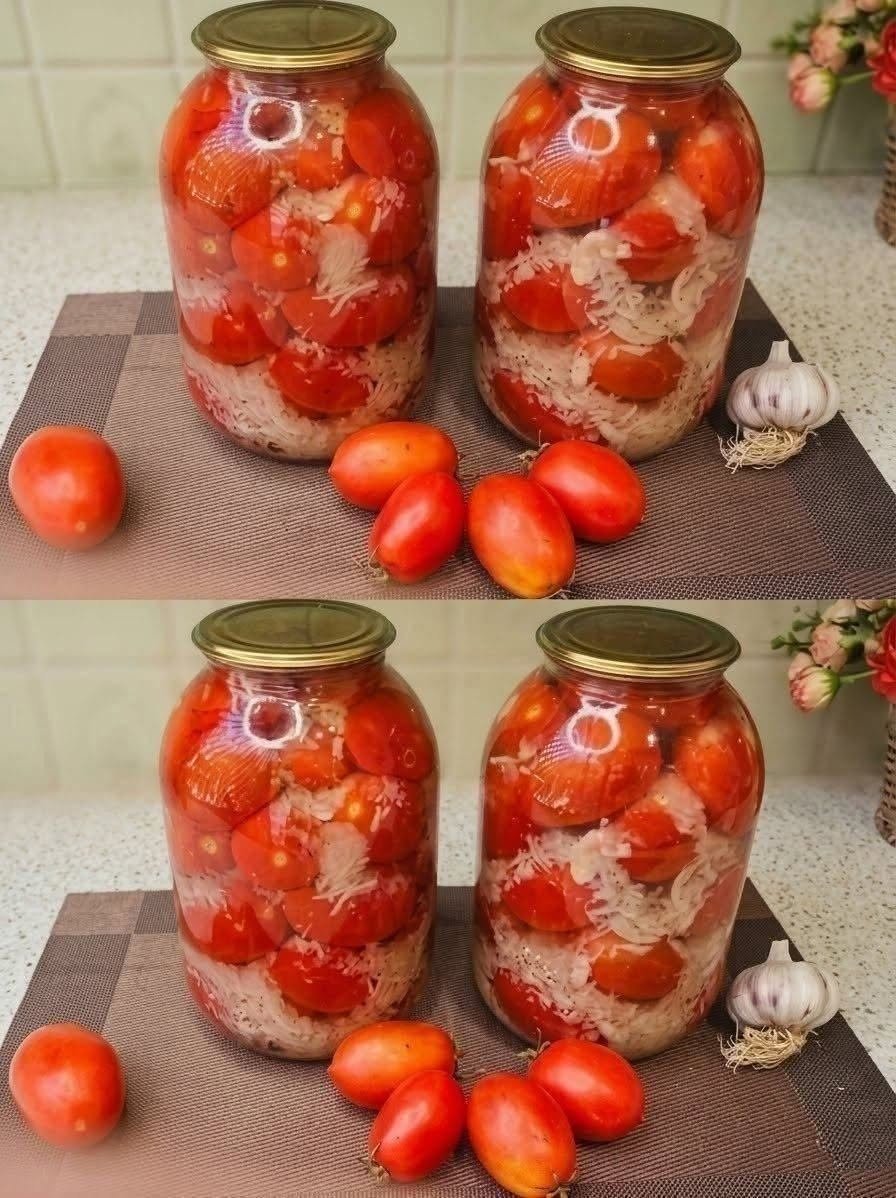
That’s why my neighbor envies me: I’ve been storing tomatoes this way for 10 years, and they’re always as fresh as summer. This recipe is too good to keep to myself!
Every summer, when tomatoes are at their peak — firm, fragrant, and practically free at the market — I pack them into jars with garlic, horseradish, and dill, pour over a hot spiced marinade, and seal them up. Months later, in the dead of winter, I open a jar and the tomatoes taste like they were picked yesterday: bright, firm, and bursting with flavor.
Preserved Tomatoes in Jars is the old-fashioned canning method that keeps summer alive all year. No freezer burn, no mushy thawed tomatoes — just perfect, pickled tomatoes ready whenever you need them.
Why Preserve Tomatoes This Way
Freezing tomatoes ruins their texture — they come out soft and watery. Store-bought canned tomatoes can’t compare to homegrown or market-fresh ones. But jarred tomatoes in a hot marinade keep their shape, their bite, and their summer flavor for a year or more on a pantry shelf.
The secret is the combination of horseradish and garlic in the jar. The shredded horseradish (that white “snow” you see packed between the tomatoes) adds a gentle heat and acts as a natural preservative, while garlic infuses everything with its unmistakable aroma. Together with dill and a properly balanced vinegar marinade, they create tomatoes that are tangy, savory, and absolutely addictive.
Recipe Overview
- Prep Time: 30 minutes
- Processing Time: 20 minutes
- Total Time: About 50 minutes (plus cooling)
- Yield: About 4 large jars (1.5 liter each)
- Shelf Life: 12+ months in a cool, dark place
- Ready to Eat: After 2–3 weeks of marinating
- Difficulty: Easy — no special equipment needed
Ingredients
For the Jars
- Firm ripe plum tomatoes: about 3 kg (6.5 lbs) — Roma or similar meaty varieties
- Garlic: 8–10 cloves, peeled
- Fresh horseradish root: about 100g (3.5 oz), peeled and finely shredded
- Fresh dill: 4–8 sprigs or dill heads with seeds
- Bay leaves: 4 (one per jar)
- Black peppercorns: 5–6 per jar
For the Marinade (per 1 liter / 4 cups of water)
- Water: 1 liter
- Salt: 1 tablespoon (non-iodized — pickling or kosher salt)
- Sugar: 2 tablespoons
- Vinegar (9%): 50 ml (about 3½ tablespoons)
Tomato choice is everything. Use firm, ripe, unblemished plum or Roma tomatoes — meaty varieties with fewer seeds hold their shape in the jar. Overripe or soft tomatoes will turn to mush. Wash them well and prick each one near the stem with a toothpick — this tiny hole prevents the skins from bursting when the hot marinade hits them.
Step-by-Step Instructions
Step 1: Sterilize the Jars and Lids
Wash the jars and lids in hot soapy water, rinse well, then sterilize. The easiest method: place clean jars in a cold oven, heat to 250°F (120°C), and hold for 15 minutes. Boil the lids in water for 5 minutes. Keep everything hot until filling — packing into cold jars risks cracking.
Step 2: Prepare the Flavor Base
Peel the garlic cloves. Peel the horseradish root and shred it finely on a grater — this is the white “snow” that goes between the tomatoes. Wash the dill. Have the bay leaves and peppercorns ready.
Step 3: Pack the Jars
Into each hot, sterilized jar, place: a sprig of dill, 2 garlic cloves, a generous pinch of shredded horseradish, 1 bay leaf, and 5–6 peppercorns. Then pack the tomatoes in tightly — snug but not crushed. Tuck more shredded horseradish between the layers of tomatoes as you go, so every tomato sits against that spicy, preservative goodness.
Step 4: First Pour (Blanching)
Bring a kettle of plain water to a rolling boil. Pour the boiling water over the packed tomatoes, filling each jar to the top. Cover with the lids (don’t seal yet) and let stand for 15–20 minutes. This pre-heats the tomatoes and jars, and begins the sterilization of the contents.
Step 5: Make the Marinade
Carefully drain the water from the jars back into a large pot (a special draining lid makes this easy, or hold the lid ajar). Measure the drained water — for every liter, add 1 tablespoon salt and 2 tablespoons sugar. Bring to a full boil, stirring to dissolve. Remove from heat and stir in the vinegar (50 ml per liter of water).
Step 6: Final Pour and Seal
Immediately pour the boiling marinade over the tomatoes, filling each jar right to the brim. Seal tightly with the hot sterilized lids at once. Work quickly — the marinade must be boiling hot when it goes in.
Step 7: Cool Slowly
Flip each sealed jar upside down and wrap them all in a thick blanket or towels. Leave them wrapped for 12–24 hours until completely cool. This slow cooling is important — it completes the sealing process and lets the lids vacuum-seal properly. You may hear the lids “pop” as they seal.
Step 8: Store
Once cool, check the seals (lids should be concave and not flex when pressed). Store the jars in a cool, dark place — a pantry, cellar, or cupboard. They are ready to eat after 2–3 weeks, once the marinade has fully penetrated the tomatoes, and keep for 12 months or more.
Tips for Perfect Jarred Tomatoes
- Prick every tomato near the stem with a toothpick — this is the single best trick to prevent split skins.
- Use non-iodized salt. Iodized table salt can cloud the brine and give off-flavors. Pickling, kosher, or sea salt only.
- Pack tightly but gently. Air pockets are the enemy; crushed tomatoes are too. Find the middle ground.
- Keep jars hot. Pouring boiling marinade into a cold jar can crack the glass. Pre-heat with the first pour.
- Don’t skip the blanket. Slow cooling under insulation is what guarantees a strong vacuum seal.
- Horseradish is the signature. Don’t substitute it away — it gives these tomatoes their distinctive bite and helps preserve them.
Easy Variations
Spicy Version
Add a small hot chili pepper (or half of one) to each jar along with the garlic. The heat builds slowly over the weeks of marinating.
Sweet Dill Pickle Style
Increase the sugar to 3 tablespoons per liter of water for a sweeter, milder marinade — closer to bread-and-butter style.
Herb Garden Mix
Add a few leaves of fresh basil, a sprig of tarragon, or celery leaves to the jars alongside the dill for a more complex herbal background.
Cherry Tomato Jars
Use firm cherry tomatoes instead of plums — they make beautiful bite-size jarred tomatoes, perfect for appetizer platters. Reduce the first-pour standing time to 10 minutes.
How to Use Your Jarred Tomatoes
- Straight from the jar — as a side dish with any hearty meal
- On appetizer platters — alongside cheeses, cured meats, and bread
- Chopped into salads — instant summer flavor in winter salads
- With potatoes — the classic pairing: boiled or mashed potatoes + pickled tomatoes
- The brine itself — don’t throw it away; it’s excellent in salad dressings and marinades
Storage & Food Safety
Unopened jars: Store in a cool, dark place for up to 12–18 months. A pantry or cellar around 50–68°F (10–20°C) is ideal.
Opened jars: Refrigerate and use within 2–3 weeks. Always use a clean fork to remove tomatoes — never fingers.
Check before eating: The lid should be sealed concave. If a jar’s lid bulges, the brine is cloudy with an off smell, or the seal has failed — discard it. When in doubt, throw it out. Properly sealed jars with clear brine and firm tomatoes are perfectly safe.
Common Mistakes to Avoid
- Using overripe tomatoes. Soft tomatoes disintegrate in the jar. Firm and ripe is the rule.
- Skipping the toothpick prick. Unpricked tomatoes split their skins in the hot marinade.
- Iodized salt. It clouds the brine and can affect flavor. Always use pickling or kosher salt.
- Cold jars + boiling marinade. Thermal shock cracks glass. Pre-heat jars with the first hot-water pour.
- Opening too soon. The tomatoes need 2–3 weeks for the marinade to fully penetrate. Patience pays.
- Storing in warmth or light. Heat and sunlight degrade both flavor and safety. Cool and dark, always.
Frequently Asked Questions
How long do jarred tomatoes really last?
Properly sealed and stored in a cool, dark place, they keep 12–18 months. In practice, most families finish them long before that.
Do I need a pressure canner?
No. This is a vinegar-marinade (pickling) method, not low-acid canning — the acidity makes it safe with the hot-pour method. Never skip the vinegar or reduce it.
Why did my brine turn cloudy?
Usually iodized salt, or starch from the tomatoes. If the seal is intact and there’s no off smell, cloudiness from salt is harmless — but switch to pickling salt next time.
Can I reuse the brine?
For a second batch of fresh tomatoes, yes — bring it back to a boil first. Don’t reuse it more than once.
What does the horseradish do?
It adds a distinctive gentle heat and pungency that makes these tomatoes special, and traditionally it’s believed to help keep the preserve crisp and safe.
My tomatoes floated to the top — is that bad?
No, it’s normal. Packing tightly minimizes it, but some floating is harmless as long as the jar is sealed and the tomatoes stay submerged in brine.
You May Also Like
If you love preserving summer flavors, try our Marinated Cucumber Salad for a quick fresh pickle, or the Low-Carb Stuffed Tomatoes “In The Snow” appetizer for another tomato showstopper. Browse the Recipes section for more.
Final Thoughts
Preserved Tomatoes in Jars are how summer gets saved. One afternoon of packing jars, and you’ll be opening sunshine all winter long — tomatoes as fresh-tasting as the day they were picked, with that garlicky, horseradish-kissed bite no store jar can match.
That’s why my neighbor envies me. And now you know the secret too.