
Red Onion Water Recipe: Ingredients, Preparation, and Kidney Health Facts
Red onion water is one of the simplest homemade infusions you can make: a red onion, a cup of water, and a little patience. It has become popular online, especially in posts about kidney health and creatinine levels. Before you try it, here is the honest picture — the exact recipe, how to prepare it, and what the evidence actually says about kidneys.
What Is Red Onion Water?
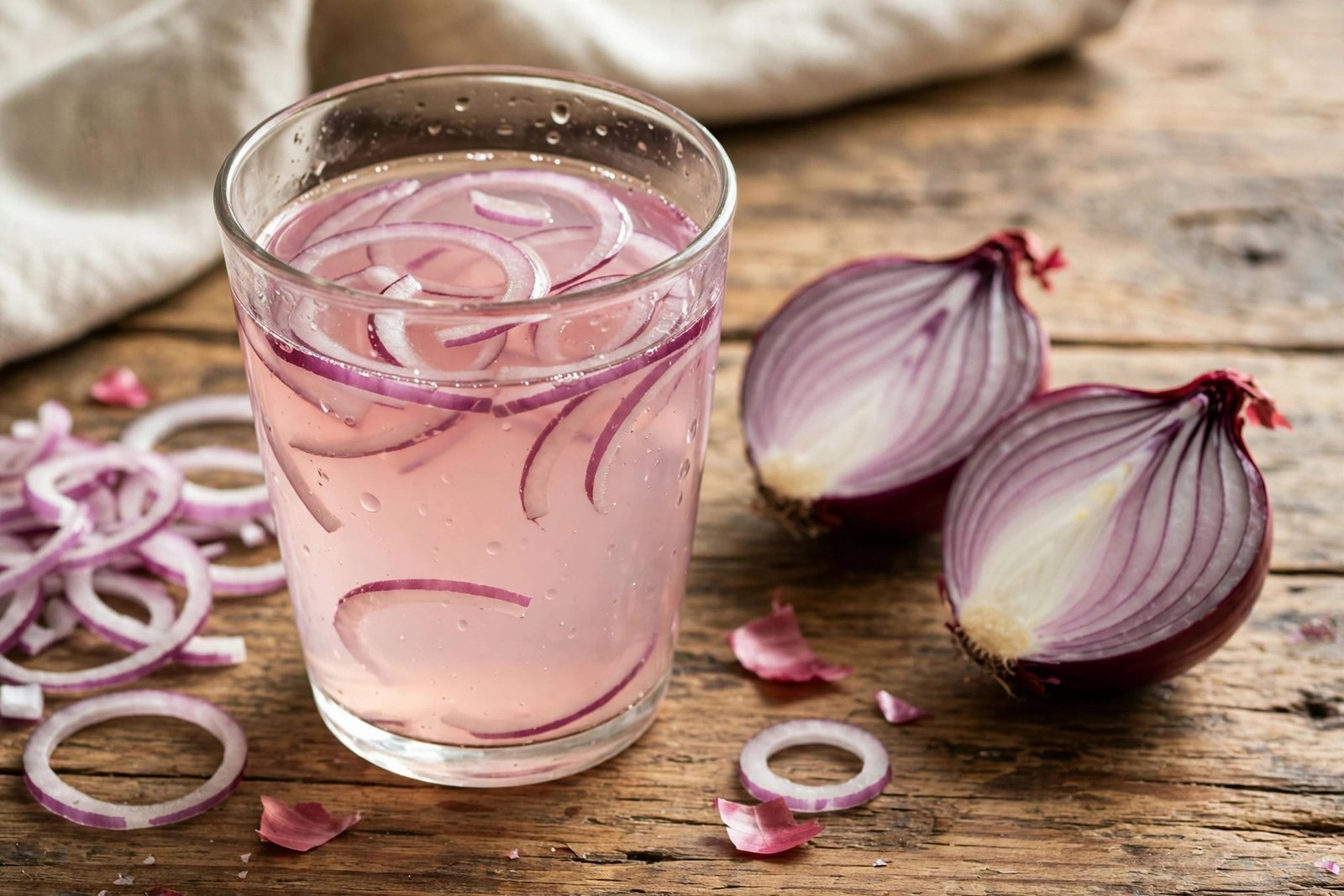
Red onion water is a simple infusion. You slice a red onion into thin rings, cover it with drinking water, and let it soak for 15 to 30 minutes. The water picks up a pale pink color and a mild onion flavor. Some people drink the infused water; others eat the soaked onion with a meal or in a salad. It is a food, not a medicine, and it is important to be clear about that from the start.
The Recipe
Ingredients (1 glass)
- 1 medium red onion
- 1 cup (240 ml) drinking water
- 1 teaspoon lemon juice (optional)
Directions
- Peel and wash the red onion thoroughly.
- Slice the onion into thin rings.
- Place the onion slices in a clean glass bowl or jar.
- Add the drinking water and let the onion soak for 15 to 30 minutes.
- Add lemon juice if desired.
- Drink the infused water, and enjoy the soaked onion with a meal or add it to a fresh salad.
Prep time: 5 minutes, plus 15 to 30 minutes soaking. Servings: 1 glass.
Nutrition (per glass, water plus soaked onion)
About 50 calories, 1 g protein, 0 g fat, about 9 g natural sugar (from the onion), and about 2 g fiber. Red onions also provide vitamin C, folate, potassium, and plant compounds called flavonoids, including quercetin, which gives red onions their purple color. The strained water alone is only about 5 to 10 calories — most of the nutrition stays in the onion itself.
What Red Onions Actually Contain
Red onions are nutritious vegetables that fit well into a balanced diet. They contain flavonoids, including quercetin, a plant compound studied for its antioxidant properties. They also provide vitamin C, which supports the immune system and helps the body absorb iron, plus small amounts of folate and potassium. Onions are low in calories and add flavor without fat or added sugar, which is why they are a staple in healthy cooking around the world.
Kidney Health Facts — The Honest Picture
This is the part that matters most, so let us be direct. Red onion water is not a proven treatment for kidney disease or high creatinine levels. There is insufficient clinical evidence that drinking red onion water restores kidney function or lowers creatinine levels within 30 minutes — or at all. The idea that a single drink can fix creatinine is a social media claim, not a medical finding.
High creatinine levels may indicate reduced kidney function, although other factors can also affect the results. Anyone with elevated creatinine should consult a healthcare professional to identify the cause and determine the appropriate next steps. People with kidney disease may need individualized advice about fluid intake and dietary choices, because the right amount of fluid and the right foods are different for each person.
That does not mean red onion water is useless. It is a light, natural drink made from a real vegetable, and red onions themselves are a healthy food. It can be part of a balanced diet. It just cannot replace medical tests, prescribed medication, or professional healthcare advice.
How to Use It
Make it fresh when you want it. Slice the onion, soak it for 15 to 30 minutes, and drink the water while it is fresh. Eat the soaked onion with your meal or toss it into a salad so nothing goes to waste. There is no special time of day required — the article gives no morning or empty-stomach instruction, so fit it into your routine wherever it feels natural. If you enjoy it, you can make it regularly as a light, flavorful drink.
Tips
- Slice it thin: thin rings release more flavor into the water in the short 15 to 30 minute soak.
- Use a glass jar: a clean glass bowl or jar lets you see the pale pink color develop, and glass does not hold onto onion smell the way plastic does.
- Add the lemon: a teaspoon of lemon juice brightens the flavor and takes the edge off the raw onion taste.
- Do not soak it overnight: 15 to 30 minutes is enough. A longer soak makes the flavor harsh and the onion soggy.
- Eat the onion too: the soaked rings are mild and slightly sweet — they are good in a salad, on a sandwich, or alongside grilled food.
Frequently Asked Questions
Does red onion water lower creatinine in 30 minutes?
No. There is insufficient clinical evidence that drinking red onion water lowers creatinine levels within 30 minutes or restores kidney function. High creatinine needs a doctor to find the cause.
Is red onion water good for kidneys?
Red onions are a healthy food and can be part of a balanced diet, but the water itself is not a proven kidney treatment. People with kidney disease should get individualized advice about fluids and diet from their healthcare professional.
How long should I soak the onion?
15 to 30 minutes is enough. That is the time given in the recipe, and a longer soak is not needed.
Should I drink it on an empty stomach in the morning?
The recipe does not specify a time. Drink it fresh whenever it suits you, and eat the soaked onion with a meal.
Can I use a white or yellow onion instead?
You can, but red onions are the ones used in this recipe, and their flavonoids and color are part of the appeal. White or yellow onions will give a milder, less colorful infusion.