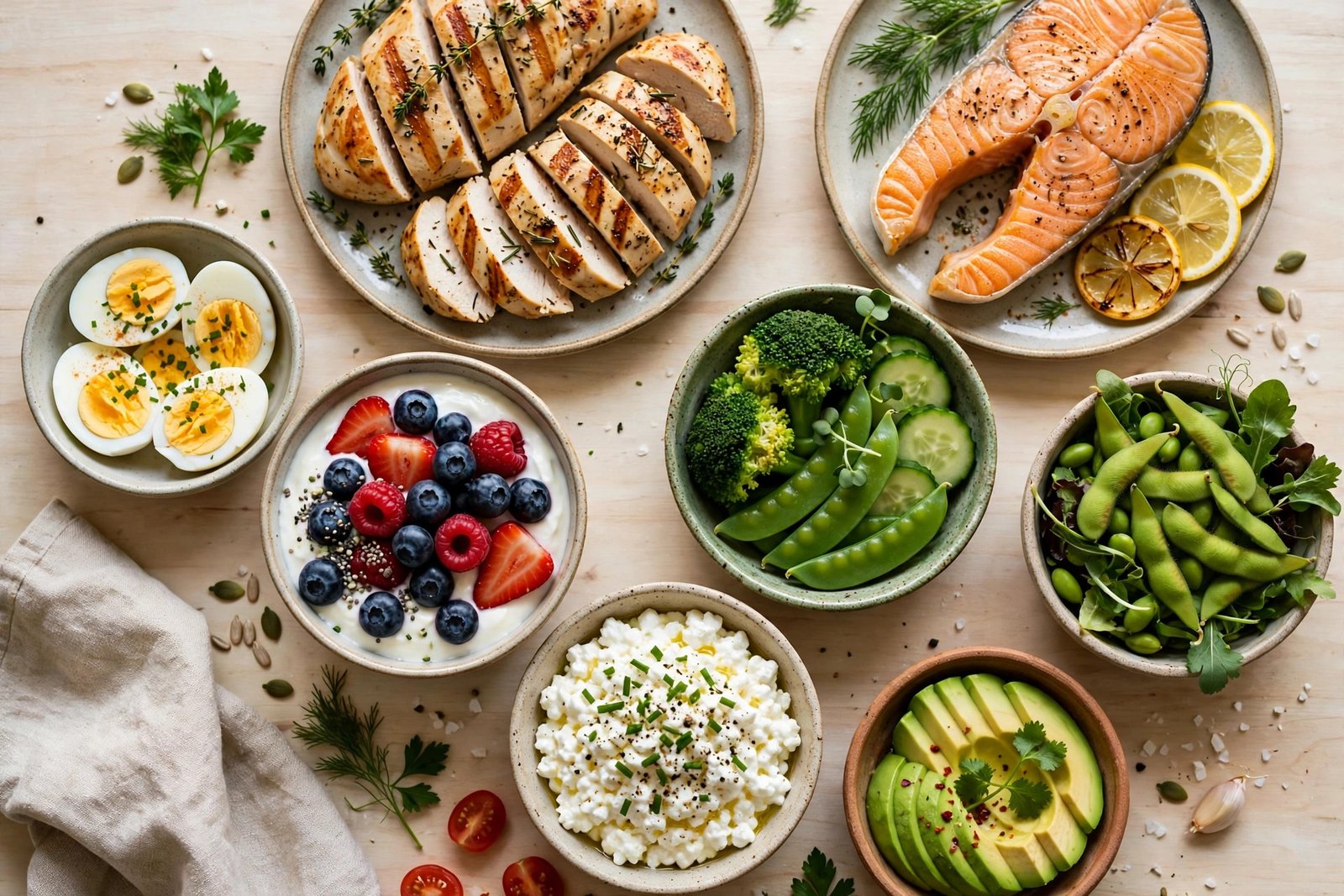
Losing weight and building muscle feels frustrating when you are constantly hungry or struggling to see results. But there is a simple fix that works for busy people: eat more protein. A high-protein meal plan keeps you full longer, helps your body burn more calories, and supports lean muscle — without hours of meal prep or eating plain chicken and broccoli every day.
This 7-day high-protein meal plan is built for real life. The meals are quick, delicious, and flexible, with vegetarian and plant-based options alongside lean meats. Whether you want to drop weight, gain strength, or simply eat better, this plan makes healthy eating effortless.
Why a High-Protein Meal Plan Works
Protein is the most filling nutrient. It controls hunger, reduces cravings, and helps you keep muscle while losing fat. It also takes more energy to digest than carbs or fat, so your body burns more calories just processing it. That combination — fullness plus a faster metabolism — is why high-protein eating is one of the most reliable ways to lose weight and keep it off.
This plan is designed to be:
- Filling and muscle-friendly: every meal centers on a solid protein source, so you stay satisfied for hours.
- Balanced: protein is paired with fiber, healthy fats, and vegetables for overall wellness.
- Flexible: lean meats, fish, eggs, dairy, and plant proteins all fit — pick what you enjoy.
- Meal-prep friendly: quick one-pan meals, wraps, and bowls that save time without losing flavor.
- Comforting: you still get satisfying, hearty food — not a diet of dry salads.
How Much Protein Should You Eat Daily?
The general rule, from Harvard Medical School, is about 0.8 grams of protein per kilogram of body weight (0.36 grams per pound). If you weigh 150 pounds (68 kg), that is around 55 grams a day as a minimum. But if you are active, trying to lose weight, or building muscle, you will do better with more — most active adults aim for roughly 90 to 110 grams a day.
A practical way to hit that target is to spread protein across the day: about 20 to 30 grams at each main meal, plus a protein-rich snack. Eating more than about 40 grams in one sitting does not give extra benefit, so spreading it out works best. After a workout, around 20 to 25 grams of protein helps muscle recovery.
Here is a quick reference for the protein in common foods, per serving:
- Chicken breast, 100 g — about 22.5 g protein
- Turkey breast, 85 g — about 25.6 g protein
- Salmon fillet, 178 g — about 39.3 g protein
- Canned tuna, 107 g — about 20.3 g protein
- Low-fat cottage cheese, 100 g — about 11 g protein
- Greek yogurt, 100 g — about 10 g protein
- One large egg — about 6 g protein
- Lean ground beef, 100 g — about 26 g protein
The 7-Day High-Protein Meal Plan
Each day below gives breakfast, lunch, a snack, and dinner, with the protein for each meal and a daily total. The plan averages about 95 to 110 grams of protein a day. Swap any meal for another day’s equivalent if you prefer — the structure matters more than the exact dish.
Day 1 — about 104 g protein
- Breakfast (20 g): Greek yogurt bowl — 200 g Greek yogurt with berries and a tablespoon of chia seeds.
- Lunch (34 g): Grilled chicken salad — 150 g grilled chicken breast over mixed greens with olive oil and lemon.
- Snack (17 g): 150 g cottage cheese with sliced cucumber or a few cherry tomatoes.
- Dinner (33 g): Baked salmon — 150 g salmon fillet with roasted vegetables.
Day 2 — about 109 g protein
- Breakfast (19 g): Veggie omelette — 2 whole eggs plus 2 egg whites with spinach, mushrooms, and a slice of whole-grain toast.
- Lunch (36 g): Turkey wrap — 120 g sliced turkey breast in a whole-wheat wrap with lettuce, tomato, and mustard.
- Snack (15 g): 150 g Greek yogurt with a small handful of almonds.
- Dinner (39 g): Lean beef stir-fry — 150 g lean ground beef with mixed vegetables and a little soy sauce, served over cauliflower rice.
Day 3 — about 95 g protein
- Breakfast (22 g): Cottage cheese bowl — 200 g cottage cheese with sliced peaches or berries.
- Lunch (27 g): Tuna and chickpea salad — 1 can of tuna with chickpeas, red onion, and lemon over greens.
- Snack (12 g): 2 boiled eggs with a pinch of salt.
- Dinner (34 g): Roast chicken thighs — 150 g chicken thighs with roasted sweet potato and green beans.
Day 4 — about 114 g protein
- Breakfast (35 g): Protein smoothie — 150 g Greek yogurt, 1 scoop of protein powder, a banana, and a spoonful of peanut butter.
- Lunch (26 g): Salmon salad — 120 g leftover or canned salmon over greens with cucumber and olive oil.
- Snack (17 g): 150 g cottage cheese with a few walnuts.
- Dinner (36 g): Turkey meatballs — 120 g turkey meatballs in marinara sauce with zucchini noodles.
Day 5 — about 108 g protein
- Breakfast (23 g): Eggs on toast — 2 eggs with 100 g cottage cheese on whole-grain toast.
- Lunch (42 g): Chicken and quinoa bowl — 150 g grilled chicken breast with a cup of cooked quinoa and roasted vegetables.
- Snack (15 g): 150 g Greek yogurt with berries.
- Dinner (28 g): Seared tuna — 150 g tuna steak with steamed broccoli and a squeeze of lemon.
Day 6 — about 108 g protein
- Breakfast (25 g): Overnight oats — oats soaked in 200 g Greek yogurt with nuts and berries.
- Lunch (45 g): Turkey and lentil soup — 120 g sliced turkey with a cup of lentil soup.
- Snack (12 g): 2 boiled eggs.
- Dinner (26 g): Baked salmon — 120 g salmon fillet with asparagus and a side salad.
Day 7 — about 109 g protein
- Breakfast (29 g): Cottage cheese pancakes — 150 g cottage cheese blended with 2 eggs, cooked as small pancakes, topped with berries.
- Lunch (34 g): Chicken salad — 150 g grilled chicken breast over greens with avocado and a light dressing.
- Snack (15 g): 150 g Greek yogurt with a drizzle of honey.
- Dinner (31 g): Lean beef and vegetables — 120 g lean beef strips stir-fried with peppers, onions, and mushrooms.
How to Follow This Plan Without Stress
The plan works because it is simple, not because it is strict. A few habits make it easy to stick to:
- Plan your meals: sketch the week in five minutes on Sunday. Pick your proteins first — chicken, fish, eggs, yogurt, cottage cheese — then build meals around them.
- Choose quality over quantity: lean, high-quality protein gives you the amino acids your body needs without excess fat.
- Batch cook: grill a few chicken breasts, boil a dozen eggs, and cook a pot of quinoa on Sunday. Most lunches then take five minutes to assemble.
- Balance the plate: pair protein with vegetables and a whole grain or healthy fat so meals stay satisfying and nutritious.
- Track for a week: use a food journal or a nutrition app for the first seven days to see whether you are hitting your protein target. After that, you will know the portions by eye.
- Stay hydrated: drink plenty of water. It aids digestion and is especially important on a higher-protein diet.
- Listen to your body: if you feel hungry between meals, add a protein snack rather than a sugary one. If you feel sluggish, check that you are eating enough vegetables and drinking enough water.
Meal-Prep Shortcuts for Busy Weeks
If your weekdays are packed, these shortcuts keep the plan on track:
- Keep canned tuna, Greek yogurt, cottage cheese, and eggs stocked — they need no cooking.
- Buy pre-cut vegetables and bagged salad so assembling a meal takes minutes.
- Cook double at dinner and pack the extra portion for tomorrow’s lunch.
- Freeze individual portions of grilled chicken, turkey meatballs, and salmon so a protein is always ready.
- Keep a shaker bottle and protein powder at work for days when lunch runs late.
Frequently Asked Questions
Can I follow this plan if I am vegetarian?
Yes. Swap the meats for eggs, Greek yogurt, cottage cheese, lentils, chickpeas, tofu, and tempeh. A cup of cooked lentils gives about 18 grams of protein, and 100 grams of tofu gives about 8 grams. Combine different plant proteins across the day to cover all the amino acids.
Will eating this much protein hurt my kidneys?
For healthy adults, a protein intake in the 90 to 110 gram range is well within normal dietary guidance. If you have kidney disease or another medical condition, talk to your doctor before changing your protein intake.
Do I need protein powder?
No. The plan reaches its target from whole foods alone. Protein powder is just a convenient shortcut on busy mornings, as in the Day 4 smoothie.
Can I repeat the same day twice?
Absolutely. If you love Day 1 and Day 5, repeat them. Variety helps, but consistency matters more than novelty.
What if I am still hungry?
Add more vegetables and a little more protein to the meal rather than reaching for snacks. A bigger salad, an extra egg, or a larger piece of chicken will keep you full far longer than the same calories from bread or sweets.
The Bottom Line
A high-protein meal plan does not have to be complicated or boring. With a few lean proteins, some quick prep, and meals you actually enjoy, you can stay full, protect your muscle, and steadily move toward your goals — even on the busiest weeks. Start with Day 1 tomorrow, keep the portions simple, and let the protein do the heavy lifting.