
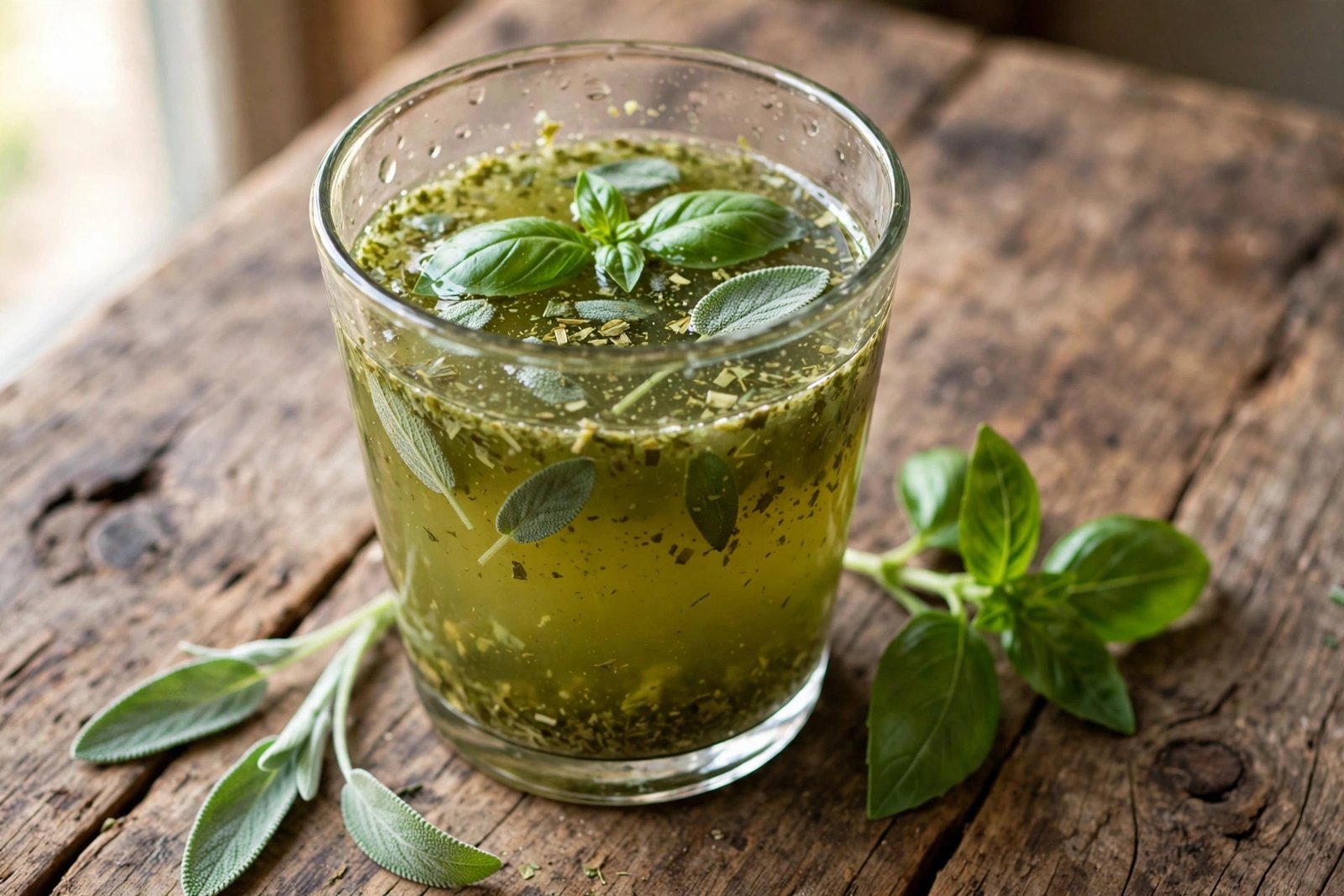
Basil and Sage Kidney Tonic
Some of the best herbal drinks are the simplest ones. Fresh basil, fresh sage, hot water, lemon, and a little honey — steeped gently and sipped warm. This basil and sage kidney tonic is a daily herbal routine, not a medicine, and it is best enjoyed for what it is: a fragrant, calming cup that supports your daily hydration. Here is the exact recipe, the steeping times, and how to drink it.
Why Basil and Sage?
Basil and sage are two of the most aromatic herbs in the kitchen, and their scent comes from volatile oils — eugenol in basil and thujone in sage. Those oils carry both the flavor and the character of the herbs, which is why this recipe treats them gently: bruise the leaves to release the oils, steep them covered so the aroma does not escape, and never boil the herbs themselves. Basil is sweet and slightly peppery; sage is earthy and a little astringent. Together they make a tonic that is green, fragrant, and soothing.
The Recipe
Ingredients (2 servings, 1 cup each)
- 1/2 cup fresh Italian sweet basil leaves, tightly packed, rinsed thoroughly
- 1/4 cup fresh common sage leaves, rinsed thoroughly
- 2 1/2 cups filtered water (about 20 oz)
- 1 tablespoon fresh lemon juice (from about half a fresh lemon)
- 1 to 2 teaspoons raw unfiltered honey (adjust to preferred sweetness)
- Optional: 2 thin slices of fresh ginger root (for extra warmth) or a small pinch of Himalayan pink salt
Equipment: small non-reactive saucepan (stainless steel or ceramic), fine-mesh strainer or tea infuser, heat-proof glass measuring cup or teapot, standard ceramic mug.
Directions
- Prep and bruise the herbs. Rinse the basil and sage leaves under cool running water and pat them dry. Lay them flat on a clean cutting board and gently press or twist them with the back of a spoon, a rolling pin, or your fingertips until the surface looks slightly darker and a fragrant aroma is released. Bruising breaks down the cell walls and releases the volatile oils.
- Heat the water. Pour 2 1/2 cups of filtered water into your saucepan. Bring it to a soft, rolling boil over medium-high heat. Once bubbles break steadily across the surface, remove the pan from the heat and let it rest for 45 seconds. This cools the water from boiling to about 160°F (71°C), the ideal temperature for gentle herbal extraction. Water that is too hot can scorch delicate herbs and make the tonic bitter.
- Add the herbs and steep. Add the bruised basil and sage leaves to the hot water. If using ginger slices, add them now. Cover the saucepan with a tight-fitting lid immediately — covering is essential, because the volatile oils evaporate easily and an uncovered pot lets them escape into the air. Let the herbs steep uninterrupted for 8 to 10 minutes. For a mild, soothing tea, 8 minutes is enough. For a stronger, more astringent tonic, allow the full 10 minutes.
- Strain. Carefully pour the liquid through a fine-mesh strainer into a glass teapot or directly into your ceramic mug. Gently press the softened leaves against the strainer with the back of a spoon to extract any remaining liquid, then discard the spent herbs.
- Finish with lemon and honey. Stir in 1 tablespoon of freshly squeezed lemon juice — the bright acidity lightens the color and livens the flavor. Let the tonic cool for a few minutes until it is comfortably warm to the touch, below 110°F (43°C), before adding the honey. Stir in 1 to 2 teaspoons of raw unfiltered honey until fully dissolved. Adding the honey after the tonic cools helps preserve its natural enzymes and antioxidants.
Prep time: 5 minutes, plus 8 to 10 minutes steeping. Servings: 2 cups.
Strength Guide
- Light and fresh (5 to 6 minutes): 1/3 cup basil, 2 tablespoons sage. Best for beginners and casual everyday sipping.
- Balanced and standard (8 to 10 minutes): 1/2 cup basil, 1/4 cup sage. The daily routine — kidney support and routine hydration.
- Deep and astringent (12 to 15 minutes): 1/2 cup basil, 1/3 cup sage plus ginger. A stronger, more intense herbal tonic for a restorative focus.
Nutrition (per 1-cup serving)
About 22 calories, 0.4 g protein, 0.1 g fat, 5.8 g carbohydrates, 0.4 g fiber, and about 4 g sugar (from the raw honey). It also provides potassium (78 mg), vitamin A (8% of daily value), vitamin C (12%), calcium (3%), and iron (4%). The exact calories depend on how much honey you add — 1 teaspoon keeps it lighter, 2 teaspoons makes it sweeter.
How to Drink It
Enjoy 1 cup warm in the morning on an empty stomach to start your day hydrated, or sip it slowly in the evening as a calming herbal ritual. During warmer weather, let the brewed tea cool to room temperature, then pour it over ice with a fresh basil leaf for a refreshing, light tonic. Store any unused portion in an airtight glass jar or bottle in the refrigerator for up to 24 hours. Reheat it gently on the stovetop or in the microwave until warm, but do not reboil it — reheating beyond a simmer dulls the flavor and reduces its potency.
An Honest Note on “Kidney Tonic”
The name “kidney tonic” describes a daily herbal routine, not a treatment. This recipe names no specific kidney condition or disease, and it gives no scientific evidence that it cures or treats any kidney problem. It is a fragrant, hydrating herbal drink made from real basil and sage, and it fits well into a healthy daily routine. If you have kidney disease, are pregnant, or take medication, talk to your doctor before making any herbal drink a daily habit — sage contains thujone, and herbal drinks can interact with some medicines. A tonic supports your routine; it does not replace medical care.
Tips for the Best Tonic
- Use fresh, vibrant herbs: fresh organic basil and sage give the best flavor and aroma. Dull or wilted leaves make a flat tonic.
- Always cover while steeping: the lid traps the volatile oils. An uncovered pot lets the best part of the aroma escape.
- Do not boil the herbs: let the water cool for 45 seconds after boiling before adding the leaves, or the tonic turns bitter.
- Add honey only after cooling: wait until the tonic is below 110°F (43°C) so the honey keeps its natural character.
- Make it fresh: this tonic is best the same day. Do not keep it longer than 24 hours in the fridge.
Frequently Asked Questions
Can I drink this tonic every day?
It is framed as a daily routine — 1 cup in the morning or in the evening. If you have a health condition or take medication, check with your doctor first.
Can I use dried basil and sage instead of fresh?
Fresh is best for this recipe, because the volatile oils are strongest in fresh leaves. Dried herbs will give a weaker, less fragrant tonic — use about one-third the amount if you substitute.
Why do I need to bruise the leaves?
Bruising breaks the cell walls and releases the essential oils (eugenol in basil, thujone in sage) that carry the flavor. Without bruising, the steep is much weaker.
Can I make a larger batch?
Yes — double the herbs and water to make 4 cups. But do not store it longer than 24 hours in the fridge, and reheat gently without reboiling.
What does it taste like?
Sweet basil brings a soft, peppery sweetness; sage adds an earthy, slightly astringent note; lemon brightens it; and honey rounds it out. The 8-minute steep is mild and soothing, while the 12 to 15 minute steep is deeper and more herbal.