
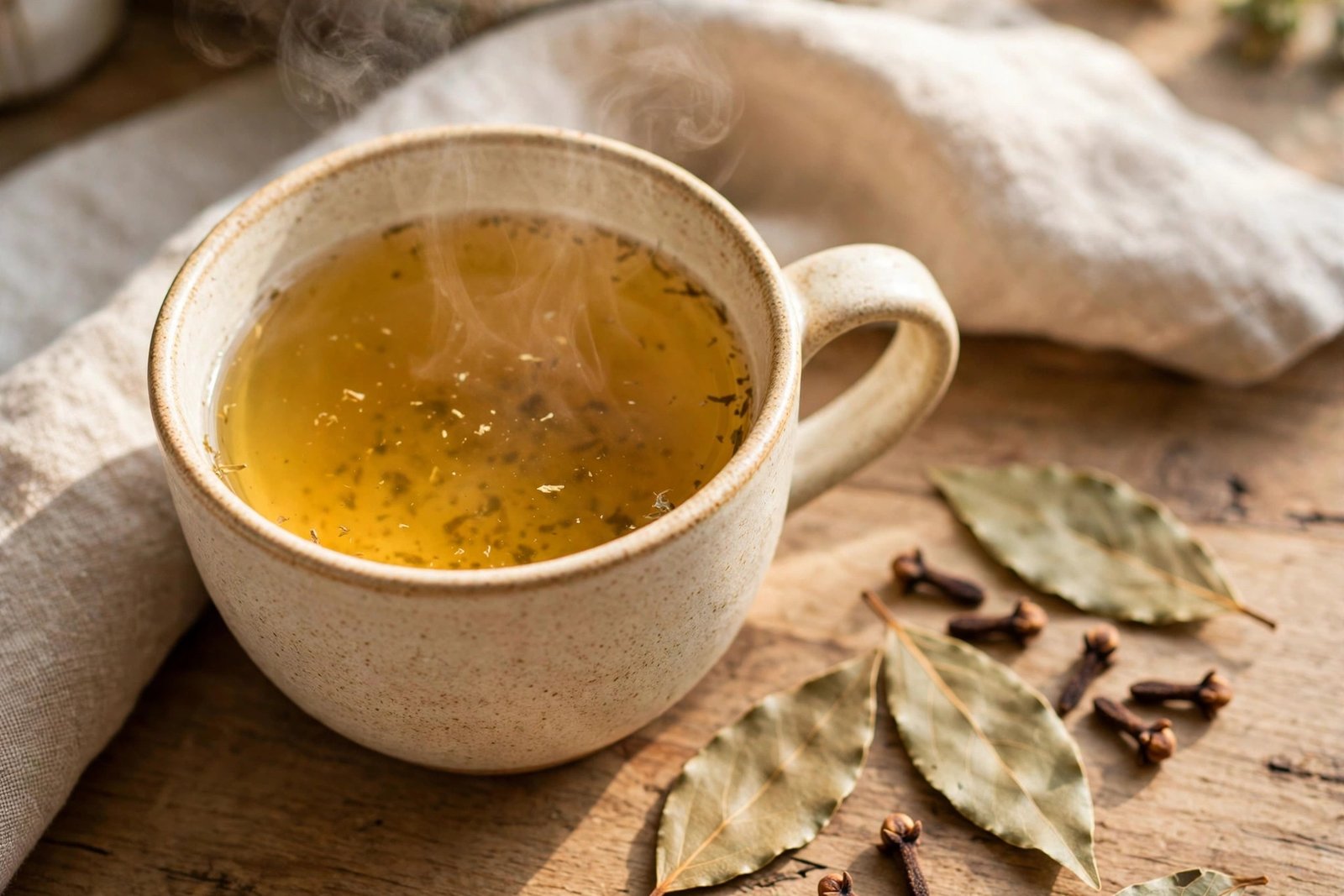
Bay Leaf and Clove Herbal Tea
Some of the best drinks in the world are the simplest ones. This bay leaf and clove herbal tea needs just three ingredients, a small pot and twenty minutes — and what it gives back is a warm, aromatic cup that has been sipped for generations for comfort, digestion and calm.
Bay leaves and cloves are two of the oldest spices in the kitchen cupboard, and they have a natural affinity. Bay leaf brings a soft, herbal, almost tea-like warmth; cloves bring a sweet, spicy depth with a hint of heat. Simmered together in water, they make an infusion that is fragrant, gently warming and surprisingly complex for something made from two dried spices and water.
This is a tea for slow moments. It is the cup you make after a heavy meal, when your stomach wants something gentle. It is the cup you make in the evening, when the day is winding down and you want something warm without caffeine. And it is the cup you make when you want a small daily ritual — a few quiet minutes, a warm mug in your hands, and nothing to rush.
It is easy to prepare and can be enjoyed at any time of the day. There is no special equipment, no long steeping, no expensive ingredient. If you have bay leaves and cloves in the spice drawer, you already have everything you need.
Why You Will Love This Tea
- Only 3 ingredients: bay leaves, cloves and water, plus honey or lemon if you like.
- Ready in 20 minutes: a few minutes to bring to a boil, 10 to 15 minutes to simmer.
- Caffeine-free: a warm, soothing drink for any time of day or night.
- Traditionally used for digestion and relaxation: bay leaf and clove have long been used in herbal traditions for comfort after meals and for calm.
- Almost no calories: unsweetened, a cup has virtually no calories — add honey only if you want sweetness.
Ingredients
Makes 2 cups. You will need:
- 3–4 dried bay leaves
- 5–7 whole cloves
- 2 cups of water
- Honey or lemon (optional, for taste)
Use whole, high-quality spices for the best result. Fresh, aromatic bay leaves and plump cloves give a far superior brew to old, dusty ones that have sat in the cupboard for years. If your bay leaves have lost their scent, it is time for a fresh packet.
How to Make Bay Leaf and Clove Herbal Tea
- Heat the water. Add 2 cups of water to a small pot and place it on medium heat.
- Add the spices. Put the bay leaves and the whole cloves into the water.
- Bring to a gentle boil. Let the water come up to a gentle boil — not a hard rolling boil, just a steady simmer.
- Simmer and infuse. Reduce the heat and let it simmer for 10 to 15 minutes, allowing the flavours to infuse. The longer it simmers, the stronger and more robust the tea becomes.
- Strain. Turn off the heat and strain the tea into a cup, leaving the bay leaves and cloves behind.
- Sweeten if you like. Add honey or a squeeze of lemon if desired.
- Serve warm and enjoy. Drink it warm, slowly, while it is still fragrant.
How Strong Should It Be?
You control the strength by adjusting the simmering time. A shorter steep of around 8 minutes gives a lighter, gentler tea — a good place to start if you are trying it for the first time. A longer simmer, up to 20 minutes, creates a much more robust and intense infusion, with the cloves coming forward more strongly. Start with the 10 to 15 minute range in the recipe, then adjust to your taste next time.
Remember that this is a sipping tea, meant to be enjoyed in moderation. Its potent flavour means it is typically served in smaller quantities, much like an after-dinner digestif — a small, warm cup after a meal rather than a large mug gulped down in a hurry.
Traditional Uses and Benefits
Bay leaf and clove tea is traditionally used for relaxation, digestion and overall wellness. In herbal traditions, bay leaf is valued for supporting digestion, and cloves are known for their warming, aromatic qualities and natural antioxidants. Together they make a drink that is warming and soothing for the body, and many people find a warm cup after a meal helps them feel more comfortable and settled.
These are traditional uses, not medical claims — this tea is a comforting herbal drink, not a treatment. What it genuinely offers is a warm, caffeine-free ritual, a moment of calm, and a flavour that is both soothing and interesting. That is more than enough reason to make it.
Variations to Try
The basic recipe is lovely on its own, but it adapts easily. For a brighter, citrusy note, add a few thin slices of fresh ginger or a strip of orange peel during the simmering stage. If you are feeling under the weather, add a cinnamon stick or a few black peppercorns for an extra warming boost. For a caffeine-free, floral-infused relaxant, try adding a sprinkle of dried lavender or a pinch of chamomile flowers to the blend just before straining. Each variation keeps the same simple method — simmer, strain, serve warm.
Storage
Store your dry ingredients — bay leaves and whole cloves — in separate, airtight containers kept in a cool, dark cupboard away from heat and sunlight, so they keep their essential oils and aroma. If you wish to make a larger batch of the brewed tea for convenience, you can prepare and strain it, then store the liquid in a sealed jar in the refrigerator for up to three days. For the freshest taste, however, it is always best to prepare the tea fresh each time, as the volatile compounds that provide much of the aroma and potency diminish over time once brewed.
Nutrition (per cup)
Unsweetened, a cup of bay leaf and clove tea has virtually no calories — about 2 calories, 0 g protein, 0 g carbohydrate, 0 g fat and 0 g sugar. With a teaspoon of honey stirred in, a cup has about 23 calories and 6 g of natural sugar. Figures are calculated from the actual ingredient amounts listed above.
Frequently Asked Questions
Can I drink this tea every day? It is a caffeine-free herbal infusion made from common kitchen spices, and it is traditionally enjoyed regularly in small cups. As with any herbal tea, enjoy it in moderation — a cup or two a day is the usual pattern.
Can I use ground cloves instead of whole cloves? Whole cloves are better here — they infuse gently and are easy to strain out. Ground cloves would make the tea cloudy and gritty, and much harder to strain cleanly.
Can I use fresh bay leaves? Yes, fresh bay leaves work well. Use 2 to 3 fresh leaves in place of 3 to 4 dried ones, as fresh leaves are milder. Note that the bay leaves sold for cooking are the safe culinary kind — do not use leaves from an ornamental bay unless you are certain of the variety.
How long should I simmer it? Ten to fifteen minutes is the standard range. Eight minutes gives a lighter tea; up to twenty minutes gives a stronger, more intense infusion. Adjust to your taste.
Can I make a bigger batch? Yes. Scale the recipe up — for example, double the water, bay leaves and cloves — and store the strained tea in a sealed jar in the fridge for up to three days. Reheat gently before serving. Fresh is best, but a batch is convenient.
This bay leaf and clove tea is a reminder that simple, natural ingredients can come together to create a deeply soothing ritual. Whether you seek digestive comfort, a moment of calm, or simply a uniquely flavourful warm drink, this aromatic infusion offers a gentle, nurturing pause in your day. Enjoy.