
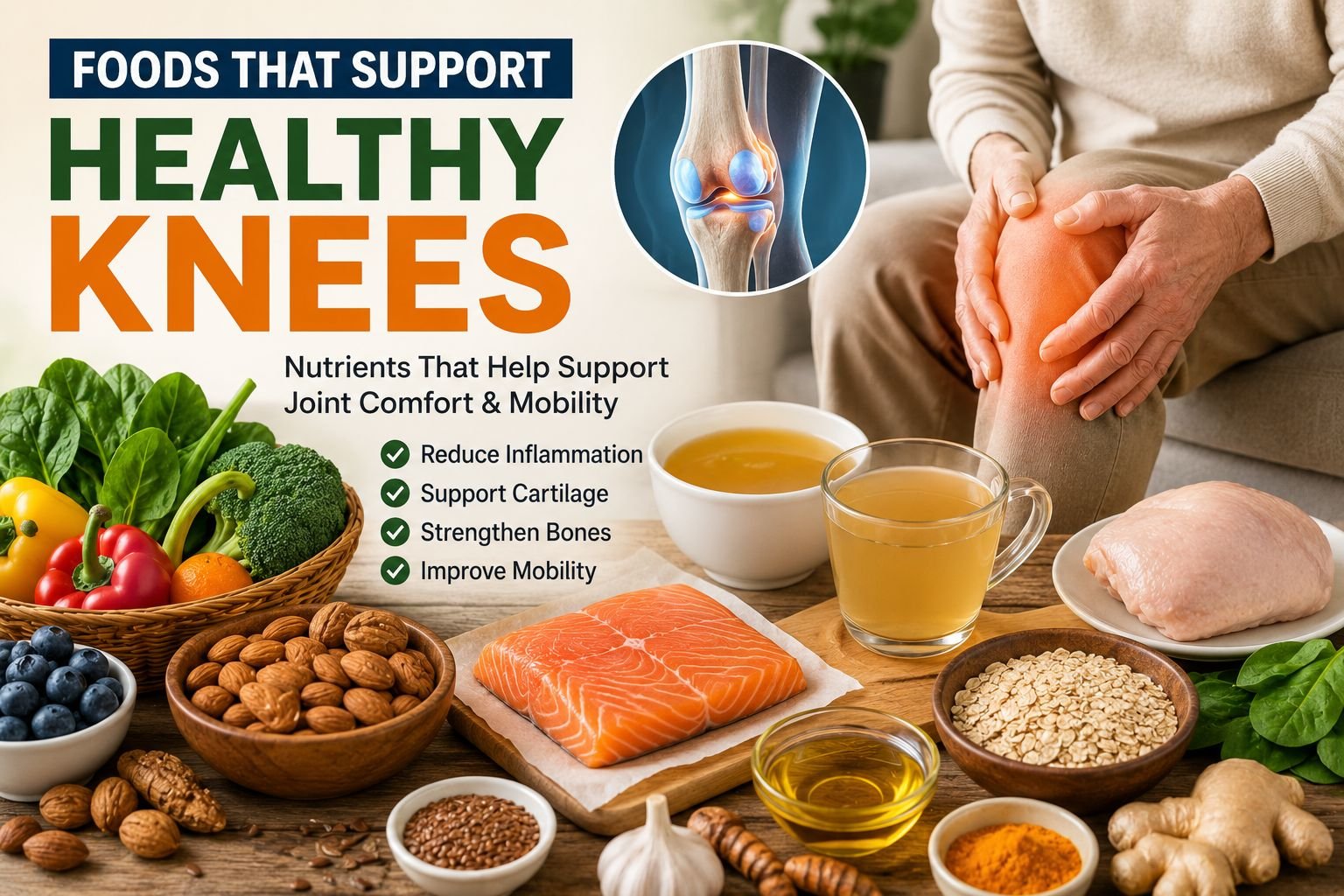
Can One Food Really Rebuild Knee Cartilage?
If you’ve ever stood up from a chair and felt stiffness in your knees, you’re not alone. Many people experience occasional knee discomfort as they get older, especially after long periods of sitting, standing, or walking. Everyday activities like climbing stairs, gardening, shopping, or simply getting out of bed may become more difficult over time.
Social media is filled with headlines claiming that a certain food can “rebuild knee cartilage” or completely eliminate joint pain. While these claims are attention-grabbing, the truth is much more balanced. No single food has been proven to regenerate damaged knee cartilage or cure joint problems on its own.
However, a nutritious diet rich in key vitamins, minerals, healthy fats, and protein can support overall joint health and may help your body maintain healthy bones, muscles, and connective tissues. When combined with regular movement, adequate hydration, quality sleep, and maintaining a healthy weight, these healthy eating habits can contribute to better mobility and comfort.
Why Knee Discomfort Becomes More Common With Age
Your knees are among the hardest-working joints in your body. Every time you walk, climb stairs, stand up, or bend down, your knees absorb significant pressure.
As we age, natural changes begin to occur inside the joints. Cartilage—the smooth tissue that cushions the ends of bones—gradually becomes thinner and less flexible. Muscles around the knees may also become weaker, reducing the support they provide to the joint.
Several factors can contribute to knee discomfort, including:
- Natural aging
- Previous injuries
- Osteoarthritis
- Muscle weakness
- Excess body weight
- Long periods of inactivity
- Poor posture
- Physically demanding work
Although aging is unavoidable, healthy lifestyle choices can help support joint function throughout life.
Understanding Cartilage
Cartilage is a smooth, rubbery tissue that covers the ends of bones inside the joints.
Healthy cartilage allows your knees to move smoothly by reducing friction and absorbing shock during movement.
Unlike many other tissues in the body, cartilage has a limited blood supply. Because of this, it repairs itself much more slowly after injury or wear.
This is one reason why protecting joint health through healthy habits becomes increasingly important with age.
The Truth Behind Viral “Miracle Food” Claims
Many online articles claim that eating a few spoonfuls of a specific food every day can rebuild cartilage.
Currently, there is no strong scientific evidence proving that any food can regenerate damaged knee cartilage in humans.
Some foods contain nutrients involved in collagen formation and connective tissue health, but these nutrients support normal body function rather than acting as miracle treatments.
Rather than looking for one magical ingredient, experts recommend focusing on an overall balanced eating pattern.
Nutrients That Help Support Joint Health
Several nutrients play important roles in maintaining healthy bones, muscles, and connective tissues.
Protein
Protein helps maintain and repair muscles that support your knees.
Excellent sources include:
- Chicken
- Fish
- Eggs
- Greek yogurt
- Beans
- Lentils
- Lean beef
Vitamin C
Vitamin C contributes to normal collagen formation, an important structural protein found throughout the body.
Foods rich in vitamin C include:
- Oranges
- Guava
- Kiwi
- Strawberries
- Bell peppers
- Broccoli
Omega-3 Fatty Acids
Omega-3 fats are commonly included in heart-healthy eating patterns and may help support overall wellness.
Good sources include:
- Salmon
- Sardines
- Mackerel
- Walnuts
- Chia seeds
- Flaxseeds
Calcium
Calcium helps maintain normal bones.
Good dietary sources include:
- Milk
- Cheese
- Yogurt
- Fortified plant milk
- Tofu
Vitamin D
Vitamin D helps your body absorb calcium effectively.
Natural sources include:
- Fatty fish
- Egg yolks
- Fortified dairy products
- Fortified cereals
Sunlight also helps your skin produce vitamin D naturally.
Is Bone Broth Good for Your Knees?
Bone broth has become increasingly popular because it naturally contains collagen-related compounds.
While many people enjoy bone broth as part of a healthy diet, research has not shown that drinking bone broth can rebuild cartilage or reverse arthritis.
It can still be a nutritious addition to your meals because it is:
- Warm and comforting
- Hydrating
- A source of protein, depending on preparation
- Easy to digest
Enjoy it as part of a balanced diet rather than expecting dramatic results.
Foods That Naturally Support Joint Health
Instead of focusing on one ingredient, include a variety of nutritious foods throughout the week.
Fatty Fish
Rich in omega-3 fatty acids.
Leafy Greens
Spinach, kale, and Swiss chard provide vitamins and antioxidants.
Colorful Vegetables
Carrots, tomatoes, peppers, broccoli, and sweet potatoes provide beneficial nutrients.
Fresh Fruit
Berries, oranges, kiwi, apples, and guava contribute vitamins and antioxidants.
Nuts and Seeds
Almonds, walnuts, pumpkin seeds, sunflower seeds, and flaxseeds provide healthy fats and minerals.
Whole Grains
Oats, brown rice, quinoa, and whole wheat provide fiber and nutrients.
Healthy Habits Matter Just as Much
Nutrition works best when combined with other healthy lifestyle habits.
Stay Physically Active
Gentle movement helps keep joints flexible.
Good options include:
- Walking
- Swimming
- Cycling
- Tai Chi
- Water aerobics
Strengthen Your Legs
Strong muscles help support your knees and improve stability.
Simple bodyweight exercises performed safely can help maintain muscle strength.
Maintain a Healthy Weight
Even modest weight loss can reduce the amount of pressure placed on your knees during everyday activities.
Stay Hydrated
Water supports many normal functions throughout the body.
Proper hydration is an important part of overall health.
Avoid Sitting Too Long
If you sit for long periods, stand up every 30 to 60 minutes and move around for a few minutes.
A Simple 7-Day Knee-Friendly Routine
Days 1–2
- Walk for 10 minutes.
- Drink more water.
- Add one extra serving of vegetables.
Days 3–4
- Include salmon or another fatty fish.
- Stretch for five minutes.
- Eat fruit rich in vitamin C.
Days 5–6
- Add Greek yogurt or another calcium-rich food.
- Perform gentle leg-strengthening exercises.
- Continue drinking enough water.
Day 7
Combine all of these healthy habits into a simple daily routine.
Small, consistent improvements often have a greater impact than occasional big changes.
Common Mistakes That Can Affect Knee Health
Some everyday habits may place unnecessary stress on your joints.
Try to avoid:
- Remaining inactive for long periods
- Sudden intense exercise after inactivity
- Wearing unsupportive footwear
- Ignoring persistent pain
- Depending only on supplements while neglecting diet and exercise
Frequently Asked Questions
Can Food Rebuild Knee Cartilage?
No. Current scientific evidence does not show that any food can regenerate damaged knee cartilage.
A healthy diet supports overall joint health but cannot reverse cartilage loss.
Is Bone Broth Worth Drinking?
Bone broth can be a nutritious part of a balanced diet, but it should not be viewed as a cure for joint problems.
Does Walking Help Knee Health?
For many people, gentle walking supports joint mobility and muscle strength.
If you have significant pain or a medical condition, consult your healthcare provider before beginning a new exercise routine.
Should I Take Collagen Supplements?
Research on collagen supplements is ongoing.
Some studies suggest they may benefit certain individuals, but results remain mixed and supplements should not replace medical treatment.
Final Thoughts
Healthy knees depend on much more than a single food or supplement. A balanced diet rich in protein, vitamin C, calcium, vitamin D, omega-3 fats, fruits, vegetables, and whole grains provides nutrients that help support healthy bones, muscles, and connective tissues.
Combined with regular physical activity, maintaining a healthy weight, adequate hydration, and quality sleep, these habits offer a practical approach to supporting long-term joint health. Rather than searching for miracle cures, focus on building healthy routines that your body can benefit from every day.