
Every day, your skin faces challenges you can’t always see.
Sunlight.
Pollution.
Stress.
Lack of sleep.
Even the natural aging process slowly affects the proteins that help keep skin smooth, firm, and resilient. One of the most important of these proteins is collagen.
As collagen production gradually declines with age, many people begin noticing fine lines, drier skin, and a loss of firmness. That’s why collagen supplements and beauty products have become so popular.
But here’s something many people don’t realize…
Your body already knows how to make collagen.
What it needs are the right nutrients to support that natural process.
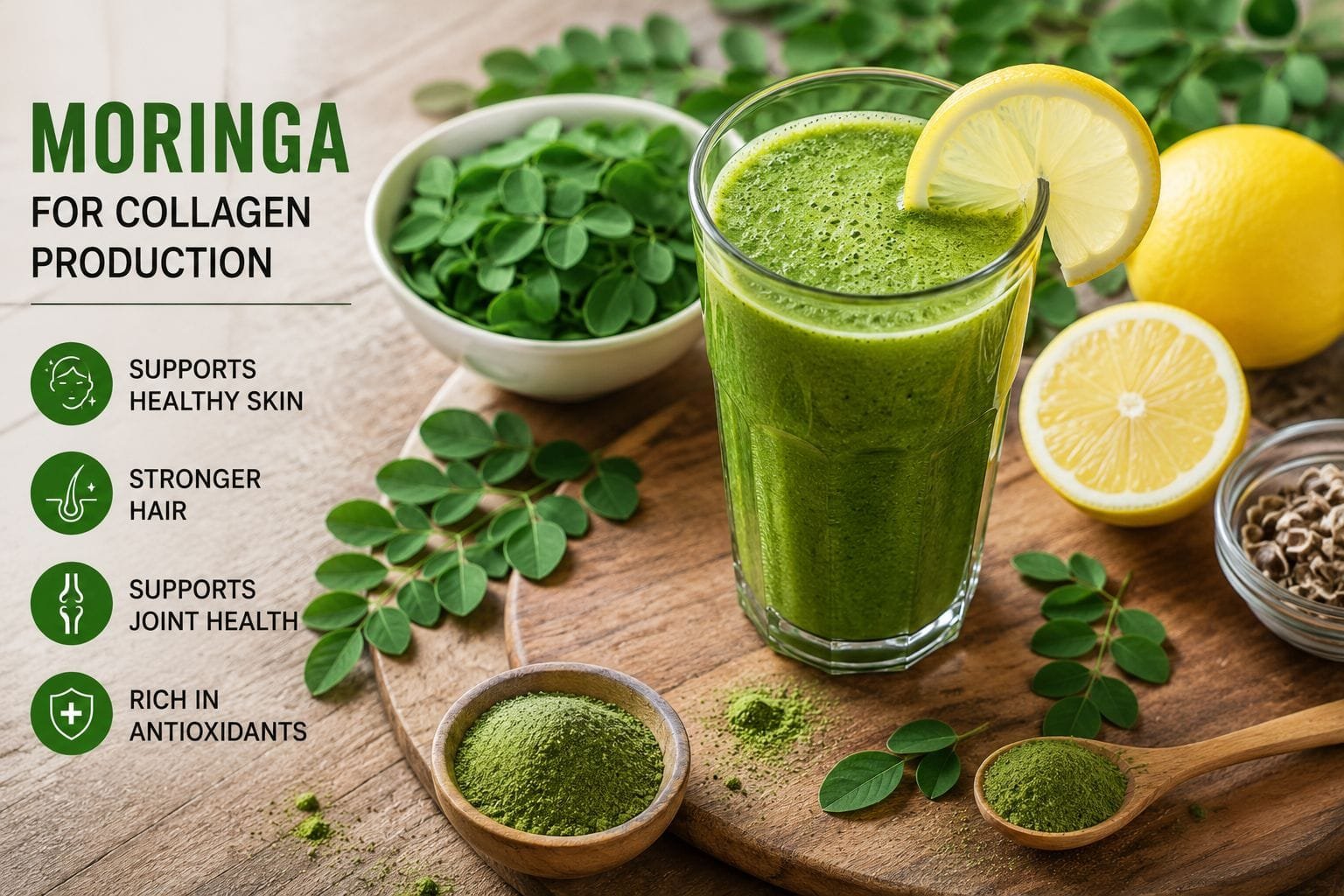
One plant that has attracted growing attention is moringa, often called one of the world’s most nutrient-dense superfoods. Rich in vitamins, minerals, antioxidants, and plant compounds, moringa may provide nutrients that help support your body’s normal collagen production when included as part of a balanced diet.
So, can a simple green plant really make a difference?
Let’s explore what moringa is, why it’s so popular, and how it may fit into a healthy skincare routine.
Table of Contents
ToggleWhat Is Moringa?
Moringa comes from the Moringa oleifera tree, sometimes referred to as the “drumstick tree” or the “miracle tree.”
Native to parts of South Asia and now grown throughout tropical regions, nearly every part of the plant has been used traditionally for food or herbal purposes.
Today, moringa is commonly available as:
- Powder
- Capsules
- Tea
- Fresh leaves
- Dried leaves
Its popularity comes from its impressive nutritional profile rather than any single “miracle” ingredient.
Why Moringa May Support Collagen Production
Collagen doesn’t come directly from moringa.
Instead, moringa provides several nutrients that your body uses during its natural collagen-building process.
Vitamin C
Vitamin C is one of the most important nutrients involved in collagen formation.
Without enough vitamin C, your body cannot efficiently produce collagen.
Moringa naturally contains vitamin C, making it a helpful addition to a balanced diet.
Amino Acids
Proteins are built from amino acids, and collagen is no exception.
Moringa contains several essential amino acids that contribute to normal protein production throughout the body.
Antioxidants
Daily exposure to UV rays, pollution, and normal metabolism creates unstable molecules called free radicals.
Over time, oxidative stress may contribute to skin aging.
Moringa contains antioxidants such as vitamins A and E along with plant compounds that help protect cells from oxidative stress.
Zinc and Iron
Healthy skin depends on more than collagen alone.
Minerals like zinc and iron help support normal skin function, circulation, and tissue repair.
Moringa naturally provides both of these important minerals.
Potential Benefits for Skin
Adding nutrient-rich foods like moringa to your diet may support overall skin health.
Some people choose moringa as part of a skincare-focused lifestyle because it may help support:
- Healthy skin elasticity
- Normal collagen production
- Skin hydration
- Protection from oxidative stress
- A smoother-looking complexion
- Overall skin wellness
It’s important to remember that results vary from person to person and usually depend on consistent healthy habits over time.
Benefits Beyond Skin
One reason moringa has become so popular is that its nutrients support more than just the skin.
Many people include moringa in their diets to help support:
Hair Health
Protein, iron, and antioxidants all contribute to healthy hair growth and strength.
Nail Strength
Nutrients that support normal protein production may also contribute to healthier nails.
Joint Health
Some research suggests that compounds in moringa have anti-inflammatory properties, although more studies are needed to understand their role in joint health.
General Wellness
Because moringa is rich in vitamins and minerals, it can be a nutritious addition to an overall balanced eating plan.
An Easy Moringa Drink Recipe
If you’d like to include moringa in your routine, here’s a simple drink you can prepare at home.
Ingredients
- 1 tablespoon moringa powder
- 1 tablespoon sunflower seeds or ground flaxseeds
- Juice of ½ fresh lemon
- 1 cup (250 ml) water
- 1 teaspoon honey (optional)
Instructions
- Pour the water into a blender or large glass.
- Add the moringa powder.
- Add the sunflower seeds or flaxseeds.
- Squeeze in the fresh lemon juice.
- Blend or stir thoroughly until smooth.
- Sweeten with honey if desired.
Serve immediately.
When Should You Drink It?
Many people prefer drinking moringa in the morning.
Some enjoy it with breakfast, while others have it before eating.
There is no strong scientific evidence showing that one specific time of day is significantly more effective than another.
The most important factor is consistency as part of an overall healthy diet.
How Long Does It Take to Notice Results?
Moringa is a nutritious food—not an instant solution.
Some people report gradual improvements over several weeks when combined with balanced nutrition and healthy lifestyle habits.
Individual experiences vary.
In general, noticeable changes in skin appearance depend on many factors, including:
- Overall diet
- Hydration
- Sun protection
- Sleep quality
- Genetics
- Age
Consistency is far more important than expecting overnight changes.
Tips for Getting the Most from Moringa
- Choose high-quality moringa powder from a trusted
Moringa for Collagen Production: Can This Superfood Naturally Support Healthier Skin?
Introduction
Walk through the skincare aisle of any store, and you’ll find shelves packed with collagen creams, serums, powders, and supplements—all promising smoother skin, fewer wrinkles, and a youthful glow.
But here’s something many people overlook…
Collagen isn’t something you simply rub onto your skin or drink once and expect overnight results.
Your body actually produces collagen on its own.
The real question is whether you’re giving it the nutrients it needs to do that efficiently.
That’s where moringa enters the conversation.
Often called one of the world’s most nutrient-dense superfoods, moringa has become increasingly popular among people looking for natural ways to support healthy skin, stronger hair, and overall wellness. Rich in vitamins, minerals, antioxidants, and amino acids, this leafy green plant contains several nutrients involved in your body’s normal collagen production.
Does that mean moringa is a miracle cure for wrinkles?
Not exactly.
But it may be a valuable addition to a balanced diet that supports healthy skin from the inside out.
Let’s explore why this remarkable plant has earned its reputation and what current research suggests about its role in collagen production.
What Is Moringa?
Moringa comes from the Moringa oleifera tree, a fast-growing plant native to parts of South Asia but now cultivated in many tropical and subtropical regions around the world.
Sometimes referred to as the “drumstick tree” or the “miracle tree,” nearly every part of the plant has traditionally been used for food or herbal purposes.
Today, moringa is available in several forms, including:
- Fresh leaves
- Dried leaf powder
- Capsules
- Tea
- Liquid extracts
Its popularity isn’t based on one magical ingredient.
Instead, it’s the impressive combination of vitamins, minerals, plant compounds, and antioxidants that makes moringa stand out among nutrient-rich foods.
Understanding Collagen
Before looking at moringa’s benefits, it helps to understand what collagen actually does.
Collagen is the most abundant protein in the human body.
It acts like the framework that helps keep your:
- Skin firm
- Hair healthy
- Nails strong
- Bones resilient
- Cartilage flexible
- Tendons and ligaments strong
Beginning in early adulthood, collagen production naturally slows down.
Over time, this gradual decline contributes to:
- Fine lines
- Wrinkles
- Loss of skin firmness
- Drier skin
- Reduced elasticity
While no food can completely stop this natural process, certain nutrients help support your body’s ability to produce collagen.
Why Moringa May Support Collagen Production
Moringa doesn’t contain collagen itself.
Instead, it supplies nutrients that play important roles in collagen synthesis and skin health.
Vitamin C
Vitamin C is one of the most essential nutrients involved in collagen formation.
Your body uses vitamin C to convert amino acids into collagen fibers.
Without enough vitamin C, normal collagen production becomes less efficient.
Moringa naturally provides vitamin C, making it a useful addition to a nutrient-rich diet.
Amino Acids
Collagen is built from amino acids.
Moringa contains several essential amino acids that help support normal protein production throughout the body.
These amino acids contribute to many biological processes beyond skin health, including muscle maintenance and tissue repair.
Powerful Antioxidants
Every day, your skin is exposed to sunlight, pollution, and other environmental factors that create free radicals.
These unstable molecules contribute to oxidative stress, which may accelerate visible signs of skin aging.
Moringa contains antioxidants such as:
- Vitamin A
- Vitamin E
- Polyphenols
- Flavonoids
These compounds help protect cells from oxidative damage as part of a healthy lifestyle.
Zinc and Iron
Healthy skin depends on more than collagen alone.
Minerals such as zinc and iron support normal skin repair, healthy circulation, and overall tissue maintenance.
Moringa naturally contains both nutrients.
Potential Benefits for Skin
When included as part of a balanced diet, moringa may help support:
- Healthy collagen production
- Improved skin hydration
- Better skin elasticity
- Protection against oxidative stress
- Healthier-looking skin
- A more radiant complexion
It’s important to remember that these benefits develop gradually and vary from person to person.
Benefits Beyond Skin
One reason moringa has attracted so much attention is that its nutrients may support several aspects of overall wellness.
Hair Health
Protein, iron, and vitamins contribute to maintaining healthy hair.
Many people include moringa in their diets to support stronger-looking hair.
Nail Health
Because nails are made primarily of keratin, adequate nutrition plays an important role in maintaining nail strength.
Joint Wellness
Some early research suggests that moringa contains plant compounds with anti-inflammatory properties.
While more research is needed, many people include it as part of an overall healthy eating pattern.
Daily Nutrition
Moringa provides a wide range of vitamins and minerals that contribute to overall health and wellness.
Simple Moringa Drink Recipe
Adding moringa to your daily routine doesn’t have to be complicated.
Ingredients
- 1 tablespoon moringa powder
- 1 tablespoon ground flaxseeds or sunflower seeds
- Juice of half a fresh lemon
- 1 cup (250 ml) water
- 1 teaspoon honey (optional)
Directions
Add the water to a blender or large glass.
Stir in the moringa powder.
Add the ground seeds.
Squeeze in the fresh lemon juice.
Blend or whisk until smooth.
Sweeten with honey if desired.
Serve immediately.
When Is the Best Time to Drink It?
Many people enjoy moringa in the morning because it’s easy to include in a breakfast routine.
Others prefer adding it to smoothies or juices later in the day.
Current research doesn’t show that one specific time is significantly better than another.
Consistency matters much more than timing.
How Long Does It Take to Notice Changes?
Unlike beauty products that promise overnight transformations, nutrition works gradually.
If moringa becomes part of an overall healthy lifestyle, some people notice gradual improvements over several weeks.
Factors that influence skin appearance include:
- Overall diet
- Hydration
- Sleep quality
- Sun exposure
- Stress levels
- Genetics
- Age
No single food can overcome poor lifestyle habits.
Healthy skin is usually the result of many healthy choices working together.
Tips for Using Moringa
- Purchase moringa from reputable brands.
- Store it in an airtight container.
- Start with small amounts if you’ve never used it before.
- Combine it with a balanced diet rich in fruits and vegetables.
- Stay well hydrated.
- Protect your skin from excessive sun exposure.
Important Precautions
Although moringa is considered safe for most healthy adults when consumed in food amounts, a few precautions are worth noting.
Consult your healthcare provider before using moringa supplements if you:
- Are pregnant or breastfeeding
- Take prescription medications
- Have diabetes
- Have low blood pressure
- Have thyroid conditions
- Have a chronic medical condition
Some people may experience mild digestive discomfort when first adding moringa to their diet.
Starting with smaller amounts may help.
Frequently Asked Questions
Does moringa contain collagen?
No.
Moringa does not contain collagen, but it provides nutrients that help support your body’s natural collagen production.
Can moringa remove wrinkles?
No food can completely eliminate wrinkles.
However, eating nutrient-rich foods may support healthy skin as part of an overall balanced lifestyle.
Can I drink moringa every day?
Many people enjoy moderate amounts daily.
Follow the serving recommendations on the product label or speak with your healthcare provider if you have medical concerns.
Is moringa better than collagen supplements?
They serve different purposes.
Collagen supplements provide collagen peptides, while moringa supplies vitamins, minerals, antioxidants, and amino acids that support overall nutrition.
Final Thoughts
Moringa has earned its reputation as a nutrient-dense superfood for good reason. While it isn’t a miracle solution for aging or collagen loss, it provides several important nutrients that support your body’s natural collagen production and overall skin health.
Combined with a balanced diet, regular exercise, adequate hydration, quality sleep, and proper sun protection, moringa can be a valuable addition to a healthy lifestyle. Instead of searching for quick fixes, focus on consistent habits that nourish your body from the inside out—and your skin is likely to benefit over time.