
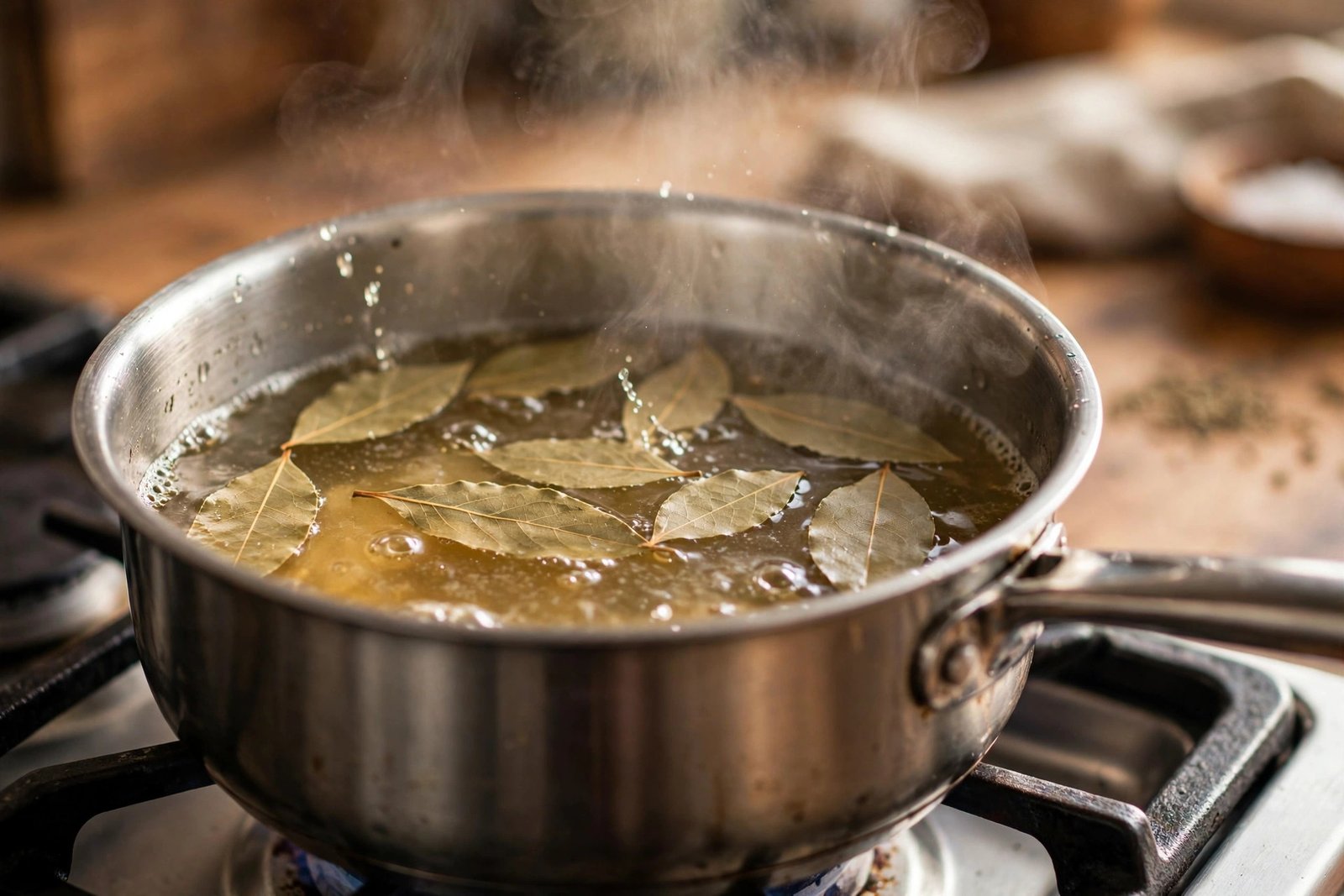
There is something deeply satisfying about walking into a kitchen that smells like a sun-warmed herb garden instead of last night’s cooking. If you have ever wished for a simple, inexpensive way to freshen your home with a natural herbal aroma — one that generations of households have experimented with — boiled bay leaves might be exactly the little kitchen project you have been looking for.
Bay Leaf Bug-Repellent Water is a straightforward homemade preparation: dried bay leaves simmered in water until the liquid turns fragrant and golden, then used around the home as a natural freshener or diluted into a simple spray. It takes about 20 minutes, costs almost nothing, and fills the whole house with a warm, slightly peppery herbal scent that feels clean and grounding.
Now, an honest note before we start: bay leaves have a long folk history as a household helper for discouraging insects, and many people swear by them. But there is no solid scientific proof that bay leaf water will eliminate flies, mosquitoes, or cockroaches on its own. Think of this as a pleasant aromatic experiment and a complement to good housekeeping — not a replacement for real pest control when you actually need it.
Why Bay Leaves?
Bay leaves — the dried leaves of Laurus nobilis — are best known as a slow-simmered soup and stew seasoning. But the same aromatic compounds that make them valuable in cooking (including eucalyptol and other volatile oils) are what give the leaves their strong, distinctive scent when heated in water. That scent is the whole point here.
Traditional household wisdom in many cultures holds that the smell of bay leaves is unpleasant to certain insects, which is why you will find recommendations to tuck dried bay leaves into pantry shelves, grain containers, and pet-food bins. Boiling the leaves simply concentrates that aroma into a liquid you can place or spray wherever you want the scent to linger.
What makes this preparation appealing is how accessible it is. You probably already have bay leaves in your spice drawer. You need nothing fancier than a saucepan, water, and a strainer. And unlike synthetic air fresheners, you know exactly what is in it.
Recipe Overview
- Prep Time: 2 minutes
- Cook Time: 10–15 minutes
- Total Time: 15–20 minutes
- Yield: About 2 cups of infusion
- Difficulty: Very easy
- Best For: Kitchens, entryways, pantries, and common living areas
Ingredients
Basic Bay Leaf Infusion
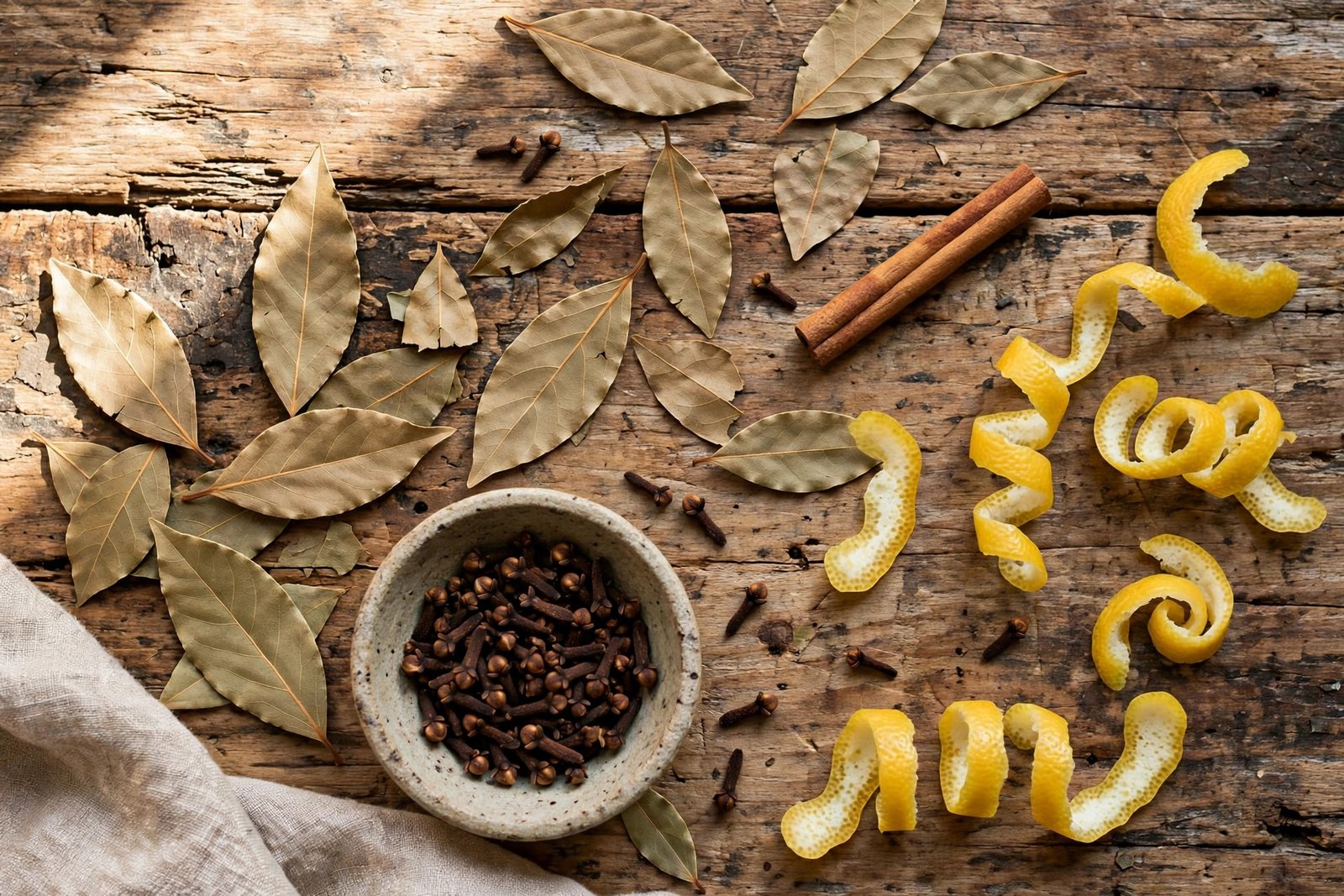
- Dried bay leaves: 8–10 whole leaves
- Water: 2 cups (500 ml)
- Cinnamon stick (optional): 1 stick, for a warmer fragrance
- Whole cloves (optional): 1 teaspoon, for a spicier aroma
For a Simple Spray Bottle Version
- Cooled bay leaf infusion: 1½ cups
- White vinegar: ½ cup
- Lemon peel (optional): a few strips, added during simmering
- Clean spray bottle: 1
Important safety note: Never mix vinegar with bleach or any bleach-containing cleaning product. The combination creates toxic fumes.
Step-by-Step Instructions
Step 1: Inspect the Bay Leaves
Take out 8–10 clean, dry culinary bay leaves. Give them a quick look for dust or debris and brush off anything you see. If you want a stronger infusion, gently crush or tear a few of the leaves — breaking them open releases more of the aromatic oils.
Step 2: Bring the Water to a Boil
Pour 2 cups of water into a small or medium saucepan. Set it over medium-high heat and bring it to a rolling boil. This should take about 3–4 minutes depending on your stove.
Step 3: Add the Bay Leaves and Simmer
Carefully add the bay leaves to the boiling water. If you are using the optional cinnamon stick or whole cloves, add them now as well. Reduce the heat to low so the mixture settles into a gentle simmer — you want lazy bubbles, not a hard boil, which can make the aroma harsh.
Let it simmer for 10–15 minutes. You will notice the water gradually turning a light golden-brown color and the kitchen filling with a warm herbal scent. That is how you know the infusion is working.
Step 4: Cool It Down
Remove the saucepan from the heat. Let the infusion sit and cool for about 10 minutes. It should be noticeably fragrant by now. Do not skip the cooling — hot liquid is unsafe to strain into containers and can damage spray bottles.
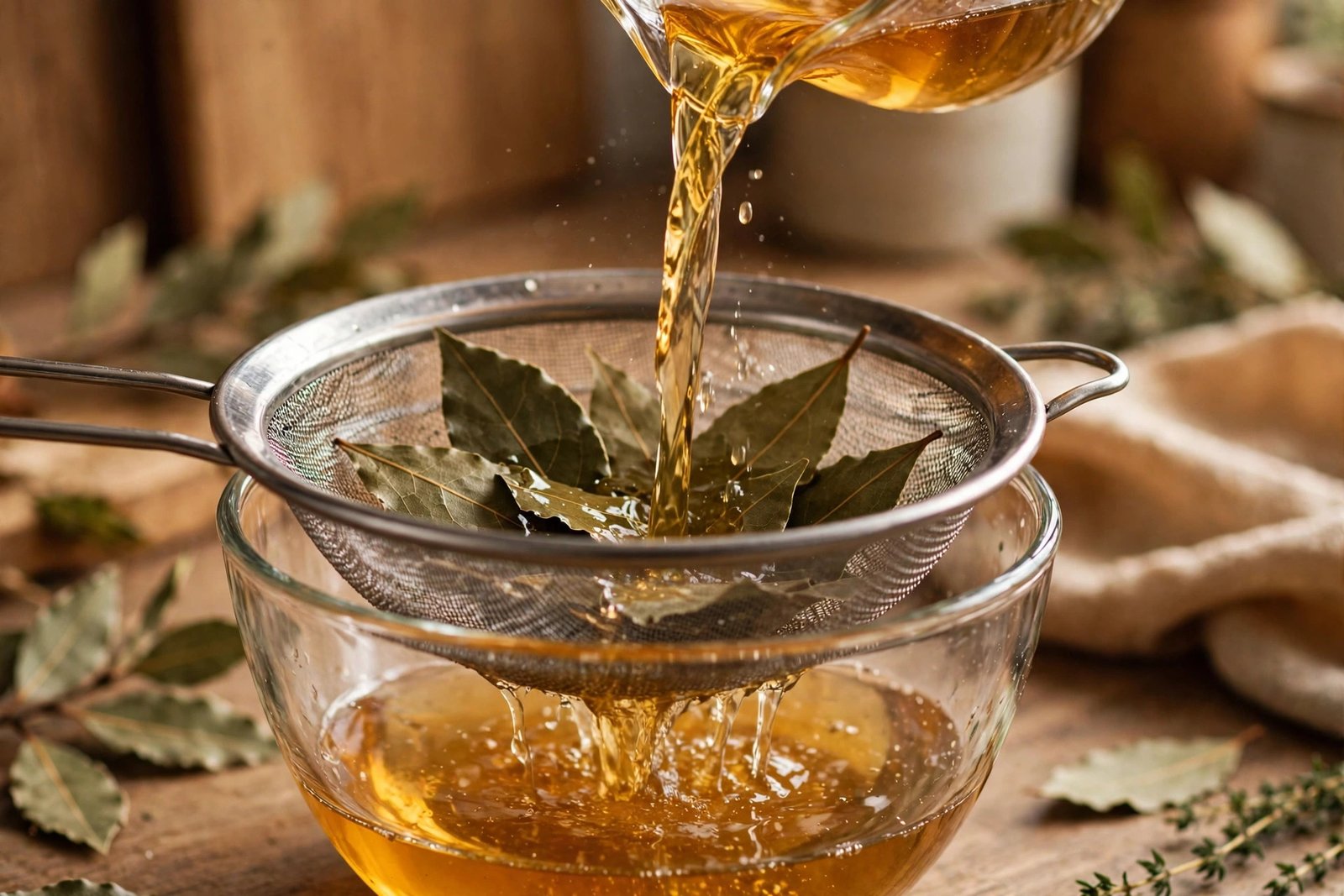
Step 5: Strain the Liquid
Place a fine-mesh strainer over a clean bowl, jug, or measuring cup. Pour the infusion through the strainer, catching all the leaves, cinnamon, and cloves. Discard the solids. What you have left is your finished bay leaf water — smooth, aromatic, and ready to use.
Step 6: Use It Around Your Home
Once the liquid is completely cool, you have two options:
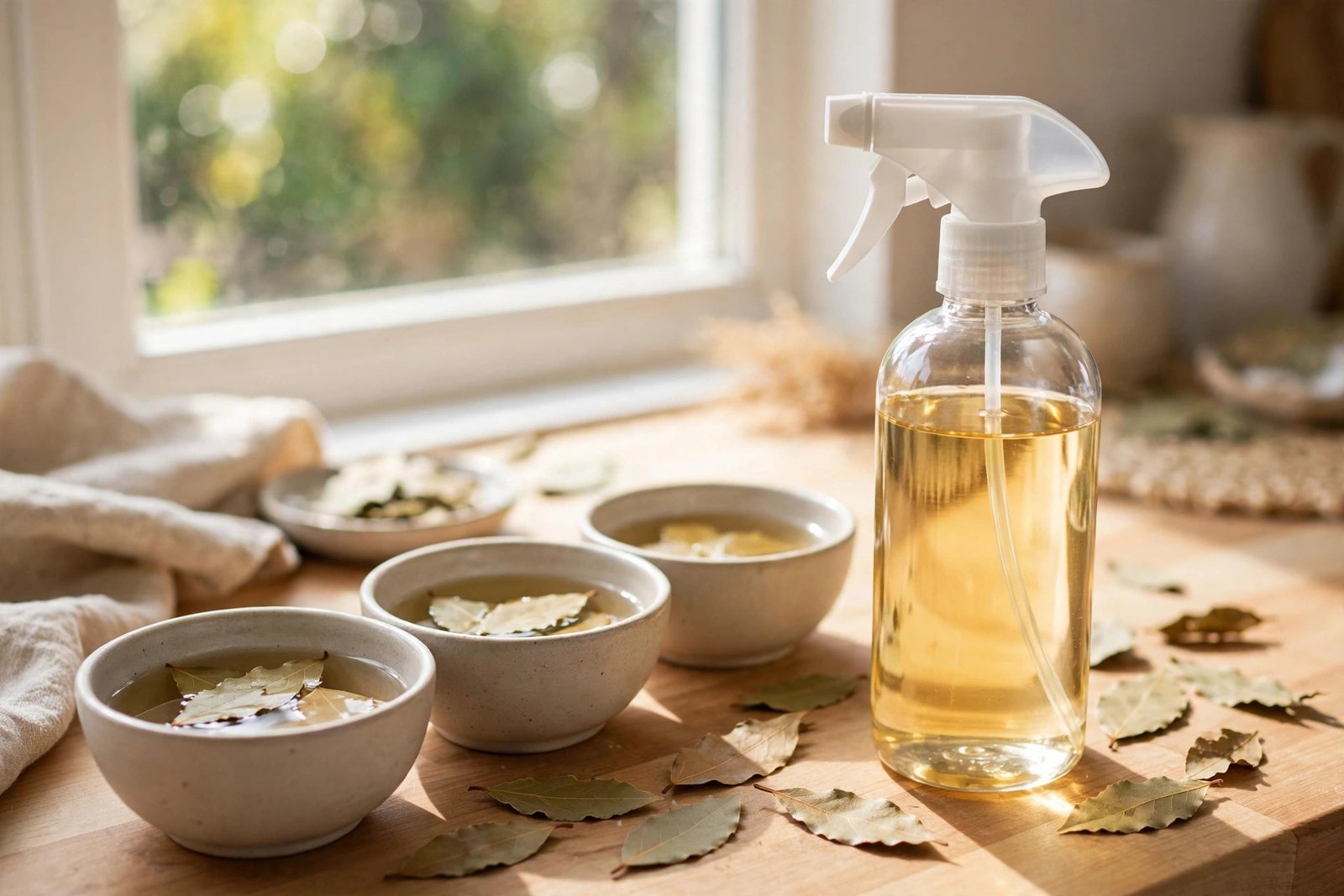
- As a room freshener: Pour small amounts into shallow bowls or ramekins and place them near the kitchen, by the garbage area, in the entryway, or anywhere you want a subtle herbal scent.
- As a spray: Combine 1½ cups of the cooled infusion with ½ cup of white vinegar in a clean spray bottle. Shake gently before each use. Mist lightly around door frames, window sills, and trash areas — anywhere you want the aroma.
Tips for the Best Results
- Start with good leaves. Bay leaves lose potency over time. If your jar has been sitting in the spice drawer for two years, the aroma will be faint. Fresher dried leaves give a noticeably stronger infusion.
- Do not rush the simmer. The full 10–15 minutes matters. A quick 3-minute steep gives you vaguely herbal water; the longer simmer is what builds real fragrance.
- Always let it cool fully before bottling. Pouring hot liquid into a spray bottle can warp the plastic and create pressure. Patience here prevents a mess.
- Refresh every few days. Natural herbal aromas fade. Bowls of bay leaf water left out for a week will just become stale water. Make a fresh batch every 2–3 days for the best scent.
- Test spray on surfaces first. Vinegar and concentrated herbal liquids can dull certain finishes. Spritz a hidden spot, wait an hour, and check before spraying widely.
- Keep it away from kids and pets. Store bowls and spray bottles where small children and curious pets cannot reach them, especially if you added vinegar.
Easy Variations to Try
Bay Leaf and Cinnamon Water
Add one cinnamon stick to the simmering pot. The result is a warm, cozy fragrance that is especially nice in autumn and winter — like a simplified mulled scent for the whole house.
Bay Leaf and Clove Infusion
Stir in 1 teaspoon of whole cloves with the bay leaves. Cloves bring a stronger, spicier note that pairs beautifully with the herbal base. This is the boldest-smelling version.
Bay Leaf Lemon Spray
Toss a few strips of fresh lemon peel into the pot while simmering, then strain them out with everything else. The citrus brightens the whole infusion and the finished spray smells fresh and clean.
Bay Leaf Kitchen Freshener (No Vinegar)
Skip the spray bottle entirely. Just make the plain infusion and set out small bowls near the stove, the garbage bin, or the pantry. Simple, zero-fuss, and surprisingly effective as a background scent.
Storage and Make-Ahead
You can absolutely make bay leaf water ahead of time. Let it cool completely, pour it into a clean sealed jar or bottle, and refrigerate. It keeps for up to 3 days in the fridge.
Discard the infusion sooner if it develops an off smell, turns cloudy, or shows any signs of spoilage. Because this is a homemade herbal preparation with no preservatives, freshness matters — when in doubt, make a new batch. It only takes 20 minutes.
You can also freeze the infusion in ice-cube trays for 1–2 months. Pop out a cube or two as needed, thaw in the refrigerator, and use promptly. This is handy if you want to keep a supply without making it fresh every few days.
Common Mistakes to Avoid
- Expecting it to wipe out an infestation. Bay leaf water is an aromatic home experiment, not pest control. If you have a real cockroach, fly, or mosquito problem, address it with proven methods — sanitation, sealing entry points, and proper pest products.
- Using a week-old batch. Stale infusion loses its scent and can harbor bacteria. Fresh every few days is the rule.
- Spraying near food or on food-contact surfaces without cleaning after. The vinegar version especially should be kept away from anything you eat off of unless you wipe it down afterward.
- Forgetting about pets. Some animals are sensitive to strong herbal scents and vinegar. Do not spray pet bedding, food bowls, or areas where pets lick surfaces.
- Ignoring the real attractants. No herbal water compensates for uncovered trash, standing water, or crumbs everywhere. The unglamorous cleaning work matters far more for keeping bugs away.
What Pairs Well With This
Bay leaf water works best as one small part of a tidy-home routine. Combine it with the basics that actually keep pests away:
- Wiping down kitchen counters and the stove daily
- Sealing dry goods in airtight containers
- Taking out the garbage regularly
- Fixing leaky taps (standing water attracts insects)
- Keeping window screens in good repair
- Sealing cracks and gaps around doors and windows
Frequently Asked Questions
Do bay leaves really repel cockroaches?
Bay leaves have a strong scent that folk tradition associates with deterring cockroaches, and many households tuck dried leaves into pantries for this reason. However, there is no strong scientific evidence that bay leaf water alone will reliably repel or eliminate a cockroach problem.
Will this keep flies away?
The herbal aroma may be mildly unpleasant to some insects, but bay leaf water should not be counted on as a dependable method of fly control. Screens, sanitation, and proper traps work far better.
Does it work on mosquitoes?
There is no good evidence that placing bowls of bay leaf water around a room will control mosquitoes. For mosquitoes, focus on eliminating standing water, using window screens, and applying a proven insect repellent when outdoors.
How often should I make a fresh batch?
Every 2–3 days is a good rhythm. The scent fades and the liquid can spoil, so frequent fresh batches beat one big batch left sitting around.
Can I drink bay leaf water?
This preparation is intended as a household freshener, not a beverage. While culinary bay leaves are a normal cooking ingredient, a concentrated simmered infusion is not something you should assume is safe to drink in quantity.
Is it safe around pets?
Use caution. Keep bowls and spray away from pet food, bedding, and areas where animals lick surfaces. If you have birds, small mammals, or reptiles — which can be sensitive to strong scents and vinegar fumes — it is best to skip the spray version around them.
You May Also Like
If you enjoyed this natural home preparation, you might also like our other simple homemade ideas. Browse the Recipes section for more easy kitchen projects, natural fresheners, and traditional household preparations you can make with pantry staples.
Final Thoughts
Bay Leaf Bug-Repellent Water is one of those wonderfully simple projects that costs almost nothing and makes your home smell genuinely lovely. Ten bay leaves, two cups of water, fifteen minutes of simmering — and your kitchen smells like an herb garden.
Just keep your expectations honest: this is a beautiful-smelling home experiment rooted in folk tradition, not a pest-control product. Pair it with good cleaning habits, enjoy the aroma, and let the bay leaves do what they do best — making your space feel warm, fresh, and cared for.