
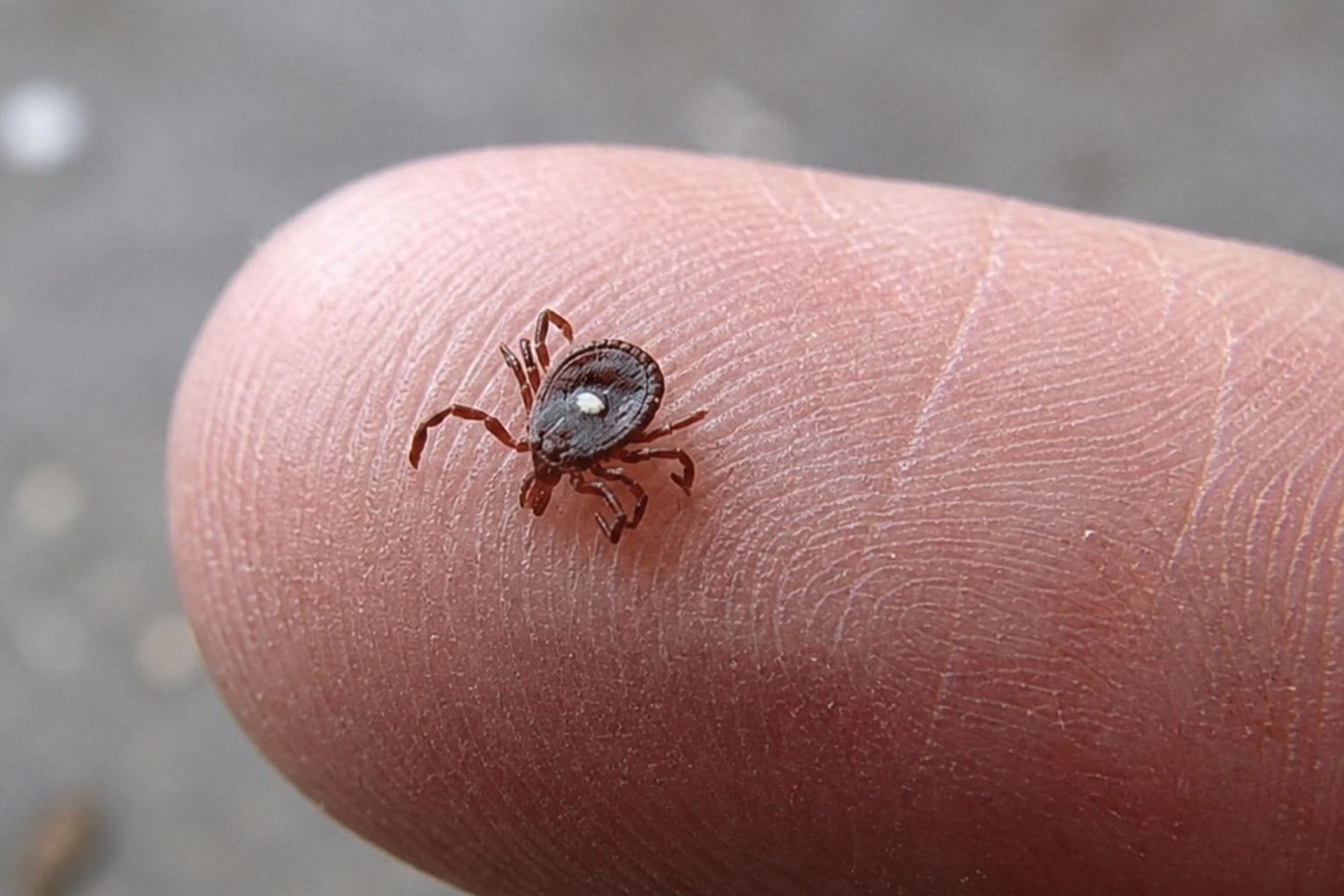
Finding a tick attached to your skin can be unsettling, especially when you realize it may be a lone star tick.
These small arachnids are common in many parts of the United States, particularly across the South, Midwest, and Mid-Atlantic regions. While finding one does not mean you will automatically become sick, a lone star tick bite is worth taking seriously because these ticks can be associated with several health problems, including alpha-gal syndrome, a potentially serious allergy that can develop after certain tick bites.
The good news is that there are simple steps you can take when you discover a tick.
The most important thing is not to panic and not to wait. Removing an attached tick promptly is one of the best things you can do.
What Is a Lone Star Tick?
The lone star tick is scientifically known as Amblyomma americanum.
Adult female lone star ticks are particularly recognizable because they usually have a small, pale or white spot on their back. That distinctive marking is where the name “lone star tick” comes from.
They can be quite small, especially during earlier stages of their life cycle, which makes them easy to overlook.
Lone star ticks are established across large portions of the eastern, southeastern, and central United States. Their local abundance can vary considerably, so simply living in an area where they occur does not mean every tick you encounter is a lone star tick.
Don’t Wait to Remove an Attached Tick
If you discover a tick attached to your skin, remove it as soon as possible.
You don’t need to wait for a doctor or try to identify the species with absolute certainty before removing it.
The CDC recommends using clean, fine-tipped tweezers to grasp the tick as close to the skin’s surface as possible. Pull upward with steady, even pressure. Avoid twisting or jerking the tick because this can cause parts of the tick’s mouth to break off and remain in the skin.
How to Remove a Tick Properly
Follow these steps:
- Get a pair of clean, fine-tipped tweezers.
- Grasp the tick as close to your skin as possible.
- Pull straight upward using steady pressure.
- Avoid twisting, crushing, or jerking the tick.
- Clean the bite area after removal.
- Wash your hands thoroughly.
Soap and water or rubbing alcohol can be used to clean the bite area after the tick has been removed.
If part of the mouth remains embedded and you cannot easily remove it with clean tweezers, the CDC notes that you can leave it alone and allow the skin to heal rather than digging aggressively into the skin.
What You Should NOT Do
There are plenty of old-fashioned tick-removal tricks circulating online.
Don’t rely on methods that involve burning the tick, smothering it with substances, or trying to make it detach on its own.
The goal is simple: remove the tick mechanically with fine-tipped tweezers.
Trying unusual methods can irritate the skin and may make the removal process more difficult.
What Happens After You Remove the Tick?
Once the tick is gone, don’t assume you need to panic.
A tick bite does not automatically mean you will develop a tick-borne illness or alpha-gal syndrome.
However, it’s a good idea to remember the date of the bite and keep an eye on your health.
If possible, take a photograph of the tick before disposing of it. A photo may help a healthcare professional identify the tick later if symptoms develop.
You can also write down:
- When you noticed the tick
- Where it was attached
- Approximately how long it may have been attached
- Where you were when you may have picked it up
- Any symptoms that appear afterward
These details can be useful if you eventually need medical advice.
Why Lone Star Ticks Get So Much Attention
One reason lone star ticks have received increasing attention is their association with alpha-gal syndrome (AGS).
Alpha-gal syndrome is a potentially serious allergy to a carbohydrate called alpha-gal, which is found in many products derived from mammals.
In the United States, AGS is most strongly associated with lone star tick bites, although researchers have also investigated possible links involving other tick species.
Importantly, not everyone who is bitten by a lone star tick develops alpha-gal syndrome.
A tick bite should not automatically make you believe you have developed a meat allergy.
Instead, knowing about the possibility can help you recognize unusual symptoms later.
What Is Alpha-Gal Syndrome?
Alpha-gal syndrome is sometimes described as a “red meat allergy,” although it is more complicated than a typical food allergy.
Alpha-gal is a sugar molecule found in most non-primate mammals and in some products made from mammalian ingredients.
People with AGS can experience allergic reactions after consuming certain foods or products containing alpha-gal.
One unusual feature is the timing.
Unlike many conventional food allergies that can cause symptoms fairly quickly, AGS reactions are often delayed. Symptoms may occur several hours after eating a food containing alpha-gal.
Symptoms to Watch For
Symptoms can vary considerably from one person to another.
Possible symptoms of alpha-gal syndrome include:
- Hives
- Skin swelling
- Stomach pain
- Nausea
- Diarrhea
- Heartburn
- Coughing
- Wheezing
- Difficulty breathing
- Dizziness
- Low blood pressure
In severe cases, anaphylaxis can occur, which requires emergency medical treatment.
One important detail is that symptoms may not begin immediately after the tick bite.
CDC information notes that symptoms of AGS can take weeks or even months to appear after a tick bite.
That means you should not expect to feel something unusual right after removing a tick.
When Should You Contact a Doctor?
Contact a healthcare professional if you become sick after a tick bite, particularly if you develop symptoms such as fever, headache, unusual fatigue, muscle or joint pain, or a rash.
Tick-borne illnesses can have different symptoms, and the specific risk depends on the type of tick and where the exposure occurred.
You should also tell your healthcare provider that you recently found a tick.
That small detail can be important when your symptoms are being evaluated.
If you experience difficulty breathing, swelling of the throat or tongue, fainting, severe dizziness, or other signs of a serious allergic reaction, seek emergency medical care immediately.
Don’t Assume Every Tick Bite Causes Lyme Disease
Another common misconception is that every tick bite means Lyme disease.
That’s not the case.
Different tick species can carry different pathogens, and the illnesses associated with ticks vary by geographic region.
The lone star tick is particularly notable for its association with alpha-gal syndrome and several other tick-borne conditions. It is therefore important not to assume that every tick bite should be treated as a Lyme disease exposure.
Your healthcare provider can assess your symptoms, location, exposure and the type of tick involved.
Check Yourself for More Ticks
Finding one tick means you should take a few extra minutes to check for others.
Ticks can hide in places that are easy to miss.
Check:
- Around and inside the ears
- Along the hairline
- Scalp
- Under the arms
- Around the waist
- Behind the knees
- Between the legs
- Around the ankles
- Other areas where clothing presses against the skin
Children should be checked carefully because they may not notice or report a tick bite themselves.
Don’t forget your pets, clothing and outdoor equipment. Ticks can enter your home on animals, clothing and gear before eventually attaching to another person.
Shower After Spending Time Outdoors
A shower after coming indoors is another useful part of tick prevention.
The CDC recommends showering soon after returning indoors and performing a thorough tick check.
Checking your clothing and gear is also important.
If you have been in an area where ticks are common, make this a routine rather than something you only do when you remember.
How to Reduce Your Risk of Another Tick Bite
Preventing another bite is especially important because repeated tick exposure can increase the opportunity for tick-associated illnesses and alpha-gal sensitization.
Before going outdoors, consider using an EPA-registered insect repellent according to its label.
For clothing and gear, products containing 0.5% permethrin can provide additional protection when used according to the product instructions.
When possible, avoid walking directly through dense brush, tall grass and heavily wooded areas where ticks may be present.
Afterward, perform a complete tick check.
What About Your Pets?
Pets can also bring ticks into the house.
Dogs and other outdoor pets should be checked regularly, particularly after spending time in grassy or wooded areas.
Talk with your veterinarian about appropriate tick-prevention products for your pet.
Keeping pets protected can reduce the chance of ticks hitching a ride into your home.
Can You Prevent Alpha-Gal Syndrome?
There is currently no way to guarantee that a person will not develop alpha-gal syndrome after a tick bite.
The most effective prevention strategy is to avoid tick bites in the first place.
If you have already been bitten, don’t assume that you have AGS. Instead, be aware of the possible symptoms and mention the tick exposure to your healthcare provider if unexplained allergic reactions occur later.
CDC guidance emphasizes that preventing tick bites is an important strategy for reducing the risk of AGS.
A Tick Bite Doesn’t Mean You Should Panic
Seeing a lone star tick attached to your skin can be frightening, but panic isn’t helpful.
The most useful response is straightforward:
Remove the tick promptly, clean the area, record the exposure, check for additional ticks, and pay attention to your health.
Most importantly, don’t let fear stop you from enjoying the outdoors.
A few simple habits can make a big difference.
Check your skin after outdoor activities. Check your children. Check your pets. Wash or inspect your clothing and gear. And remove attached ticks promptly when you find them.
Frequently Asked Questions
How do I know if I found a lone star tick?
Adult female lone star ticks commonly have a distinctive light-colored spot on their back. However, ticks can look very different depending on their life stage, so identification from appearance alone isn’t always reliable.
Should I save the tick after removing it?
You can take a clear photograph of the tick before disposing of it. If you become sick later, the photograph may provide useful information for a healthcare professional.
Can a lone star tick bite cause a meat allergy?
A lone star tick bite can be associated with alpha-gal syndrome, an allergy involving the carbohydrate alpha-gal. However, not everyone bitten by a lone star tick develops the condition.
How long after a tick bite can symptoms appear?
Symptoms depend on the condition involved. For alpha-gal syndrome, symptoms can take weeks or months to appear after the tick bite, and allergic reactions after exposure to alpha-gal-containing foods are often delayed by several hours.
What is the safest way to remove a tick?
Use clean, fine-tipped tweezers to grasp the tick close to the skin and pull upward with steady, even pressure. Avoid twisting or jerking. Clean the area afterward.
When should I seek medical attention after a tick bite?
Seek medical advice if you develop symptoms such as fever, headache, rash, unusual fatigue, muscle or joint pain, or other concerning symptoms after a tick exposure. Emergency care is necessary for signs of a severe allergic reaction, including difficulty breathing or anaphylaxis.
Final Thoughts
Finding a lone star tick doesn’t automatically mean something bad will happen.
What matters most is knowing what to do.
Remove an attached tick promptly with fine-tipped tweezers, clean the bite area, check yourself and your belongings for additional ticks, and monitor for unusual symptoms.
Lone star ticks are particularly important to recognize because of their association with alpha-gal syndrome, a potentially serious allergic condition that can appear long after the original tick bite.
The best protection is prevention. Use appropriate tick repellents, wear protective clothing when practical, check your skin after outdoor activities, inspect pets and gear, and make tick checks part of your routine whenever you’ve been outside in tick-prone areas.
SEO Title: What to Do If You Spot a Lone Star Tick: Important Steps to Take
Meta Description: Found a lone star tick? Learn how to safely remove it, what symptoms to watch for, why alpha-gal syndrome matters, and how to reduce your risk of future tick bites.
Primary Keyword: lone star tick
Secondary Keywords: lone star tick bite, what to do after a tick bite, tick removal, alpha-gal syndrome, tick bite symptoms, how to remove a tick