

You know the sound. That sharp little pop when you pull, bend, or press your knuckles — followed by that oddly satisfying feeling of relief. Millions of people do it every single day: at their desk, in the car, while watching TV. It feels harmless. It feels good, even.
But doctors have been warning about this habit for years — and what is actually happening inside your joints when you crack them is stranger, and more concerning, than most people imagine.
What That “Pop” Really Is
Here is the part nobody tells you. Your knuckles are not bones hitting each other. Each finger joint is cushioned by a slippery fluid called synovial fluid, which keeps the joint gliding smoothly. Dissolved inside that fluid are tiny gas bubbles — mostly nitrogen.
When you stretch or press the joint, you suddenly drop the pressure inside it. The gas bubbles collapse all at once — and that collapse is the “crack” you hear. You are not realigning anything. You are setting off a tiny gas explosion inside your own hand, over and over, day after day.
What Doctors Actually Say
For decades, people believed cracking knuckles caused arthritis. The research on that is genuinely surprising: large studies comparing habitual knuckle-crackers with non-crackers found no clear evidence that the habit causes arthritis. One famous study even had a doctor crack the knuckles of only one hand for 50 years — and found no difference between the two hands.
But here is what doctors DO warn about, and it is the part crackers never hear:
- Weaker grip over time. Studies have linked habitual knuckle cracking with reduced hand strength and grip — the very thing your hands are for.
- Swollen, puffy hands. Chronic crackers in studies showed more hand swelling than people who never cracked.
- Soft-tissue damage. Aggressive cracking can strain the ligaments around the joint, and in rare cases even dislocate a finger or tear tissue.
- A habit that escalates. Most people start with one knuckle and end up cracking every joint they can reach — fingers, wrists, neck, back — multiplying the strain.
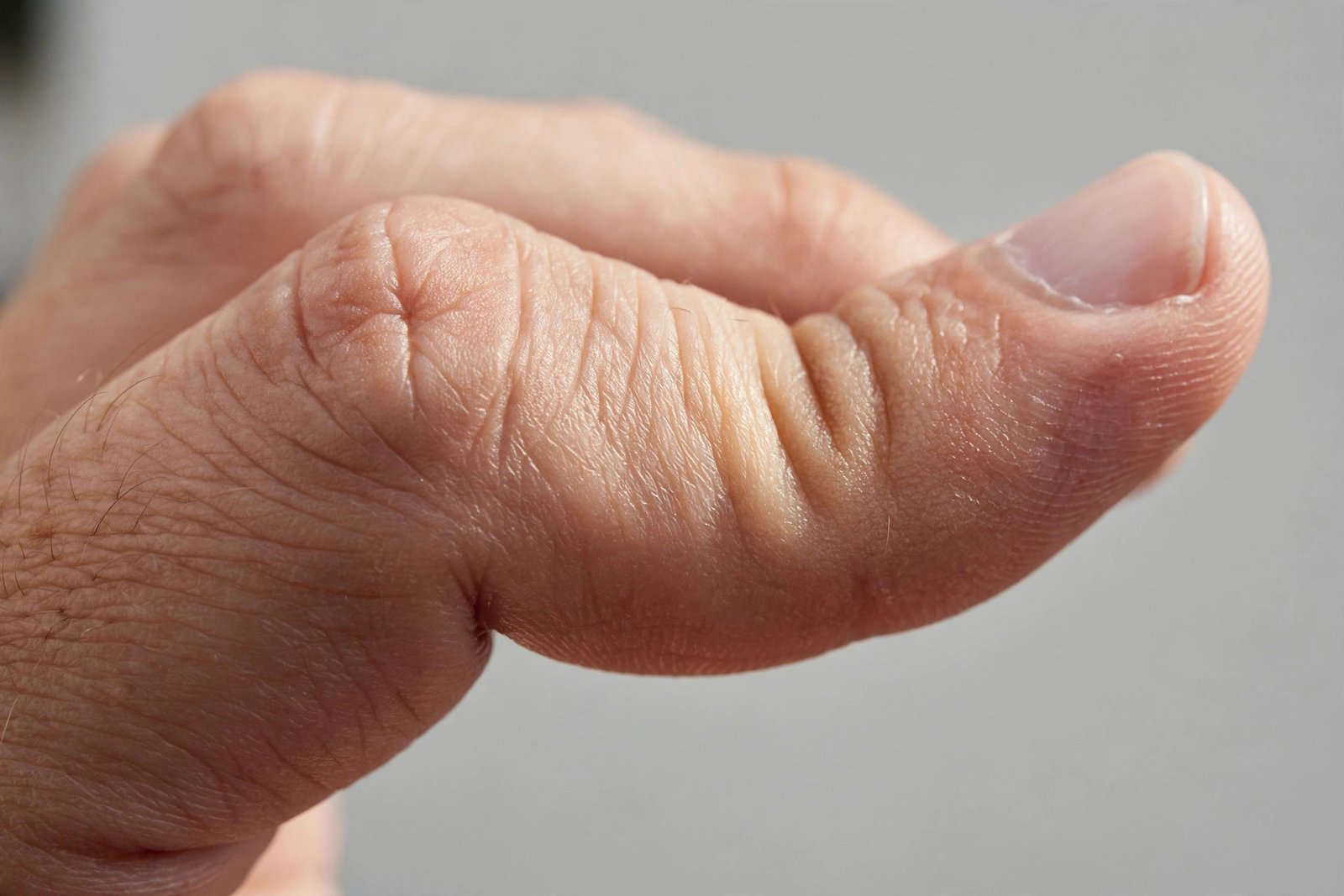
The Signs Your Hands Are Telling You to Stop
Your joints do not file complaints in writing — they send signals. Doctors say to pay attention if you notice:
- Your hands feel stiff or achy after a cracking session instead of relieved
- Your knuckles look puffier than they used to
- You feel the urge to crack the same joint again within minutes
- You are cracking harder and harder to get the same “pop”
- Your grip feels weaker — jars and lids are suddenly harder to open
That last one is the quiet warning most people ignore. Grip strength is one of the simplest measures of hand health, and it is exactly what chronic cracking has been linked to wearing down.
How to Break the Habit — Starting Today
First: notice your triggers. Most people crack their knuckles when they are bored, anxious, or idle — at a desk, in traffic, on the couch. The habit lives in those empty moments.
Second: replace the motion, don’t just fight it. When the urge hits, do the opposite movement — spread your fingers wide and stretch them for ten seconds instead of compressing the joint. You get the release feeling without the pop.
Third: keep your hands busy. A stress ball, a pen to fidget with, even squeezing and releasing your fists gives your hands something to do that does not involve collapsing gas bubbles in your joints.
The Bottom Line
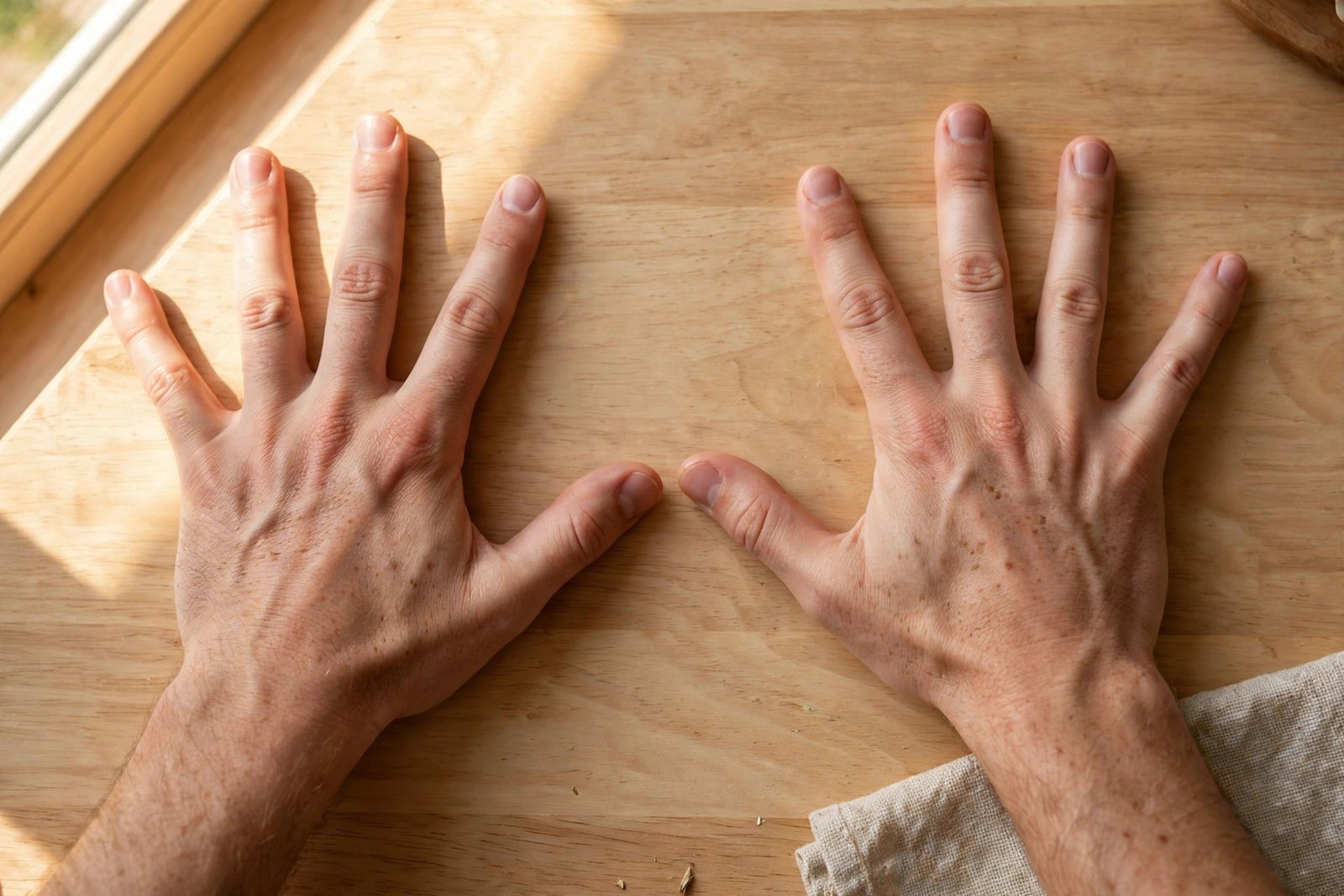
One crack will not ruin your hands. But doctors are clear about the pattern: years of daily cracking is linked to weaker grip, swelling, and strained ligaments — real costs for a habit that gives you nothing but a two-second thrill.
Your hands do everything for you. Maybe it is time to stop popping them and start protecting them.
Try going one full day without a single crack. Your knuckles will thank you.