
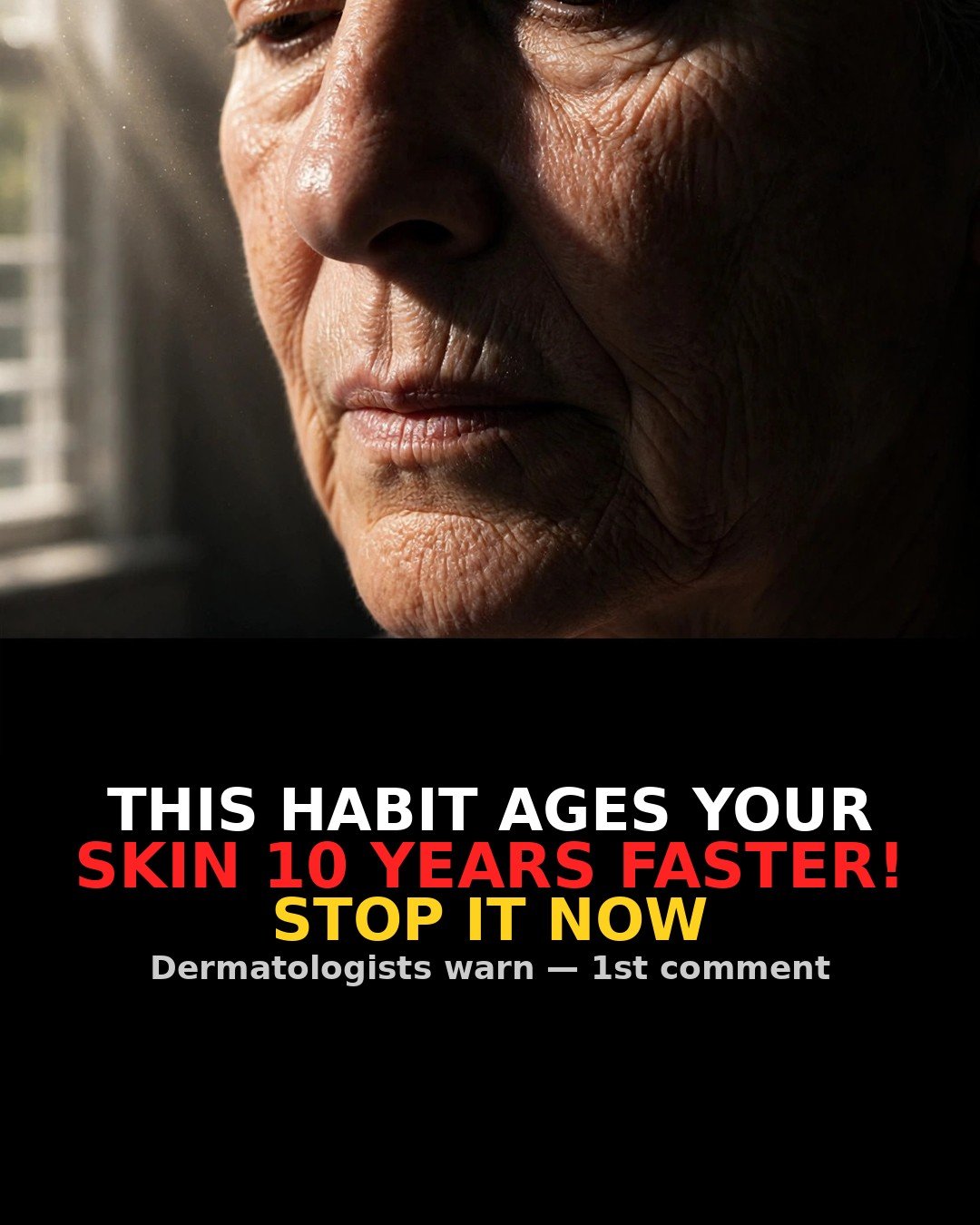
It’s Not Just Your Imagination — This Daily Habit Is Aging You
Look in the mirror. Now think about five years ago. Notice a few more fine lines? A little less firmness? Slightly duller skin? Most people chalk it up to “just getting older.” And yes, aging is inevitable. But here’s what almost nobody realizes: one everyday habit could be accelerating your skin aging by up to a decade — and you’re probably doing it right now without thinking twice.
Dermatologists have a term for it. They see it every single day in their clinics. And when they tell patients what’s causing it, the reaction is almost always the same: shock, then disbelief, then “nobody ever told me.”
Let’s talk about what it is, why it’s so damaging, and — most importantly — how to stop it.
The #1 Everyday Habit That Ages Your Skin: Unprotected Sun Exposure
If you guessed something exotic, sorry to disappoint. The answer is almost embarrassingly simple: daily, incidental sun exposure without protection.
Not beach days. Not tanning beds. Just… everyday life. Driving to work. Walking to the store. Sitting near a window. The 10 minutes here and 15 minutes there that you never think about — because who puts on sunscreen for a quick errand?
Here’s the devastating math: dermatologists estimate that up to 80-90% of visible skin aging — wrinkles, dark spots, sagging, rough texture — is caused by ultraviolet (UV) radiation, not by the passage of time itself. This is called photoaging, and it’s distinct from chronological aging.
Studies comparing the skin of people with lifelong sun protection habits versus those without show differences so dramatic they look like different decades of life. In one famous comparison, a truck driver who spent 28 years with one side of his face toward the window showed extreme one-sided aging — deep wrinkles, sagging, and thickened skin on the sun-exposed side, while the other side looked decades younger. Same person. Same age. Same genetics. Only the sun exposure differed.
Why Daily Incidental Exposure Is Worse Than You Think
UVA Goes Through Glass
Here’s what most people get wrong: they think they’re safe indoors or in the car. UVB rays (the burning ones) are mostly blocked by glass. But UVA rays — the aging ones — penetrate windows easily. Your car windshield, your office windows, your living room — UVA is coming through all of them, silently breaking down your collagen hour after hour.
It’s Cumulative and Irreversible
Unlike a sunburn that fades, UVA damage accumulates in the deeper layers of your skin over years. It destroys collagen and elastin — the proteins that keep skin firm and bouncy. Once they’re broken down, your body replaces them very slowly (and less effectively as you age). The damage is essentially a one-way ratchet.
Clouds Don’t Save You
Up to 80% of UV radiation penetrates cloud cover. Those overcast days when you skip sunscreen? Your skin is still getting hit. This is one of the biggest misconceptions in skincare.
The Science: What’s Actually Happening Inside Your Skin
To understand why sun damage is so hard to undo, it helps to know what’s going on beneath the surface. Your skin’s firmness and bounce come from two key proteins in the deeper layer (the dermis): collagen, which acts like scaffolding holding everything up, and elastin, which lets skin stretch and snap back. In young skin, both are abundant and constantly renewed.
UV radiation disrupts this in two ways. First, it generates free radicals — unstable molecules that damage everything they touch. Second, those free radicals switch on enzymes called matrix metalloproteinases (MMPs), which literally chew through your existing collagen, weakening your skin’s structure from the inside long before visible damage appears.
At the same time, UV damages the DNA inside your skin cells. Some of that DNA damage shows up as dark spots and uneven pigmentation. And your body’s repair systems, which work beautifully in your twenties, slow down dramatically with age — collagen production drops about 1% per year after age 20, and UV damage accelerates that decline. The result is thinner, less resilient skin that wrinkles, sags, and spots far earlier than it should.
Other Everyday Habits That Accelerate Skin Aging
Sun is #1 by a huge margin, but these everyday habits pile on:
1. Sleeping on Your Side or Stomach
Night after night, pressing your face into a pillow creates sleep wrinkles — vertical creases that, over years, become permanent. Back-sleeping or silk pillowcases (less friction) help.
2. Not Removing Makeup / Harsh Cleansing
Sleeping in makeup traps pollutants against your skin all night, generating free radicals. On the flip side, harsh scrubbing and hot water strip your skin barrier, causing chronic low-grade inflammation that accelerates aging.
3. Sugar-Heavy Diet
Excess sugar triggers glycation — a process where sugar molecules attach to collagen and elastin, making them stiff and brittle. The result: more wrinkles, less bounce. You can’t see it happening, but it’s happening.
4. Chronic Sleep Deprivation
Your skin does its heaviest repair work during deep sleep, when growth hormone peaks. Consistently sleeping less than 7 hours robs your skin of this repair window. Studies show poor sleepers show significantly more signs of aging and slower recovery from sun damage.
5. Smoking and Vaping
Nicotine constricts blood vessels, starving skin of oxygen and nutrients. The repetitive facial motions (pursing lips) etch lines around the mouth. Smokers’ skin can look 10-15 years older than non-smokers of the same age.
6. Stress (and the Cortisol It Produces)
Chronic stress elevates cortisol, which breaks down collagen, increases inflammation, and impairs your skin barrier. The “stressed look” is real and measurable.
How to Actually Protect Your Skin (Without Overhauling Your Life)
You don’t need a 12-step routine. These high-impact changes cover 90% of it:
Daily Sunscreen — Non-Negotiable
SPF 30+ broad-spectrum, every morning, on face, neck, and hands — even if you’re staying inside. Modern formulas are lightweight and invisible. This single habit is worth more than every expensive serum combined.
Antioxidant Serum (Vitamin C)
Applied in the morning under sunscreen, vitamin C neutralizes the free radicals that UV generates. It’s the best-supported anti-aging topical in dermatology.
Retinoid at Night
Prescription tretinoin or over-the-counter retinol is the gold standard for reversing existing photoaging. It boosts collagen production and accelerates cell turnover. Start slowly (2x/week) to avoid irritation.
Moisturize Consistently
A good moisturizer maintains your skin barrier, which is your first line of defense against everything — pollution, irritants, moisture loss.
Sleep on Your Back (or Get Silk)
Small change, real long-term payoff for wrinkle prevention.
Can You Reverse Damage That’s Already Done?
Here’s the encouraging part: while you can’t turn back the clock completely, dermatologists say it’s genuinely possible to improve photoaged skin — and the evidence for what works is stronger than most people realize.
The best-studied option is prescription tretinoin (a vitamin A derivative). In clinical trials, consistent tretinoin use over 6-12 months measurably increased collagen production, faded dark spots, and smoothed fine wrinkles — which is why dermatologists consider it the gold standard. Over-the-counter retinol works too, just more gradually.
Beyond topicals, in-office treatments can accelerate the turnaround. Chemical peels remove damaged outer layers so fresher skin grows in. Fractional laser treatments create controlled micro-injuries that trigger your body’s own collagen-rebuilding response. Microneedling works on a similar principle. None of these are magic — they all work by stimulating the same repair processes your skin used effortlessly in youth.
The honest truth, though: prevention beats reversal every time. Every dermatologist will tell you that a $15 bottle of daily sunscreen does more over a decade than thousands of dollars of corrective treatments. The earlier you start protecting, the less you’ll ever need to fix.
The Bottom Line
You can’t stop time. But you can stop the habit that’s doing most of the visible damage. Daily unprotected sun exposure is quietly adding years to your face — and the fix is as simple as a 30-second sunscreen application each morning.
Your future self will thank you. Every single dermatologist agrees: the best anti-aging product ever invented isn’t a cream or a procedure. It’s sunscreen, used daily, starting now.
Frequently Asked Questions
Is it too late if I’m already seeing signs of aging?
Never too late. Sunscreen prevents further damage starting immediately, and retinoids can partially reverse existing photoaging. Dermatologists see improvement in patients who start protection at any age.
Do I need sunscreen if I work from home?
Yes — UVA penetrates windows. If you sit near windows during the day, you’re getting exposure. Daily SPF is still the recommendation.
What’s the difference between UVA and UVB?
UVB causes sunburn (surface damage). UVA causes aging (deep damage) and penetrates glass and clouds. You need “broad spectrum” protection against both.
Can diet really affect skin aging?
Yes. High-sugar diets accelerate glycation (collagen damage), while antioxidant-rich diets (colorful fruits, vegetables, green tea) help neutralize UV-generated free radicals. Diet won’t replace sunscreen, but it matters.