
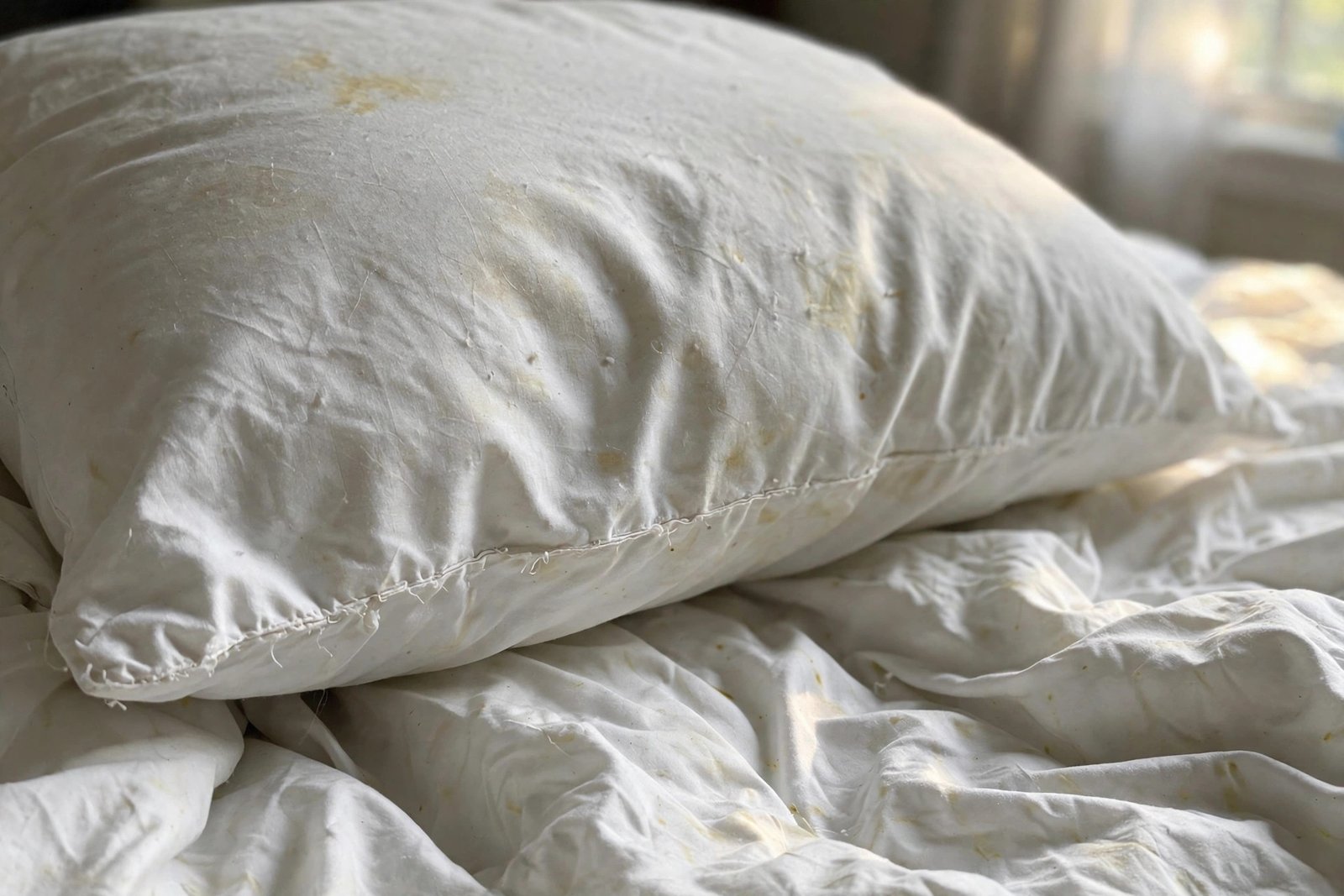
The Swab Test That Stopped People in Their Tracks
Picture this: researchers take a cotton swab, run it across a pillowcase that hasn’t been washed in just one week, and put it under analysis. Then they swab an average toilet seat. The result? The pillowcase carried roughly three million bacterial colonies per square inch — about 17,000 times more bacteria than the toilet seat.
Let that sink in. The thing you press your face into for eight hours every single night — the thing you trust with your skin, your breathing, your rest — is, by the numbers, spectacularly filthier than the one object in your home everyone agrees is disgusting.
This wasn’t a rumor or a meme. It was a controlled swab experiment run over four consecutive weeks, testing the pillowcases of volunteers at the start of every week. And every single week, the numbers came back revolting. The colonies found included gram-positive cocci and bacilli — the same broad families of bacteria associated with skin infections, respiratory irritation, and worse.
And here’s the part nobody wants to hear: most people wash their pillowcases far less often than they should, and almost never wash the pillow itself.
What’s Actually Living Inside Your Pillow
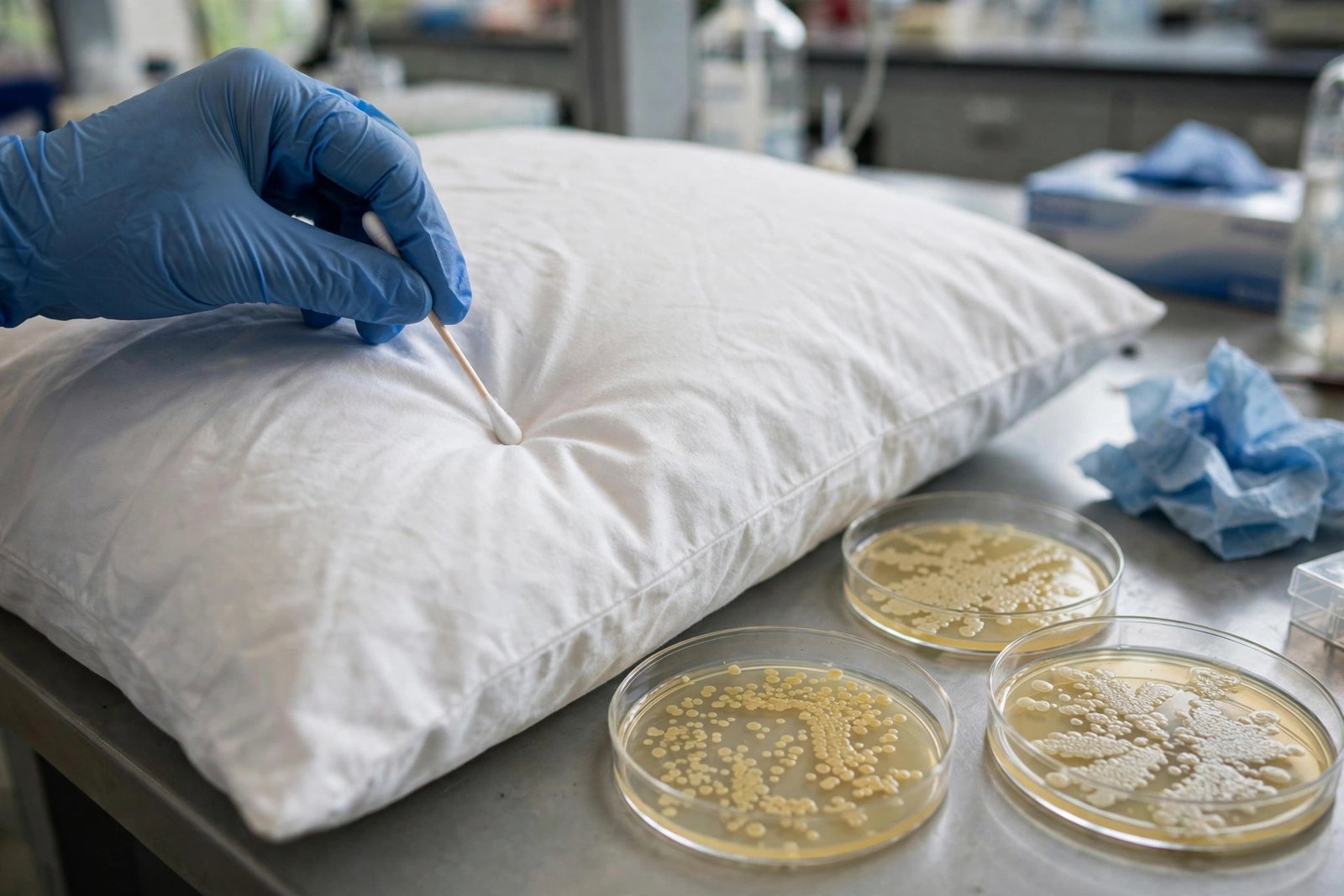
Bacteria are only the opening act. The real horror show is happening deeper — inside the pillow, where you can’t see it at all.
In 2005, researchers at the University of Manchester dissected ten pillows that had been in regular use for between a year and a half and twenty years. What they found was published in the scientific journal Allergy, and it reads like science fiction: millions of fungal spores per pillow, with four to sixteen different species identified in every single sample.
The most common species was Aspergillus fumigatus — a microscopic fungus known to trigger problems in people with weakened immune systems and to worsen asthma in adults. They also found fungi normally associated with bread mold, vine mold, damp walls, and showers. Synthetic pillows were even worse than feather ones.
Professor Ashley Woodcock, who led the research, described what scientists believe is happening in there: the house dust mite eats the fungi, and the fungi in turn feed on the dust mites’ droppings plus your shed skin cells — a miniature ecosystem, living and breeding inside the thing you sleep on.
Where Does It All Come From? You. Every Night.
Your pillow isn’t dirty because your bedroom is dirty. It’s dirty because you are in it, night after night, for roughly a third of your life.
Every day, you shed tens of millions of dead skin cells — dermatologists estimate around 50 million per day end up in your bedding. Add a full night of sweat (your head perspires more than you think), drool, natural skin oils, leftover makeup, hair products, and creams. Now trap all of that in warm, dark, slightly damp fabric for eight hours.
You’ve just built a five-star hotel for microorganisms.
Dust mites move in first. These microscopic creatures feast on your dead skin cells, and a single used pillow can harbor enormous populations of them. Their droppings then become food for fungi. The fungi release spores. The warmth from your head keeps the whole cycle running at full speed. And because almost nobody washes the actual pillow — only the case, and not often enough — this ecosystem can live undisturbed for years, only puffing spores into the air when you fluff the pillow in the morning.
The Pillow That Gains Weight While You Sleep
Here’s a claim that sounds impossible until you hear who said it. Carol McLay, an infection preventionist and president of the Association for Professionals in Infection Control and Epidemiology, has stated that a two-year-old pillow can weigh up to 10% more than it did when new — just from the accumulated weight of dust mites and dead skin cells packed inside it.
Ten percent. Imagine buying a pillow and, two years later, a tenth of what you’re resting your head on is mites and shed skin. You can’t see it. You can’t feel it. But it’s there, night after night, inches from your nose and mouth.
This is why sleep experts quietly call the pillow the most neglected hygiene item in the bedroom. People will deep-clean a bathroom, sanitize a kitchen sponge, and replace a toothbrush on schedule — then sleep for years on the same unwashed pillow without a second thought.
What This Grime Can Do to Your Face and Lungs
So what does eight hours a night on a bacteria-loaded, mite-packed, spore-filled surface actually do to you? Researchers and dermatologists point to a familiar list of complaints.
Breakouts and skin irritation. Dirty pillowcases are constantly cited by dermatologists as a contributor to acne and skin inflammation — your face marinates in oil, sweat, and bacteria all night. People who change their pillowcase more often frequently report clearer skin within weeks.
Allergies and asthma. Dust mite droppings are one of the most common indoor allergens on earth. If you wake up congested, sneezy, or with itchy eyes and it fades after you’ve been up a while, your pillow is a prime suspect. The Manchester researchers specifically noted that pillow fungi exacerbate asthma in adults.
Respiratory irritation. Remember those spores released when you fluff the pillow? You’re breathing right next to them all night. For most healthy people the effect is subtle — morning stuffiness, a scratchy throat. For sensitive individuals, it ZZZcan be much more noticeable.
Hair and scalp issues. The same microbial mix linked to skin problems can also irritate the scalp, and some experts connect chronically dirty pillowcases to dandruff flare-ups and even excess shedding.
None of this means your pillow is going to send you to the hospital. But it does mean the thing you associate with rest and cleanliness might be quietly working against both.
The Fix Takes Less Than Five Minutes
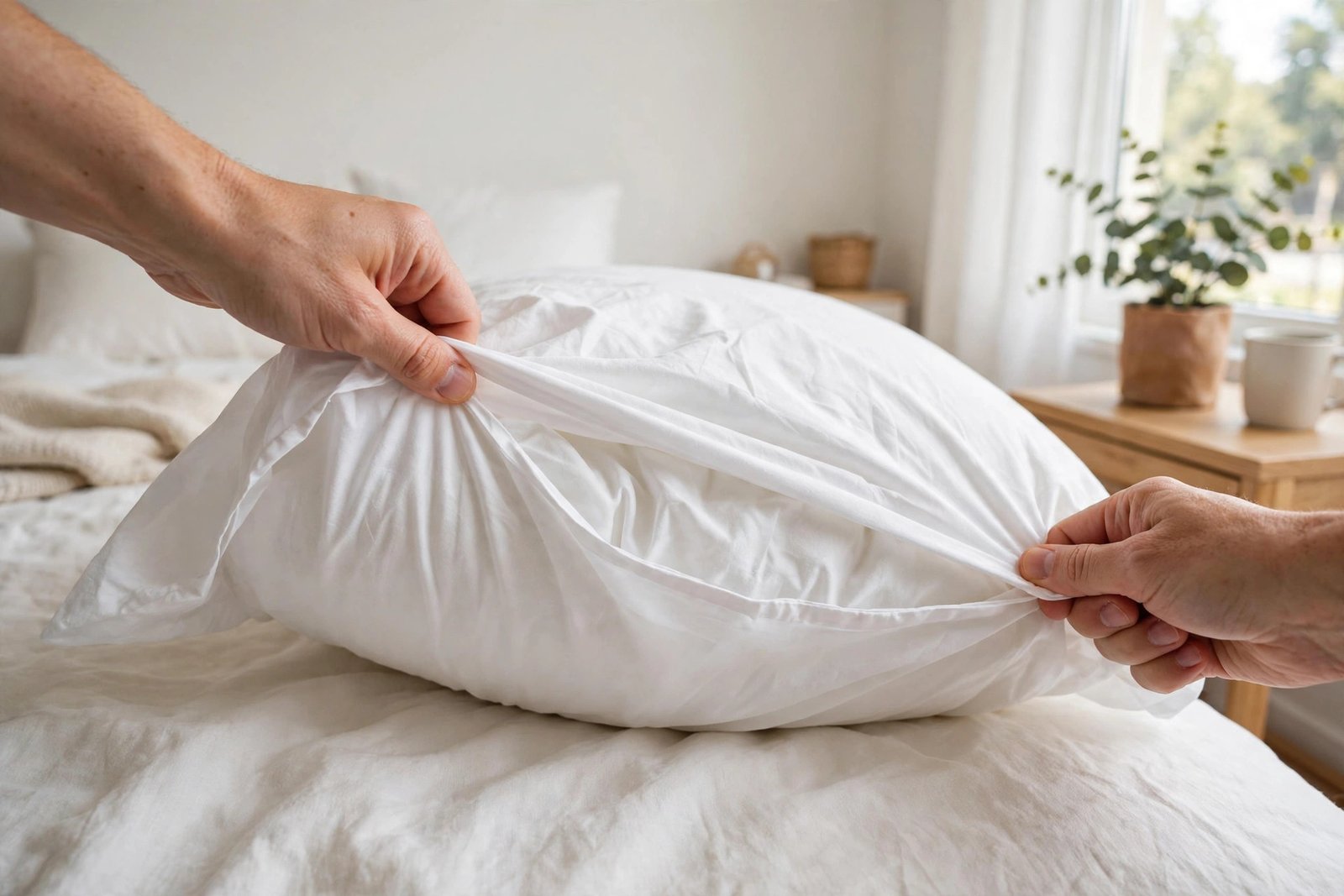
Here’s the good news: this is one of the easiest hygiene problems in your entire home to solve. No expensive products. No complicated routine.
1. Change your pillowcase every week — minimum. This is the single biggest step. If you have oily or acne-prone skin, change it every three to four days. Keep a spare set so there’s always a clean one ready.
2. Wash the actual pillows. Most pillows — including down and synthetic — can go in the washing machine. Do it every three to six months on a gentle cycle, then dry thoroughly. A pillow that stays damp inside is worse than a dirty dry one.
3. Replace pillows every one to two years. No pillow lasts forever. If yours is lumpy, flat, stained yellow, or older than you can remember, it’s not a pillow anymore — it’s a habitat. Retire it.
4. Don’t go to bed dirty. Showering before bed, removing makeup, and keeping pets off the pillows dramatically slow the buildup. Every shortcut you take at night, your pillow collects.
5. Let it breathe in the morning. Instead of making the bed immediately, pull the covers back for 20–30 minutes. Airflow and daylight dry out the moisture mites and fungi depend on.
Tonight, You’ll Think About This
Seventeen thousand times more bacteria than a toilet seat. Millions of fungal spores. A miniature ecosystem with its own food chain — inside the soft white rectangle you trust with your face.
The proof has been sitting in laboratories since 2005, and in swab-test petri dishes ever since. The only question is what you do with it. Tonight, when your head hits the pillow, you’ll know exactly what’s in there with you.
Go strip the case. Throw it in the wash. Your face will thank you by morning.