
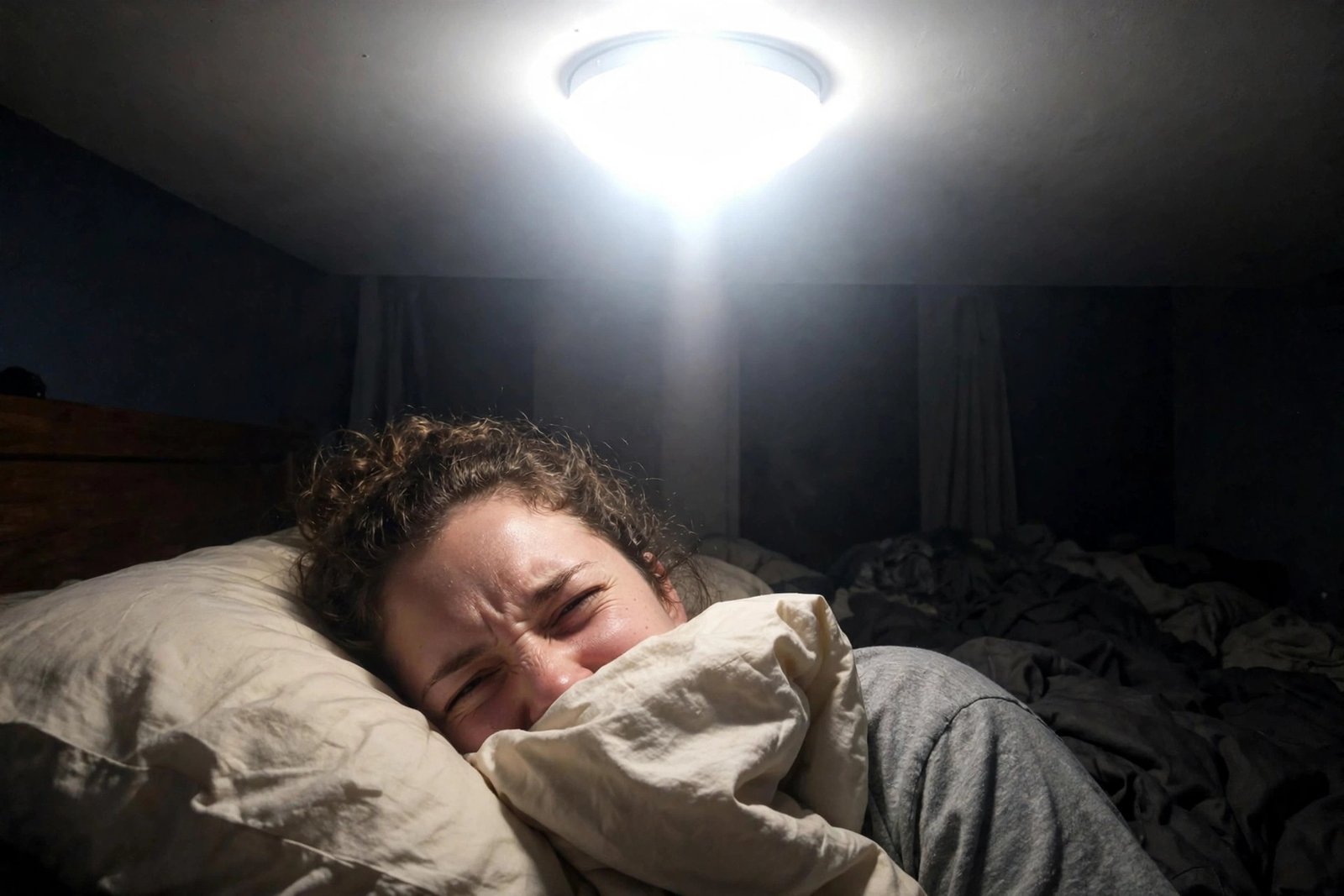
You do everything right. You brush your teeth, set the alarm, climb into bed — and leave the hallway light on. The TV keeps glowing in the corner. Your phone lights up with every notification on the nightstand. It feels harmless. Your eyes are closed, after all — what could light possibly do while you sleep?
According to a 2022 study from Northwestern Medicine, quite a lot. Researchers discovered that just one single night of sleeping with the lights on changed volunteers’ bodies by morning: their blood sugar control got worse and their heart rate climbed. The lead scientist called it a warning for anyone who sleeps in a lit room — which, it turns out, is a huge number of us.
Here’s what the science actually found, why your closed eyelids don’t protect you, and the 5-minute fix sleep doctors recommend.
The One-Night Experiment That Worried Sleep Doctors
In March 2022, researchers at Northwestern University’s Feinberg School of Medicine published a study in the journal PNAS that made sleep scientists sit up. Led by Dr. Phyllis Zee, chief of sleep medicine, the team brought 20 healthy young adults into a sleep lab for two nights.
On one night, participants slept in near-darkness — less than 3 lux, about as dark as a moonless night. On another night, they slept with moderate room light: 100 lux, roughly the brightness of a well-lit hallway or a room with the overhead light on.
By morning, the difference was measurable. After the lit night, participants showed greater insulin resistance — their bodies needed more insulin to manage blood sugar. Their heart rates were higher. And their nervous systems had shifted toward sympathetic activation — the “fight or flight” mode that should power down at night — instead of the restful parasympathetic mode the body needs during sleep.
One night. That’s all it took to see the change. Dr. Zee’s advice was blunt: avoid light during the hours you’re sleeping.
Why Closed Eyelids Don’t Protect You
“But my eyes are closed!” — that’s what almost everyone says. Here’s the uncomfortable truth: your eyelids are not blackout curtains.
Light passes through closed eyelids and still reaches the retina. Special cells in the eye — intrinsically photosensitive retinal ganglion cells — detect light even when you’re not consciously seeing anything, and they report straight to your brain’s master clock in the hypothalamus.
That clock runs your circadian rhythm: the 24-hour cycle controlling when you feel sleepy, when hormones release, when your body repairs itself. When light hits those cells at night, your brain gets a confusing signal: it must be daytime. Melatonin — the hormone that tells your body it’s night — gets suppressed. Your nervous system stays partly in “day mode” when it should be in full “night mode.”
That’s exactly what the Northwestern team measured: hearts beating faster and stress systems staying switched on all night, just because the room wasn’t dark.
Even a Dim Nightlight Counts
You might think this only applies to bright overhead lights. It doesn’t.
Sleep researchers have found that even dim light — around 5 lux, like a faint hallway nightlight or the glow seeping under a door — can fragment sleep and suppress melatonin. Your brain is exquisitely sensitive to light at night because, for most of human history, night meant darkness. Total darkness.
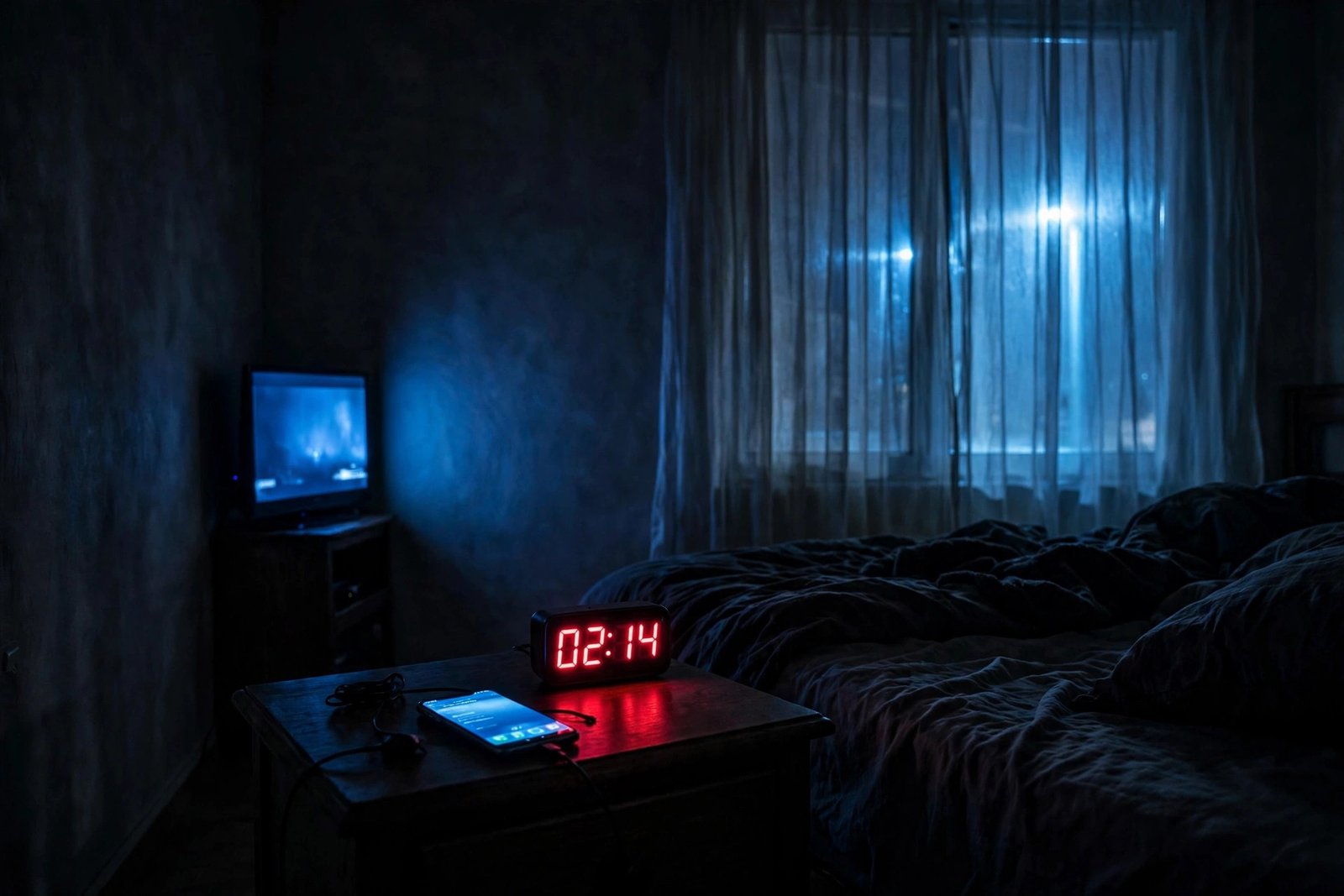
Think about how much light actually surrounds the average sleeper: the streetlight bleeding through thin curtains, the TV on standby, the phone lighting up with each message, the bright blue numbers of an alarm clock, the little LED on the charger, the bathroom light left on with the door cracked open.
Individually they seem trivial. Together, they turn your bedroom into what one sleep researcher called “a light soup” — and your brain drinks it all night long.
The Chain Reaction: Blood Sugar, Heart, and Weight
So what does a night in “day mode” actually do to you? The Northwestern study caught three things happening at once — and each one points to a bigger long-term risk.
First, insulin resistance. After the lit night, participants’ bodies responded less efficiently to insulin. Do that occasionally and your body bounces back. Do it night after night for years, and you’re walking down the road toward type 2 diabetes. Insulin resistance is one of the earliest warning signs of the disease.
Second, heart rate. A sleeping heart should slow down and rest. When light keeps the sympathetic nervous system switched on, the heart works harder all night — night after night, year after year. Over time, researchers link this kind of strain to higher cardiovascular risk.
Third, weight. A major 2019 study from the U.S. National Institutes of Health — the Sister Study, published in JAMA Internal Medicine — followed more than 43,000 women and found that those who slept with a television on, or a light on in the room, had about 17% higher odds of gaining 11 pounds or more over the next five years. Light at night pushes bedtimes later, shortens sleep, and disrupts the hunger hormones ghrelin and leptin — a perfect recipe for gradual weight gain.
One light. Three slow-motion health risks.
It’s Not Just the Ceiling Light
When people hear “sleeping with the lights on,” they picture an overhead bulb blazing. But the modern bedroom has sneakier offenders:
- The television. Falling asleep to the TV is one of the most common habits — and one of the worst. It flickers, changes brightness, and makes noise all night.
- The phone. Every notification lights up the screen. Face-down and silenced is the minimum; another room is better.
- Streetlights and security lights. Thin curtains do almost nothing against them.
- The alarm clock. Those bright blue or white LED numbers are surprisingly powerful at close range.
- Charger LEDs and standby lights. Tiny, but they’re often at eye level on the nightstand.
- The bathroom light. Leaving it on “just in case” with the door open floods the bedroom.
Sleep doctors have a simple rule of thumb: if you can see your hand clearly when you hold it up in your bedroom at night, it’s too bright.
The 5-Minute Fix Sleep Doctors Swear By
The good news: this is one of the easiest health fixes that exists. No pills, no gym, no diet. Just darkness.
- Make the bedroom as dark as possible. Blackout curtains are the gold standard. If that’s not an option, a comfortable sleep mask works — Dr. Zee specifically recommends an eye mask when you can’t control the light in your room.
- Dim the house 2–3 hours before bed. Switch to warm, low lighting in the evening. Your brain starts making melatonin when light fades — help it along.
- Put the phone face-down — or better, outside the bedroom. Turn on Do Not Disturb. No screens for the last hour before sleep if you can manage it.
- Kill the tiny lights. A strip of electrical tape over standby LEDs costs almost nothing. Swap a bright digital clock for a dim red display, or turn it away from the bed.
- Fix the bathroom run. Instead of the overhead light, use a dim amber motion-sensor nightlight placed low. You’ll see where you’re going without nuking your melatonin.
- Block the windows properly. If streetlights glare in, layer blackout curtains over blinds. Your future self will thank you.
What If Your Child Is Afraid of the Dark?
Parents ask this one a lot — and the answer is reassuring. The dose makes the poison.
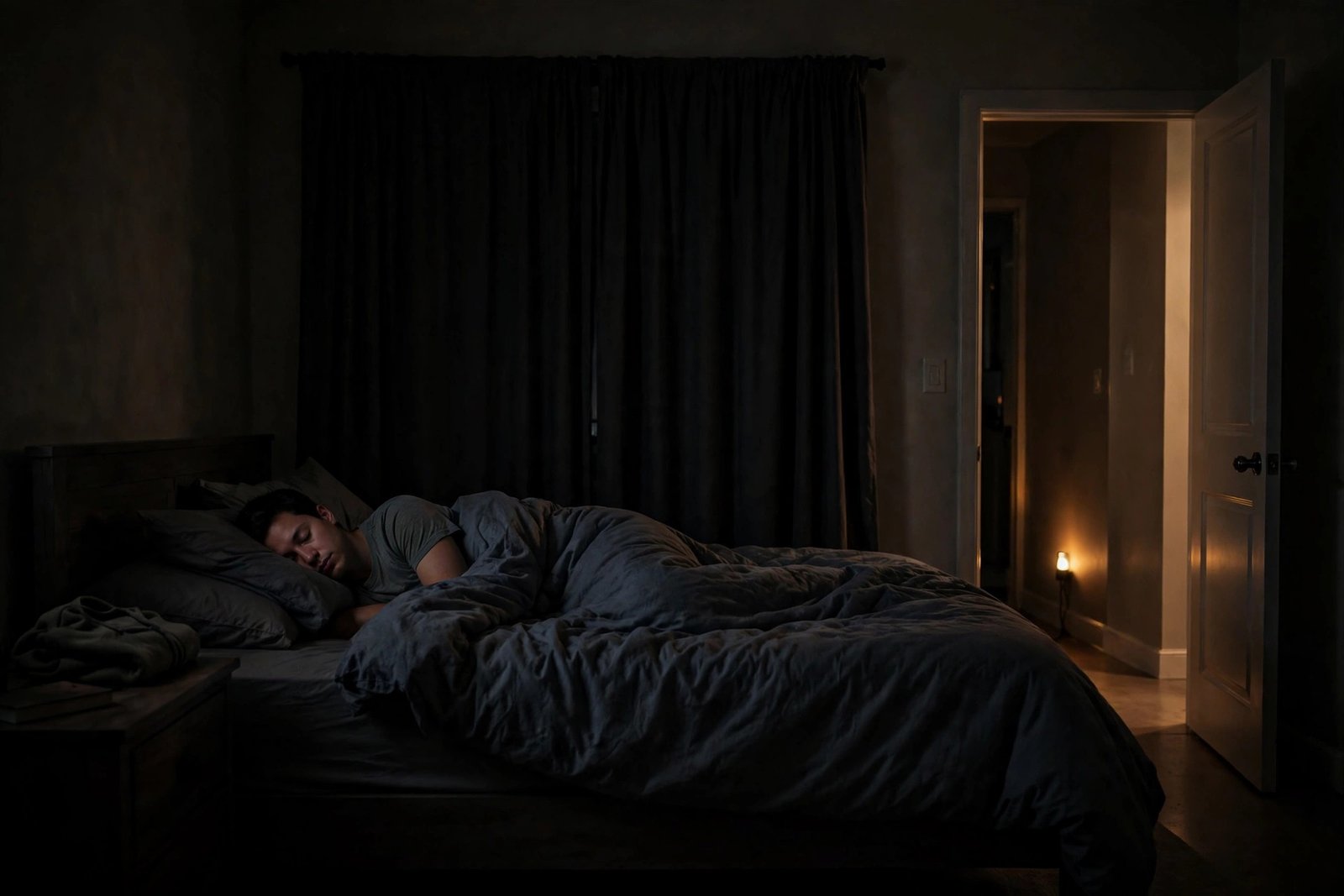
A small, dim, warm-colored nightlight placed low and away from the bed — ideally amber or red, not white or blue — is vastly better than an overhead light or hallway light blazing through an open door. Keep the bedroom door mostly closed, put the light in a corner rather than shining on the face, and choose the dimmest one that does the job.
As kids get older, gradually dim it further. The goal is the same as for adults: the darkest sleep you can comfortably manage.
The Bottom Line
Tonight, try the hand test. Climb into bed, hold up your hand — if you can see it clearly, your bedroom is too bright, and your body is spending the night in “day mode” without your permission.
One night of light changed blood sugar and heart rate in a lab. Imagine what hundreds of nights are doing quietly, in the light. Fix it tonight — it takes five minutes, and your body will notice by morning.
Read next: Your Pillow Is Dirtier Than a Toilet Seat — Here’s Proof!