Olive Oil on an Empty Stomach: Benefits, Myths, and How to Use It Safely
Olive oil has earned its reputation as one of the healthiest fats in the world. Often called “liquid gold,” extra virgin olive oil is a staple of the Mediterranean diet and is rich in heart-healthy fats, antioxidants, and beneficial plant compounds.
Many people start their morning with a spoonful of olive oil on an empty stomach, believing it improves digestion, supports heart health, and promotes overall wellness. While olive oil offers several proven health benefits, it’s important to understand what science supports and what remains a popular health claim.
Why Extra Virgin Olive Oil Is So Healthy
Extra virgin olive oil is minimally processed, allowing it to retain many of its natural nutrients.
It contains:
- Heart-healthy monounsaturated fats
- Vitamin E
- Vitamin K
- Polyphenols
- Powerful antioxidants
- Natural anti-inflammatory compounds
These nutrients help protect the body from oxidative stress while supporting long-term health.
Potential Benefits of Taking Olive Oil in the Morning
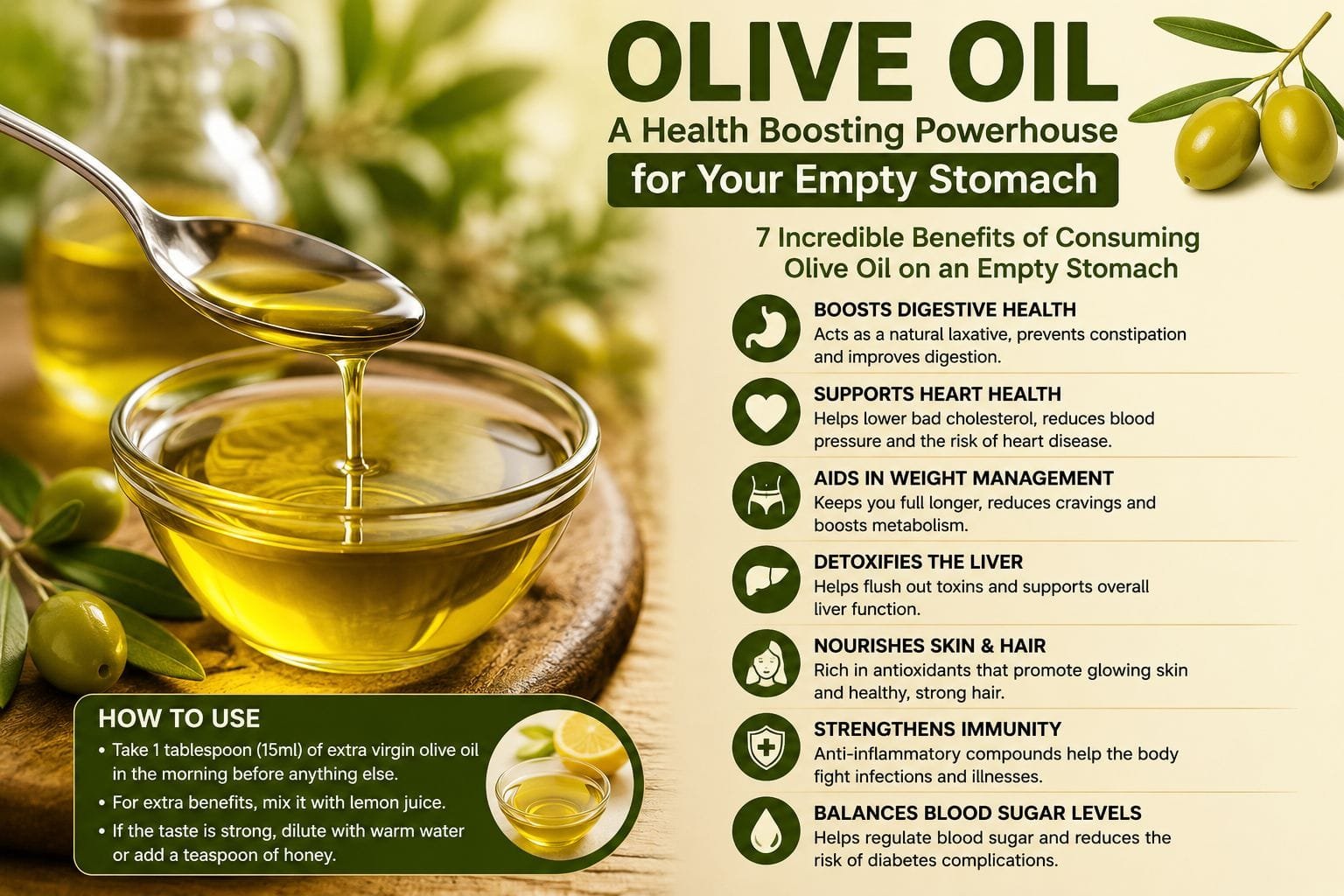
Supports Heart Health
Olive oil is rich in oleic acid, a monounsaturated fat that may help reduce LDL (“bad”) cholesterol while maintaining healthy HDL (“good”) cholesterol levels as part of a balanced diet.
Regular consumption has also been linked to better cardiovascular health.
May Improve Digestion
Healthy fats stimulate the release of bile, which helps digest dietary fats.
Some people also find that olive oil helps promote regular bowel movements, especially when combined with a fiber-rich diet and adequate hydration.
Helps You Feel Fuller
Because healthy fats digest more slowly than refined carbohydrates, olive oil may increase feelings of fullness and reduce unnecessary snacking.
When combined with a nutritious breakfast, it can support healthy eating habits.
Rich in Antioxidants
Extra virgin olive oil contains polyphenols and vitamin E, which help protect cells from damage caused by free radicals.
These antioxidants also support healthy aging.
Supports Healthy Skin
The healthy fats and vitamin E found in olive oil help maintain skin hydration and support the skin’s natural barrier.
Including olive oil in your diet may contribute to healthier-looking skin over time.
Provides Anti-Inflammatory Compounds
Extra virgin olive oil contains oleocanthal, a natural compound with anti-inflammatory properties.
A diet rich in anti-inflammatory foods may help support overall wellness.
Can Olive Oil Detox the Liver?
Your liver naturally removes toxins from your body without needing a special detox.
While olive oil is a healthy fat that supports overall nutrition, there is no strong scientific evidence that taking olive oil alone “detoxifies” the liver.
Maintaining a balanced diet, staying physically active, limiting alcohol, and getting enough sleep remain the best ways to support liver health.
Can Olive Oil Lower Blood Sugar?
Replacing saturated fats with healthier fats like olive oil may help improve blood sugar management as part of an overall healthy eating pattern.
However, olive oil is not a treatment for diabetes, and anyone managing diabetes should continue following their healthcare provider’s recommendations.
How to Use Olive Oil in the Morning
If you’d like to include olive oil in your morning routine, keep it simple.
- Take 1 tablespoon of extra virgin olive oil.
- Consume it on its own or drizzle it over whole-grain toast.
- Pair it with fruit, eggs, or yogurt for a balanced breakfast.
- Some people enjoy mixing it with fresh lemon juice, although this has no proven detox effect.
Choosing the Best Olive Oil
For the greatest nutritional value, look for:
- Extra virgin olive oil
- Cold-pressed
- Dark glass bottle
- Fresh harvest date when available
- Minimal processing
Store olive oil in a cool, dark place away from heat and sunlight.
Things to Keep in Mind
Although olive oil is healthy, it’s still calorie-dense.
One tablespoon contains approximately 120 calories, so moderation is important.
People with certain digestive conditions or those taking medications should consult a healthcare professional if they have concerns about making significant dietary changes.
Frequently Asked Questions
Is it better to drink olive oil on an empty stomach?
There is no strong evidence that consuming olive oil on an empty stomach provides greater health benefits than consuming it with meals. The important factor is including olive oil regularly as part of a healthy diet.
How much olive oil should I take daily?
Most people can enjoy 1–2 tablespoons per day as part of a balanced eating plan.
Which type of olive oil is healthiest?
Extra virgin olive oil is generally considered the healthiest option because it contains the highest levels of antioxidants and beneficial plant compounds.
Can olive oil help with constipation?
Some people find that olive oil helps support regular bowel movements, but results vary. Drinking enough water and eating plenty of fiber are also important for digestive health.
Final Thoughts
Extra virgin olive oil is a nutritious addition to almost any diet. It’s rich in healthy fats, antioxidants, and anti-inflammatory compounds that support heart health and overall wellness. While some claims about drinking olive oil on an empty stomach—such as detoxifying the liver or dramatically lowering blood sugar—are not well supported by scientific evidence, regularly using olive oil in place of less healthy fats is a smart choice for most people.
Whether you drizzle it over salads, use it in cooking, or enjoy a small amount in the morning, olive oil can be part of a healthy lifestyle when combined with a balanced diet and regular physical activity.