
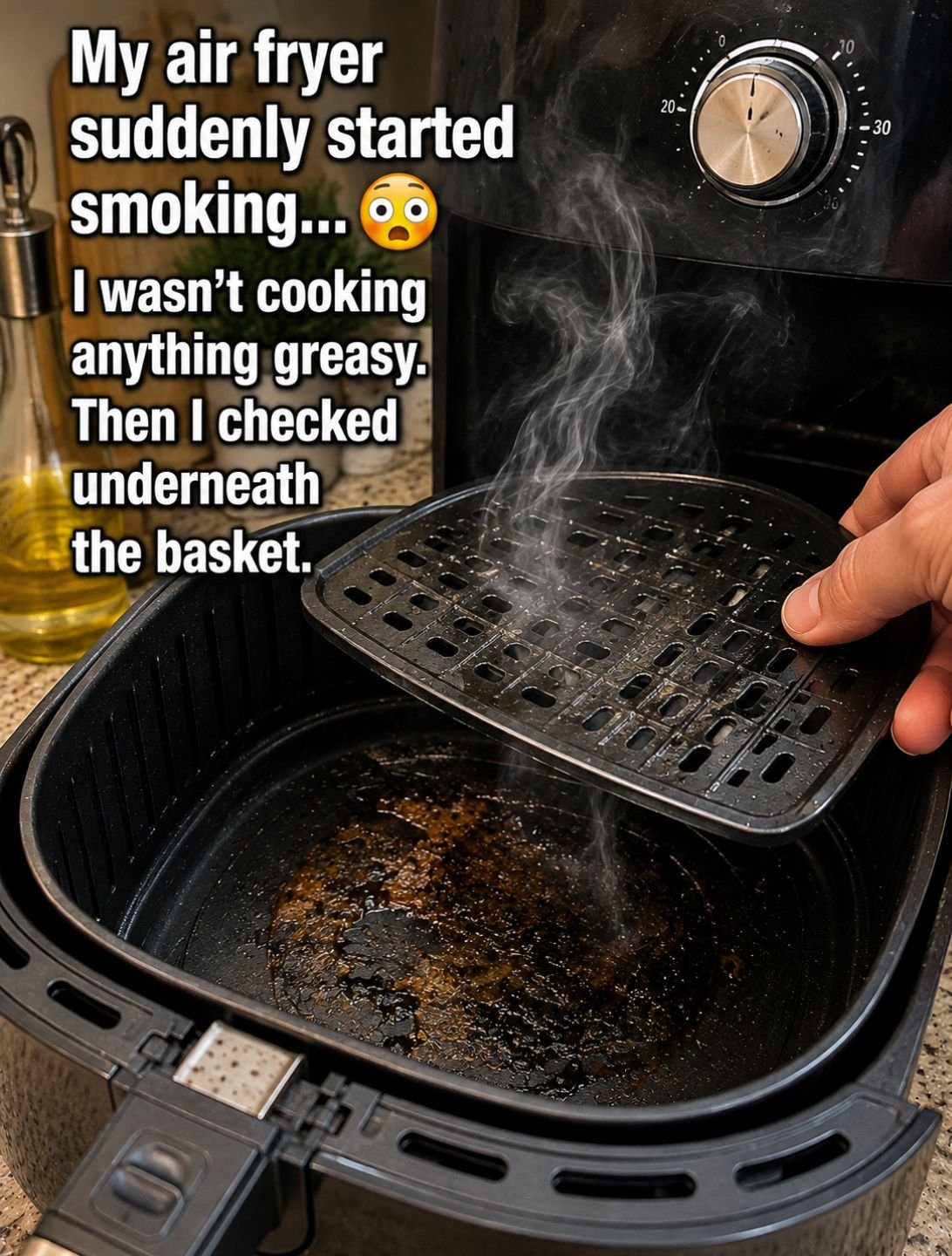
Seeing smoke coming from your air fryer can be alarming, especially when you aren’t cooking anything particularly greasy.
The first thing to know is that not all smoke means the same thing.
A small amount of white smoke can sometimes come from hot grease or moisture, while black smoke is a much more serious warning sign. For example, Ninja’s safety instructions say that if the appliance emits black smoke, you should unplug it immediately and wait for the smoking to stop before removing the cooking basket.
So before using your air fryer again, it’s worth figuring out what’s actually happening.
1. Check Under the Basket
One of the easiest things to overlook is the area underneath the removable cooking basket.
When fatty foods cook, grease and food juices can collect underneath the basket. Over repeated cooking sessions, that residue can become dark and baked onto the surface.
When the air fryer gets hot again, accumulated grease can begin smoking.
This is one reason regular cleaning matters. Ninja’s instructions specifically tell users to make sure the appliance is clean before use and to follow the recommended cleaning and maintenance procedures.
2. Did You Cook Something Very Fatty?
Some foods naturally release a lot of fat.
Think about foods such as:
- Bacon
- Sausage
- Chicken thighs
- Wings
- Burgers
- Fatty cuts of meat
That grease can drip through the basket and collect in the lower pan.
If the accumulated grease becomes hot enough, it can produce smoke.
A roast tray or drip-catching component is also designed in some air-fryer ovens specifically to catch grease and reduce smoke and splatter.
3. Look for Burnt Food Particles
Tiny crumbs can become surprisingly smoky.
A small piece of food that escaped through the basket can sit underneath and repeatedly heat up.
Eventually, it may become blackened and produce an unpleasant smell or smoke.
This is especially likely if you’ve been cooking foods that shed crumbs, breading, cheese, or small pieces during cooking.
Before your next cooking session, inspect the basket and lower pan for leftover food.
4. White Smoke vs. Black Smoke
This distinction matters.
White Smoke
White smoke or vapor can sometimes come from moisture or hot grease.
That doesn’t mean you should ignore it, especially if it’s persistent, but it can have a different cause from black smoke.
Black Smoke
Black smoke is more concerning.
If your air fryer is producing black smoke, stop using it and follow your manufacturer’s safety instructions.
Ninja’s air-fryer manual specifically instructs users to unplug the appliance immediately if it emits black smoke and wait until the smoking stops before removing the basket.
Don’t continue cooking simply to see whether the smoke disappears.
5. Check Whether Anything Is Actually Damaged
Open the appliance only after it has cooled.
Look carefully at the basket, pan, interior, and visible heating area.
You’re looking for things such as:
- Peeling coating
- Melted components
- Cracked plastic
- Burn marks
- Warped parts
- Loose pieces
- Unusual electrical damage
If you see actual physical damage rather than ordinary grease buildup, don’t assume cleaning will solve the problem.
Contact the manufacturer or check the manual for the correct replacement or service procedure.
6. Give the Air Fryer Enough Space
Air fryers need adequate airflow around them.
Don’t push the appliance tightly against walls, cabinets, or other objects.
Ninja’s safety instructions specifically call for adequate space above and around the appliance for air circulation.
This is particularly important when you’re using an appliance that produces substantial heat.
7. Clean It Before Using It Again
If the problem appears to be grease or food residue, let the appliance cool completely and clean the removable components according to your manufacturer’s instructions.
For some air-fryer ovens, manufacturers recommend washing accessories in warm, soapy water and drying them thoroughly. Ninja also warns against submerging the main electrical unit in water.
Don’t use aggressive cleaning methods that could damage a nonstick surface.
Your specific model’s manual should always take priority because construction and cleaning instructions vary.
Why the Smoke Can Suddenly Appear
You might use an air fryer dozens of times without seeing smoke and then suddenly notice it.
That’s because residue can gradually accumulate.
One cooking session might leave behind only a tiny amount of grease.
Another session adds more.
Eventually, the accumulated residue becomes substantial enough that the next high-temperature cooking cycle produces visible smoke.
So the smoke can appear “out of nowhere” even though the buildup has been developing over time.
What If the Air Fryer Smells Burnt?
A burnt smell doesn’t automatically mean the appliance is broken.
It can come from:
- Old grease
- Burnt crumbs
- Food residue
- Overheated food
- Packaging or material accidentally left inside
- A damaged component
If the smell continues after thorough cleaning, stop using the appliance until you’ve determined the cause.
A persistent electrical or plastic-burning smell deserves particular attention.
Don’t Immediately Pull Out a Smoking Basket
This is important.
If the appliance is actively smoking, don’t immediately grab the hot basket with your bare hands.
For black smoke specifically, Ninja’s instructions say to unplug the appliance and wait for the smoking to stop before removing the cooking basket.
Let the appliance cool before inspecting it.
What If You See Flames?
Treat flames as a serious situation.
Turn off and unplug the appliance only if you can do so safely.
Never throw water onto a grease fire. Water can make a grease fire spread.
Ninja’s oven safety instructions specifically warn against using water when grease is present and provide alternative fire-safety guidance.
If a fire cannot be safely controlled, leave the area and contact emergency services.
How to Reduce the Chance of Smoking
A few simple habits can make a difference.
Clean After Greasy Foods
Don’t allow layers of grease to accumulate underneath the basket.
Remove Crumbs
Small food particles can burn during later cooking sessions.
Don’t Overcrowd
Overcrowding can affect airflow and cooking performance.
Keep the Appliance Ventilated
Leave appropriate clearance around the air fryer.
Follow the Manual
Different models have different basket coatings, heating systems, temperature limits, and cleaning requirements.
A Quick Check Before Your Next Cook
Before turning the air fryer on, take 30 seconds to look inside.
Check the basket.
Check underneath it.
Look for old grease.
Remove crumbs.
Check for damaged or peeling parts.
Make sure nothing is touching the heating area.
That tiny inspection can help prevent a surprising amount of smoke.
When Should You Stop Using It?
Don’t keep using an air fryer if you notice:
- Black smoke
- Burning electrical smells
- Melting plastic
- Damaged wiring
- Sparks
- A visibly damaged heating element
- Severe coating or component damage
- Repeated smoking after cleaning
In those situations, consult the manufacturer’s instructions or customer support before using the appliance again.
Final Thoughts
An air fryer suddenly producing smoke can be scary, but the cause isn’t always a serious appliance failure.
Sometimes the culprit is simply old grease or food residue hiding underneath the basket.
But you shouldn’t automatically assume every smoking air fryer is harmless.
Check the color and amount of smoke, inspect the appliance only after it has cooled, clean it according to the manufacturer’s instructions, and pay attention to signs of actual damage.
And remember the most important distinction:
A little smoke from hot grease is one thing. Black smoke, burning smells, flames, or damaged components are reasons to stop and investigate immediately.
That strange smoke you saw might have started with something as simple as a forgotten layer of grease hiding underneath the basket—but it’s worth checking before your next meal.