
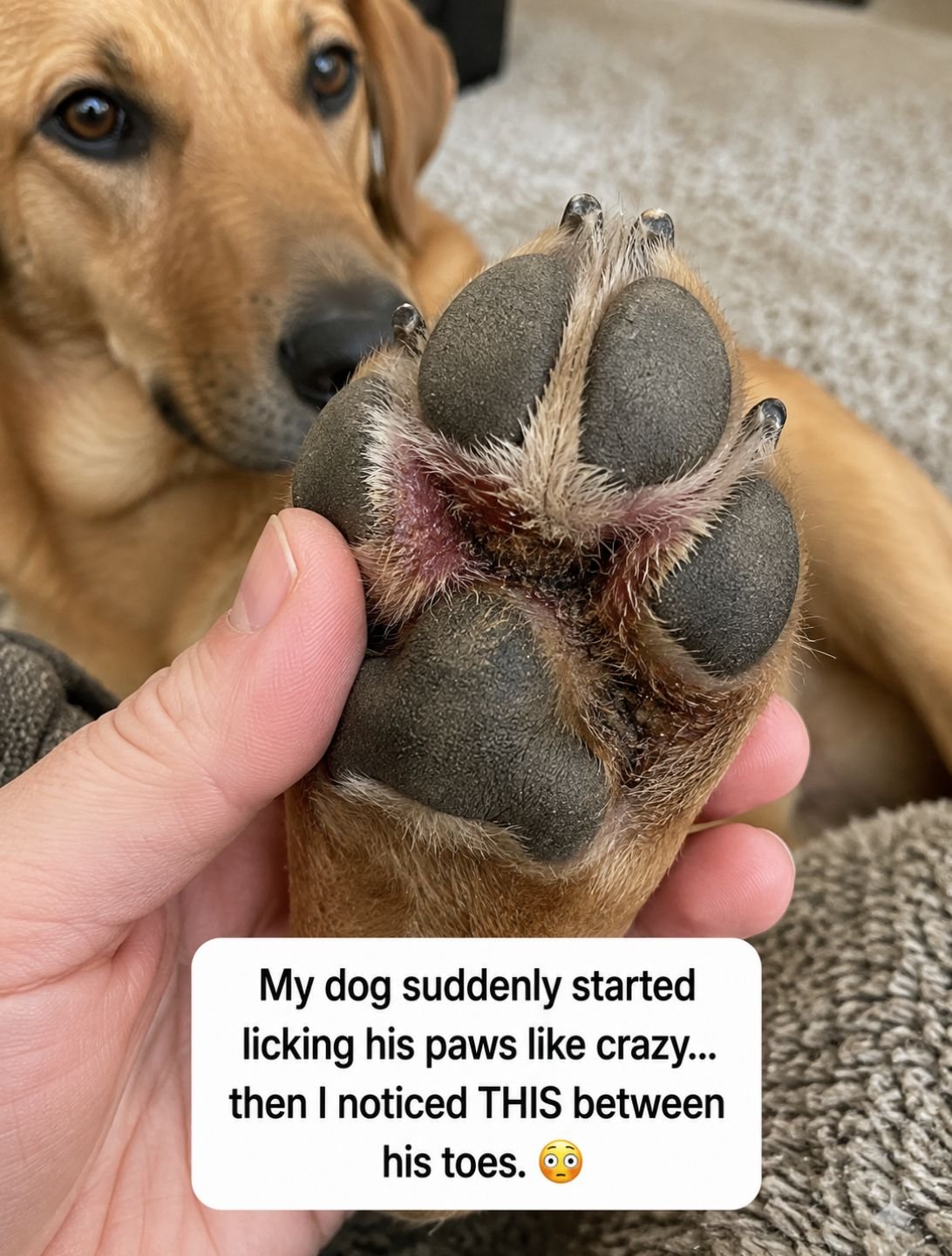
If your dog suddenly starts licking or chewing his paws much more than usual, it’s easy to dismiss it as a strange habit.
Sometimes a little paw licking is completely normal. Dogs groom themselves, and they may lick their feet after walking outside.
But frequent or intense licking can be a sign that something is irritating the paws. Possible causes include injuries, allergies, parasites, skin problems, environmental irritants, pain, or behavioral issues.
That’s why checking between the toes can be surprisingly important.
First, Look Between the Toes
When a dog keeps licking one particular paw, carefully inspect it.
Look between the toes, around the pads, and near the nails for:
- Dirt or debris
- Small cuts
- Thorns or plant material
- Swelling
- Red or irritated skin
- Crusty areas
- Broken nails
- Something stuck between the pads
The American Kennel Club recommends checking between the toes and around the pads because dirt, salt, and other debris can accumulate there and cause irritation.
Why Dogs Lick Their Paws
There isn’t one single reason.
1. Something Is Stuck
A small piece of grass, thorn, splinter, or other foreign material can become lodged between the toes.
If the licking suddenly begins and is focused on one paw, this is one of the first things worth checking.
Don’t forcefully dig into the paw if something appears deeply embedded. A veterinarian should handle objects that are difficult to safely remove.
2. Allergies
Dogs can develop allergies to things in their environment, including pollen, dust, mold, grass, and other allergens.
Environmental allergies commonly affect the paws and the skin between the toes, and affected dogs may lick or chew their feet because they’re itchy.
Food sensitivities can also contribute to itchy paws in some dogs.
3. Irritated Skin
Inflamed skin around the paws can make a dog want to lick constantly.
Pododermatitis is a broad term for inflammation of the skin of the paw. Signs can include redness, swelling, crusting, hair loss, and persistent licking or chewing.
4. Yeast or Bacterial Problems
Moisture from repeated licking can make an already irritated paw even more uncomfortable.
Dogs with yeast problems may show excessive licking, red or irritated skin, hair loss, and brown staining around the paws or nails.
The tricky part is that licking itself can create more moisture, potentially making the irritation worse.
5. Parasites
Parasites can also cause intense itching.
Fleas and mites are among the possible causes of paw irritation, although the exact cause needs to be determined rather than assumed.
6. Pain or Injury
Sometimes the problem isn’t itchiness at all.
A cut, torn nail, burn, sting, blister, or other injury can cause a dog to repeatedly lick one paw.
Dogs may also lick a foot because of pain elsewhere in the limb.
One Paw vs. All Four Paws
This can be a useful clue.
If your dog suddenly focuses intensely on one paw, something local—such as an injury or foreign object—may be worth checking first.
If several paws are affected, allergies, skin conditions, or other broader causes become possibilities.
However, this isn’t enough to diagnose the problem by itself.
A veterinarian may need to examine the paws and skin to determine what’s actually happening.
Don’t Ignore Redness
Take a closer look if you notice:
- Redness
- Swelling
- Cracked skin
- Bleeding
- Crusting
- Hair loss
- Discharge
- Brown staining
- A strong unusual odor
- Limping
These signs can indicate that the paw is more than simply dirty.
Persistent inflammation can also lead to secondary infections.
What You Can Do at Home
If the paws simply have dirt or outdoor debris on them, gently cleaning them can help.
After walks, you can inspect the paws and wipe away dirt or other material with a clean damp cloth.
Pay particular attention to the spaces between the toes.
After cleaning, dry the paws thoroughly because excess moisture can contribute to irritation.
Don’t aggressively scrub irritated skin.
And don’t start applying human creams, medications, or essential oils without veterinary guidance.
When Should You Call the Vet?
Contact your veterinarian if the licking is persistent, intense, or getting worse.
It’s especially important to seek veterinary advice if your dog has:
- Significant swelling
- Bleeding
- Pus or discharge
- Severe redness
- A painful or swollen paw
- Trouble walking
- A suspected embedded object
- A wound that isn’t healing
- Repeated episodes of paw licking
Persistent licking can sometimes become a cycle: irritation causes licking, licking damages the skin, and the damaged skin becomes even more irritated.
What About the “Frito Feet” Smell?
Some dogs naturally have a noticeable corn-chip or “Fritos” smell from their feet.
That smell alone doesn’t necessarily mean something is wrong.
However, if the odor suddenly becomes much stronger or is accompanied by redness, irritation, discharge, excessive licking, or other changes, it’s worth having the paws checked.
The Simple Paw Check Every Dog Owner Can Do
The next time you’re grooming your dog, don’t just look at the tops of the paws.
Gently check:
Between the toes → around the pads → underneath the paw → around the nails.
Look for anything unusual.
This takes only a few seconds and can help you notice small problems before they become bigger ones.
Final Thoughts
A dog licking his paws once in a while isn’t necessarily a reason to panic.
But if the behavior suddenly becomes frequent or obsessive, it’s worth investigating.
The cause could be something simple like dirt or a small irritant, but allergies, injuries, parasites, skin inflammation, and infections are also possible.
The most important thing is not to guess based on one symptom.
Check the paws, look between the toes, keep them clean and dry, and contact your veterinarian if the problem persists or the paw looks painful or inflamed.
Your dog’s excessive licking may be his way of telling you that something is bothering him.