
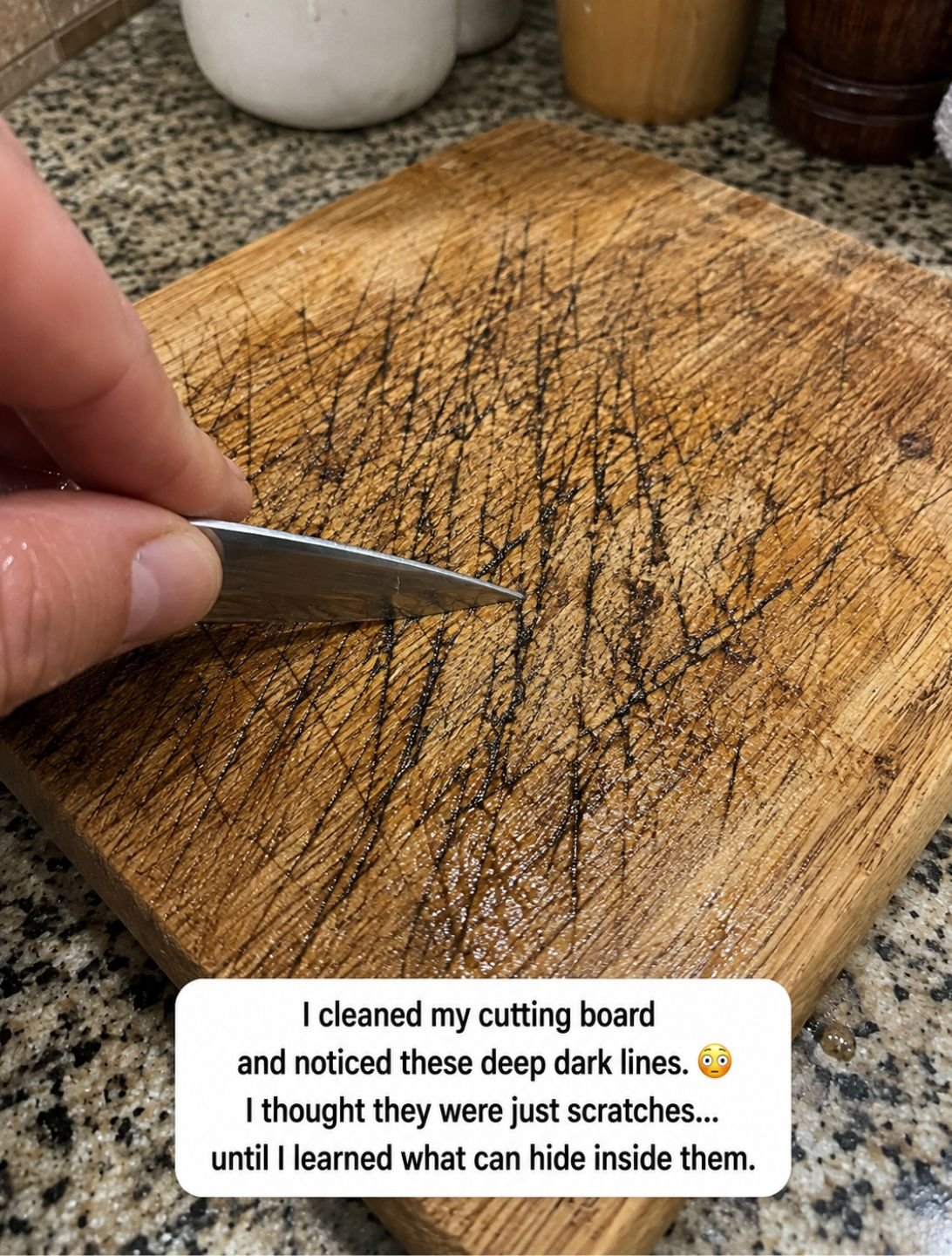
That old wooden cutting board sitting in your kitchen might look perfectly usable at first glance. A few scratches here and there may seem harmless, especially if you’ve been washing it regularly.
But there comes a point when a cutting board becomes difficult to clean properly.
Those deep grooves, cracks, and damaged areas aren’t just cosmetic. They can trap food particles and moisture, making the surface harder to clean and sanitize. The FDA specifically recommends replacing excessively worn cutting boards because bacteria can grow in hard-to-clean grooves and cracks.
So how do you know when it’s time to replace yours?
Here are seven signs worth checking.
1. The Grooves Are Getting Deep
A few knife marks are completely normal.
Over time, however, repeated chopping can create deep grooves across the surface.
The problem isn’t simply that the board looks old. Deep cuts can create spaces that are difficult to clean thoroughly.
The FDA recommends replacing excessively worn cutting boards, including wooden boards, because bacteria can grow in grooves and cracks that are difficult to clean.
If you can easily see deep channels throughout the board, it’s worth considering a replacement.
2. Cracks Are Starting to Appear
Small surface scratches are different from actual cracks.
Once a board develops cracks, food particles and moisture can get into areas that are much harder to clean.
A cracked board may also continue deteriorating with repeated washing and drying.
If the cracks are spreading or becoming deep, replacing the board is usually the better option.
3. The Surface Feels Rough
Run your hand gently over the cutting surface.
Does it feel smooth, or does it feel rough and heavily damaged?
A heavily worn surface can indicate that the board has reached the end of its useful life.
You don’t need to replace a wooden cutting board simply because it has a few marks. Normal knife marks happen.
The concern is excessive wear that makes proper cleaning difficult.
4. The Board No Longer Sits Flat
This is an easy sign to overlook.
Wood can change shape as it absorbs and loses moisture.
If your cutting board has warped and rocks back and forth while you’re cutting, that’s more than an inconvenience.
A board that doesn’t sit securely can make food preparation more difficult and potentially increase the chance of slipping while using a knife.
If it has become badly warped, replacement is a sensible choice.
5. You Notice Persistent Odors
A cutting board can sometimes hold onto food smells.
That doesn’t automatically mean it’s unsafe.
But if you’ve thoroughly cleaned the board and it continues to have a strong, unpleasant odor, inspect it carefully for cracks, deep grooves, discoloration, or trapped food particles.
A persistent smell combined with significant damage is a stronger reason to replace it.
6. Mold or Black Spots Keep Returning
Dark marks aren’t automatically mold.
Wood can naturally develop discoloration from foods, moisture, and normal use.
But if you see suspected mold, especially in deep cracks or damaged areas, don’t simply cover it with another layer of oil and continue using the board.
A board that has become excessively worn or difficult to clean should be replaced.
The FDA emphasizes that food-contact surfaces need to be kept clean and that excessively worn cutting boards should be replaced.
7. Raw Meat and Vegetables Are Being Prepared on the Same Damaged Board
This is particularly important.
Raw meat, poultry, and seafood can carry harmful bacteria.
The FDA recommends using one cutting board for raw meat, poultry, and seafood and another for fresh fruits and vegetables when possible.
If you have an old, deeply scratched board that you use for raw chicken or meat, it’s worth paying extra attention to its condition.
A damaged board can make thorough cleaning more difficult.
How to Clean a Wooden Cutting Board
Regular cleaning can help extend the useful life of a cutting board.
After preparing food, wash the board with hot, soapy water.
This is particularly important after preparing raw meat, poultry, seafood, eggs, or unwashed produce. The FDA recommends washing cutting boards and other utensils with soap and hot water after contact with these foods.
Don’t simply wipe the board with a towel and put it away.
Food residue and moisture can remain on the surface.
Don’t Use the Same Board for Everything
If you have enough kitchen space, having separate boards can make food preparation easier and reduce cross-contamination risks.
For example:
Board 1: Raw meat, poultry, and seafood
Board 2: Fruits, vegetables, bread, and ready-to-eat foods
The FDA specifically recommends this separation when possible.
If you only have one board, clean it thoroughly between different types of food.
Should You Use Bleach on a Wooden Cutting Board?
Be careful with homemade cleaning mixtures.
Don’t automatically assume that stronger chemicals are better.
For everyday cleaning, follow the manufacturer’s care instructions and use hot, soapy water as appropriate.
If you use a sanitizer, follow the product’s label directions carefully.
Food-contact surfaces need to be cleaned and, when appropriate, sanitized properly rather than simply exposed to increasingly strong chemicals.
Can You Sand a Wooden Cutting Board?
Light surface wear can sometimes be addressed through proper maintenance, depending on the type of board and manufacturer’s instructions.
However, sanding isn’t a magic solution for a board that is badly cracked, warped, deeply grooved, or otherwise excessively worn.
If the board has reached the point where it is difficult to clean, replacement is usually the simpler option.
The FDA’s guidance is clear that excessively worn cutting boards should be replaced.
What About Plastic Cutting Boards?
Plastic boards aren’t automatically maintenance-free.
They can also develop deep knife grooves over time.
The FDA’s guidance about replacing excessively worn cutting boards applies to plastic and non-porous acrylic boards as well as wooden boards.
So don’t assume a plastic board can be used forever simply because it isn’t made of wood.
Look at the condition of the actual cutting surface.
How Often Should You Replace a Cutting Board?
There’s no universal calendar date that says every cutting board must be replaced after a certain number of months or years.
Two people can use the same type of board very differently.
One person may have a board that remains smooth and usable for years, while another person’s board may become heavily grooved much sooner.
Instead of focusing only on age, focus on condition.
If the board is excessively worn, deeply cracked, badly warped, or difficult to clean, it’s time to consider replacing it.
The Simple Test You Can Do Today
Take your cutting board out of the cabinet and look closely at it.
Ask yourself:
- Are there deep grooves everywhere?
- Are there cracks?
- Is the surface badly rough?
- Does the board rock or wobble?
- Are there persistent odors?
- Is there visible mold or deterioration?
- Is it difficult to clean properly?
If you answered yes to several of these questions, your cutting board may have reached the end of its useful life.
Final Thoughts
A few knife marks don’t mean you need to throw away your cutting board.
But when those marks become deep grooves, cracks, and heavily worn areas, the situation changes.
The FDA specifically advises replacing excessively worn cutting boards because bacteria can grow in grooves and cracks that are difficult to clean.
The best approach is simple: keep your cutting board clean, keep raw foods separated from ready-to-eat foods when possible, and pay attention to its condition rather than its age.
Sometimes that old board just needs a good cleaning.
And sometimes those deep black lines are telling you something important: it may finally be time for a new one.