
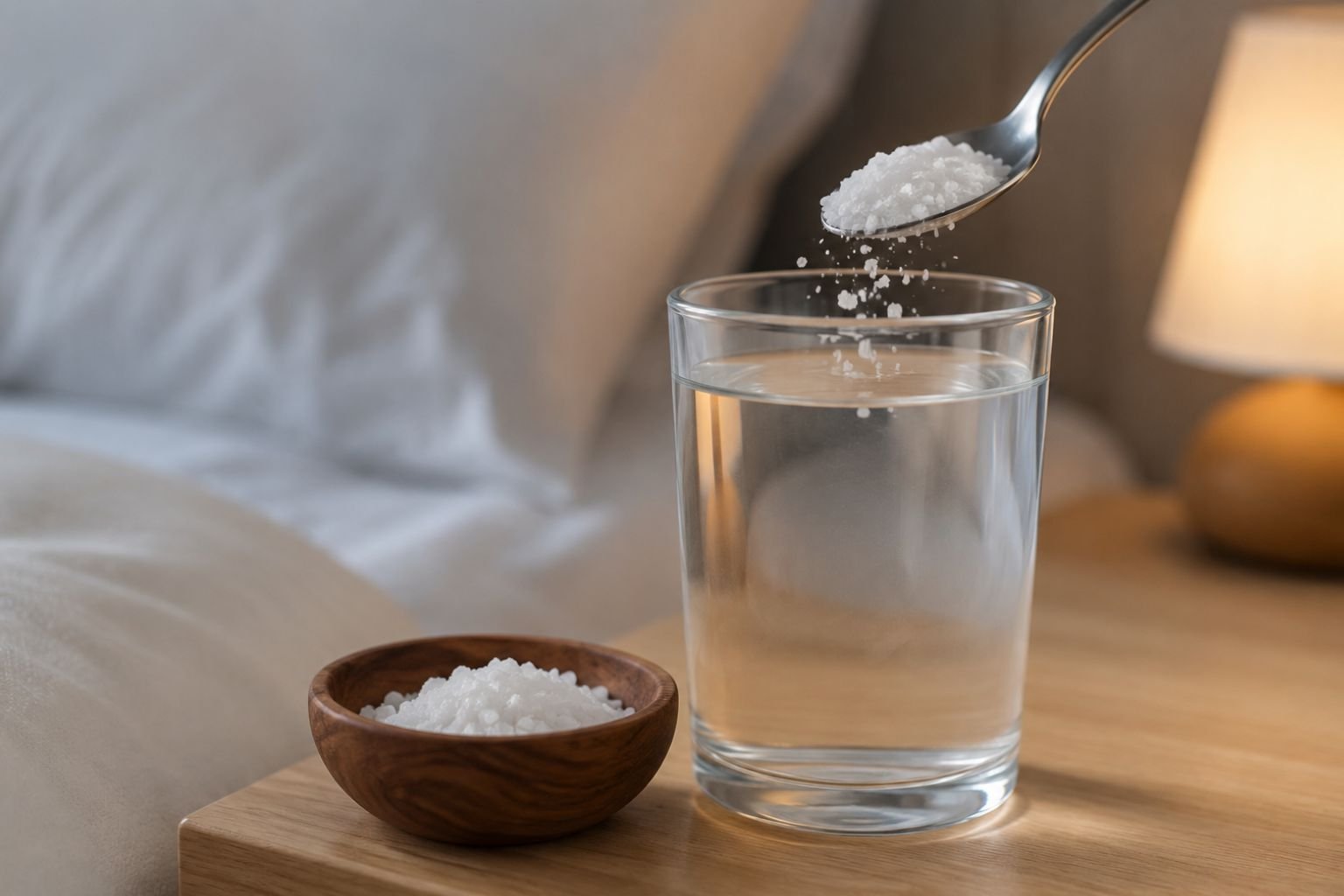
Should You Drink Salt Water Before Bed? Here’s What You Need to Know Before Making It a Nightly Habit
Have you ever placed a glass of salt water next to your bed because someone claimed it could improve your health while you slept?
Maybe a friend recommended it. Perhaps you saw a Facebook post promising better sleep, less joint discomfort, or a healthier body with nothing more than a pinch of salt and a glass of water.
It sounds incredibly simple.
Almost too simple.
That’s exactly why millions of people have become curious about this nighttime habit.
Some people wake up believing it helped. Others wake up with a dry mouth, feeling unusually thirsty, or wondering why they didn’t sleep as well as expected.
So what’s really happening?
Is this an overlooked wellness habit… or just another internet trend that’s missing an important part of the story?
Let’s separate the popular claims from what current research actually suggests.
Why Has Salt Water Become Such a Popular Home Remedy?
If you’ve spent any time on social media recently, you’ve probably seen posts praising salt water as a natural solution for almost everything.
Some people believe drinking salt water before bed may help:
- Improve sleep quality
- Reduce joint discomfort
- Support digestion
- Help the body stay hydrated
- Balance blood sugar
- Boost overall wellness
These claims are appealing because they promise a simple answer to problems many people experience every day.
After all, who wouldn’t want a natural remedy that costs only a few pennies?
But here’s where the conversation becomes much more interesting…
Simple doesn’t always mean effective.
And natural doesn’t automatically mean risk-free.
What Actually Happens When You Drink Salt Water?
Salt contains sodium, one of the body’s essential electrolytes.
Sodium plays an important role in:
- Muscle contractions
- Nerve function
- Fluid balance
- Blood pressure regulation
Without enough sodium, the body cannot function normally.
But there’s another side to the story.
Your kidneys work around the clock to keep sodium levels within a very narrow range.
When extra sodium enters the body, your kidneys often respond by holding onto water or increasing urine production to maintain balance.
This process happens automatically, whether you’re awake or asleep.
That’s why adding extra salt before bedtime doesn’t necessarily produce the effects many online posts promise.
In fact, for some people, it may create the opposite experience.
The Part Most People Never Think About
Imagine filling a small sponge with just enough water.
It feels balanced.
Now imagine pouring in much more water than it needs.
Eventually the sponge becomes overloaded.
Your body isn’t exactly like a sponge, but it also works hard to maintain balance.
Too much sodium may encourage your body to hold onto extra fluid or make you thirsty as it works to restore that balance.
That’s why some people notice:
- Waking up thirsty
- A dry mouth during the night
- More trips to the bathroom
- Feeling slightly bloated the next morning
These effects don’t happen to everyone.
But they do explain why experiences vary so much from person to person.
Can Salt Water Really Improve Sleep?
One of the biggest claims online is that drinking salt water before bed promotes deeper, more restful sleep.
At first glance, that sounds convincing.
However, current scientific evidence doesn’t strongly support the idea that extra sodium before bed improves sleep quality in healthy adults.
Sleep is influenced by many factors, including:
- Stress levels
- Daily activity
- Light exposure
- Caffeine intake
- Alcohol consumption
- Bedroom temperature
- Hormones
- Medical conditions
Salt isn’t considered one of the primary factors that improves sleep.
In fact, if drinking salt water leaves you thirsty or causes nighttime bathroom visits, your sleep may actually become more interrupted.
What About Joint Discomfort?
Another common claim is that salt water reduces joint discomfort.
The reality is more complicated.
Joint discomfort can have many different causes, including:
- Osteoarthritis
- Inflammation
- Previous injuries
- Autoimmune conditions
- Aging
- Physical activity
There is no strong evidence showing that simply drinking salt water before bed directly improves these underlying causes.
If joint discomfort is persistent or severe, it’s important to discuss it with a healthcare professional rather than relying solely on viral home remedies.
Why Older Adults Should Be More Careful
Age changes the way the body regulates fluids and sodium.
As people get older, they may become more sensitive to excessive sodium intake.
This means nighttime salt water could contribute to:
- Increased thirst
- Mild fluid retention
- Temporary increases in blood pressure in some individuals
- More nighttime urination
Not everyone experiences these effects.
But they are worth considering, especially for people who already have high blood pressure, heart disease, or kidney problems.
Why This Trend Spread So Quickly
There’s a reason this idea became popular.
Actually…
There are several reasons.
First, it’s inexpensive.
Second, almost everyone already has salt at home.
Third, people naturally prefer simple solutions over complicated ones.
And finally…
Personal success stories spread much faster online than scientific studies.
When someone says,
“This worked for me,”
it’s easy to believe the same result will happen for everyone.
Unfortunately, the human body doesn’t always work that way.
A Better Evening Routine
If your goal is waking up feeling refreshed, there are habits supported by stronger evidence than drinking salt water before bed.
Consider building an evening routine that includes:
- Drinking a small glass of plain water if you’re thirsty
- Avoiding heavy, salty meals late at night
- Limiting caffeine during the evening
- Reducing screen time before bed
- Keeping your bedroom cool, quiet, and dark
- Following a consistent sleep schedule
These habits are simple, affordable, and may have a bigger impact on sleep than adding extra sodium before bedtime.
Gentle Evening Drinks to Consider
If you enjoy having something warm before bed, many people prefer options such as:
- Warm water
- Chamomile tea
- Warm milk (if tolerated)
- Ginger tea
- Caffeine-free herbal tea
These drinks may fit comfortably into a relaxing bedtime routine, though individual responses vary.
If You Still Want to Try Salt Water
If you’re curious about the trend, moderation is important.
Keep these practical tips in mind:
- Avoid using large amounts of salt.
- Pay attention to how your body responds.
- Don’t assume that what’s popular online is right for everyone.
- If you have high blood pressure, kidney disease, heart disease, or are on a sodium-restricted diet, talk with your healthcare provider before making it a regular habit.
The most important advice is surprisingly simple:
Listen to your own body rather than following every trend that appears on social media.
Frequently Asked Questions
Can salt water before bed improve sleep?
Current evidence does not strongly support this claim. For some people, it may even interrupt sleep by increasing thirst or nighttime urination.
Is it safe for older adults?
Older adults can be more sensitive to sodium intake. Anyone with high blood pressure, heart disease, or kidney disease should be especially cautious and seek medical advice if unsure.
Should I drink salt water every night?
Most people already get enough sodium through their regular diet, so adding extra salt every night is generally unnecessary.
Is salt bad for everyone?
No. Sodium is essential for normal body function. The key is consuming an appropriate amount rather than too little or too much.
Final Thoughts
Salt is an important nutrient that the body needs every day, but more isn’t always better. While drinking a small amount of salt water before bed may not cause problems for everyone, current evidence doesn’t support it as a reliable way to improve sleep, reduce joint discomfort, or deliver the wide range of benefits often claimed online.
Instead of chasing quick fixes, focus on consistent habits such as balanced nutrition, regular physical activity, good hydration, and healthy sleep routines. These everyday choices are far more likely to support long-term health than any single viral trend.