
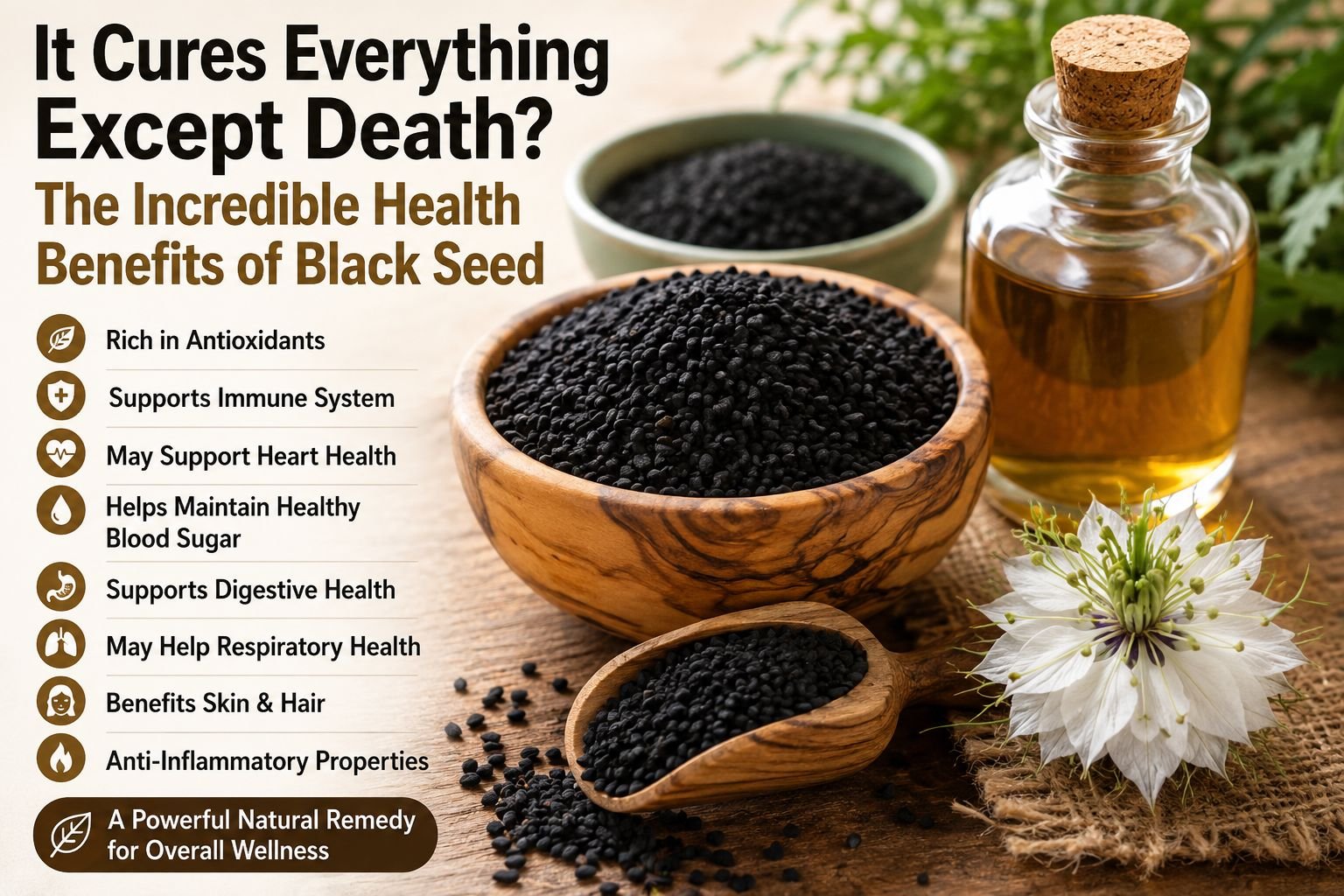
Black seed (Nigella sativa) has earned a remarkable reputation in traditional medicine, where it has been valued for centuries as a versatile natural remedy. Often called black cumin or kalonji, these tiny black seeds have been used in the Middle East, Asia, and parts of Africa as both a culinary spice and a wellness ingredient. One popular saying describes black seed as the remedy that “cures everything except death.” While this phrase reflects its long-standing cultural importance, modern science does not support the idea that black seed can cure every disease.
What researchers have found, however, is that black seed contains a variety of naturally occurring compounds that may support overall health when included as part of a balanced diet. It is especially known for its antioxidant content and a plant compound called thymoquinone, which has been the focus of numerous scientific studies.
Today, black seed is available in many forms, including whole seeds, ground powder, capsules, and black seed oil. Many people use it as a daily wellness supplement, while others enjoy adding it to breads, curries, teas, smoothies, and salad dressings.
This article explores what black seed is, its nutritional value, potential health benefits, current scientific evidence, and practical ways to include it in your daily routine.
What Is Black Seed?
Black seed comes from the flowering plant Nigella sativa, which belongs to the buttercup family. The plant produces small black seeds that have a slightly peppery, nutty flavor with hints of oregano and onion.
For thousands of years, these seeds have been used in traditional herbal practices and cooking. They are especially popular in Middle Eastern, Indian, Turkish, and Mediterranean cuisines.
Black seed contains numerous naturally occurring nutrients, including:
- Healthy fats
- Dietary fiber
- Protein
- Iron
- Calcium
- Potassium
- Magnesium
- Zinc
- Vitamin B compounds
- Essential amino acids
- Plant antioxidants
One of its most studied natural compounds is thymoquinone, which is believed to contribute to many of the seed’s biological properties.
Nutritional Profile
Although consumed in relatively small amounts, black seed provides several beneficial nutrients.
A typical serving contains:
- Healthy unsaturated fats
- Plant protein
- Dietary fiber
- Calcium
- Iron
- Magnesium
- Phosphorus
- Potassium
- Zinc
- Copper
These nutrients contribute to normal body functions and make black seed a nutrient-dense addition to a healthy eating pattern.
Potential Health Benefits
Rich in Antioxidants
Black seed contains antioxidants that help protect cells from oxidative stress caused by unstable molecules known as free radicals. Antioxidants are an important part of a balanced diet because they help support the body’s natural defense systems.
May Support Immune Function
Black seed has traditionally been used to support immune health. While research is ongoing, some studies suggest that its naturally occurring compounds may help support normal immune system function as part of an overall healthy lifestyle.
May Help Support Heart Health
Some research suggests that black seed may contribute to maintaining healthy cholesterol and blood pressure levels when combined with a nutritious diet, regular exercise, and medical guidance where appropriate.
May Support Healthy Blood Sugar
Several small studies have explored the effects of black seed on blood sugar management. While results are encouraging, black seed should not replace prescribed medications or professional medical care for diabetes.
Supports Digestive Wellness
Traditionally, black seed has been used to promote digestive comfort. It may help support normal digestion and contribute to overall gastrointestinal wellness when consumed as part of a balanced diet.
Respiratory Support
Black seed has long been used in traditional practices for respiratory comfort. Some early research has examined its effects on breathing and seasonal allergies, but more high-quality human studies are needed.
Black Seed for Skin
Black seed oil is widely used in natural skincare products.
Many people apply it to help:
- Moisturize dry skin
- Support the skin’s natural barrier
- Improve overall skin appearance
- Reduce dryness
Because everyone’s skin is different, it’s recommended to perform a patch test before applying black seed oil more broadly.
Black Seed for Hair
Black seed oil has become a popular ingredient in shampoos, conditioners, and hair oils.
It may help:
- Moisturize the scalp
- Improve hair softness
- Reduce dryness
- Support healthy-looking hair
While many people report positive experiences, more research is needed to confirm specific benefits.
Easy Ways to Enjoy Black Seed
Black seed can be incorporated into your diet in several simple ways.
Try adding it to:
- Homemade bread
- Flatbreads
- Yogurt
- Smoothies
- Salads
- Soups
- Rice dishes
- Roasted vegetables
- Herbal teas
Its warm, slightly peppery flavor complements both savory and sweet recipes.
Simple Black Seed Honey Drink
Ingredients
- 1 teaspoon black seeds
- 1 tablespoon honey
- 1 cup warm water
- Juice of half a lemon (optional)
Instructions
- Lightly crush the black seeds.
- Add them to warm water.
- Stir in the honey until dissolved.
- Add fresh lemon juice if desired.
- Drink while warm.
Tips
- Store black seeds in an airtight container away from heat and sunlight.
- Grind only the amount you need to preserve freshness.
- Use black seed oil according to the manufacturer’s directions.
- Enjoy black seed as part of a varied, balanced diet rather than relying on it as a treatment for illness.
Safety Considerations
Black seed is generally considered safe when consumed in normal culinary amounts.
However:
- Supplements may not be appropriate for everyone.
- Pregnant or breastfeeding individuals should consult a healthcare professional before using supplements.
- Black seed may interact with certain medications.
- Anyone with an existing medical condition should speak with a qualified healthcare provider before starting any herbal supplement.
Frequently Asked Questions
Can black seed cure diseases?
No. There is no reliable scientific evidence showing that black seed cures diseases. It may support overall wellness, but it should not replace professional medical treatment.
What is thymoquinone?
Thymoquinone is a naturally occurring compound found in black seed that researchers continue to study for its antioxidant and other biological properties.
Can I eat black seeds every day?
Many people include small amounts of black seed in their daily diet. If you plan to use concentrated supplements or oils regularly, consult your healthcare provider.
Is black seed the same as black sesame?
No. Black seed (Nigella sativa) and black sesame seeds come from different plants and have different nutritional profiles.
What does black seed taste like?
It has a mildly peppery, earthy flavor with hints of onion, oregano, and nutmeg.
Conclusion
Black seed has earned its reputation as one of the world’s most respected traditional wellness foods thanks to centuries of use and growing scientific interest. While the popular saying that it “cures everything except death” is not supported by modern evidence, research suggests that black seed contains valuable nutrients and plant compounds that may contribute to overall health as part of a balanced lifestyle.