
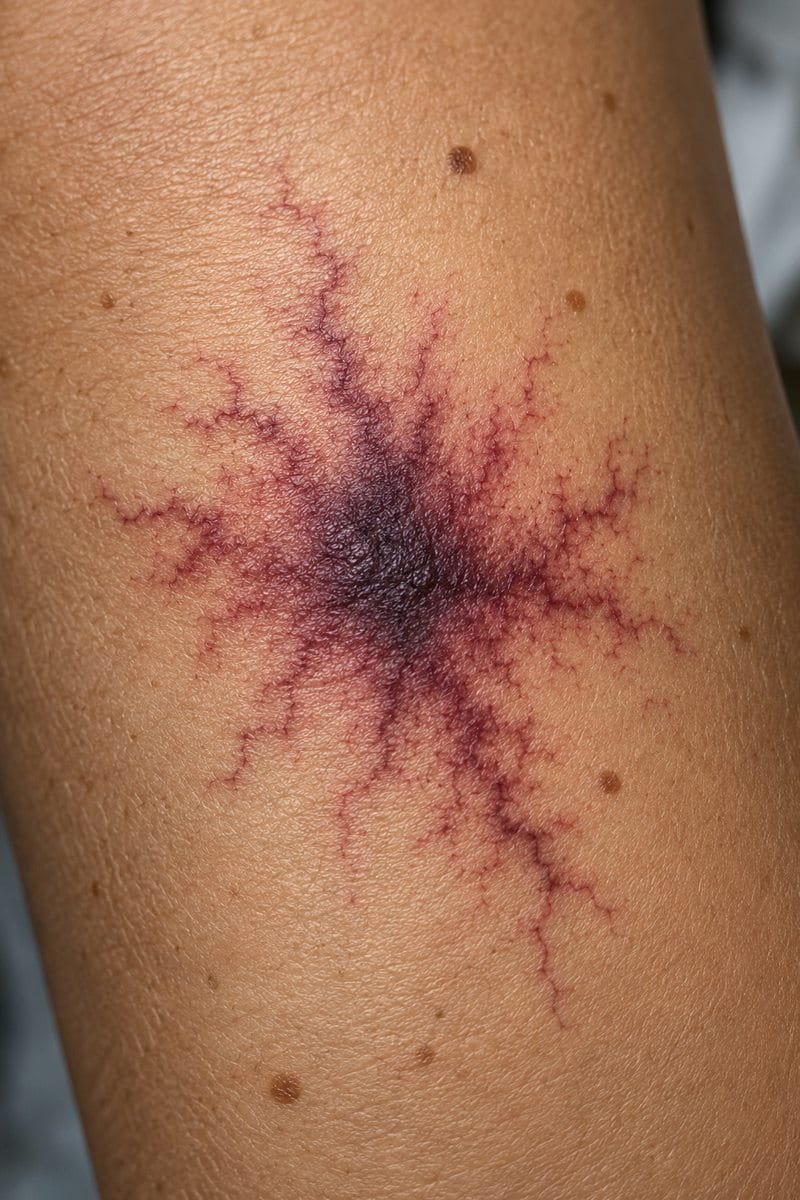
Seeing a sudden purple, red or bruise-like mark on the skin can be frightening, especially when there is no obvious injury to explain it.
One medical term doctors use for this type of finding is purpura. Purpura describes red, purple or brown spots and patches that happen when small blood vessels leak blood underneath the skin. It is important to understand that purpura is not one specific disease. It is a visible sign that can have many different causes.
The appearance can range from tiny pinpoint spots to larger patches that look like bruises. On lighter skin they may appear red or purple, while on darker skin they can appear brown, dark purple or almost black.
Table of Contents
ToggleWhat Exactly Is Purpura?
Underneath the skin are thousands of tiny blood vessels called capillaries. Normally, blood stays inside these vessels.
If a small vessel becomes damaged, inflamed, fragile or affected by a problem with blood clotting, a small amount of blood can escape into the surrounding tissue.
That leaked blood becomes visible through the skin.
The result can look like:
- A purple-red patch
- A bruise-like area
- Several small purple dots
- A cluster of reddish spots
- Brownish discoloration as the blood begins to break down
Purpura generally does not turn white when you press on it, because the color comes from blood underneath the skin rather than simply increased blood flow at the surface.
Is Purpura a Disease?
Not by itself.
This is one of the most important things to understand.
Purpura is a sign, not a diagnosis.
A person can develop purpura after a minor injury, from fragile blood vessels, because of certain medications, because of a platelet problem, or because of inflammation affecting blood vessels.
In some people it is relatively harmless. In others, it can be a clue that an underlying medical problem needs investigation.
That is why a new unexplained purple mark should not automatically be diagnosed from a photograph.
Common Cause: An Unnoticed Injury
Sometimes the explanation is surprisingly simple.
A person may bump their arm against furniture, carry something heavy, scratch an itchy area, or put prolonged pressure on the skin without remembering it later.
Small blood vessels can break and create a bruise-like purple patch.
This type of mark usually changes gradually as the body removes the blood trapped beneath the skin.
It may become darker before eventually fading.
Not every unexplained bruise means something is wrong with the blood. Occasional bruises are extremely common.
Fragile Blood Vessels Can Cause Purple Patches
As people age, the skin becomes thinner and some of the small blood vessels become more fragile.
Long-term sun exposure can also contribute to weakened skin and blood vessels.
This can lead to a condition commonly called senile or actinic purpura, in which flat purple patches develop particularly on areas such as the forearms and hands.
These marks can appear after very minor trauma that would not normally cause noticeable bruising.
They may look dramatic but are often not dangerous by themselves.
However, if someone suddenly develops numerous unexplained bruises, it is still worth discussing the change with a healthcare professional.
Medications Can Increase Bruising
Certain medicines can make bleeding under the skin more likely.
Blood-thinning medications are an important example. Other medicines can affect platelets or the clotting system as well.
This is particularly important if someone notices that they started bruising much more easily after beginning a new medication or changing a dose.
Do not stop a prescribed medication on your own.
A doctor or pharmacist can review the medication list and determine whether a medicine could be contributing to the problem.
Low Platelets Can Cause Purpura
Platelets are tiny blood cells that help the body stop bleeding.
When the platelet count becomes too low, small blood vessels can leak more easily and the person may develop petechiae, purpura or unexplained bruising.
Other possible signs include:
- Frequent nosebleeds
- Bleeding gums
- Easy bruising
- Tiny red or purple spots
- Unusually heavy menstrual bleeding
- Bleeding that takes longer than expected to stop
One example is immune thrombocytopenia (ITP), in which the immune system mistakenly destroys platelets. Purpura and petechiae can occur with ITP.
Importantly, seeing one purple spot does not mean someone has ITP. A blood test is needed to determine whether the platelet count is actually low.
Blood-Clotting Problems Can Also Be Involved
The body has a complicated system that keeps bleeding under control.
If certain clotting factors are missing, abnormal or affected by disease, unusual bruising or bleeding can occur.
Possible causes include inherited bleeding disorders, liver problems, certain medications and other medical conditions.
Doctors may use blood tests to check how well the blood is clotting when unexplained bruising or purpura is suspected.
Inflammation of Blood Vessels
Another possible cause is vasculitis, meaning inflammation of blood vessels.
When small blood vessels become inflamed, they can become damaged and leak blood into the skin.
A form of vasculitis called IgA vasculitis can produce raised red or purple spots that resemble bruises. It occurs more commonly in children but can also affect adults.
Unlike a simple bruise, vasculitis may be accompanied by other symptoms such as:
- Joint pain or swelling
- Abdominal pain
- Fever
- Fatigue
- Blood or abnormalities in the urine
Because some forms of vasculitis can affect organs beyond the skin, these additional symptoms should be medically evaluated.
Could an Infection Cause Purple Spots?
Yes, certain infections can be associated with petechiae or purpura.
However, this is where people should be careful about searching for a diagnosis based solely on an image.
A purple skin mark accompanied by fever or a person who suddenly feels extremely unwell is much more concerning than an isolated mark in someone who otherwise feels normal.
Some serious infections can produce rapidly developing skin findings along with fever, weakness, confusion or other systemic symptoms.
That combination requires urgent medical assessment.
How Do Doctors Find Out What Is Causing It?
A doctor doesn’t diagnose purpura simply by looking at one photograph.
The evaluation usually starts with the skin itself.
The doctor may ask:
- When did the mark first appear?
- Is it getting larger?
- Has this happened before?
- Was there an injury?
- Are there similar marks elsewhere?
- Are you taking blood thinners or other medicines?
- Have you recently been sick?
- Are you experiencing unusual bleeding?
- Do you have fever, weakness or other symptoms?
Depending on the situation, blood tests may be ordered.
A complete blood count (CBC) can help determine whether the platelet count is low. Other tests may be used to evaluate blood clotting or look for an underlying condition. In selected cases, a skin biopsy may be considered.
How Is Purpura Treated?
There isn’t one medication that treats every case of purpura.
That’s because the treatment depends on the cause.
If the mark is simply an ordinary bruise from minor trauma, no specific medical treatment may be necessary. The body gradually reabsorbs the blood underneath the skin.
If a medication is contributing to the problem, a healthcare professional may review the medication and decide whether an adjustment is appropriate.
If low platelets are responsible, treatment depends on why the platelet count is low. Some immune-related platelet disorders may require medications that reduce immune destruction of platelets or treatments that raise platelet levels.
If vasculitis is responsible, treatment focuses on controlling the underlying inflammation and checking whether other organs are involved.
So there is no safe “one treatment fits all” approach for a mysterious purple skin mark.
Can You Treat It at Home?
If you know the mark is an ordinary minor bruise and the person otherwise feels well, it will often improve naturally.
But unexplained or repeatedly appearing purple marks should not simply be covered with creams and ignored.
Avoid scratching or repeatedly pressing the area.
Take a photograph so you can compare the mark over the next several days. If new marks appear, note when they appeared and whether they are changing.
If you take prescription medications, especially medicines that affect bleeding or clotting, make sure your healthcare professional knows about them.
When Should You See a Doctor?
It is a good idea to seek medical advice when purple or bruise-like marks:
- Appear without an obvious injury
- Keep coming back
- Suddenly become much more frequent
- Occur together with unusual bleeding
- Appear with many tiny red or purple spots
- Are accompanied by fever
- Come with significant weakness or fatigue
- Occur alongside abdominal or joint pain
- Are associated with blood in the urine or stool
A healthcare professional can determine whether the mark is simply purpura from a minor cause or whether further investigation is needed.
🚨 When Is It an Emergency?
A purple or reddish skin mark becomes much more concerning when it appears together with rapidly worsening illness.
Seek urgent medical care if there is:
- Confusion
- Fainting
- Difficulty breathing
- Uncontrolled bleeding
- Severe weakness
- Very high fever
- Rapidly spreading purple spots
- Severe headache or neurological changes
- Significant swelling or severe pain
- A person who looks or feels seriously ill
Rare conditions such as thrombotic thrombocytopenic purpura (TTP) can cause purplish spots along with neurological symptoms, anemia and other serious problems. TTP is a medical emergency and requires hospital treatment.
This does not mean that every purple skin mark is TTP. It is extremely important not to jump from a visual symptom to a rare diagnosis.
The accompanying symptoms and medical evaluation are what make the difference.
Final Takeaway
A strange purple-red mark on the skin can certainly look alarming.
The medical term purpura describes blood leaking from small blood vessels underneath the skin. It can appear as purple, red or brown spots and patches and may resemble a bruise.
But purpura isn’t one disease.
It can happen because of something minor such as unnoticed trauma or fragile blood vessels, but it can also be associated with medications, low platelets, clotting problems, infections or inflammation of blood vessels.
The appearance of the mark alone cannot tell you which cause is responsible.
If the mark is unexplained, keeps appearing, spreads, or comes with unusual bleeding, fever, weakness or other symptoms, medical evaluation is the safest approach.
And if severe symptoms such as confusion, fainting, difficulty breathing, uncontrolled bleeding or rapidly worsening illness occur, don’t wait for the skin mark to resolve on its own—seek urgent medical care.