
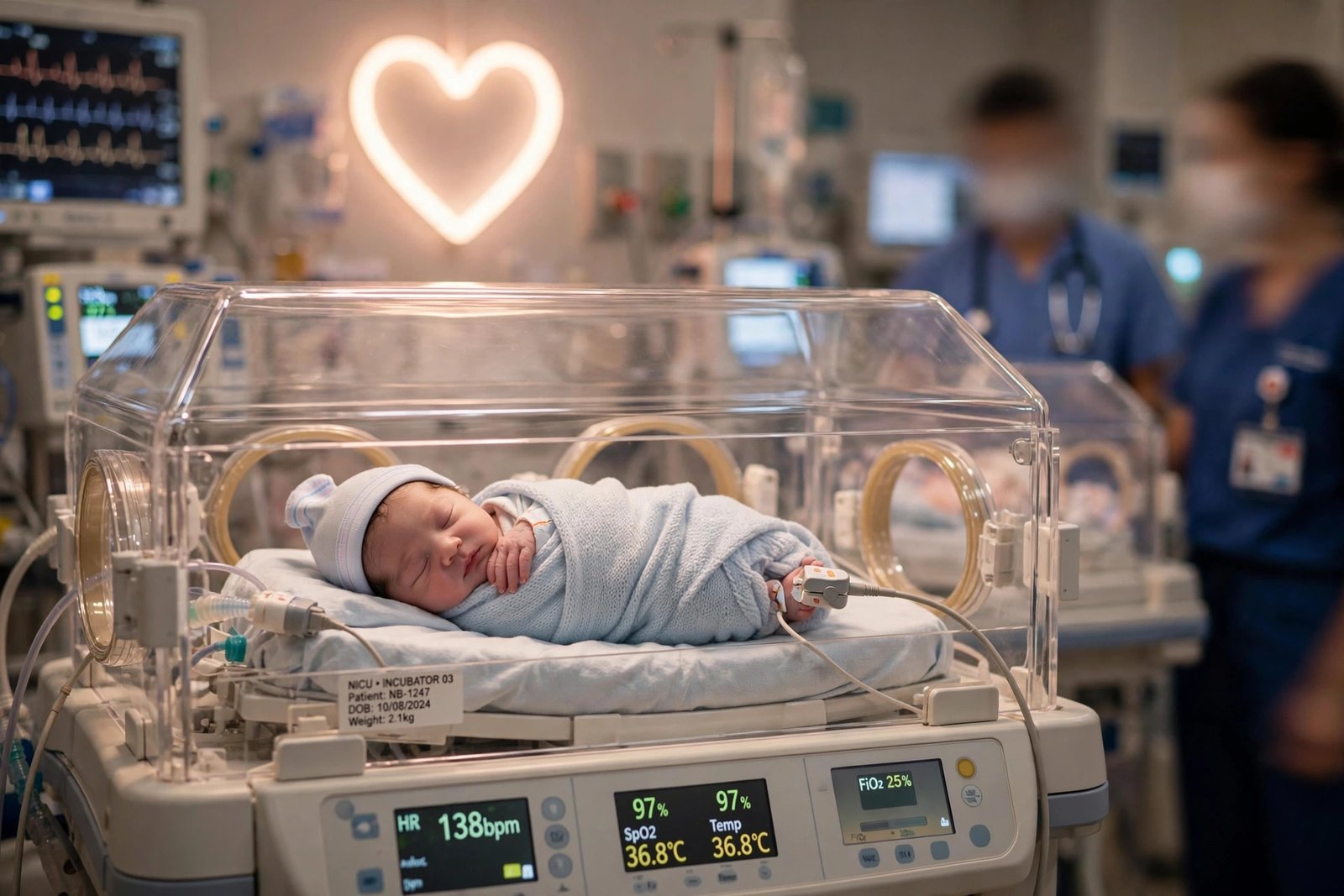
It sounds like something from a fairy tale: a baby girl born with not one, but two beating hearts inside her tiny chest. Yet this is not fiction. Medical history contains real, documented cases of babies born with two hearts — and of a girl who lived with two hearts beating side by side for ten full years before doctors did something no one had ever dared to do before. Doctors who treated these children use one word for it: a miracle.
How can a human body work with two hearts? The answer involves one of the boldest surgeries ever attempted, a rare form of conjoined twinning, and a discovery that changed what doctors believe a damaged heart is capable of. This is the true story of the girl born with two hearts.
The Girl Who Lived With Two Hearts for 10 Years
In 1995, a two-year-old British girl named Hannah Clark was dying. Her heart muscle was being destroyed by cardiomyopathy — a disease that weakens the heart until it can no longer pump blood through the body. She had only weeks to live.
The standard answer was a transplant: remove the failing heart and replace it with a donor organ. But her surgical team at Harefield Hospital in London, led by renowned cardiac surgeon Sir Magdi Yacoub, proposed something almost unheard of. Instead of replacing her heart, they would give her a second heart — placed right alongside the first.
The donor heart would do all the work of pumping blood, while Hannah’s own failing heart would stay exactly where it was, relieved of its burden. Resting. Given time to possibly heal. It was a gamble — in 1995, no one knew if a failing heart could truly recover with enough support.
The surgery succeeded. Hannah left the hospital with two hearts beating in her chest. And over the following years, the impossible happened: her original heart began showing real signs of recovery. By the age of six, both of her hearts were working normally.
What Is a “Piggyback” Heart Transplant?
The procedure Hannah received is called a heterotopic heart transplant — doctors nicknamed it the “piggyback” transplant. Instead of removing the patient’s diseased heart (an orthotopic transplant), the surgeon connects a second, healthy donor heart alongside the original one. The two hearts share the workload, with the donor heart doing most of the pumping.
The idea came from Christiaan Barnard, the South African surgeon who performed the world’s first heart transplant in 1967. Between 1974 and 1983, around 50 patients received second hearts in piggyback procedures. The logic was elegant: keep the original heart as a backup in case the donor organ failed, and give the damaged heart a chance to rest and recover.
The catch is that the patient must take powerful immunosuppressant drugs for life to stop the body rejecting the donor heart — and those drugs carry heavy risks of their own, as Hannah’s story would prove.
Babies Born With Two Hearts: The Conjoined Twins of Ratlam
While Hannah received her second heart through surgery, some babies are literally born with two hearts. One of the most astonishing cases happened on March 28, 2022, in Ratlam, a town in the Indian state of Madhya Pradesh.
Shaheen Khan and her husband Sohail had been told throughout the pregnancy that they were expecting twins — two separate, healthy babies. But what arrived that day stunned the entire medical team: one baby with two heads, three arms, and two hearts.
The condition is called dicephalic parapagus, an extremely rare form of conjoined twinning where two infants are fused side by side and share a single torso. It occurs in roughly one in a million births, and most such cases end in stillbirth or death within hours. But this time, the answer to the mother’s first question — “Is my baby alive?” — was yes.
Doctors quickly realized something crucial: the conjoined twins had two fully functioning hearts. Having two hearts meant each twin’s circulation was supported independently — a factor that significantly increased their chances of survival. The babies were transferred to a specialized hospital in the city of Indore, where doctors monitored them around the clock.
Though physically joined, the twins have two separate brains, two spines, and independent thought. They share one torso, with an extra arm between them making three in total. A similar case in 2019, also in Madhya Pradesh, saw a baby with two heads and three arms survive its first days — proof that these one-in-a-million children can defy the odds.
Ectopia Cordis: When the Heart Grows Outside the Chest
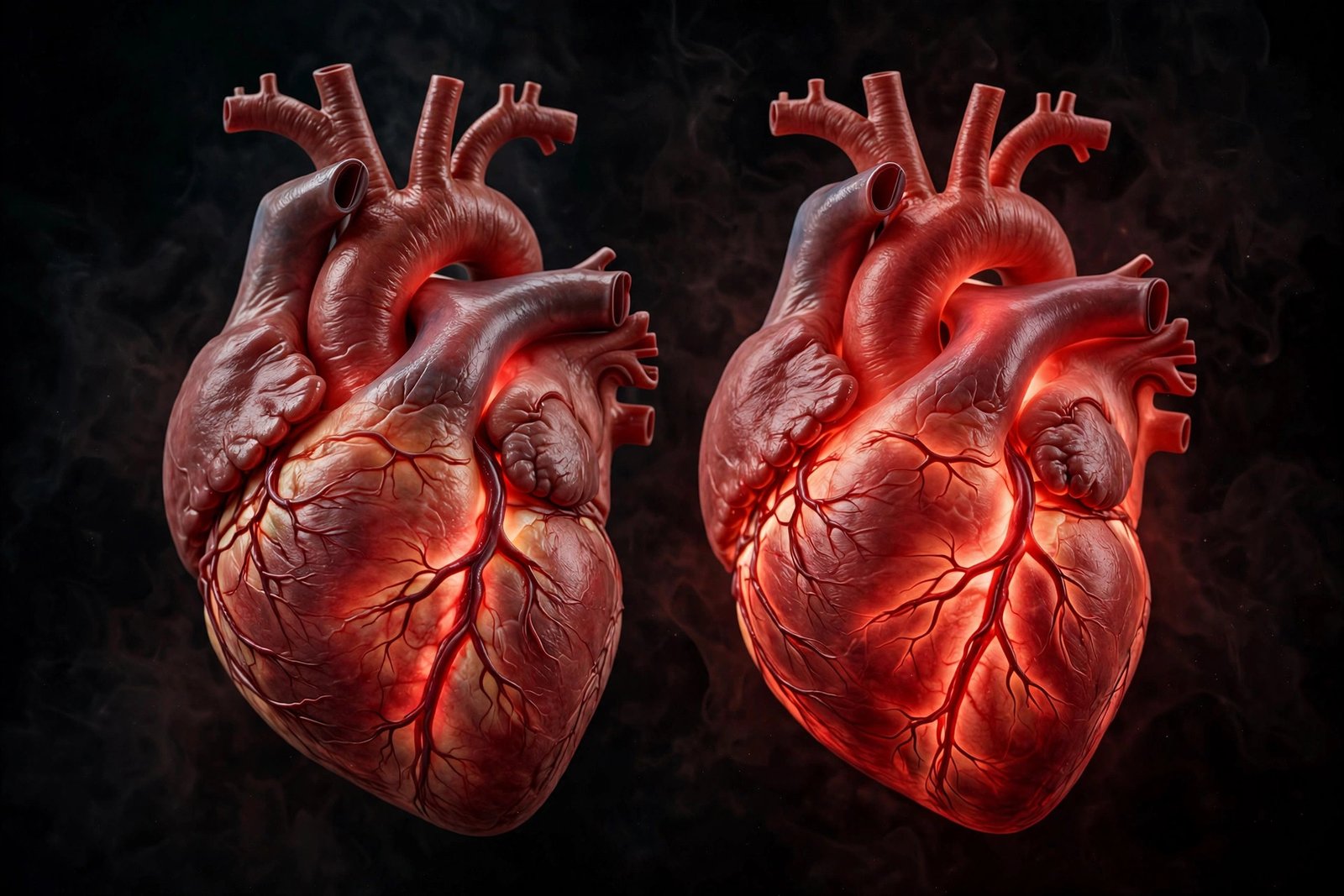
Another astonishing heart anomaly is ectopia cordis, a condition in which a baby’s heart develops partially or completely outside the chest cavity. It happens when the chest wall fails to close properly during fetal development, leaving the beating heart visible on the outside of the body.
Ectopia cordis occurs in only 5.5 to 7.9 per million live births. Most affected babies also have other serious defects of the chest and abdomen, and many do not survive long after birth. But the condition proves just how dramatically heart development can go off-script — and how hard these tiny hearts fight to keep beating, even in the wrong place.
Surgeons have occasionally managed to protect and reposition an ectopic heart, but the window for intervention is brutally narrow. Each case is a race between the baby’s fragile body and the operating team.
How Can a Person Survive With Two Hearts?
The obvious question is mechanical: how do two hearts share one circulatory system without interfering with each other? In a piggyback transplant, the surgeons connect the donor heart’s vessels to the patient’s existing vessels so that blood flows through both organs in a coordinated loop. The donor heart — stronger and healthier — takes over most of the pumping, while the original heart handles a smaller share and slowly rebuilds its strength.
Over time, something remarkable was observed in Hannah’s case: a heart that had been written off as dead tissue began to heal. This was one of the first strong pieces of evidence that a damaged heart can recover if it is given enough support and rest — a discovery that has shaped modern treatments, including ventricular assist devices (mechanical pumps that support a failing heart while doctors treat the underlying disease).
In the conjoined twins’ case, the biology is different but equally fascinating: two hearts developed in one shared torso, each wired to its own twin’s brain and nervous system, yet both contributing to a shared circulation. The redundancy is exactly what kept them alive when most dicephalic parapagus babies do not survive.
The Price of a Miracle: Hannah’s Fight Against Cancer
Hannah Clark’s story took a dark turn after her miraculous recovery. The immunosuppressant drugs she took to protect her donor heart left her vulnerable to a cancer linked to immune suppression — post-transplant lymphoproliferative disorder, driven by the Epstein-Barr virus. The cancer struck four times. She endured chemotherapy, went into remission, and relapsed again and again.
She was trapped: stop the drugs and her body would reject the donor heart; keep taking them and the cancer would keep returning. By 2005, ten years after the original transplant, doctors faced an agonizing decision.
Then came the surprise that made medical history. Tests showed that Hannah’s original heart — the one that had been dying in 1995 — had fully recovered and was working well on its own. In February 2006, surgeons at Great Ormond Street Hospital removed the donor heart. It was the first time a second donor heart had ever been safely removed after a successful reversal.
With the immunosuppressants stopped, Hannah’s immune system fought off the cancer — and within days, it was gone, apparently for good. “The possibility of recovery of the heart is like magic,” Sir Magdi Yacoub said at the time. “Now, her heart is functioning normally.”
Why Doctors Still Call These Cases Miracles
Modern medicine can explain the plumbing — how two hearts are connected, how blood flows, how drugs suppress rejection. What it cannot fully explain is the resilience: a heart written off as dead tissue that rebuilds itself over a decade; twins with a one-in-a-million body plan who breathe, feed, and stabilize against every prediction.
Cases like Hannah Clark’s and the Ratlam twins sit at the very edge of what medicine understands. They remind doctors that the human body — especially a child’s body — can do things no textbook predicts. And every one of these miracles teaches surgeons something new that saves the next child.
Frequently Asked Questions
Can a person really be born with two hearts?
Yes. In dicephalic parapagus conjoined twins — two babies fused side by side sharing one torso — each twin develops their own heart, so the shared body contains two beating hearts. It is extraordinarily rare, occurring in roughly one in a million births.
What is a piggyback heart transplant?
It is a heterotopic heart transplant in which a donor heart is connected alongside the patient’s own heart instead of replacing it. The donor heart does most of the pumping while the original heart rests, which can allow a damaged heart to recover.
What happened to Hannah Clark?
Hannah received a second heart at age two in 1995. After ten years, her original heart had recovered fully, and the donor heart was removed in 2006 — the first successful transplant reversal of its kind. Her immune system then defeated the cancer that immunosuppressant drugs had allowed to grow, and she recovered fully.
How rare is ectopia cordis?
Ectopia cordis — the heart developing outside the chest — occurs in about 5.5 to 7.9 per million live births. Most affected babies have additional serious defects and many do not survive, but each case advances surgical knowledge.