
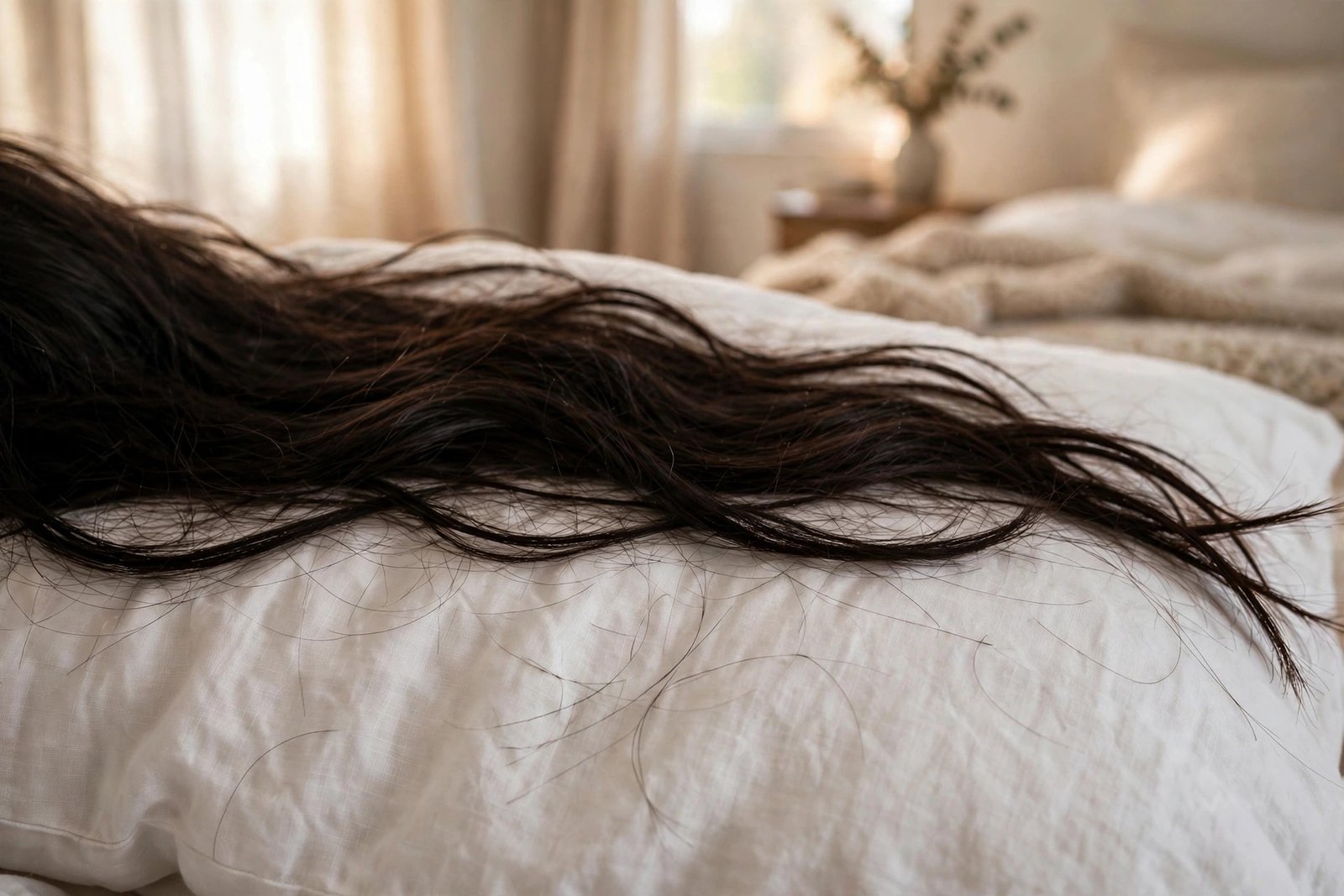
You fall asleep with a full head of hair and wake up to a crime scene on your pillow. A few strands here, a clump there, and every morning the drain in the shower seems to collect a little more than the day before. If this sounds familiar, you are not imagining it — and the biggest culprit might not be your shampoo, your diet, or your genes. It might be something you do every single night without thinking twice.
Dermatologists and trichologists have a name for the kind of hair loss that starts in the bedroom, and they say it is far more common than people realize. The good news? Once you know what the habit is, fixing it takes about two minutes. Keep reading — because the habit most people blame is usually the wrong one.
The Real Culprit: Tight Hairstyles at Night
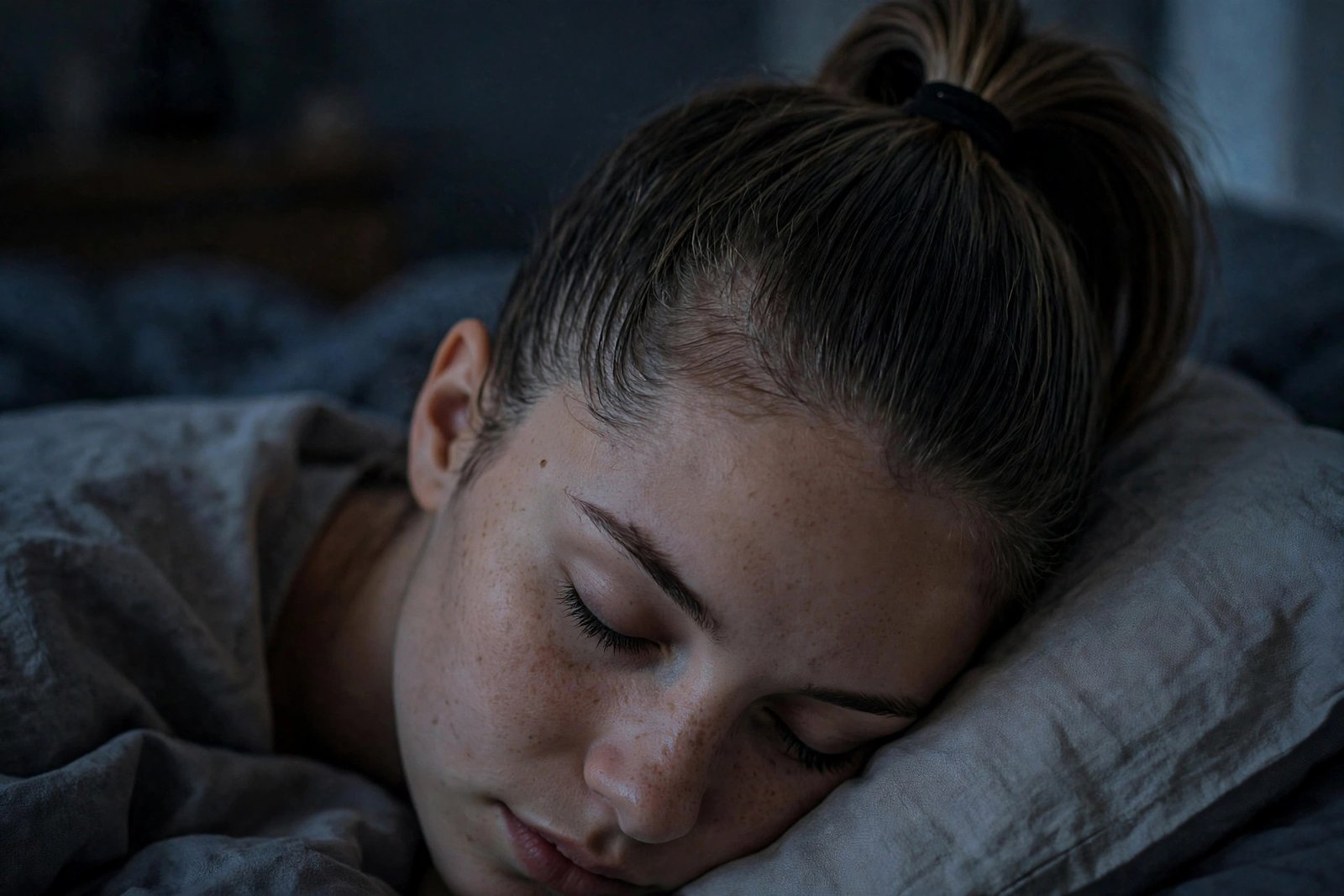
Here it is — the nighttime habit that quietly causes hair loss for millions of people: sleeping with your hair pulled back tight. The high ponytail, the tight topknot, the slicked-back bun you threw up before bed because it was “easier.” Dermatologists call the resulting damage traction alopecia — hair loss caused by constant, repeated pulling on the hair follicles.
Every follicle on your scalp is a living structure anchored in the skin. When hair is yanked tight for the 7–9 hours you sleep, those anchors are under tension all night long. Do it once, and nothing happens. Do it every night for months, and the follicles along your hairline, temples, and the nape of your neck start to weaken, miniaturize, and eventually stop producing hair altogether.
The cruel part is that traction alopecia is silent. There is no pain, no itching, no warning rash. You just notice one day that your hairline looks a little thinner, your part looks a little wider, and those tiny baby hairs around your temples never seem to grow back. By the time most people connect the dots, the damage has been building for a year or more.
Early-stage traction alopecia is reversible — loosen the tension and the follicles can recover. But if the pulling continues for years, the follicles can scar over permanently, and no product, oil, or vitamin will bring that hair back. That is why this particular nighttime habit is the one doctors warn about most.
Sleeping With Wet Hair Makes Everything Worse
The second most damaging nighttime habit is going to bed with wet or damp hair. Hair is at its most fragile when it is wet — the strands swell, stretch, and become far more elastic, which means they snap instead of bouncing back.
When you toss and turn on a pillow with damp hair, every movement grinds fragile wet strands against the fabric. The result is breakage along the mid-lengths and ends: hair that looks thinner, frizzier, and shorter even though it is technically still growing from the root. People often mistake this breakage for shedding and panic about hair loss, when the real problem is mechanical damage happening while they sleep.
A persistently damp scalp overnight also creates a warm, moist environment where fungi and bacteria thrive. An itchy, flaky, irritated scalp is not just uncomfortable — chronic scalp inflammation can disrupt the normal hair growth cycle and push more follicles into the shedding phase. If you shower at night, the single most protective thing you can do is dry your hair fully before your head hits the pillow.
Your Pillowcase Is Quietly Damaging Your Hair
Here is a habit hiding in plain sight: the rough cotton pillowcase you have slept on for years. Standard cotton has a coarse, absorbent weave. All night long, as you move in your sleep, your hair drags across that rough surface — and the friction roughs up the hair cuticle, the protective outer layer of each strand.
A roughed-up cuticle means more tangles, more frizz, more split ends, and more breakage. Cotton also absorbs moisture — including the natural oils your scalp produces to keep hair supple. Hair that dries out overnight becomes brittle, and brittle hair snaps.
This is why hair specialists so often recommend switching to a silk or satin pillowcase. The smooth surface lets hair glide instead of catching, dramatically cutting down on friction and moisture loss. It will not regrow hair you have lost, but it stops the nightly grinding that thins out the hair you still have.
The Stress–Sleep Connection Nobody Talks About
There is another nighttime factor that causes real, measurable hair shedding: chronic poor sleep itself. When you consistently sleep badly — scrolling until 2 a.m., irregular bedtimes, restless nights — your body produces more cortisol, the stress hormone.
Elevated cortisol disrupts the hair growth cycle. More follicles than normal get pushed from the growth phase into the resting phase, and two to three months later they shed all at once. Dermatologists call this telogen effluvium, and it is one of the most common causes of sudden, diffuse hair thinning. The shedding often starts months after the stressful period, so people rarely connect their bad sleep habits to the hair in the shower drain.
The pattern is unmistakable once you know it: months of late nights, then handfuls of hair coming out every time you wash or brush. Fix the sleep, lower the cortisol, and the shedding usually reverses on its own within a few months — follicles simply re-enter the growth phase.
Going to Bed With Product Buildup
Dry shampoo, heavy oils, gels, and styling creams are designed for daytime wear, not for an 8-hour press against your scalp. Sleeping with product buildup night after night clogs the follicles and traps sweat, oil, and dead skin against the scalp.
A congested scalp cannot breathe, and follicles buried under layers of product do not grow as well. Worse, the combination of product residue and overnight sweating is a recipe for scalp irritation and folliculitis — inflamed, sometimes painful bumps around the follicles that can damage them if the inflammation becomes chronic. If you use styling products during the day, make a habit of brushing them out gently — or better, washing — before bed.
Warning Signs Your Night Routine Is the Problem
How do you know if your nighttime habits are behind your hair loss? Look for these telltale signs:
- Thinning at the hairline and temples — the classic traction alopecia pattern, especially if you sleep in tight styles.
- More hair on the pillow than in the brush — shedding concentrated overnight points to something happening while you sleep.
- Short, broken pieces around the crown — a sign of wet-hair or friction breakage rather than true shedding from the root.
- An itchy, flaky, or irritated scalp — often linked to damp-hair sleeping or product buildup.
- Sudden all-over shedding 2–3 months after a period of terrible sleep — the delayed signature of stress-related telogen effluvium.
If you recognize yourself in two or more of these, your bedtime routine deserves an honest audit before you spend money on expensive treatments.
7 Nighttime Fixes for Healthier Hair
The encouraging truth is that nighttime hair damage is some of the easiest to fix. Here is what hair specialists actually recommend:
- Sleep with your hair loose or in a loose, low braid. If you must tie it back, use a soft scrunchie or silk tie — never a tight elastic — and keep it low and loose.
- Never go to bed with wet hair. Dry it fully, even if that means a quick blast with the dryer on cool.
- Switch to a silk or satin pillowcase. Less friction, less moisture loss, fewer tangles by morning.
- Brush out styling products before bed — or wash them out — so your scalp gets a clean 8 hours.
- Protect your sleep schedule. Consistent, sufficient sleep keeps cortisol down and your growth cycle on track.
- Massage your scalp for two minutes before bed. It boosts blood flow to the follicles and doubles as a wind-down ritual.
- Check your hairline monthly. Take a quick photo in the same light. Catching traction thinning early is the difference between reversible and permanent.
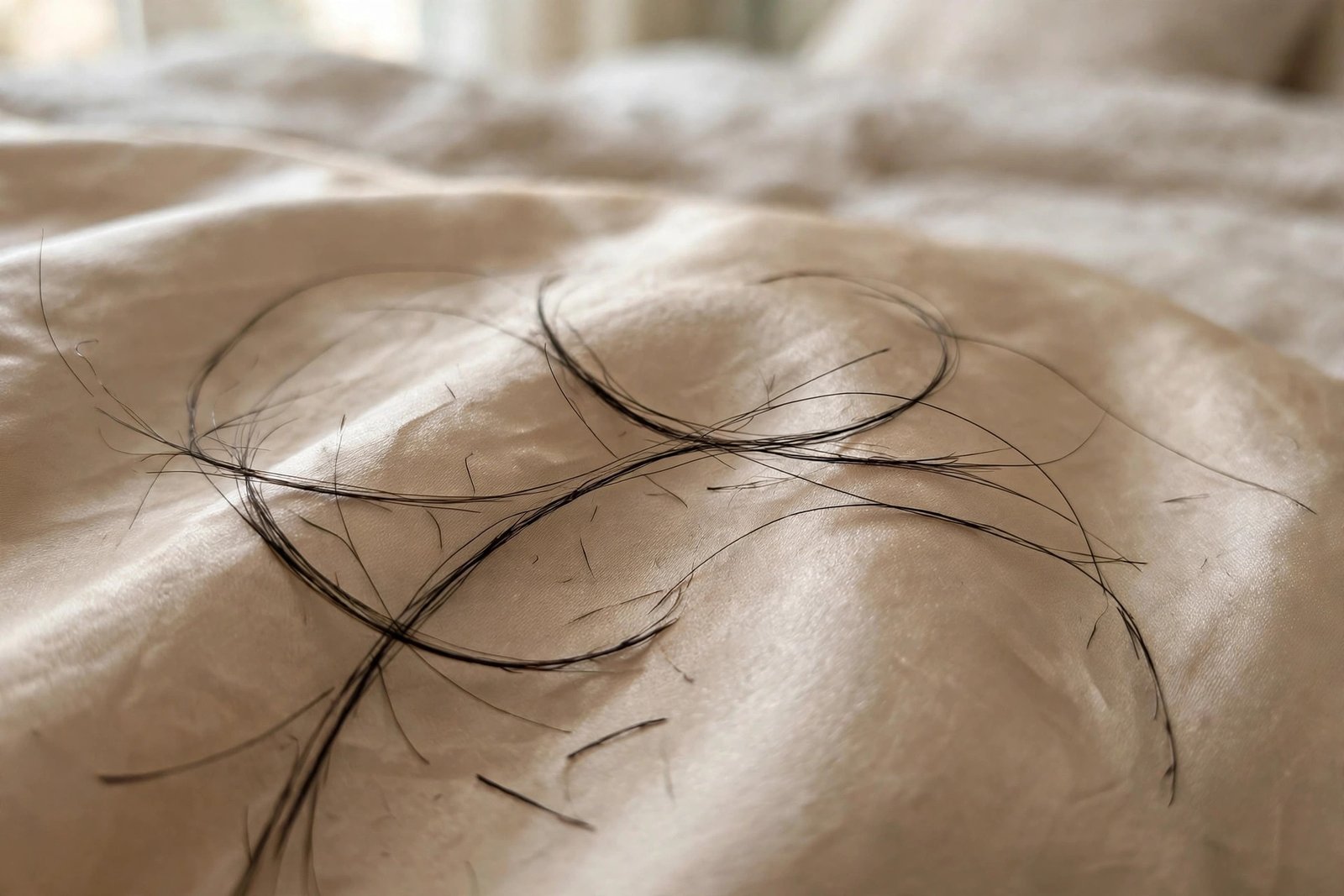
Most people do at least one of the damaging habits every single night without realizing it — the tight ponytail, the damp hair, the rough cotton pillowcase. The damage builds silently, strand by strand, until one morning the pillow tells the story. Change the habit tonight, and you give your follicles the one thing they have been asking for all along: eight peaceful hours with nothing pulling, grinding, or suffocating them.
Your hair does its growing while you sleep. Make sure your sleep is not doing the undoing.