
What Really Happened That Morning
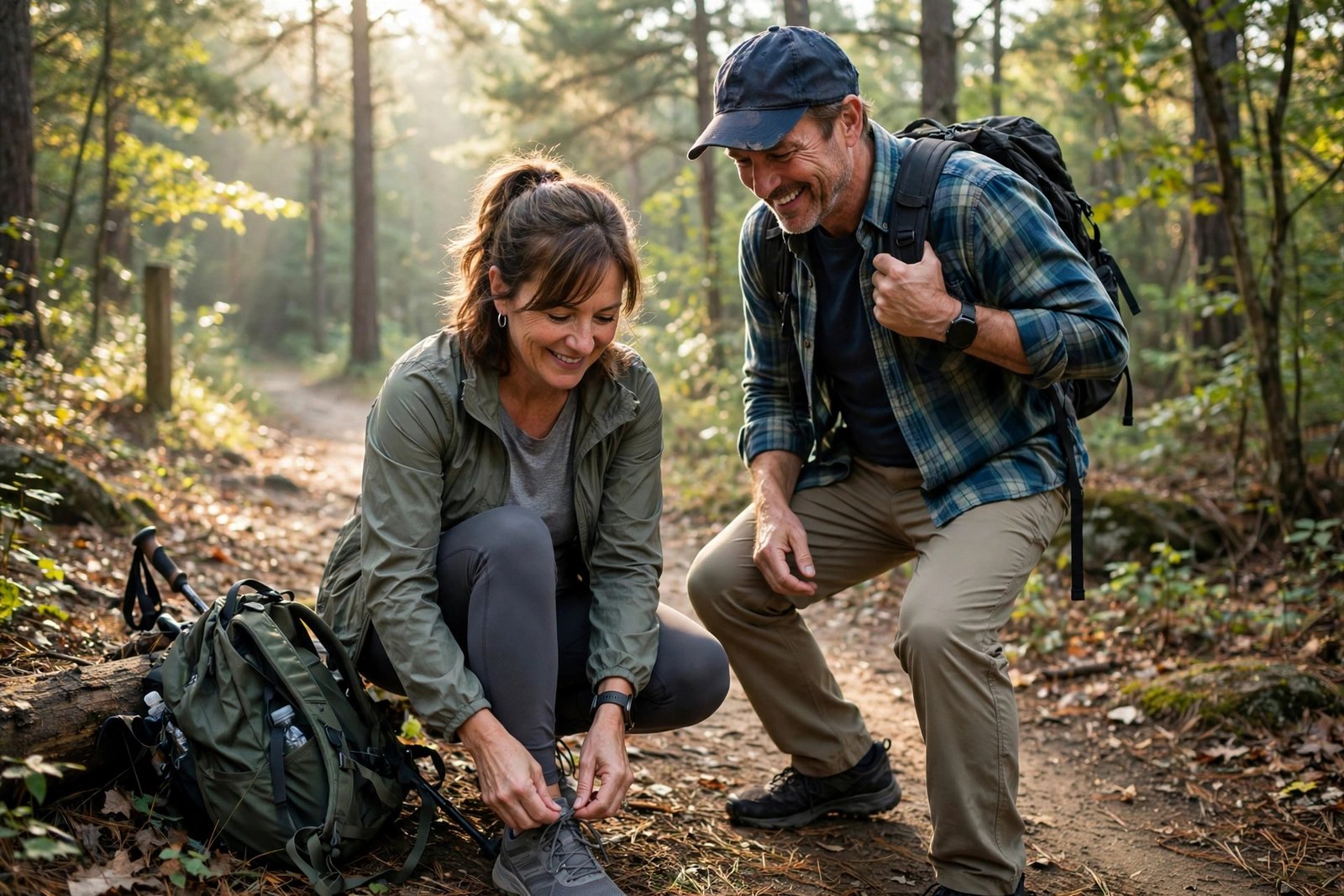
In February 2018, Tina Hines woke up like any other day, looking forward to a hike with her husband, Brian. She had no warning, no dramatic symptoms — just an ordinary morning that turned extraordinary within minutes.
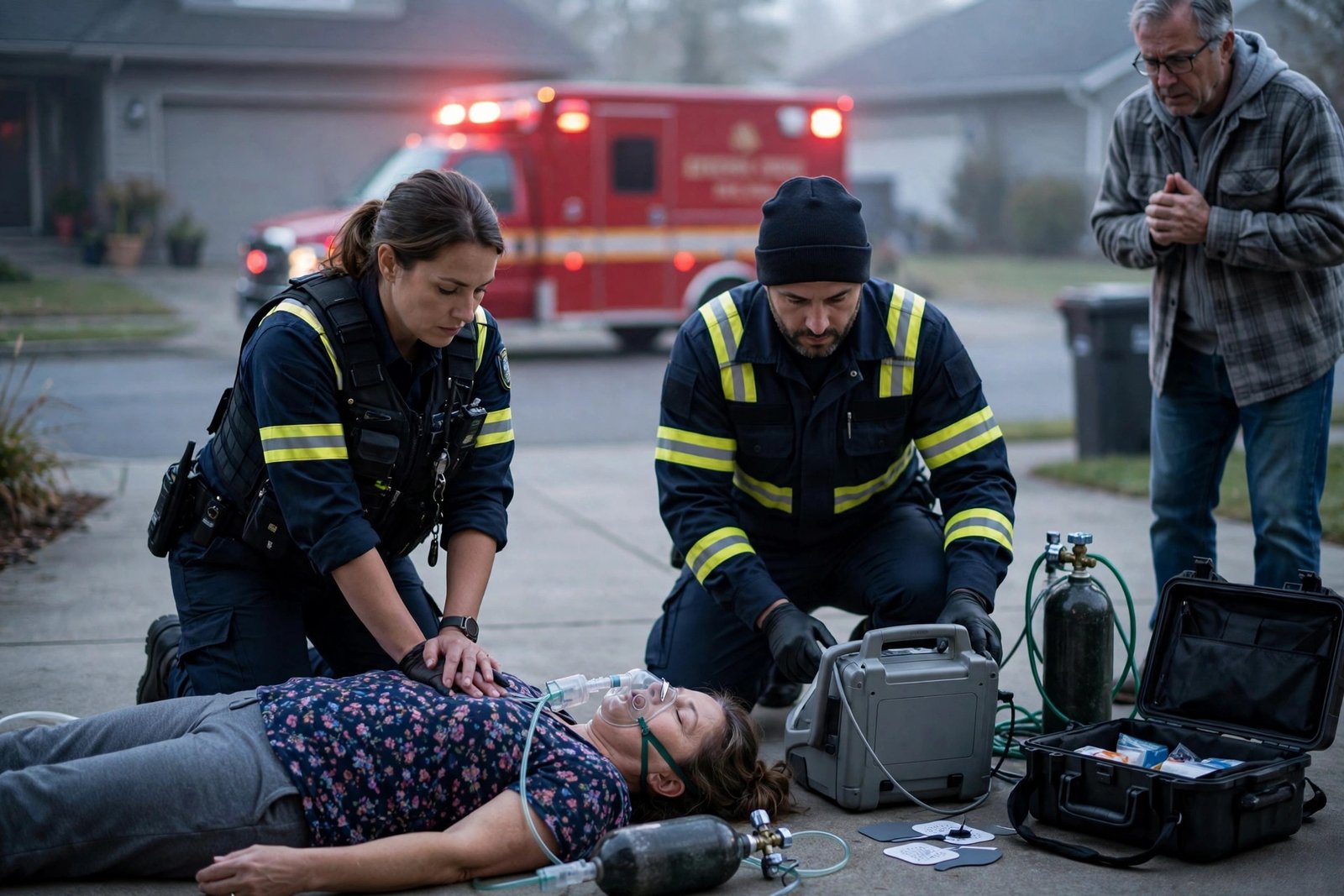
As the couple prepared to leave, Tina suddenly collapsed. Her heart had gone into sudden cardiac arrest. One moment she was lacing up for a hike, and the next she was clinically dead.
Brian didn’t freeze. He immediately began CPR, pushing hard and fast on her chest while a neighbor rushed to help. Between them, they kept blood moving through Tina’s body — the single factor that would later make doctors call her case extraordinary.
27 Minutes Without a Beating Heart
Tina’s heart was restarted and stopped again — six separate times. Her husband and neighbor revived her four times with CPR, and paramedics shocked her heart back with a defibrillator twice more on the way to the hospital.
In total, Tina Hines was effectively dead for 27 minutes.
To understand why that number stuns doctors, consider what happens inside the body when the heart stops. The brain consumes roughly 20 percent of the body’s oxygen, and its cells begin dying within 4 to 6 minutes without a fresh supply. Past 10 minutes, survival without brain damage becomes vanishingly rare. Past 20 minutes, most doctors will tell you the case is lost.
Tina beat every one of those numbers.
The First Thing She Did After Waking Up
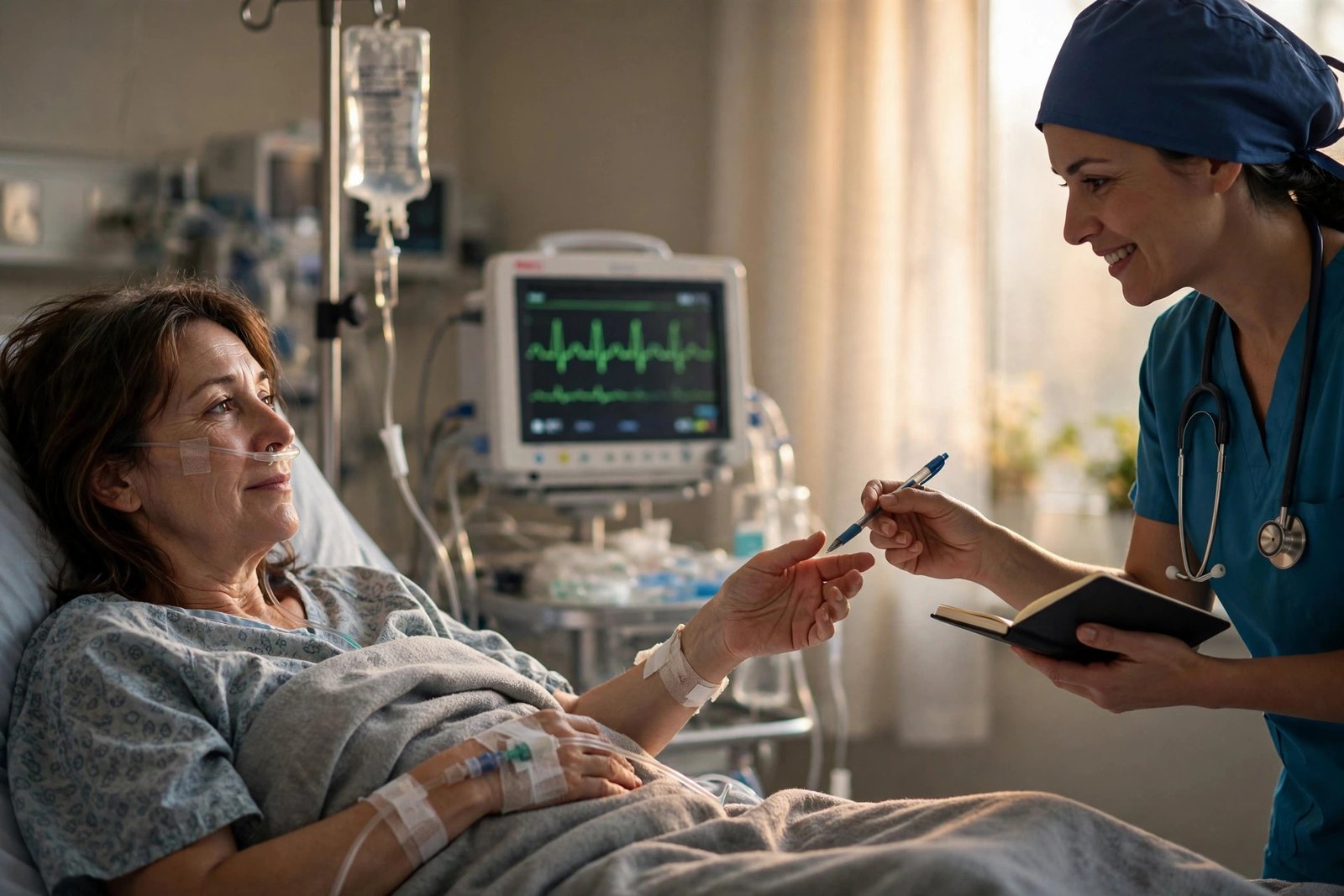
When Tina finally woke at the hospital, she couldn’t speak — a breathing tube ran down her throat. But the moment consciousness returned, she became desperate to communicate. She frantically signaled for something to write with.
A nurse handed her a pen and a notebook. In shaky, barely legible handwriting, Tina scrawled two words: “It’s real.”
Her family crowded around, confused. Brian held the notebook steady, his hands shaking, while they tried to decode what she meant. Was she talking about her pain? Her surroundings? Tina shook her head no.
Then her daughter spoke up: “Heaven?”
With tears in her eyes, Tina nodded yes — and pointed toward the sky.
What She Says She Saw
After the breathing tube was removed and Tina could talk, she described the experience in her own words. “It was so real, the colors were so vibrant,” she told reporters.
She described an overwhelming sense of peace and claimed she saw Jesus standing before a radiant glow, his arms outstretched, with a bright yellow light shining behind him. She spoke of dark gates and a warmth she had never felt before.
Tina made a full physical recovery — no brain damage, no lasting injury — and later wrote a book about the experience and how it reshaped her outlook on life and death. Her niece, Madie Johnson, was so moved by the story that she had the words “it’s real” tattooed on her wrist, along with posting her aunt’s original note to social media, where it touched millions.
Clinical Death vs. Biological Death: The 27-Minute Mystery
So how does a person survive 27 minutes without a heartbeat? The answer lies in a distinction doctors make between two kinds of death.
Clinical death is the moment the heart stops beating and breathing ceases. It is reversible — this is the state CPR and defibrillators are designed to reverse.
Biological death begins minutes later, when brain cells and organs die from oxygen starvation and the damage can no longer be undone.
The gap between the two is where miracles — or rather, remarkable medicine — happen. High-quality CPR does not restart the heart, but it keeps oxygenated blood flowing to the brain, stretching that window of clinical death far longer than nature allows. Brian’s CPR, then the neighbor’s, then the paramedics’ defibrillator shocks, kept resetting Tina’s clock.
Each of the six times her heart stopped, someone was there to bring her back. That unbroken chain of intervention is the real reason Tina Hines is alive today.
Near-Death Experiences: More Common Than You Think
Tina’s story sounds almost too strange to believe — until you look at the numbers. Researchers who study cardiac arrest survivors report that roughly 10 to 20 percent describe some kind of visual or sensory episode during the time they were technically dead.
The reports share striking patterns: vivid colors, an overwhelming sense of peace, seeing light or figures, feeling separated from the body. Patients who have never met describe eerily similar things.
Scientists have started hunting for a physical explanation. In a widely cited 2013 study, researchers at the University of Michigan found that in the moments before death, the brain experiences a surge of electrical activity — higher, in some measurements, than during the most alert waking state. The dying brain, it turns out, is anything but quiet.
Whether that surge explains the visions or merely accompanies them is something science has not settled yet. And for families like Tina’s, the explanation hardly matters.
The Minutes That Decide Everything
Emergency doctors repeat one figure endlessly: brain cells begin dying within 4 to 6 minutes without oxygen. Every minute of delay in CPR and defibrillation dramatically lowers survival odds.
Only about 1 in 10 people who suffer cardiac arrest outside a hospital survive. The survivors share one thing in common — someone acted fast. Immediate bystander CPR can double or even triple a person’s chance of survival.
Brian had no medical training beyond what anyone can learn. What he had was the willingness to act. The neighbor who jumped in made the chain unbroken. That is the part of Tina’s story doctors emphasize: the “miracle” began with two ordinary people refusing to stand still.
Why This Story Still Gives People Chills
Years later, Tina Hines’ case keeps resurfacing across the world because it touches the two questions every human being carries: What happens when we die? And can love — or faith, or sheer human will — reach across that boundary?
Her two-word message, written while a tube still sat in her throat, said more than any speech could. For her family, “It’s real” settled the question. For the rest of us, it sits there unanswered — a woman who was dead for 27 minutes, pointing at the sky.
The one fact nobody argues about: she lived. And her story is the reason CPR instructors now use her case to show students what their hands are capable of.
Frequently Asked Questions
Is Tina Hines’ story real?
Yes. Her cardiac arrest in February 2018 was reported by multiple news outlets, and she has given interviews about her recovery. Her family shared the original handwritten note.
How long can a person survive without a heartbeat?
Brain damage typically begins within 4 to 6 minutes without oxygen. Survival beyond 10 minutes is rare without intervention. Continuous CPR and rapid defibrillation can extend the survivable window, as Tina’s 27-minute case shows.
What does “clinically dead” mean?
Clinical death is when the heart stops beating and breathing ceases. It is potentially reversible with CPR and defibrillation, unlike biological death, where organ cells have died beyond recovery.
Do many cardiac arrest survivors report near-death experiences?
Studies suggest 10 to 20 percent of survivors describe visual or sensory episodes during the event, often featuring vivid colors, peace, or light — strikingly similar across patients.