
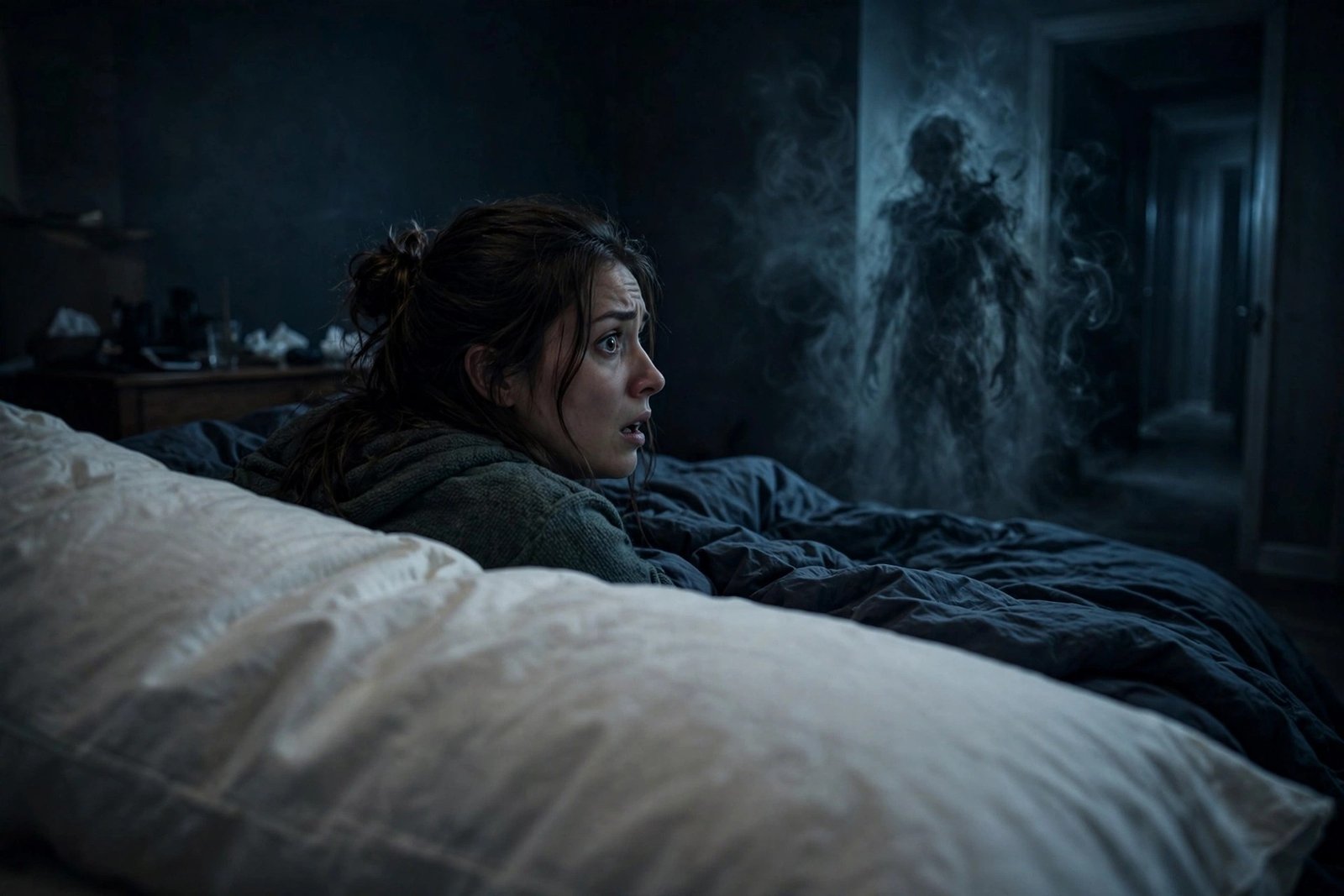
A shadowy figure crosses the room out of the corner of your eye. A face stares back from a dark hallway. A loved one who passed away appears standing by your bed. Millions of people around the world report experiences like these — and for centuries, “ghosts” were the only explanation. But modern brain science offers a far more startling answer: the visions may be coming from inside your own head. Neurologists have identified specific brain conditions that can make people see things that are not really there — and some of the people who “see ghosts” might actually be showing symptoms of a neurological or sleep-related disorder.
This is not about whether ghosts exist. It is about what the brain does when it malfunctions, misfires, or fills in the blanks — and the results are far stranger than most people expect.
Your Brain Is Built to See Faces — Even Where None Exist
The human brain has a dedicated region called the fusiform face area, whose entire job is detecting faces. It is so eager to do its job that it regularly sees faces in clouds, tree bark, burnt toast, and shadows — a phenomenon called pareidolia. Studies have shown this face-detection system is hyperactive in many people, and it works hardest in low light, when your vision is uncertain.
So when someone wakes up at 3 a.m. and “sees” a figure standing in a dark doorway, their brain may literally be assembling a human shape out of shadows. It feels completely real because the brain region that detected it is the same one used to recognize real faces. Your brain would rather show you a ghost that isn’t there than miss a person who is — an evolutionary habit from a time when mistaking a shadow for a predator was safer than the reverse.
Charles Bonnet Syndrome: The Brain Condition That Creates Ghosts
One of the most fascinating conditions linked to ghost sightings is Charles Bonnet syndrome (CBS). It affects people with significant vision loss — often older adults with macular degeneration, glaucoma, or cataracts. As their eyesight fades, the visual part of the brain starts generating its own images to fill the silence: people, faces, animals, or entire scenes that look completely real.
What makes CBS so important is that sufferers know the visions are not real — but they look so vivid that many are terrified they are losing their minds, and never tell anyone. Researchers believe many historical “hauntings” reported by elderly people living in dim, quiet homes may have been undiagnosed Charles Bonnet syndrome. The condition is estimated to affect up to half of people with severe vision loss, yet most doctors never think to ask about it, and most patients never mention it.
Sleep Paralysis: The Night Visitor Science Can Explain
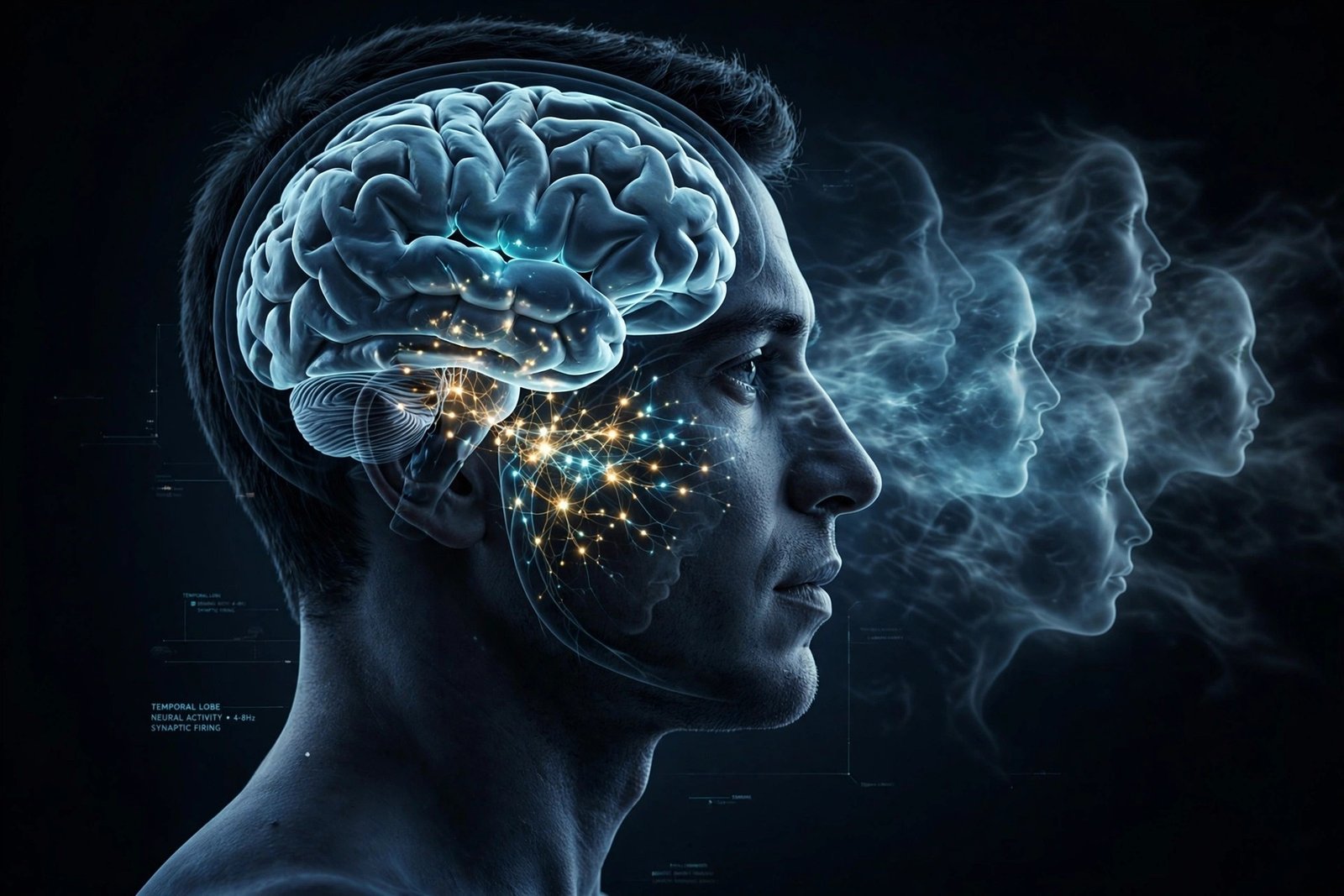
A huge number of ghost sightings happen in bed — someone wakes up, cannot move, and sees a dark figure sitting on their chest or standing in the corner. This is the textbook description of sleep paralysis, and it is frighteningly common: studies suggest up to 40 percent of people experience it at least once.
During sleep paralysis, the brain wakes up while the body’s muscles are still locked in REM-sleep paralysis. The sleeper is conscious, cannot move or scream, and the dream system is still partly active — so the brain projects dream imagery, often threatening figures, directly into the bedroom. The crushing pressure on the chest is a real physical sensation caused by shallow breathing muscles still being paralyzed. People across cultures report the same “intruder,” “pressure,” and “demonic” experiences — not because the same ghost visits everyone, but because human brains work the same way everywhere.
Grief Hallucinations: When the Deceased Visit the Living
Perhaps the most emotionally powerful “ghost” experiences happen after the death of a loved one. A large proportion of bereaved people report sensing the presence of the deceased — hearing their voice, smelling their perfume, or even seeing them. Researchers call these bereavement hallucinations, and they are a normal, well-documented part of grief rather than a mental illness.
The grieving brain has spent years or decades building a detailed model of a loved one — their face, voice, footsteps, habits. After death, that model keeps running for a while, and under stress, exhaustion, or in a quiet house full of memories, the brain can briefly play back its recordings. These experiences are usually comforting, and mental health experts consider them a healthy part of mourning. But when they happen to someone who doesn’t know the science, they are almost always interpreted as a genuine haunting.
Lewy Body Dementia and the Brain’s Misfiring Wiring
Not all ghost sightings are harmless. Vivid, detailed visual hallucinations are one of the core early symptoms of dementia with Lewy bodies — the second most common form of progressive dementia after Alzheimer’s. People with this condition may see children, animals, or strangers in the house long before their memory problems become obvious. Because the hallucinations look so real and the person is otherwise sharp, families often have no idea anything is medically wrong.
Similar visual disturbances can occur with temporal lobe seizures, certain migraines, and in rare cases Parkinson’s disease. The temporal lobe, which processes faces, memories, and emotions, is a prime suspect: unusual electrical activity there can produce an overwhelming feeling of “presence” — the distinct sensation that someone unseen is in the room. Neuroscientists have even reproduced this eerie “sensed presence” in the lab by stimulating the temporal lobe directly.
When “Seeing Ghosts” Means You Should See a Doctor
Experiencing something ghost-like once or twice — especially when waking up, falling asleep, or grieving — is extremely common and usually nothing to worry about. But medical experts say certain patterns deserve a checkup:
Visions that appear in full daylight and keep returning, hallucinations that come with confusion or memory problems, seeing things along with tremors or stiffness, or a sudden onset of vivid hallucinations in an older adult. These can signal Charles Bonnet syndrome, Lewy body dementia, a sleep disorder, or a neurological condition that benefits enormously from early diagnosis. An eye exam, a sleep evaluation, or a neurological workup can often explain what feels supernatural — and in many cases, treatment makes the visions fade or stop entirely.
Why Some People See Ghosts More Than Others
Scientists have found that people vary in how easily their brains generate these experiences. Those who are sleep-deprived, highly stressed, or grieving are far more susceptible. People with strong imaginative tendencies and those living in very quiet, dim environments — exactly the conditions of old houses and late nights — report more experiences. And once someone believes a place is haunted, the brain starts actively hunting for evidence, finding faces in shadows and meaning in ordinary sounds.
None of this proves ghosts don’t exist. What it proves is that the human brain is a hallucination machine operating on a hair trigger — and that before concluding a house is haunted, it may be worth asking whether the wiring inside the skull needs a look.
Frequently Asked Questions
Can a brain condition really make you see ghosts?
Yes. Charles Bonnet syndrome, sleep paralysis, grief hallucinations, Lewy body dementia, and temporal lobe activity can all produce vivid visions of figures or faces that feel completely real. Each has a known neurological mechanism.
What is Charles Bonnet syndrome?
It is a condition where people with vision loss experience vivid visual hallucinations — people, faces, or scenes — because the visual cortex generates its own images when deprived of input. Sufferers know the visions are not real, but they look convincing.
Why do so many ghost sightings happen in bed at night?
Most nighttime sightings match sleep paralysis: the brain wakes during REM atonia, leaving a person conscious but unable to move while dream imagery — often threatening figures — projects into the room.
Is seeing a deceased loved one a sign of mental illness?
No. Bereavement hallucinations are a common, normal part of grief. The brain’s long-built model of the loved one can briefly replay, especially under stress or exhaustion. They are usually comforting and temporary.
When should hallucinations be checked by a doctor?
Recurring daytime hallucinations, visions combined with confusion or memory loss, hallucinations with tremor or stiffness, or a sudden onset in an older adult all deserve a medical evaluation — an eye exam, sleep study, or neurological workup can identify treatable causes.