
What Happens to Your Body in the First Hour After Death
It is the one experience every human will share, yet almost no one talks about it in detail. What actually happens to your body in the first sixty minutes after your heart stops? Scientists and forensic experts have mapped it out — and some of the findings are truly surprising.
Here is the hour-by-hour breakdown of what unfolds.
The Moment It Happens: 0 Minutes
Death is officially declared when the heart stops beating and breathing ceases. But here is what most people do not know: your body does not shut down all at once. It is more like a city during a blackout — systems fail one by one, not simultaneously.
Within seconds of the heart stopping, blood pressure collapses and oxygen stops reaching the brain. You lose consciousness almost immediately. But deep inside, at the cellular level, the story is just beginning.
The Brain’s Final Surge: First Few Minutes
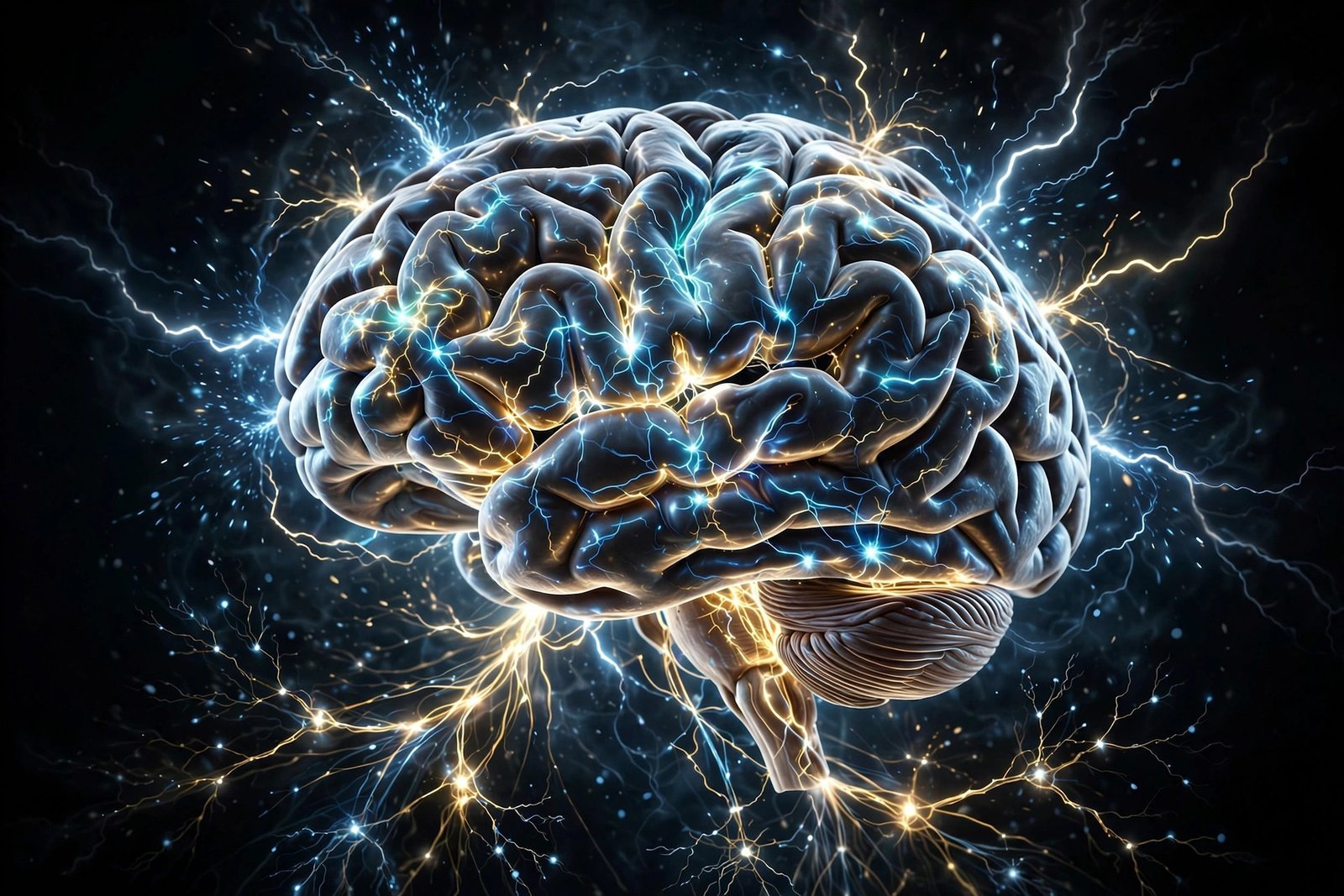
Here is the most astonishing finding. In 2022, neuroscientists recording the brain activity of a dying patient observed something unexpected: in the 30 seconds before and after the heart stopped, the brain showed a surge of activity in the gamma waves associated with memory recall, dreaming, and meditation.
Some researchers suggest this could be the biological basis of the “life flashing before your eyes” phenomenon reported by people revived from near-death experiences. The brain, it seems, may replay memories one final time.
After this surge, brain activity fades. Within 2 to 6 minutes without oxygen, brain cells begin to die — a process that is largely irreversible.
Minutes 1–15: The Color Drains
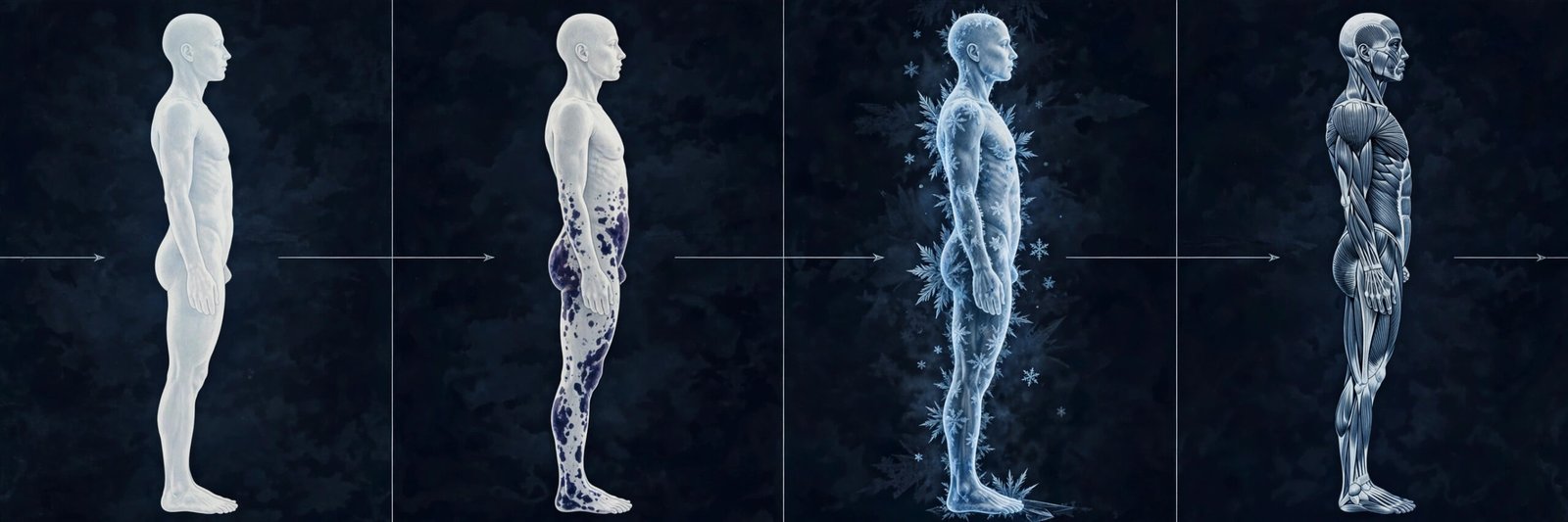
The first visible change is called pallor mortis — Latin for “pale death.” With the heart no longer pumping, blood stops circulating and gravity takes over. The skin, especially the face, turns an ashen, pale color within the first 15 minutes.
The muscles also go completely limp. This is called primary flaccidity — every muscle in the body relaxes at once. The jaw may fall open, the limbs become flexible, and the body is at its most pliable.
Minutes 15–30: Blood Settles
Next comes livor mortis, or “lividity.” With no circulation, blood pools in the lowest parts of the body under gravity’s pull. The skin in those areas turns a deep reddish-purple color, while upper areas stay pale.
This is why forensic investigators can tell if a body has been moved — the pattern of lividity reveals the position the body was in when death occurred. It sets permanently within about 6 to 8 hours.
Meanwhile, the body begins to cool. This is algor mortis — the gradual loss of body heat to the surrounding environment. A body typically cools about 1.5°F (0.8°C) per hour in the first hours, which is how forensic experts estimate time of death.
Minutes 30–60: Stiffness Begins
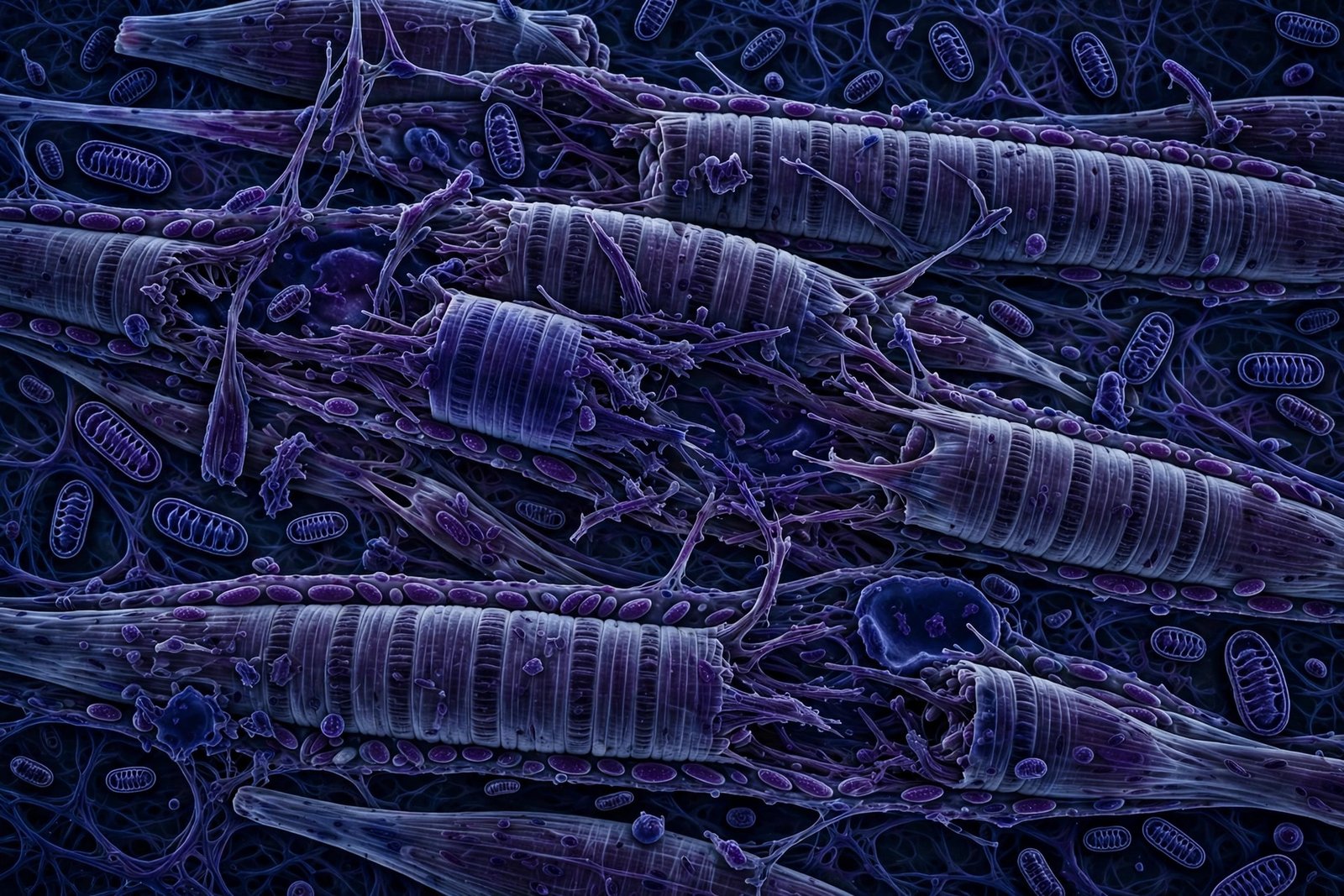
Around 30 minutes to 2 hours after death, the first signs of rigor mortis appear. Here is what causes it: your muscle cells run on a molecule called ATP. When you die, ATP production stops. Without ATP, the tiny fibers inside your muscles lock together — and cannot release.
It starts small — usually in the eyelids, jaw, and neck — then spreads downward through the body. Full rigor mortis takes about 12 hours to set in completely, and it lasts roughly another 12 hours before fading as tissues begin to break down.
What About Consciousness?
One of the most debated questions in science: can a person be aware after being declared dead? In 2017, researchers at NYU’s Langone School of Medicine found evidence that consciousness may continue for a short time after the heart stops — some cardiac arrest survivors reported awareness of their resuscitation.
Dr. Sam Parnia, who led the research, explained that the brain can remain active for a brief window even after clinical death. However, scientists stress that this is a topic of ongoing research, not settled fact.
Other Things That Happen in the First Hour
- The skin: Becomes waxy and pale as blood drains from the surface.
- The eyes: Without blinking or tear production, the corneas begin to cloud within 2 to 3 hours — but the drying starts immediately.
- Digestion: The digestive system halts. Whatever was being digested simply stops where it is.
- Cellular activity: Individual cells continue “living” for minutes to hours. Skin cells can survive up to 24 hours; some researchers have even harvested viable cells long after death.
Frequently Asked Questions
Does the brain really replay your life when you die?
A 2022 study recorded gamma wave surges in a dying patient’s brain — the same waves linked to memory recall. Researchers suggest this could explain “life flashing before your eyes” reports, though more research is needed.
How quickly does the body cool after death?
About 1.5°F (0.8°C) per hour in normal room conditions. Forensic experts use this cooling rate to estimate time of death.
What is rigor mortis and when does it start?
Rigor mortis is the stiffening of muscles caused by chemical changes after death. It typically begins 30 minutes to 2 hours after death, starting with small muscles in the face and neck.
Can you hear after you die?
Some near-death survivors report awareness during resuscitation, and researchers are studying whether brief consciousness persists. The science is still evolving.
Why does skin turn pale after death?
This is pallor mortis — with the heart stopped, blood no longer circulates to the skin’s surface, causing rapid paleness within 15 minutes.
Do nails and hair keep growing after death?
No — this is a myth. What actually happens is the skin retracts as it dehydrates, making nails and hair appear longer.
Final Thoughts
The first hour after death is not an ending so much as a slow unwinding — a sequence of precise, measurable changes that scientists have studied for centuries. From the brain’s final electrical surge to the first stiffness in the jaw, the body follows a script written by biology itself.
It is a reminder of something profound: life is not a switch that flips off. It is a flame that fades — gradually, and in stages.