

Eggshells for Knee Support: What They Can (and Can’t) Do
You have probably seen the viral posts: “When the knee lacks collagen, the eggshell is the solution.” It is a catchy line. It turns something we throw away every morning into a secret knee remedy hiding in the kitchen trash. And honestly, that is exactly why it spreads so fast — who does not love the idea that the cure was in the garbage all along?
But before we start saving every shell, let us slow down and ask the honest questions. What is actually inside an eggshell? Can it do anything for your knees? And if someone wants to try it, what is the safe way to do it?
This guide separates the facts from the hype — no miracle promises, just straight answers.
The Viral Claim, Explained
The internet version goes something like this: knees need collagen, eggshells contain the building blocks for joints, therefore eating eggshell powder rebuilds your knees. It sounds logical if you do not look too closely.
The problem is that the logic skips several important steps. Knees are complex joints, collagen is a protein your body makes (not something you can simply top up like engine oil), and eggshells are mostly something else entirely — which we will get to in a moment.
That does not mean eggshells are useless. It means the real story is more interesting — and more honest — than the viral version.
Why Do Knees Start Hurting?
Knee pain has many possible causes, and knowing the cause matters more than any home remedy:
- Aging and wear: The cartilage cushioning the joint gradually thins over the years. This is osteoarthritis, the most common reason for achy knees in older adults.
- Old injuries: A torn ligament or meniscus from years ago can come back to haunt you.
- Extra weight: Every extra pound adds several pounds of pressure on the knee with each step.
- Weak muscles: When thigh and hip muscles are weak, the knee joint absorbs more shock than it should.
- Inflammation: Conditions like rheumatoid arthritis attack the joint lining itself.
- Overuse: Repetitive kneeling, squatting, or stair climbing wears things down faster.
Here is something reassuring: knees that crackle or pop without pain are usually harmless. It is pain, swelling, stiffness, and instability that deserve attention — not sound effects.
Collagen and Your Knees: What’s the Real Connection?
Collagen is the most abundant protein in your body. It acts like scaffolding in skin, bones, tendons, ligaments — and yes, the cartilage inside your knees, which is rich in type II collagen.
That is why collagen supplements became a billion-dollar trend. Some research suggests collagen peptides may support joint comfort in certain people, especially with consistent use over months. But the results are modest, not miraculous, and no study shows collagen rebuilding a badly damaged knee overnight.
Here is the key point most viral posts miss: when you eat collagen (or any protein), your body breaks it into amino acids first. It does not travel intact to your knee like a delivery package. Your body then uses those building blocks wherever they are needed — which may or may not be your knee cartilage.
So the most reliable way to support your body’s collagen production is not a single magic ingredient. It is giving your body the raw materials: enough protein, vitamin C (essential for collagen formation), minerals like zinc and copper, water, and regular movement.
What’s Actually Inside an Eggshell?
An eggshell is roughly 95% calcium carbonate — the same compound found in many calcium supplements and antacid tablets. The remaining few percent includes small amounts of other minerals and trace proteins in the shell membrane.
That makes eggshell powder, when prepared properly, a concentrated source of calcium. Calcium matters enormously for bones, muscles, and nerves. Strong bones support better posture and movement, which indirectly helps how your joints function day to day.
But here is the honest correction to the viral claim: eggshells are not a meaningful source of collagen. Saying “eggshell replaces knee collagen” is simply not accurate. A truthful statement would be: eggshell powder may supply calcium that supports bone health, but it does not rebuild knee cartilage or cure arthritis.
Less dramatic? Yes. More useful? Absolutely.
So Can Eggshells Help Your Knees At All?
Let us be fair to both sides:
- What eggshell powder might do: Provide calcium if your diet is low in it. Adequate calcium supports bone density, and healthy bones are part of the bigger joint-health picture.
- What it cannot do: Regrow cartilage, reverse osteoarthritis, replace collagen in the knee, or fix a mechanical problem like a torn meniscus.
- What matters more: Overall nutrition, healthy weight, strong leg muscles, and appropriate medical care will always outweigh any single powder.
Think of it this way: if joint health is a team, calcium is one player — not the captain, not the coach, and definitely not the whole team.
How to Make Eggshell Powder Safely (Step by Step)
If you decide to try eggshell powder, preparation is everything. Raw, crushed shells can carry bacteria like Salmonella and have sharp edges that can irritate your throat or digestive tract. Never eat roughly crushed shells straight.
Here is the careful method people use:
- Save clean shells. Rinse eggshells immediately after cracking to remove egg white residue.
- Wash thoroughly. Wash the shells well under running water.
- Boil them. Boil the shells for about 10 minutes to reduce bacteria. Drain well.
- Dry completely. Spread on a baking tray and dry in the oven at low heat (around 200°F / 90°C) for 10–15 minutes until fully dry and lightly golden. They must be bone dry — moisture invites mold.
- Grind very fine. Use a clean coffee or spice grinder to grind the shells into an ultra-fine powder. This is the most important step: the powder should feel smooth like flour, with no grit or sharp bits. If it feels gritty, grind longer or discard it.
- Store properly. Keep the powder in a clean, dry, airtight jar. Label it with the date. Discard after a couple of months or if it smells off.
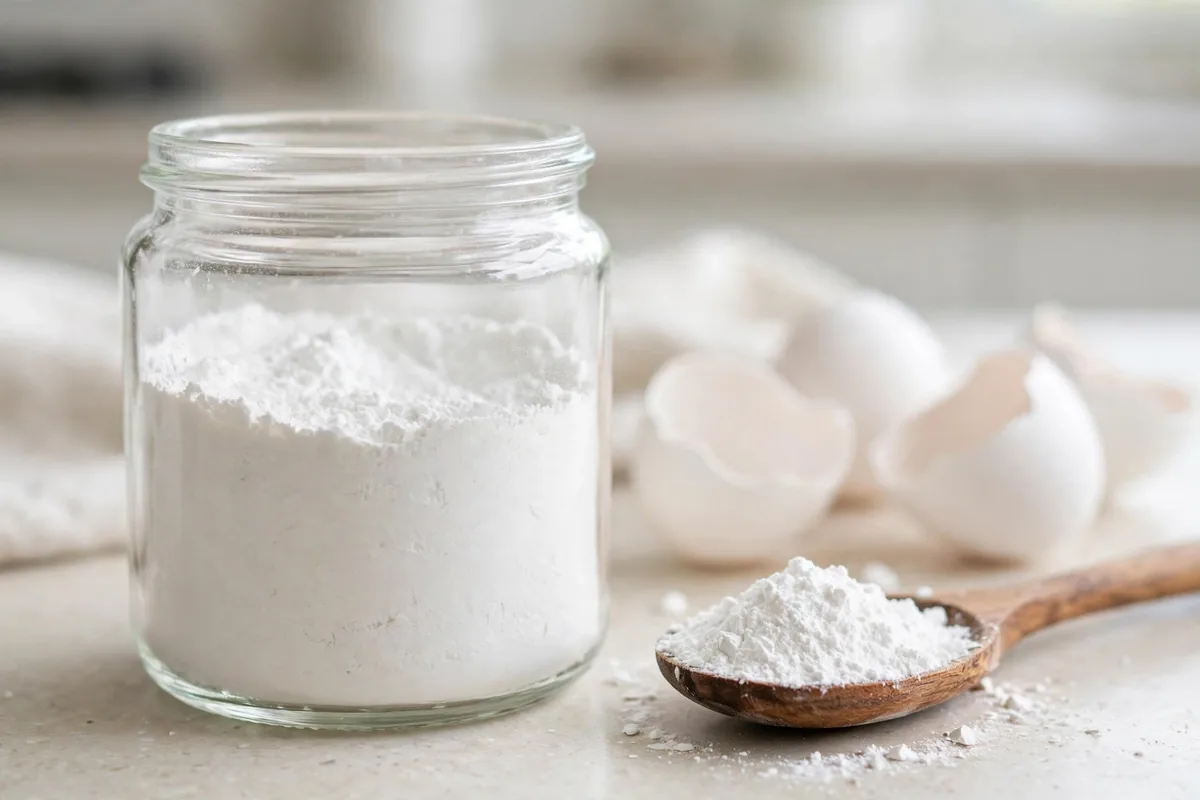
How People Use It: A Gentle Kitchen Approach
Eggshell powder is used in tiny amounts — a small pinch, not spoonfuls. Half a teaspoon of eggshell powder contains roughly 800–900 mg of calcium, which is close to an entire day’s recommended intake for most adults. More is not better.
Common gentle ways people mix a tiny pinch into food:
- Stirred into yogurt or oatmeal
- Blended into a smoothie
- Mixed into soup or stew
Pair it with vitamin C–rich foods — lemon, orange, berries, kiwi, bell peppers — because vitamin C helps your body form collagen naturally. And keep eating protein foods (eggs, fish, chicken, beans, lentils, Greek yogurt), because amino acids are the actual building blocks your body needs.
One more caution: too much calcium can cause constipation, stomach upset, and in some people increase kidney stone risk. It can also interfere with the absorption of thyroid medication, certain antibiotics, and iron supplements. If you take daily medication, check with your pharmacist or doctor first.

Foods That Truly Support Collagen and Joints
Instead of betting everything on one powder, feed your body the full toolkit for collagen production and joint health:
- Protein: eggs, fish, chicken, beans, lentils, Greek yogurt, bone broth — supplies amino acids.
- Vitamin C: citrus fruits, berries, kiwi, bell peppers, broccoli — required for collagen formation.
- Calcium: milk, yogurt, cheese, sardines with bones, leafy greens, calcium-set tofu, almonds, fortified foods.
- Zinc and copper: nuts, seeds, whole grains, shellfish — supporting players in collagen synthesis.
- Omega-3s: fatty fish, flaxseed, walnuts — may help with everyday joint comfort.
A balanced diet does more for your knees over a year than any viral powder does in a week. If nutrition is poor, sleep is bad, and movement is zero, no powder can carry the whole job on its tiny shoulders.
Don’t Forget Movement: Strong Muscles Protect Knees
Many people with knee pain stop moving because they are afraid of making it worse. Understandable — but often counterproductive. Gentle movement nourishes the joint and strengthens the muscles that protect it.
- Walking — the simplest joint-friendly exercise there is.
- Swimming and cycling — build leg strength without pounding the knees.
- Stretching — keeps the muscles around the knee flexible.
- Strengthening — stronger quadriceps and hip muscles measurably reduce pressure on the knee joint.
The rule is simple: discomfort that eases as you warm up is usually fine; sharp pain is a stop sign. A physical therapist can design a safe program if you are unsure where to start. For many people, joint support is not only about what they eat — it is equally about how they move.

Who Should Skip Eggshell Powder
Natural does not automatically mean safe for everyone. Avoid eggshell powder if you:
- Have kidney disease, kidney stones, or high blood calcium levels
- Were told by your doctor to limit calcium
- Take thyroid medication, certain antibiotics, or iron supplements (calcium can block absorption — separate them by several hours, or ask your doctor)
- Are pregnant, breastfeeding, or giving it to children — check with a healthcare professional first
- Have an egg allergy
- Are an older adult with multiple health conditions — a quick check with your doctor is worth it
Remember: poison ivy is natural too, and nobody puts that in a smoothie. “Natural” is not a safety certificate.
Warning Signs: When to See a Doctor
Home approaches are for mild, everyday support — never a substitute for medical care. See a healthcare professional promptly if you notice:
- Severe or sudden knee pain
- Swelling, redness, or warmth around the joint
- Fever along with joint pain
- Inability to bear weight or walk
- The knee locking, buckling, or giving way
- A visible deformity or a recent injury
- Pain that keeps getting worse despite rest
Pain is your body’s alarm system. Do not take the batteries out and pretend everything is fine.
Frequently Asked Questions
Do eggshells contain collagen?
Not in any meaningful amount for joints. Eggshells are about 95% calcium carbonate. The shell membrane contains trace proteins, but eggshell powder is a calcium source, not a collagen source.
Can eggshell powder rebuild knee cartilage?
No. No food or powder has been shown to regrow lost cartilage. It may support bone health as part of good nutrition, which is one piece of the joint-health puzzle.
How much eggshell powder is safe?
Only a tiny pinch occasionally. Half a teaspoon already holds nearly a full day’s calcium. Excess calcium causes more problems than it solves.
Can I just eat crushed eggshells raw?
No. Raw crushed shells can carry bacteria and their sharp edges can irritate your throat and digestive tract. They must be boiled, fully dried, and ground to a smooth powder.
Is eggshell calcium as good as supplement calcium?
Eggshell calcium is calcium carbonate, the same compound in many standard calcium supplements. The difference is dosing precision — supplements are measured; homemade powder is a guess.
What actually helps knees most?
The unglamorous classics: healthy weight, strong leg muscles, regular gentle movement, balanced nutrition with protein and vitamin C, and medical care when something is wrong.
Final Thoughts
Eggshell powder can be a reasonable homemade calcium source when it is prepared carefully — washed, boiled, fully dried, and ground to a silky powder. As part of a balanced diet, that calcium supports bone health, and healthy bones are good company for your joints.
But it is not a miracle cure for knee pain, arthritis, or missing collagen, no matter how confidently the viral posts say so. For healthier knees, think bigger: good nutrition, enough protein, vitamin C, sensible calcium, gentle movement, healthy weight, hydration — and a doctor’s guidance when you need it.
The humble eggshell may deserve a small place in the conversation. Just do not ask it to do the job of a doctor, a physical therapist, and an entire healthy lifestyle. Your knees deserve more than a viral promise — they deserve real care.