
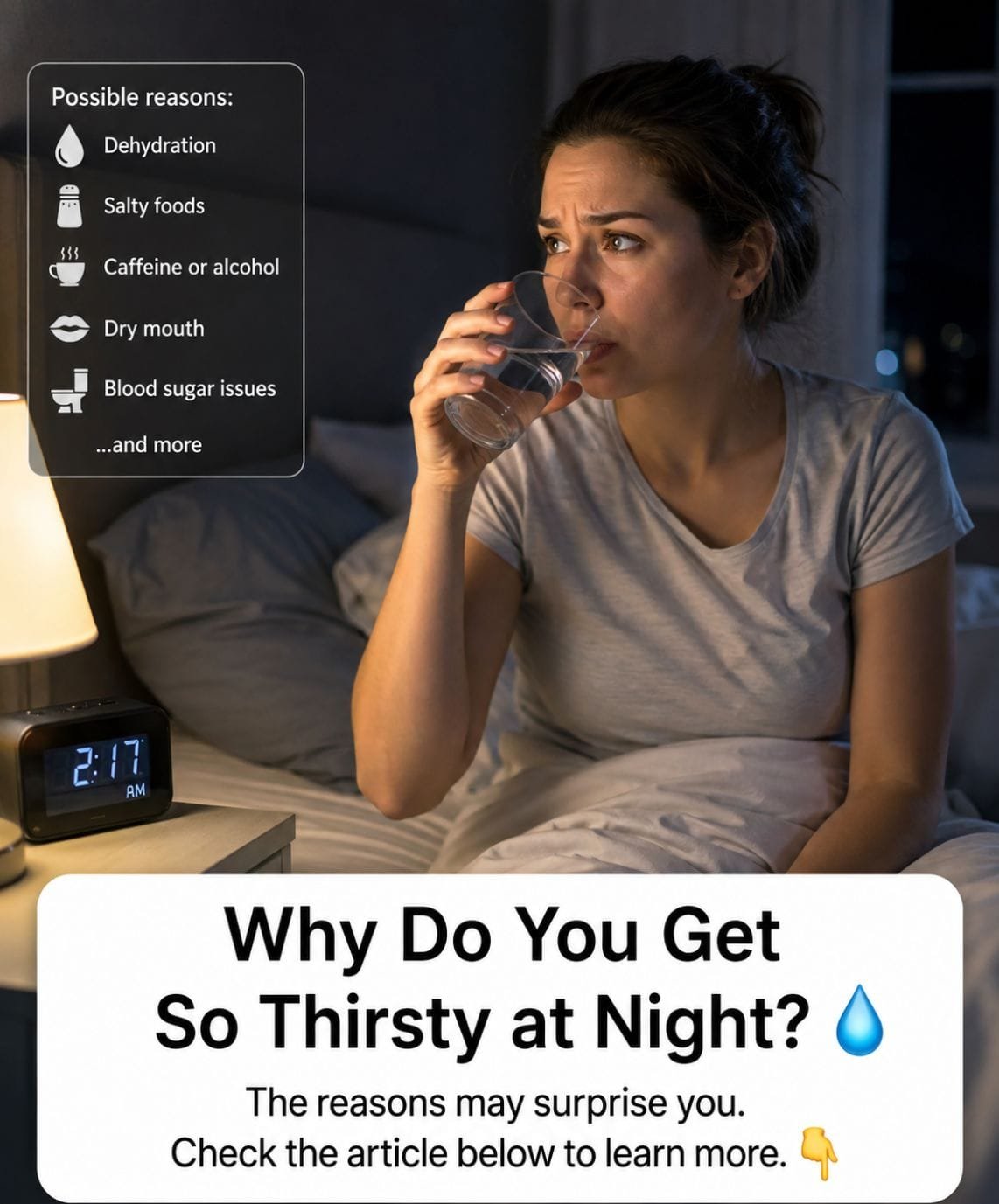
Waking up in the middle of the night feeling unusually thirsty can be annoying—especially when you’re already comfortable in bed and don’t want to get up.
Sometimes, there’s a very simple explanation.
Maybe you didn’t drink enough during the day. Maybe dinner was especially salty. Maybe your bedroom is warm or you’re sleeping with your mouth open.
But if you find yourself waking up thirsty night after night, there may be more to the story.
Here’s what can cause nighttime thirst and when it’s worth paying closer attention.
1. You Didn’t Drink Enough During the Day
The simplest explanation may be that your body needs more fluid.
Your body loses water naturally throughout the day through urination, sweating and breathing. If your fluid intake doesn’t keep up with those losses, you can become dehydrated.
Thirst can be one of the first signs that your body needs more fluid.
You may also notice:
- Darker-than-usual urine
- Dry mouth
- Tiredness
- Dizziness
- Headache
- Urinating less frequently
If you’ve spent the day exercising, working outside, or being exposed to hot weather, your fluid needs may be higher.
2. Your Dinner Was Very Salty
Ever wake up desperately wanting water after a particularly salty meal?
There may be a connection.
Foods such as processed meats, chips, fast food, canned soups and heavily seasoned meals can contain significant amounts of sodium.
After a salty meal, you may simply feel thirstier than normal.
If you notice that your nighttime thirst happens particularly often after takeout or salty dinners, try paying attention to that pattern.
3. Your Bedroom Might Be Too Warm
Your sleeping environment can also make a difference.
A warm bedroom, heavy blankets or sweating during the night can increase fluid loss.
You might wake up thirsty because you’ve been warmer than usual for several hours.
Try keeping your bedroom comfortably cool and notice whether your nighttime thirst changes.
4. You May Actually Have Dry Mouth
Here’s something many people overlook.
Sometimes what feels like thirst is actually dry mouth.
Dry mouth can happen when your mouth doesn’t produce enough saliva. It can leave your mouth feeling sticky, dry or uncomfortable when you wake up.
Sleeping with your mouth open can make this especially noticeable.
If you wake up with a dry mouth, sore throat or unusually thick saliva, consider whether you’re breathing through your mouth while sleeping.
5. Caffeine Later in the Day
That afternoon or evening coffee might also be worth looking at.
Caffeine can affect people differently, and consuming caffeinated drinks late in the day can also interfere with sleep.
If you regularly drink coffee, energy drinks, tea or other caffeinated beverages in the evening, notice whether your nighttime thirst seems connected.
You don’t necessarily need to eliminate caffeine completely.
Instead, consider reducing late-day consumption and seeing whether anything changes.
6. Alcohol Can Leave You Feeling Thirsty
Alcohol can also contribute to dehydration and can make nighttime sleep less comfortable.
A drink in the evening followed by waking up thirsty several hours later isn’t necessarily a coincidence.
Alcohol can also increase urination, which can contribute to fluid loss.
If you notice a consistent pattern, reducing evening alcohol intake may help.
7. Certain Medications Can Cause Dry Mouth or Thirst
Another possibility is medication.
Some medications can cause dry mouth or increased thirst as a side effect.
If your nighttime thirst began around the same time you started taking a new medication, it’s worth asking your doctor or pharmacist whether there’s a connection.
Don’t stop a prescribed medication on your own.
A healthcare professional can help determine whether the medication could be contributing to the problem and whether another option is appropriate.
8. Persistent Excessive Thirst Can Sometimes Have a Medical Cause
Occasional nighttime thirst isn’t usually something to panic about.
But persistent, excessive thirst deserves more attention.
For example, increased thirst and frequent urination can occur with high blood sugar and diabetes.
You might also notice other symptoms such as:
- Frequent urination
- Unusual tiredness
- Blurred vision
- Unexplained weight loss
- Persistent dry mouth
Having one of these symptoms doesn’t automatically mean you have diabetes.
But if several symptoms occur together or the thirst is persistent, it’s worth speaking with a healthcare professional.
Why Are You Waking Up to Drink Water?
There’s an important difference between waking up once because your mouth feels dry and waking up multiple times every night because you’re extremely thirsty.
If you’re repeatedly waking up to drink water and also getting up frequently to urinate, pay attention to the pattern.
It can be useful to keep track of:
- How often you wake up
- How much you’re drinking
- How often you’re urinating
- What you ate for dinner
- Whether you consumed caffeine or alcohol
- Whether your mouth feels dry
This information can be useful if you eventually discuss the issue with a healthcare professional.
Should You Drink a Lot of Water Before Bed?
Not necessarily.
You might think drinking a huge glass—or several glasses—right before bed will prevent nighttime thirst.
But that can create another problem: more trips to the bathroom.
Instead, focus on getting enough fluids throughout the day.
If you’re genuinely thirsty before bed, drinking some water is reasonable, but there’s generally no need to force yourself to consume excessive amounts.
A Simple Nighttime Experiment
If this happens occasionally, try observing your routine for several days.
During the day, stay reasonably hydrated.
At dinner, pay attention to how salty your meal is.
Limit caffeine late in the day.
Notice whether alcohol makes the problem worse.
Keep your bedroom comfortably cool.
Then see whether you still wake up extremely thirsty.
Sometimes identifying a simple pattern can tell you more than you might expect.
When Should You Get It Checked?
Nighttime thirst isn’t automatically a reason to worry.
However, it’s worth speaking with a healthcare professional if your thirst is persistent, excessive or unexplained, particularly if it happens alongside frequent urination or other unusual symptoms.
Don’t try to diagnose yourself based on thirst alone.
Many different things can cause increased thirst, and a healthcare professional can determine whether testing is appropriate.
Don’t Ignore a Pattern
One thirsty night after eating salty food isn’t particularly surprising.
But if you wake up every night reaching for water, it’s worth asking yourself what’s different.
Are you drinking enough during the day?
Was dinner unusually salty?
Is your mouth dry?
Are you taking a new medication?
Are you also urinating more frequently?
Are you experiencing other symptoms?
Those details can help separate an occasional nuisance from a recurring issue that deserves attention.
Final Thoughts
Getting thirsty at night can have a surprisingly simple explanation.
Your daytime fluid intake, dinner, bedroom temperature, mouth breathing, caffeine, alcohol and medications can all play a role.
But persistent excessive thirst—especially when accompanied by frequent urination or other symptoms—shouldn’t simply be ignored.
The key isn’t to panic every time you wake up thirsty.
It’s to notice the pattern.
If it keeps happening, especially alongside other changes in your body, talking with a healthcare professional is the safest way to find out what’s behind it.