
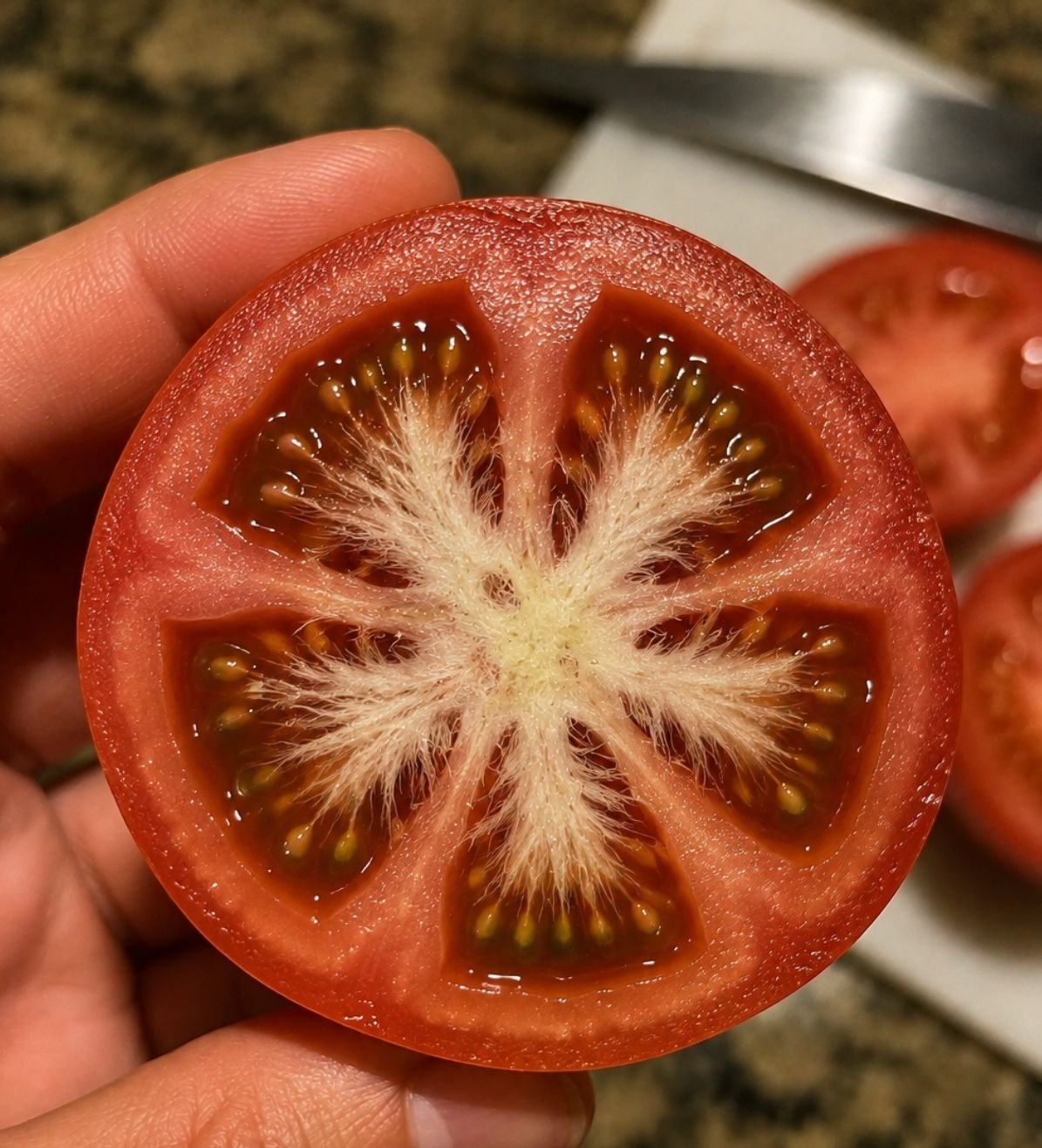
Cutting into a fresh tomato can sometimes reveal something you definitely weren’t expecting.
Instead of the usual red flesh and seeds, you may occasionally see unusual white fibers, pale growth, or a fuzzy-looking area inside. At first glance, it can look alarming enough to make you wonder whether the tomato is spoiled or unsafe.
But not every unusual-looking tomato interior means the same thing.
Some internal color and texture changes can happen naturally, while fuzzy or cotton-like growth can be a sign of fungal growth or spoilage. That’s why it’s important to look at the tomato as a whole rather than judging it from one unusual feature.
Table of Contents
ToggleWhat Should a Tomato Look Like Inside?
A ripe tomato normally has juicy flesh surrounding several chambers filled with seeds and gel.
Depending on the variety, the interior can range from deep red to pink, orange, yellow, or even somewhat pale.
Some tomatoes can also have firmer, lighter-colored internal tissue.
University of Minnesota Extension notes that some tomatoes can develop white, hard interior flesh because portions of the fruit fail to ripen normally.
So seeing white tissue by itself doesn’t automatically mean the tomato is dangerous.
The situation becomes more concerning when the material looks genuinely fuzzy, cottony, or mold-like, especially when accompanied by soft or rotting tissue.
What Could the White, Fuzzy Material Be?
There are several possibilities.
Natural Internal Fibers
Tomatoes contain fibrous structures that connect the seed chambers.
When a tomato is cut open, these structures can sometimes appear more prominent than expected.
Depending on the tomato variety and how ripe it is, the interior may have pale or whitish areas.
Internal Ripening Problems
Some tomatoes don’t ripen evenly.
The University of Minnesota Extension describes tomatoes with white, hard interior flesh in certain ripening disorders. Environmental conditions, variety, nutrition, and other factors can contribute to these changes.
In this situation, the tomato may look unusual without necessarily having visible mold.
Mold or Fungal Growth
A genuinely fuzzy or cotton-like growth is different.
Fungi can produce visible filamentous growth, and some tomato diseases can cause white or gray fungal material under favorable conditions.
For example, University of Minnesota Extension describes white mold as producing cottony white mycelia and notes that affected fruit can become soft and rotten.
That’s why a tomato with obvious fuzzy growth deserves more caution.
Does It Matter If the Tomato Doesn’t Smell Bad?
Yes.
Smell can be useful, but it isn’t a reliable test for whether food is safe.
A tomato can have visible spoilage even before it develops a strong unpleasant odor.
The same applies to other fresh produce: don’t rely solely on smell when deciding whether something with an unusual appearance is safe to eat.
What About a Tomato That Looks Fine on the Outside?
This is one reason cutting into produce can sometimes be surprising.
Internal problems aren’t always obvious from the outside.
A tomato can appear relatively normal externally while having internal discoloration, soft tissue, or other changes.
If you cut one open and discover something that looks like actual mold or decay, it’s better not to simply ignore it because the skin looked normal.
Should You Cut Around the Bad Area?
It depends on what you’re seeing.
For firm produce with a small damaged area, guidance can differ depending on the type of food and the nature of the damage.
USDA guidance advises cutting away damaged or bruised areas of fresh produce because bacteria can thrive in those areas.
However, if a tomato is clearly moldy, soft, leaking, or extensively spoiled, trimming one small section isn’t necessarily an appropriate solution.
When there is obvious mold or widespread deterioration, discarding the tomato is the safer choice.
What Does Mold Look Like?
Mold isn’t always bright green or black.
It can appear white, gray, blue, green, or in other colors depending on the organism.
Some molds can produce fuzzy or cotton-like growth.
The USDA notes that molds commonly occur on many different foods and provides specific guidance for handling moldy food.
That’s why the texture matters as much as the color.
A smooth white internal structure isn’t necessarily the same thing as a fuzzy growth.
Why Tomatoes Can Develop Spoilage
Tomatoes contain a lot of water, which makes them vulnerable to deterioration once their tissues are damaged.
Bruising, cuts, excessive moisture, poor storage conditions, and prolonged storage can all contribute to quality loss.
Fungal diseases can also affect tomatoes.
University of Minnesota Extension describes several tomato disorders involving soft or rotting fruit, including conditions that can produce visible fungal growth.
How to Store Tomatoes Properly
Whole tomatoes are generally best kept in a suitable storage environment until they’re ripe and ready to use.
Once cut, they should be refrigerated promptly.
Fresh-cut produce has a shorter shelf life than intact produce because cutting exposes the interior to contamination and moisture loss.
USDA guidance recommends refrigerating fresh-cut produce promptly for food safety and quality.
Wash Tomatoes Before Cutting
Before preparing fresh tomatoes, rinse them under cool running water.
Don’t use soap or household detergent on produce.
USDA specifically recommends washing fresh produce under running water and advises against using soap or detergent because residues can remain on the food.
It’s also helpful to use a clean knife and cutting board, especially when you’re preparing produce that will be eaten raw.
What If the Tomato Has a Strange Color but No Fuzz?
This is where things can get confusing.
A tomato may have:
- Pale internal flesh
- White fibrous tissue
- Yellowish areas
- Greenish areas around the seeds
- Uneven ripening
- Firmer sections
These changes don’t all mean the same thing.
Some are related to the variety or ripening process rather than spoilage.
For example, University of Minnesota Extension notes that some tomatoes develop white, hard internal flesh because the tissue doesn’t ripen normally.
But if the tissue is fuzzy, cotton-like, slimy, soft, or clearly decomposing, treat that differently.
What If You Already Ate Some?
If you accidentally ate a small amount of tomato that later looked unusual, don’t automatically assume you’ll become sick.
Foodborne illness depends on many factors, including what was present, how much was consumed, and the person’s individual susceptibility.
However, if you develop concerning symptoms after eating spoiled food, particularly severe or persistent symptoms, seek appropriate medical advice.
The safest approach is prevention: when food shows obvious signs of spoilage, don’t eat it.
A Good Rule for Strange Produce
When you’re unsure about an unusual food appearance, ask yourself a few questions:
Is it normal for this variety?
Is the tissue firm or soft?
Is the unusual material smooth or actually fuzzy?
Is there visible mold?
Is the tomato leaking or rotting?
Does the fruit have an unusual odor?
Looking at all of these signs together gives you a better picture than focusing on color alone.
Final Thoughts
Finding something strange inside a tomato can definitely make you stop and take a second look.
A pale or unusual interior doesn’t automatically mean the tomato is unsafe. Tomatoes can have natural variations and ripening disorders that change their internal appearance.
However, true fuzzy or cotton-like growth, soft rot, and obvious mold are reasons to be cautious. Tomato diseases and fungal growth can produce exactly those kinds of visual changes.
When you’re genuinely unsure whether what you’re seeing is normal tissue or spoilage, the safest choice is to avoid eating the questionable tomato rather than taking a chance.
Sometimes the strangest-looking food isn’t necessarily bad—but when it looks like mold, it’s better to be safe than sorry.