
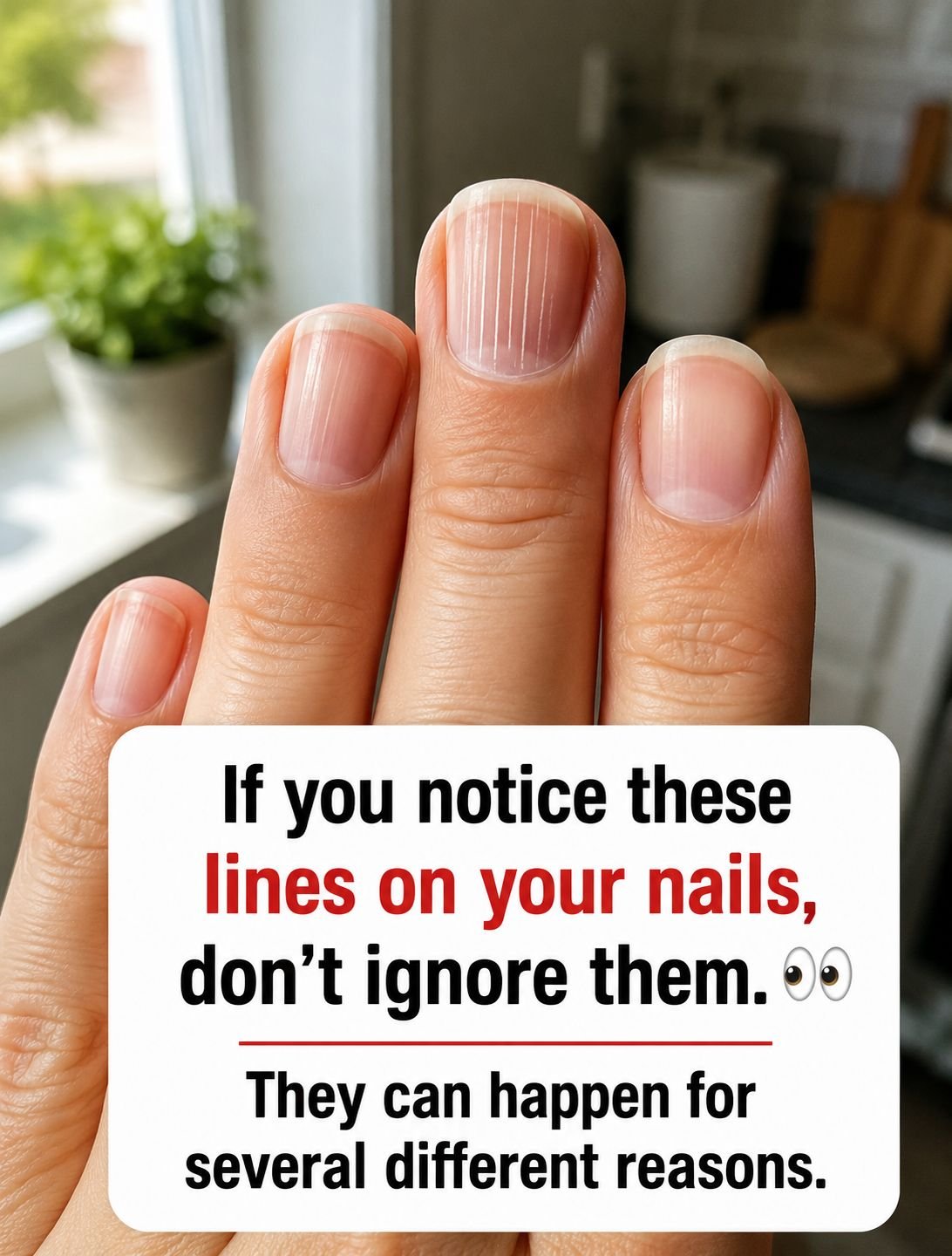
Have you ever looked closely at your fingernails and noticed tiny lines running from the base toward the tip?
These vertical ridges are surprisingly common. In many people, they’re simply a normal part of aging or related to dry skin. But nail changes can also occur because of injuries, skin conditions, nutritional deficiencies or certain health problems.
The important thing is not to panic when you see a line—but also not to assume that every unusual nail change has the same cause.
Table of Contents
ToggleWhat Are the Lines on Your Nails?
Nail ridges are lines or grooves that change the texture of the nail.
They can run in two main directions:
- Vertical: from the cuticle toward the nail tip
- Horizontal: across the width of the nail
These two patterns can have very different causes.
The image commonly seen in everyday life is a set of fine vertical ridges running lengthwise along the nail.
Vertical Ridges Are Often Harmless
If you have fine vertical ridges on several fingernails and otherwise healthy-looking nails, there may be no reason to panic.
Cleveland Clinic notes that normal aging is a common cause of vertical nail ridges, and these lines aren’t usually dangerous.
Dry skin or eczema can also be associated with vertical ridges.
So if you’ve had the same subtle lines for years without other nail or health changes, they may simply be part of your normal nail appearance.
Sometimes Dryness Plays a Role
Your nails and surrounding skin can become dry from frequent handwashing, household cleaning products and environmental conditions.
When the skin and nails are dry, ridges may become more noticeable.
Keeping your hands and cuticles moisturized can improve the appearance of dry, ridged nails. Cleveland Clinic recommends regular moisturizing when dryness or eczema contributes to nail ridges.
Could Nutrition Be Involved?
Sometimes nail changes can be associated with nutritional deficiencies.
For example, Cleveland Clinic notes that iron deficiency can cause vertical nail ridges, while certain nutritional deficiencies can contribute to other types of nail changes.
That doesn’t mean that seeing a ridge automatically means you’re deficient in iron or another nutrient.
Nails alone cannot tell you what nutrient you may be missing.
If you have persistent nail changes along with other symptoms, a healthcare professional can determine whether testing is appropriate.
What About Thyroid Problems?
Certain thyroid conditions can affect the appearance and strength of nails.
Cleveland Clinic notes that hypothyroidism can be associated with thick, brittle nails and vertical ridges.
Again, this is an example of why a nail change should be considered in context.
A vertical ridge by itself does not mean you have a thyroid disorder.
Horizontal Lines Are Different
This is where things get more interesting.
Deep horizontal grooves running across the nail are commonly called Beau’s lines.
Unlike ordinary fine vertical ridges, Beau’s lines can occur when something temporarily interrupts nail growth. Possible causes include illness with a high fever, injury, chemotherapy and some other conditions.
The American Academy of Dermatology also explains that deep grooves running across the nail can indicate that nail growth was slowed or stopped for a period of time.
So don’t confuse a few fine vertical lines with a deep horizontal groove.
Can Manicures Cause Nail Changes?
Yes, repeated cosmetic nail treatments can sometimes contribute to nail problems.
Cleveland Clinic lists prolonged use of artificial or acrylic nails and gel manicures among factors that can contribute to certain nail-growth interruptions.
If your nails have become thin, brittle or unusually ridged after repeated manicures, giving them a break may help.
Avoid picking at the nail surface or aggressively pushing back the cuticles.
What About Nail Trauma?
A simple injury can affect how a nail grows.
You may not always remember the original injury, particularly if it happened weeks or months earlier.
Damage to the nail or the nail matrix can produce ridges, dents, discoloration or other changes as the nail grows out.
This is one reason a strange-looking section of nail doesn’t automatically indicate an internal health problem.
When Should You Pay More Attention?
A new or unusual nail change deserves more attention when it is accompanied by other changes.
Consider speaking with a healthcare professional if you notice:
- New deep grooves
- Significant changes in nail color
- Nails becoming very brittle or crumbly
- Nail separation
- Pain or swelling around the nail
- Major changes in nail shape
- Persistent changes affecting only one nail
- Repeated new ridges
Cleveland Clinic recommends discussing new or unexplained nail changes with a healthcare provider so the underlying cause can be determined.
Don’t Automatically Blame a Vitamin Deficiency
This is one of the biggest misconceptions about nail lines.
You may see an online post claiming that a particular nail mark automatically means you are deficient in a specific vitamin.
It’s not that simple.
Nail changes can have many possible causes, including normal aging, injury, skin conditions, nutritional deficiencies and medical conditions.
Taking supplements simply because you noticed a nail ridge isn’t necessarily the right approach.
If a deficiency is suspected, it’s better to discuss it with a healthcare professional.
What You Can Do at Home
If you’ve been evaluated and there isn’t an underlying medical problem, basic nail care can help.
Keep Your Nails Moisturized
Apply hand and nail moisturizer regularly, especially after washing your hands.
Don’t Pick Your Cuticles
Repeatedly pushing, cutting or damaging the cuticle area can affect nail growth.
Be Gentle With Nail Tools
Avoid aggressively buffing ridges away.
Take Breaks From Artificial Nails
If your nails have become weak or damaged, reducing exposure to artificial nails or repeated gel treatments may help them recover.
Protect Your Hands
Wear gloves when using household cleaners or working with chemicals.
How Long Does It Take for Nails to Look Normal Again?
Don’t expect a nail change to disappear overnight.
Fingernails grow gradually, so if the cause of a ridge or groove has been resolved, the affected portion generally has to grow out.
Cleveland Clinic notes that nail changes may take several months to fully grow out.
That’s why patience is important.
Your Nails Aren’t a Diagnosis
Your nails can provide clues, but they aren’t a complete picture of your health.
A person with perfectly normal-looking nails can still have a health condition, while someone with harmless vertical ridges can otherwise be completely healthy.
That’s why it’s better to look at the pattern of the nail change plus any other symptoms, rather than trying to diagnose yourself from one visual sign.
Final Thoughts
Those little vertical lines on your nails can certainly make you stop and look twice.
But most fine vertical ridges aren’t automatically a reason to worry. They can be a normal part of aging, or they may become more noticeable with dryness and other everyday factors.
The situation is different when you develop new, deep, horizontal grooves, major color changes, nail separation, pain, swelling or other unusual changes.
If something looks significantly different from your usual nails or keeps getting worse, getting it checked is the safest way to find out what’s actually causing it.