
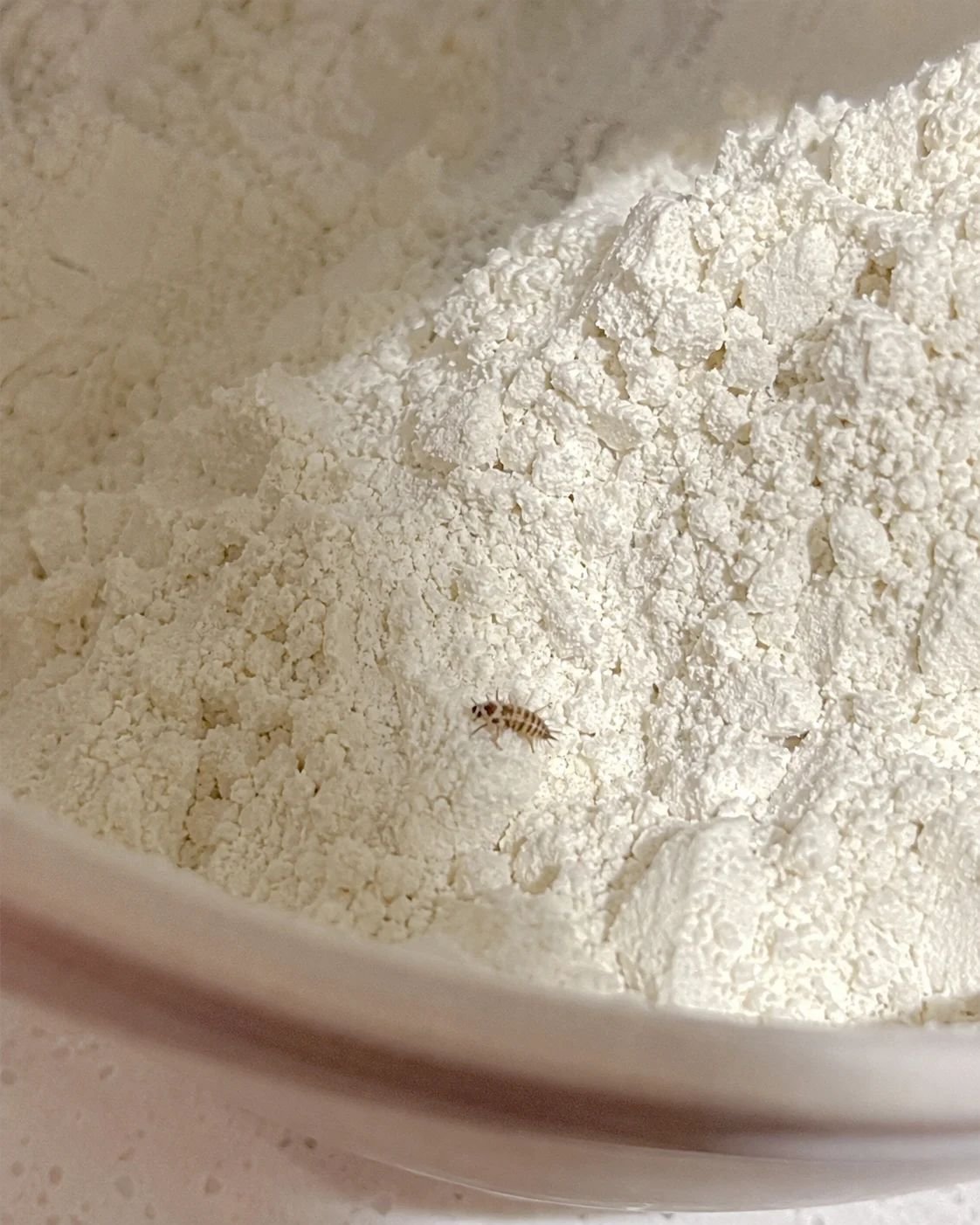
What Is That Tiny Bug in My Flour? Common Pantry Pests Explained
Finding a tiny bug moving through a container of flour can be an unpleasant surprise, especially when you are preparing food for your family. You may wonder where it came from, whether the flour is still safe to use, and whether other foods in your kitchen are affected.
The good news is that small insects found in flour are often pantry pests, a broad group of insects that infest stored dry foods. They include flour beetles, grain beetles, weevils, and pantry moths. The exact insect cannot always be identified from a quick glance, because many of these pests are extremely small and can look similar.
What Are Pantry Pests?
Pantry pests are insects that live and reproduce in stored food products. They are commonly found in foods such as flour, cereal, rice, pasta, grains, nuts, dried fruits, spices, cake mixes, and other dry ingredients.
Some of these insects are beetles, while others are moths. Depending on the species, you may find adults, larvae, or even webbing inside a package.
One important point is that finding a pantry pest does not necessarily mean your kitchen is dirty. Infestation can begin before the food reaches your home. Insects may already be present in a product during processing, storage, transportation, or at the store.
Why Do Bugs Appear in Flour?
Flour is an ideal food source for several stored-product insects.
A package can sit in a warehouse, store, or kitchen for an extended period, giving insects an opportunity to multiply. Pantry pests are especially likely to become noticeable when dry foods have been stored for a long time.
In some cases, insects can also enter packages after they have been brought home. They may get through folds, seams, or small openings in paper, cardboard, and some types of packaging.
This is why even a package that looks fine from the outside may occasionally contain an unexpected insect.
Common Bugs Found in Flour
Flour Beetles
Flour beetles are among the insects associated with flour and other dry food products.
Red flour beetles and confused flour beetles are small, reddish-brown, elongated insects. They can infest flour, cereal products, bran, dried fruits, nuts, chocolate, and other stored foods.
They are often small enough that people may notice them only after opening a package or container.
Sawtoothed Grain Beetles
Sawtoothed grain beetles are another common pantry pest.
They are small, flattened, brownish-red to nearly black insects. They can infest flour and many other foods, including cereals, pasta, nuts, dried fruits, seeds, and dried meat.
Their name comes from small tooth-like projections along the sides of their thorax.
Weevils
People often call almost any small insect found in flour a “weevil,” but that isn’t necessarily correct.
True grain weevils have a distinctive snout-like projection from the head. Granary, rice, and maize weevils generally attack whole grains or seeds, and their larvae develop inside kernels. They are less commonly associated with milled flour than some other pantry pests.
Pantry Moths
Not every pantry pest is a beetle.
Indianmeal moths are among the most common moths associated with stored food in homes. Their larvae can infest cereal products, grains, flour, dried fruits, nuts, pet food, and other dry foods.
One clue is silky webbing inside a food package. You may also notice small caterpillar-like larvae or adult moths flying around the kitchen.
How Can You Tell If Your Flour Is Infested?
A single tiny insect is enough reason to inspect the rest of the container.
Look carefully for:
- Live or dead insects
- Tiny larvae
- Small holes in packaging
- Unusual clumping
- Webbing
- Insect skins or shed material
- Unusual odors
- Multiple insects around the same food-storage area
A flashlight can make inspection easier. Extension guidance recommends examining the surface of stored foods and checking other susceptible products because more than one food item may be affected.
Also check nearby foods rather than looking only at the flour.
Which Other Foods Should You Check?
If you find insects in flour, inspect other dry ingredients stored nearby.
Pay particular attention to:
- Rice
- Pasta
- Cereal
- Oatmeal
- Cornmeal
- Baking mixes
- Crackers
- Nuts
- Dried fruit
- Spices
- Chocolate
- Dry pet food
- Birdseed
Many pantry pests are not limited to one particular food. The same infestation can spread from one stored product to another.
Is Flour With Bugs Safe to Eat?
If you discover clear evidence that flour is infested, the safest practical choice is to discard the affected flour rather than trying to remove the visible insects and continue using it.
Pantry pests can contaminate food, and there may be eggs, larvae, or other stages that are difficult to see. Extension guidance recommends throwing away contaminated food and cleaning the area where it was stored.
Also remember that flour itself is a raw agricultural product and should not be eaten raw. It should be thoroughly cooked or baked before consumption.
What Should You Do After Finding a Bug?
Start by removing the suspected infested product.
Then inspect other dry foods in the same cupboard or pantry. If you find additional signs of insects, discard those affected products as well.
Next, vacuum shelves, corners, cracks, and crevices where flour or food particles may have accumulated. Cleaning removes spilled food and insects that may remain outside the package.
Avoid spraying insecticide directly around food-storage areas. Extension guidance notes that insecticides are not recommended for controlling insects inside stored-food cupboards, and treating the area without removing the infested food source will not solve the underlying problem.
How to Prevent Bugs in Flour
Prevention starts with how dry foods are purchased and stored.
Buy quantities that you can use within a reasonable period rather than keeping large amounts of flour and other dry ingredients for long periods. Inspect packages before purchasing and avoid packages that are damaged or show signs of insects.
Once you bring food home, transferring dry ingredients into tightly sealed glass, metal, or heavy plastic containers can help prevent insects from spreading from one product to another.
Using older products before newer ones is another simple habit that can reduce the amount of food sitting unused in the pantry.
Should Flour Be Refrigerated?
Storage conditions matter too.
Penn State Extension notes that flour kept in a warm location is more likely to attract insects. During hot, humid weather, buying smaller quantities and storing flour in the refrigerator or freezer can be helpful.
Whole-wheat flour is particularly sensitive to storage conditions because its natural oils can become rancid more quickly at room temperature.
Don’t Assume Every Tiny Bug Is a Flour Beetle
One of the most important things to remember is that appearance alone can be misleading.
Many small household insects look similar, and identifying them correctly may require a clear close-up photograph or examination by someone familiar with insect identification. University of Minnesota Extension specifically cautions that small beetles can be difficult to identify from pictures.
So if you find something unusual in your flour, it is better to describe it as a possible pantry pest rather than immediately claiming that it is a particular species.
The Bottom Line
A tiny bug crawling through flour can be alarming, but it is often a sign of a stored-food pest rather than a dangerous household insect.
The most common possibilities include flour beetles, grain beetles, weevils, and pantry moths. The exact identification depends on the insect’s size, shape, color, markings, and behavior.
If you discover one, don’t simply remove the visible insect and continue cooking. Check the entire container, inspect nearby dry foods, discard clearly infested products, clean the storage area, and move unaffected ingredients into tightly sealed containers.