
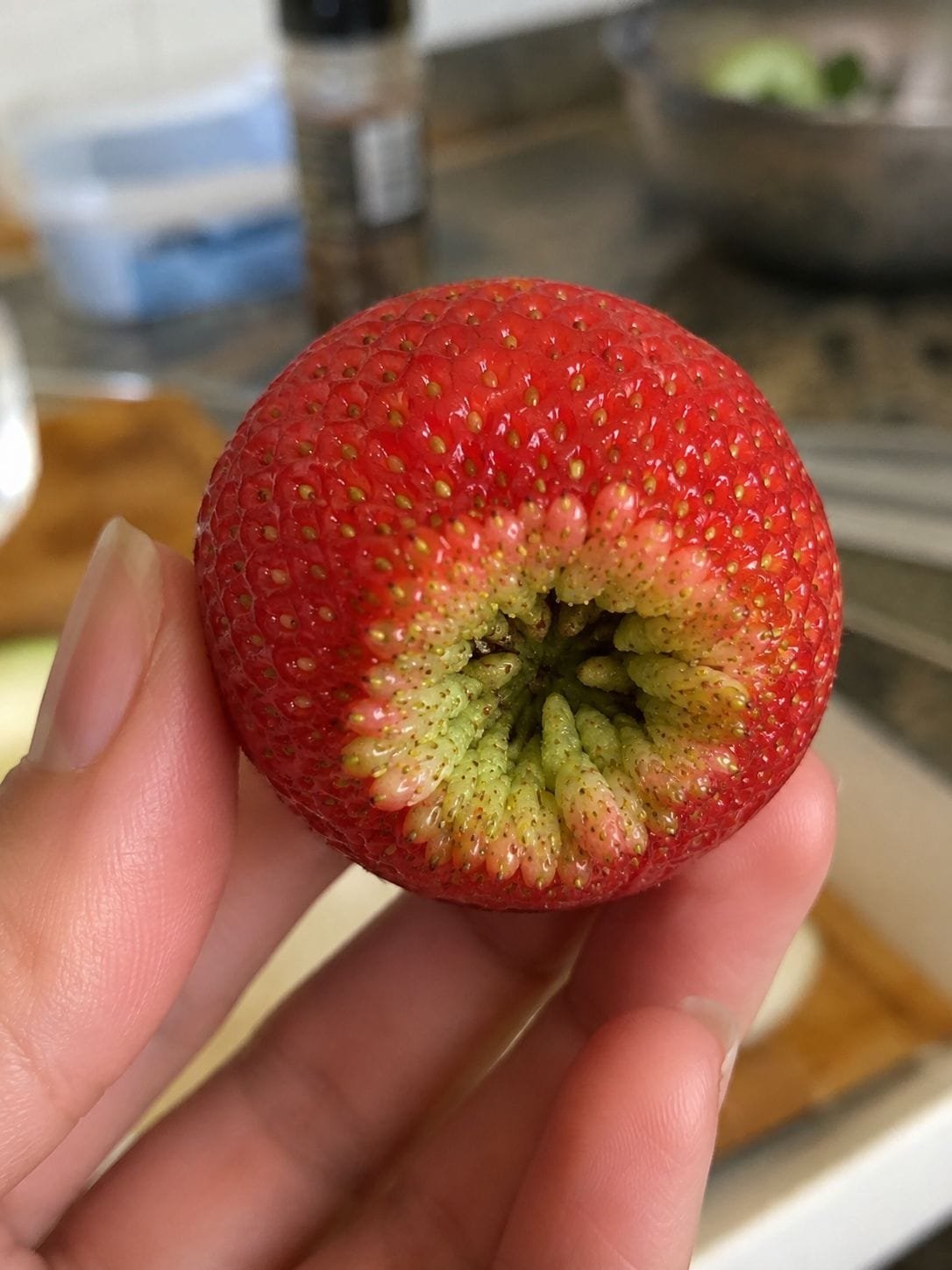
Why Does My Strawberry Have a White or Pale Patch?
A bright red strawberry with an unusual pale or white area can make you stop and take a closer look. The contrast is especially noticeable when the rest of the fruit looks healthy and ripe.
A pale area on a strawberry does not automatically mean the fruit is moldy or unsafe. Strawberries can develop lighter areas for different reasons, and the appearance, texture, and location of the patch are important when trying to understand what happened.
Some pale areas are simply related to how the fruit developed. Others can be signs of a fungal disease or early fruit deterioration.
What Causes a Pale Area on a Strawberry?
There isn’t one single explanation for every white or pale patch.
A strawberry’s color can vary depending on how the fruit developed and the conditions around it. However, when a pale area has a distinctly powdery, fuzzy, soft, or spreading appearance, it deserves closer attention.
Two important strawberry problems that can produce unusual pale or whitish appearances are powdery mildew and gray mold.
Powdery Mildew Can Make Strawberries Look Pale
Powdery mildew is a fungal disease that affects strawberry plants.
It is usually noticed first on the leaves, but it can also affect the fruit. According to Penn State Extension, infected fruit may develop a whitish powder, causing the strawberry to appear lighter than normal. Infected fruit may also have unusually raised seeds.
The white material associated with powdery mildew is different from a simple area of naturally lighter-colored strawberry skin.
You may also notice other symptoms on the plant, such as leaves curling upward or developing reddish-purple areas.
Powdery mildew tends to develop more readily when humidity is high and temperatures are moderately cool.
Gray Mold Looks Different
Another common strawberry problem is gray mold, also called Botrytis fruit rot.
Gray mold generally causes fruit to become soft and develop brownish or decaying areas. As the disease progresses, a characteristic gray, fuzzy growth can develop over the strawberry.
The location of the problem can provide a clue.
Gray mold may begin at the base of the fruit or where the strawberry touches damp soil, another wet surface, or an already-rotting berry. Under favorable conditions, the fungus can spread quickly through fruit.
So if the pale area in a strawberry is fuzzy and accompanied by softening or decay, mold becomes much more concerning than if the area is simply lighter in color.
Why Does the Bottom of the Strawberry Matter?
The underside or base of a strawberry can stay in contact with moisture, soil, leaves, or another fruit.
That makes this area important when evaluating a suspicious-looking berry.
Gray mold, for example, can develop where fruit contacts damp surfaces, and the disease is favored by wet conditions and high humidity.
A strawberry that remains wet for extended periods can therefore be more vulnerable to fungal problems.
This is one reason growers pay close attention to moisture management around strawberry plants.
Not Every Unusual Strawberry Is Diseased
An important distinction is that an unusual appearance is not automatically a disease symptom.
Strawberries naturally vary in shape, size, color, and surface appearance. A lighter section by itself does not establish that a fungal infection is present.
Plant-disease identification generally relies on looking at multiple symptoms and signs rather than one visual characteristic. Penn State’s strawberry disease guide specifically recommends examining where symptoms occur and looking for characteristic signs of the pathogen.
That means a pale patch should be evaluated alongside the rest of the fruit and plant.
What Should You Look For?
If you find a strawberry with a strange pale area, check the patch carefully.
Is it fuzzy?
A white, gray, or powdery/fuzzy coating is more concerning for fungal growth than a smooth area of lighter skin.
Powdery mildew can produce white fungal growth on fruit, while gray mold produces characteristic gray fuzzy spores as infected fruit deteriorates.
Is the strawberry soft?
Softening, watery tissue, brown decay, or an expanding damaged area can indicate fruit rot.
Gray mold commonly causes soft, light-brown areas that enlarge as the fruit becomes infected.
Is the patch dry and smooth?
A smooth, dry area without fuzzy growth or obvious decay is different from active mold.
The appearance alone may not tell you exactly why the color changed, but the absence of fungal growth or soft rot is an important distinction.
Are the seeds unusually raised?
Raised seeds can be associated with powdery mildew when the fruit itself is affected. Penn State Extension notes that fruit affected by powdery mildew may have a lighter appearance and abnormally raised seeds.
What If Other Strawberries Look Normal?
Check the rest of the container.
If one berry has a suspicious patch, inspect neighboring strawberries for:
- Fuzzy growth
- Soft spots
- Brown or gray discoloration
- Leaking juice
- Unusual odor
- Rapidly expanding areas of decay
This is particularly important with gray mold because infected fruit can spread spores to nearby fruit, especially when berries are touching and conditions are moist.
What Should You Do With a Strawberry That Has Mold?
If you can clearly see mold or the strawberry is visibly rotting, the safest choice is to discard that berry rather than eating it.
Soft fruits are not good candidates for simply cutting off a small visible mold spot because the growth may extend beyond what is visible on the surface.
Also inspect the berries that were touching the affected fruit.
Why Do Strawberries Get Moldy So Quickly?
Strawberries contain a lot of moisture and have a delicate surface, which makes them vulnerable to fruit rots.
Gray mold is particularly favored by wet conditions and high humidity. Spores can spread through air movement, rain, and splashing water.
Once a berry is damaged, the opportunity for decay can increase.
This is why bruised, crushed, or leaking berries should be dealt with quickly rather than left mixed with healthy fruit.
How Can You Keep Strawberries in Better Condition?
Keeping strawberries dry and cool can help reduce conditions favorable to spoilage.
When storing fresh berries:
- Refrigerate them promptly.
- Avoid crushing them under heavy foods.
- Remove visibly damaged berries.
- Keep the container from becoming excessively wet.
- Inspect berries regularly.
- Avoid leaving spoiled berries touching healthy ones.
For gardeners, improving air circulation around plants and reducing prolonged moisture on foliage and fruit can help reduce gray mold pressure.
So, What Does the White Area in the Picture Mean?
The important point is that you cannot identify the cause from the pale color alone.
If the area is simply smooth and lighter than the surrounding fruit, it may be a developmental or environmental variation.
If there is a white powdery coating with raised seeds, powdery mildew is one possibility.
If the area is soft, brownish, spreading, and eventually covered with gray fuzzy growth, gray mold is a more likely explanation.
That distinction is much more useful than simply saying that a white strawberry patch is “mold.”
Final Takeaway
A strange-looking strawberry isn’t necessarily something to panic about.
The key is to look beyond the color. Texture, fuzziness, softness, spreading, seed appearance, and the condition of nearby berries can provide much better clues about what is happening.
A smooth pale patch can be very different from a strawberry covered in fuzzy fungal growth.
So if you turn a strawberry over and notice an unusual white area, don’t immediately assume the worst.
Look closely first. The texture of that strange patch may tell you much more than its color.