Why Do Some Cooks Add Ice to Pasta? The Real Reason May Surprise You
Have you ever seen someone put ice on freshly cooked pasta and wondered:
“Why would anyone do that?”
At first glance, it seems completely wrong.
Pasta is supposed to be hot. So why would anyone suddenly introduce ice or very cold water?
The answer is more interesting than a simple “kitchen hack.”
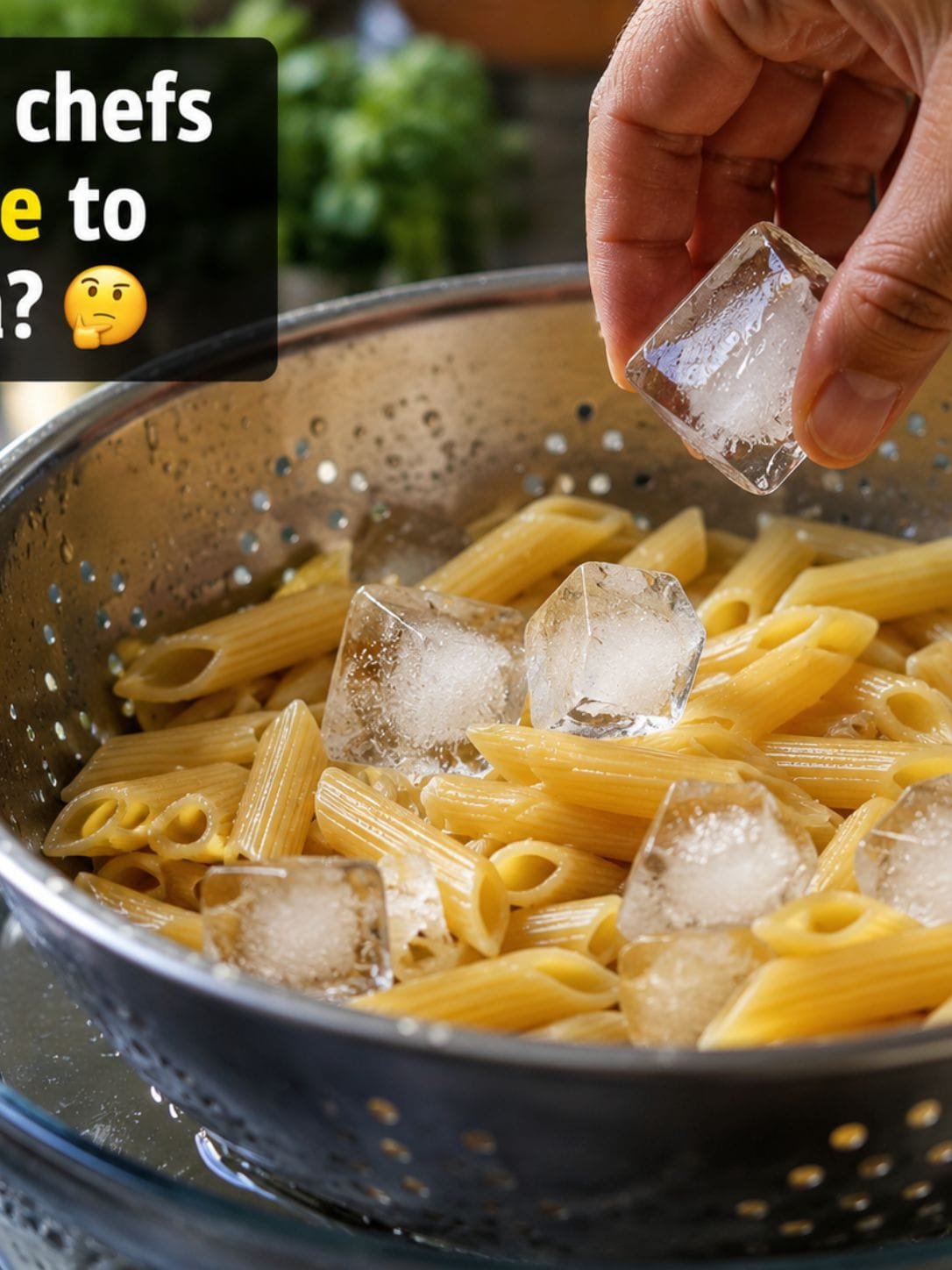
The technique can make sense in specific situations, especially when the goal is to stop the pasta from continuing to cook and cool it quickly for a cold dish.
But there’s an important catch:
You should NOT automatically use ice on every bowl of pasta.
In fact, if you’re making a normal hot pasta dish with sauce, cooling the pasta can work against what you’re trying to achieve.
Here’s what is really going on.
The hidden problem: pasta keeps cooking after you remove it from the heat
When pasta comes out of boiling water, it doesn’t instantly stop cooking.
It’s still extremely hot, and the residual heat continues affecting its texture.
That’s usually fine when you’re transferring the pasta directly into a sauce. In fact, modern pasta-cooking techniques often recommend finishing pasta in the sauce while it is still slightly underdone.
But imagine you’re making a cold pasta salad.
You don’t want the pasta sitting around hot and continuing to soften.
You want to cool it quickly.
That’s where cold water—and in some situations an ice-water bath—can become useful.
So why use ice?
The basic idea is rapid cooling.
Ice absorbs heat as it melts. When cooked pasta comes into contact with very cold water, its temperature drops much faster than it would sitting on the counter.
That can be useful when you’re preparing something that needs to become cold quickly.
For example:
- Pasta salad
- Cold noodle dishes
- Make-ahead pasta dishes
- Pasta that needs to stop cooking immediately
- Situations where you need to cool cooked pasta before refrigeration
USDA guidance specifically recognizes ice or cold-water baths as a way to rapidly chill certain hot foods before refrigeration.
But there’s more to it.
The texture is the real reason
One of the biggest reasons cooks want to cool pasta quickly is texture.
If pasta remains hot for too long, it can continue softening.
For a cold pasta salad, that’s not necessarily what you want.
You want pasta that remains pleasantly firm enough to hold up with dressing, vegetables, herbs, cheese, and other ingredients.
Recent pasta-salad guidance from Serious Eats recommends paying particular attention to pasta texture and cooling because pasta can become tough or clump as it cools incorrectly.
So the goal isn’t:
“Ice makes pasta better.”
The real goal is:
“Cold water can quickly stop the cooking process when you’re preparing pasta for a cold dish.”
That’s a very different claim.
But here’s where people get this hack wrong
If you’re making spaghetti with tomato sauce, Alfredo, carbonara, or another hot pasta dish, you generally don’t want to dump ice onto your pasta.
Why?
Because you need the pasta to remain hot enough to combine properly with the sauce.
And there’s another important reason.
Pasta starch matters.
During cooking, pasta releases starch into the water.
That starchy cooking water can help sauces become smoother and cling to the pasta.
When you’re making a hot pasta dish, cooks often reserve some pasta water and use it to help create a cohesive sauce.
Serious Eats notes that concentrated pasta cooking water can be particularly useful for helping sauces emulsify and coat pasta.
So if you’re trying to make a glossy, restaurant-style plate of hot pasta, rapidly cooling the noodles with ice is usually working in the opposite direction.
Cold pasta and hot pasta are two different situations
This is probably the most important thing to remember.
🍝 Making hot pasta?
Don’t reach for the ice.
Instead, cook the pasta until it’s slightly under your desired doneness, then finish it directly in the sauce.
This lets the pasta finish cooking while absorbing flavor from the sauce.
🥗 Making pasta salad?
Now rapid cooling can make much more sense.
You can cool the cooked pasta with cold water, and an ice-water bath can be useful when you need it chilled quickly.
The goal is to bring the temperature down rather than allowing the cooked pasta to remain warm for an extended period.
There’s also a food-safety reason to care about cooling
This isn’t just about taste.
Cooked pasta is a perishable food once prepared, and leaving cooked foods in warm conditions for extended periods can allow bacteria to multiply.
USDA describes the food-safety “Danger Zone” as 40°F–140°F (4.4°C–60°C), where bacteria can grow rapidly. USDA recommends keeping cold foods at or below 40°F and refrigerating foods promptly.
USDA research has also specifically examined cooling rates for cooked pasta and found that prolonged cooling can create conditions favorable for Bacillus cereus growth.
So if you’re making a large amount of pasta for later, don’t simply leave the pot sitting on the counter for hours.
Rapid cooling and proper refrigeration matter.
Does ice make pasta less sticky?
This is where social media often gets confusing.
You may see people claiming that putting pasta in ice water is a secret trick that automatically produces perfect noodles.
That’s too broad.
For a cold pasta dish, rinsing or cooling the pasta can be appropriate because you’re deliberately trying to cool it and stop further cooking.
But for a hot sauce-based pasta, washing away surface starch can make it harder for sauce to cling in the way you want.
That’s one reason many traditional hot-pasta preparations don’t involve rinsing the noodles after cooking.
What should you actually do?
If you’re making a hot pasta dish:
Cook → drain → finish in sauce.
If you’re making pasta salad:
Cook → cool rapidly → drain well → dress appropriately → refrigerate.
The exact method depends on the recipe, pasta shape, and final dish.
There’s no single “ice trick” that makes every pasta better.
A simple example
Imagine you’re preparing pasta for dinner at 7 p.m.
You’re cooking penne and planning to toss it with a warm tomato sauce.
In that situation, you want the pasta hot.
You’d cook it until it’s just shy of your preferred doneness, then move it into the sauce and allow it to finish cooking there.
Now imagine you’re preparing a pasta salad for tomorrow’s lunch.
That’s different.
You need the pasta to cool down rather than continue cooking.
Cold water—and when appropriate, an ice-water bath—can help bring the temperature down quickly.
Same pasta.
Completely different purpose.
One mistake you shouldn’t make
Don’t assume that adding ice automatically makes food safer.
The important thing is rapid cooling and proper refrigeration, not simply throwing a few ice cubes onto something.
For larger quantities of cooked food, USDA recommends dividing food into smaller portions and using shallow containers so it can cool more quickly.
And once chilled, keep it refrigerated.
USDA recommends maintaining refrigerators at 40°F (4.4°C) or below.
So, should you try it?
If you’re making cold pasta salad, absolutely—rapidly cooling the pasta can be a useful technique.
If you’re making hot pasta with sauce, don’t blindly copy the viral ice trick.
Your better move is usually to keep the pasta hot and finish it in the sauce.
That’s the part social-media posts often leave out.
The real trick isn’t:
“Put ice on pasta.”
It’s understanding when you want pasta to stop cooking and when you want it to keep cooking.
And once you understand that difference, pasta becomes much easier to control.
The takeaway
🍝 Hot pasta + hot sauce: keep it hot and finish cooking in the sauce.
🥗 Cold pasta salad: cool it rapidly, using cold/ice water when appropriate.
❄️ Large batch for later: cool it promptly and refrigerate safely rather than leaving it at room temperature for hours.
So the next time you see someone putting ice near pasta, don’t immediately assume they’ve discovered a secret chef trick.
Ask one question:
“What are they making?”
That tells you whether the ice actually makes sense.