
Strange Red Bumps on the Skin: What Could Be Causing Them?
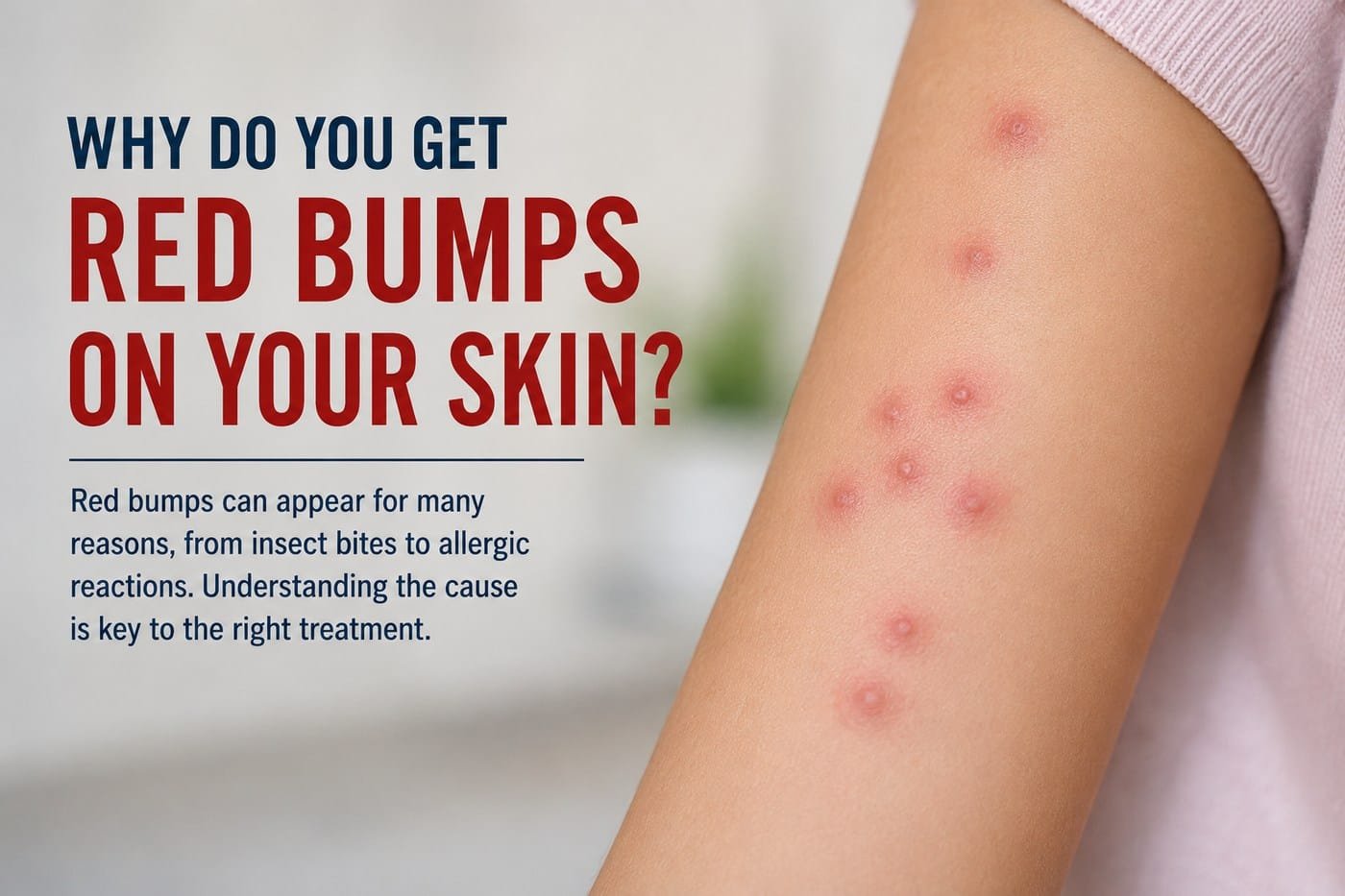
A sudden red mark or group of small bumps on the skin can be alarming, especially when it seems to appear overnight. Sometimes the cause is something as simple as an insect bite. In other cases, the skin may be reacting to an allergen, irritation, infection, or another underlying condition.
The appearance alone usually isn’t enough to identify the exact cause. However, where the marks appear, how they are arranged, whether they itch or hurt, and how quickly they change can provide useful clues.
1. Insect Bites
One of the most common explanations for sudden red bumps is an insect bite.
Mosquitoes, fleas, bedbugs, mites, and other insects can trigger a localized immune reaction. The result may be a small red or pink bump, sometimes with a tiny point in the center where the skin was pierced.
Some people develop only a small mark, while others develop a much larger, swollen and intensely itchy reaction.
What to look for
Insect bites may:
- Appear suddenly
- Become red or swollen
- Itch considerably
- Have a tiny central puncture
- Occur in clusters or several nearby spots
- Become more noticeable over several hours
The pattern can sometimes provide a clue. For example, multiple bites appearing after sleeping may raise suspicion of exposure to insects in bedding, although the pattern alone cannot prove the cause.
2. Papular Urticaria
Some people are particularly sensitive to insect bites and develop a condition called papular urticaria.
Instead of having a mild reaction that disappears quickly, the immune system produces persistent itchy bumps. New spots can continue appearing when the person is repeatedly exposed to insects.
The bumps can sometimes remain for days or longer and may become irritated from scratching.
This reaction is particularly common in children but can occur at other ages as well.
3. Bedbug Bites
Bedbugs feed on blood and commonly bite exposed areas of skin while a person is sleeping.
Possible signs include several itchy red bumps appearing on areas such as the arms, legs, neck, shoulders, or other exposed skin.
However, there is an important point: skin marks alone cannot reliably confirm a bedbug infestation.
If bedbugs are suspected, evidence in the sleeping environment—such as insects, shed skins, blood spots, or dark fecal spots around mattress seams—can be more useful than the appearance of the bites themselves.
4. Flea Bites
Flea bites can produce small, intensely itchy red bumps.
They are often found around the lower legs and ankles, although other areas can also be affected. Exposure to pets or an infested environment can increase the possibility.
A household may continue getting new bites if the source of the fleas isn’t addressed.
5. Mosquito Bites
Mosquito bites commonly produce a raised, itchy bump caused by the body’s reaction to proteins in mosquito saliva.
Some people barely react, while others develop much larger areas of redness and swelling.
These larger reactions can look surprisingly dramatic and may be mistaken for an infection or another skin problem.
6. Contact Dermatitis
Not every red mark is an insect bite.
Contact dermatitis occurs when the skin reacts to something it has touched. Possible triggers include soaps, detergents, cosmetics, plants, adhesives, metals, fragrances, and certain fabrics or chemicals.
Instead of isolated bumps, contact dermatitis may produce a patch of redness, itching, dryness, swelling, or small blisters.
The location can be an important clue: the reaction often corresponds to the area that contacted the irritating or allergenic substance.
7. Folliculitis
Another possibility is folliculitis, which occurs when hair follicles become inflamed.
It can produce small red bumps or pimples, sometimes with a tiny amount of pus. Sweating, friction, shaving, and certain bacterial or fungal infections can contribute.
Unlike many insect bites, folliculitis tends to develop around hair follicles rather than appearing randomly on the skin.
8. Hives
Hives, medically known as urticaria, can appear suddenly as raised, red or skin-colored welts.
They can be triggered by foods, medications, infections, insect exposure, heat, pressure, or other factors.
One useful clue is that individual hives often change rapidly. A particular welt may disappear while another appears somewhere else.
9. When a Red Mark May Be More Concerning
Most isolated insect bites and mild skin reactions are not emergencies.
However, medical attention becomes more important when redness is rapidly expanding, increasingly painful, hot, very swollen, or accompanied by pus or fever. These features can occur with a bacterial skin infection and should not simply be assumed to be an insect bite.
Seek urgent medical help if a skin reaction is accompanied by:
- Difficulty breathing
- Swelling of the lips, tongue, or throat
- Fainting or severe dizziness
- Widespread hives
- Rapidly worsening symptoms
- Severe pain or significant swelling
These can indicate a serious allergic reaction or another condition requiring prompt treatment.
10. Don’t Scratch the Area
Scratching an itchy bump can damage the skin and create an opening through which bacteria can enter.
Keeping the area clean and avoiding unnecessary scratching can help reduce complications.
For uncomplicated itching, a pharmacist or healthcare professional can advise whether an appropriate antihistamine or topical treatment would be suitable.
How Can You Tell What Caused It?
The most useful clues are usually the timeline, location, pattern, symptoms, and possible exposure.
Ask yourself:
- Did it appear after sleeping?
- Are there several marks nearby?
- Is it mainly itchy or painful?
- Is there a central puncture?
- Are new spots continuing to appear?
- Was there exposure to pets or insects?
- Did a new soap, detergent, cream, or clothing touch the area?
- Is the redness spreading?
- Is there fever, pus, or increasing pain?
These questions can help narrow down the possibilities, but they cannot replace an examination when the cause is uncertain.
The Important Takeaway
A strange red bump doesn’t automatically mean something dangerous. Insects, allergic reactions, skin irritation, folliculitis, and several other conditions can create surprisingly similar-looking marks.
The biggest mistake is trying to diagnose the cause from a photograph alone. Changes over time and accompanying symptoms are often more informative than the appearance of the mark itself.
If a spot continues growing, becomes increasingly painful, develops drainage, or is accompanied by fever or other concerning symptoms, it’s worth having it assessed by a healthcare professional rather than assuming it’s simply an insect bite.