
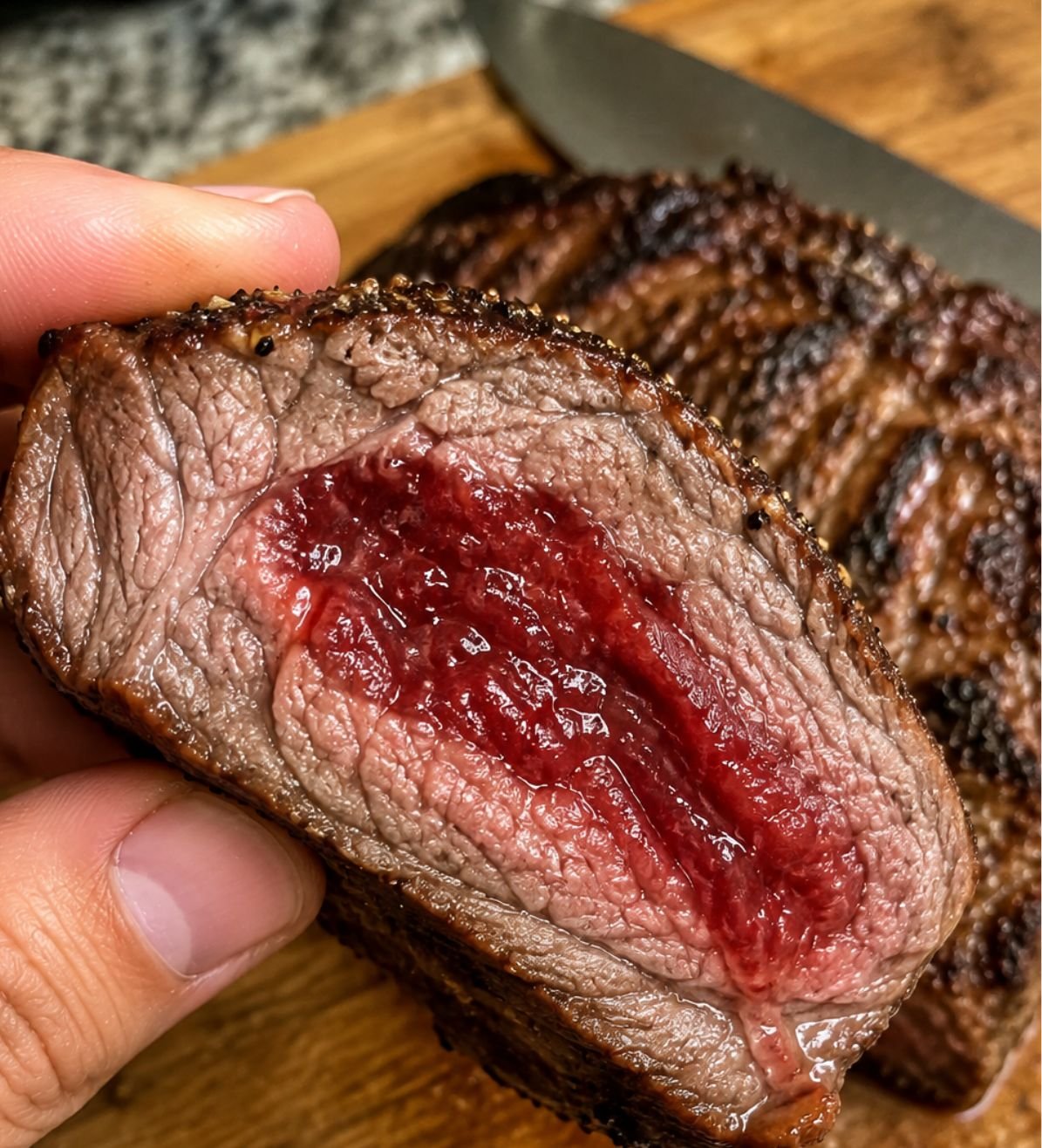
I Cut Into This Steak and Found a Strange Bright-Red Pocket Inside
Cutting into a steak can sometimes reveal something that looks completely unexpected.
The outside may have a beautifully browned crust, while the center looks dramatically red and juicy. That can make you wonder whether something is wrong with the meat or whether it’s simply the result of how the steak was cooked.
The important thing to remember is that color alone isn’t a reliable way to determine whether beef is safely cooked. The USDA recommends using a food thermometer rather than judging doneness by appearance.
Why Is Steak Red Inside?
One of the biggest misconceptions about steak is that a red or pink center automatically means the meat is raw.
That’s not necessarily true.
When beef is cooked, changes in the muscle pigments and juices can leave the center looking pink or red even after the steak has reached an appropriate temperature.
The appearance can also vary depending on the cut, cooking method, temperature, and how long the steak rests.
That’s why a dramatic red center doesn’t automatically mean the steak is spoiled or unsafe.
What Is That Red Liquid?
When people cut into a steak and see red liquid, they sometimes assume it’s blood.
It’s generally not blood.
The reddish liquid is largely water mixed with myoglobin, a protein found in muscle tissue.
Myoglobin contributes to the red or pink appearance of beef and can remain visible even after cooking.
This is one reason steak can look surprisingly red when sliced.
Is a Bright-Red Center Safe?
This is where temperature matters.
According to the USDA, whole cuts of beef such as steaks should reach a minimum internal temperature of 145°F (62.8°C), followed by at least a 3-minute rest before eating.
So instead of asking only:
“Does this steak look red?”
A better question is:
“Did the center reach the recommended temperature?”
A food thermometer is the most useful way to answer that.
Why the Outside Can Look Done While the Center Is Red
Steaks are usually cooked at relatively high temperatures.
The outside comes into direct contact with the hot pan, grill, or cooking surface, so it can develop a dark brown crust relatively quickly.
The center heats more slowly.
That creates the familiar contrast:
Brown and seared outside → pink or red center
This is completely normal for many steaks.
The key is ensuring the center reaches the appropriate safe temperature.
Why Steak Can Have an Uneven Center
Sometimes the inside of a steak isn’t one uniform color.
You may see:
- Darker red areas
- Pink areas
- Brown areas
- Juicy sections
- Different shades along the grain
Several factors can influence this appearance.
The thickness of the steak, starting temperature, cooking method, and how evenly heat moves through the meat can all affect the final interior.
Does the Red Color Mean the Steak Is Undercooked?
Not necessarily.
Color isn’t a dependable safety test.
A steak can retain a pink or red appearance after reaching the recommended internal temperature.
Likewise, a steak can appear brown on the outside without the center necessarily reaching the temperature you want.
That’s why the USDA specifically recommends checking internal temperature with a thermometer.
How to Check Steak Temperature Correctly
Insert an instant-read food thermometer into the thickest part of the steak.
Try to avoid touching the pan, grill, bone, or a large pocket of fat with the thermometer tip because that can affect the reading.
For a whole beef steak, the USDA minimum is 145°F, followed by at least a 3-minute rest.
If you prefer your steak more well-done, you can cook it to a higher temperature.
What About Ground Beef?
This is an important distinction.
Ground beef isn’t treated the same way as an intact steak because grinding can distribute bacteria throughout the meat.
The USDA recommends cooking ground beef to 160°F (71.1°C).
So you shouldn’t use the same doneness assumptions for a burger that you might use for a whole steak.
What About Mechanically Tenderized Steak?
Extra care is also important with mechanically tenderized or non-intact beef.
Tenderizing can move surface bacteria deeper into the meat.
If you’re unsure whether your steak has been mechanically tenderized, check the package instructions and follow the recommended cooking directions.
For ordinary whole steaks, the USDA’s minimum is 145°F with a 3-minute rest.
Let the Steak Rest
Resting isn’t just about flavor.
It also allows the temperature and juices inside the meat to settle after cooking.
The USDA recommends at least a 3-minute rest for whole beef steaks after reaching 145°F.
During this time, some of the juices redistribute through the meat, making it easier to slice without losing as much moisture.
How to Get a Brown Crust and Juicy Center
If you want a steak with a deeply browned exterior and juicy interior, start with a dry surface.
Pat the steak dry with paper towels before cooking.
Season it according to your preference.
Use a properly heated pan or grill so the surface can brown effectively.
Avoid constantly moving the steak around while it’s searing.
Once you’ve developed a good crust, continue cooking until the center reaches the appropriate temperature.
Why Resting Changes the Appearance
Immediately after cooking, the center can look especially juicy.
Once the steak rests, the appearance can change slightly.
Some of the liquid that was concentrated around the center redistributes through the meat.
That’s why a steak can look dramatically different immediately after slicing compared with several minutes later.
How to Store Leftover Steak
If you aren’t eating the entire steak immediately, refrigerate leftovers promptly.
The USDA recommends keeping the refrigerator at 40°F or below and using fresh beef within the recommended storage window.
For cooked leftovers, use appropriate refrigeration practices and don’t leave perishable food sitting at room temperature for extended periods.
How to Reheat Steak Without Drying It Out
Steak can become tough if reheated aggressively.
A gentle reheating method can help preserve moisture.
You can warm leftovers in a low-temperature oven and finish briefly in a hot pan.
Another option is reheating gently in a covered skillet with a small amount of moisture.
The goal is to warm the steak without repeatedly cooking the interior.
The Most Important Thing to Remember
A steak that looks extremely red isn’t automatically unsafe.
Likewise, a steak that looks brown isn’t automatically safe.
Temperature is a much better guide than color.
For whole beef steaks, the USDA recommends a minimum internal temperature of 145°F followed by a 3-minute rest.
Using a food thermometer takes the guesswork out of the process.
Final Thoughts
That shocking bright-red pocket inside a steak can definitely make you stop and wonder what happened.
But a red or pink center doesn’t automatically mean the steak is raw or spoiled.
Beef naturally contains myoglobin, and cooking can produce a wide range of interior colors depending on the steak and cooking method.
Instead of judging the steak by appearance alone, check the internal temperature.
For a whole steak, 145°F with a 3-minute rest is the USDA-recommended minimum.
So the next time you cut into a beautifully seared steak and see a surprisingly red center, don’t panic.
Grab the thermometer—not your trash can.