
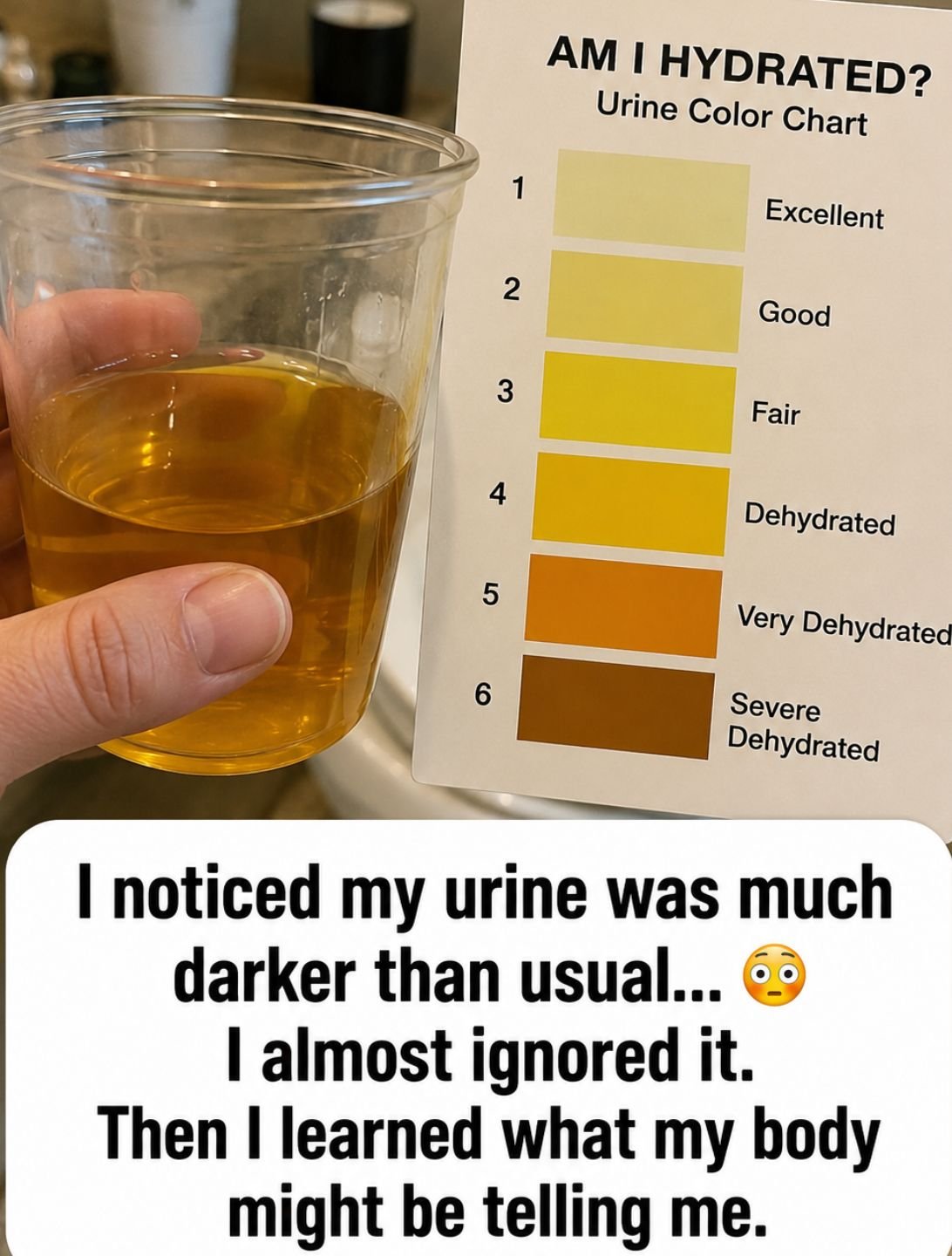
Noticing that your urine looks darker than usual can be surprising—especially when you haven’t noticed any other changes.
Sometimes the explanation is simple: you haven’t had enough fluids. When you drink less, urine becomes more concentrated and its yellow color can become stronger. But urine color can also change because of foods, vitamins, medications, and certain health conditions.
So, should you be concerned?
Not always. But the color, how long it lasts, and whether you have other symptoms can provide useful clues.
What Color Is Normal?
Urine commonly ranges from clear to pale yellow. The exact shade can vary depending on how much fluid you’ve consumed. More fluid generally dilutes the pigments in urine, making it look lighter.
A darker yellow color can simply mean your urine is more concentrated.
That’s why looking at your urine color can sometimes give you a reason to think about your hydration.
1. Dark Yellow Urine
Dark yellow urine is often associated with concentrated urine.
If you’ve had a busy day, exercised, spent time in hot weather, or simply haven’t been drinking much, your urine may become darker.
Dehydration can make urine darker, and increasing fluid intake may help return it toward a lighter color.
However, urine color alone can’t diagnose dehydration or another medical condition.
2. Orange Urine
Orange urine can have several possible explanations.
Certain medicines and vitamins can change urine to an orange or yellow-orange color. Dehydration can also make urine appear orange.
In some situations, orange urine can be associated with liver or bile-duct problems, particularly when it occurs alongside pale-colored stools or yellowing of the skin or eyes.
If you notice persistent orange urine or other concerning symptoms, it’s worth discussing with a healthcare professional.
3. Brown or Cola-Colored Urine
Very dark brown or cola-colored urine deserves more attention.
It can sometimes be related to foods or medications, but Mayo Clinic notes that some liver and kidney disorders, urinary infections, bleeding, and extreme exercise-related muscle injury can also cause dark brown urine.
This is one reason you shouldn’t assume that every very dark urine color is simply dehydration.
4. Pink or Red Urine
Pink or red urine can be caused by foods such as beets and rhubarb.
But it can also indicate blood in the urine.
Blood may occur with conditions such as urinary infections or kidney stones, among other causes. Mayo Clinic recommends getting medical evaluation when urine appears to contain blood rather than assuming it’s harmless.
If you’re unsure whether a red color came from food or blood, it’s safer to get it checked.
5. Cloudy Urine
Cloudy or murky urine can have several causes.
Urinary tract infections and kidney stones are among the possibilities listed by Mayo Clinic.
If cloudy urine appears together with burning during urination, frequent urination, pelvic discomfort, fever, or other urinary symptoms, medical advice is appropriate.
6. Blue or Green Urine
This one can look particularly strange.
Certain food dyes, medications, and medical dyes can produce blue or green urine. Some infections can also cause green urine, although this is less common.
So an unusual color doesn’t automatically mean something dangerous.
Sometimes the explanation is simply something you ate, drank, or took.
What Else Can Change Urine Color?
Urine color isn’t controlled by hydration alone.
Several things can affect its appearance, including:
- Foods
- Food coloring
- Vitamins
- Prescription medications
- Over-the-counter medicines
- Fluid intake
- Exercise
- Certain medical conditions
For example, beets can turn urine pink or red, while some medicines and vitamins can produce orange or other unusual shades.
That’s why it’s useful to consider what you’ve eaten or taken recently.
When Dark Urine May Be From Dehydration
Think about what happened during the previous several hours.
Did you:
- Drink less water than usual?
- Exercise heavily?
- Spend time in hot weather?
- Sweat significantly?
- Feel unusually thirsty?
- Urinate less frequently?
These factors can all make dehydration more plausible.
When dehydration is the cause, drinking enough fluid can help urine become lighter over time.
But don’t use urine color as a perfect hydration test. Your overall symptoms and circumstances matter too.
What About Vitamins?
Vitamins can sometimes make urine look dramatically different.
For example, certain vitamins can make urine appear bright yellow or yellow-orange.
That can look alarming if you aren’t expecting it.
Before assuming an unusual color represents an illness, think about whether you’ve recently started a new vitamin or supplement.
When Should You Talk to a Doctor?
A persistent or unexplained urine-color change deserves attention, particularly when other symptoms are present.
Contact a healthcare professional if you notice things such as:
- Blood in the urine
- Pain or burning when urinating
- Persistent cloudy urine
- Back, side, or pelvic pain
- Fever
- Significant changes in urination
- Persistent dark or orange urine
- Yellow skin or eyes
- Pale stools alongside dark/orange urine
These symptoms can point toward problems that need proper evaluation rather than simply more water.
Don’t Try to Diagnose Yourself From Color Alone
This is probably the most important takeaway.
Urine color can provide clues, but it isn’t a diagnosis.
Two people can have similarly colored urine for completely different reasons.
For example, dark urine may be related to dehydration in one person, while another person may have a medication-related color change or another underlying issue.
If a change persists or occurs with other symptoms, a healthcare professional can determine whether testing is needed.
A urinalysis can examine urine for signs associated with conditions such as urinary infections, kidney problems, and other disorders.
Simple Ways to Pay Attention to Your Urine
You don’t need to obsess over every trip to the bathroom.
Instead, notice major changes.
Ask yourself:
Is this color normal for me?
Have I been drinking less than usual?
Did I recently start a vitamin or medication?
Did I eat something that can change urine color?
Do I have pain, burning, fever, blood, or other symptoms?
These questions provide much more useful context than color alone.
Final Thoughts
A darker-than-usual urine color can be completely explainable—especially when you’re not drinking enough fluids.
But urine can change color for many other reasons too, including foods, medications, vitamins, exercise, and certain health conditions.
So don’t panic when you notice a change.
Pay attention to the color, consider what has changed recently, and look at the bigger picture.
And if the change is persistent, unexplained, or accompanied by symptoms such as blood, pain, fever, yellowing of the skin or eyes, or very dark/cola-colored urine, it’s best to speak with a healthcare professional rather than trying to figure out the cause from color alone.
This article is for general information and isn’t a substitute for medical advice or diagnosis.