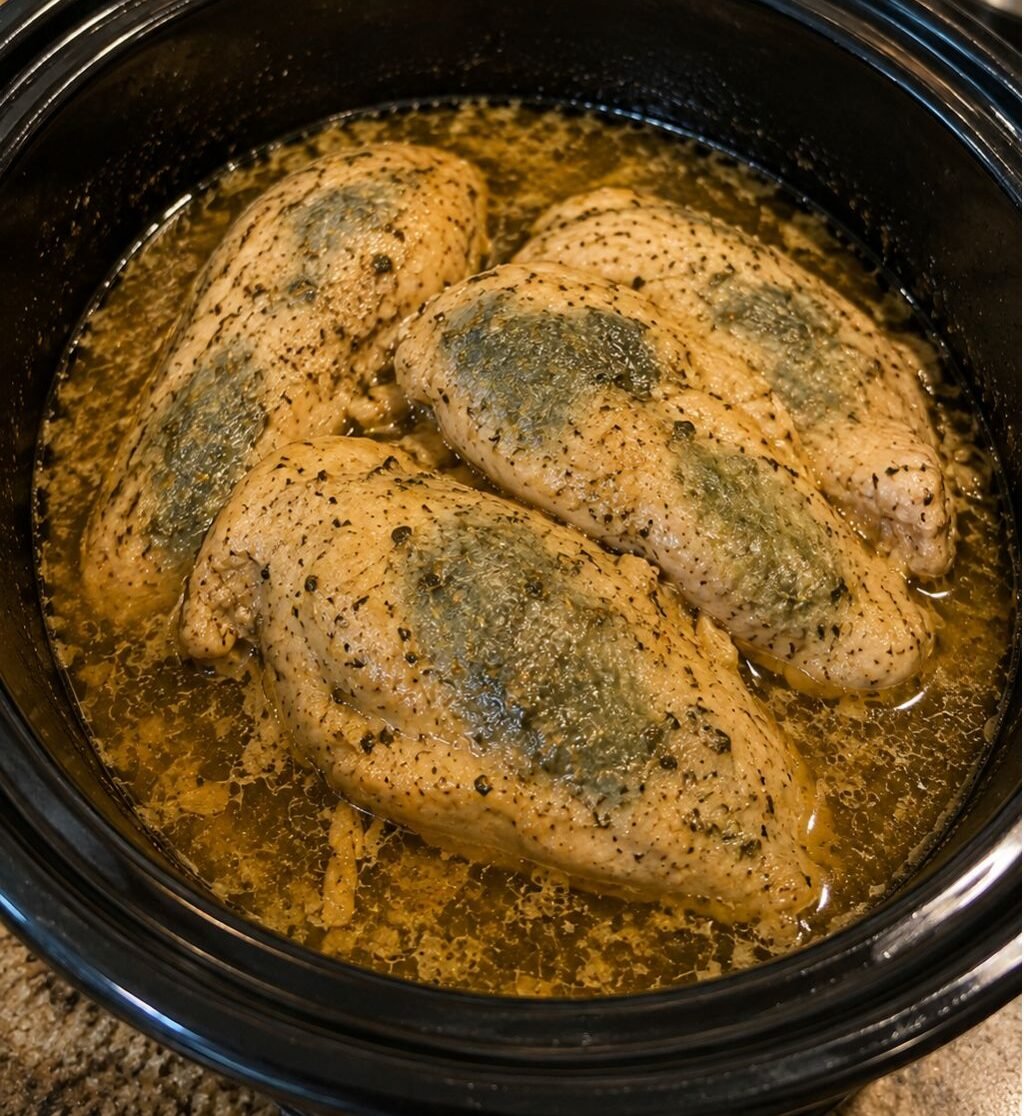
You open your slow cooker after hours of cooking, expecting tender, juicy chicken—and instead notice something strange.
There are grayish patches on the chicken.
The chicken smells normal. It has been cooking for several hours. It looks completely cooked in most places.
So what should you do?
Should you scrape the gray areas off and eat the chicken, or throw the whole meal away?
The good news is that color alone isn’t always a reliable indicator of whether poultry is safe. USDA explains that cooked poultry can naturally have different colors, and even pink areas don’t necessarily mean chicken is undercooked. The most reliable way to determine safety is checking the internal temperature with a food thermometer.
Why Does Cooked Chicken Sometimes Look Gray?
Chicken doesn’t always turn the same uniform white color during cooking.
Several factors can affect its appearance, including the type of meat, cooking conditions, pigments naturally present in the meat, and what ingredients are surrounding it.
USDA notes that color changes in meat and poultry by themselves do not necessarily mean spoilage. Spoilage is more concerning when discoloration occurs together with other changes such as an unpleasant odor, stickiness, tackiness, or slime.
That’s why looking at the chicken’s color alone isn’t enough to decide whether it’s safe.
The Most Important Question: Did It Reach 165°F?
When it comes to chicken, temperature matters much more than appearance.
USDA recommends cooking poultry to a minimum internal temperature of 165°F (73.9°C), measured with a food thermometer. For whole chicken, the thickest parts of the breast and the innermost areas of the thigh and wing should be checked.
This is especially important with slow-cooked chicken because the outside can look completely done before you have verified the temperature of the thickest portion.
So instead of asking:
“Does my chicken look white enough?”
Ask:
“Did the thickest part reach 165°F?”
What If the Chicken Is Fully Cooked but Still Looks Strange?
This is where many people become confused.
A chicken breast can look slightly pink, gray, tan, or otherwise different in color even after reaching a safe temperature. USDA specifically explains that cooked poultry can range from white to pink to tan and that color isn’t a reliable measure of safety.
That means a strange-looking patch isn’t automatically proof that the chicken has gone bad.
However, grayish patches that are accompanied by a bad smell, slimy texture, or other signs of spoilage are a different situation.
If something looks or smells spoiled, don’t taste it to find out.
What About the Smell?
Smell can provide useful information, but it shouldn’t be your only safety test.
Spoiled meat or poultry may develop an unpleasant or unusual odor. USDA also lists sticky, tacky, or slimy texture as signs that meat or poultry should not be used.
But a normal smell doesn’t prove that chicken is safe.
Harmful bacteria aren’t necessarily detectable by smell, taste, or appearance.
That’s why temperature + proper handling matter more than simply passing the smell test.
Could the Gray Area Be Related to the Skin?
Possibly.
Chicken skin can naturally vary in color, and USDA says poultry skin color can range from cream-colored to yellow depending on factors such as the bird’s feed.
Cooking can also change the appearance of the skin and meat underneath it.
If the unusual area is simply a change in color but the chicken was properly stored, cooked to 165°F, and doesn’t have signs of spoilage, color alone isn’t enough to conclude that the chicken is unsafe.
What If It Looks Gray Before Cooking?
That’s a slightly different situation.
Raw poultry naturally varies in color, and USDA says raw poultry can range from bluish-white to yellow.
However, raw chicken that has developed an unpleasant odor, sticky or slimy texture, or other obvious signs of spoilage shouldn’t be cooked and eaten just because the package date hasn’t passed.
Dates aren’t a guarantee that food is safe if it has been mishandled or improperly stored.
Slow Cooker Safety Matters Too
The cooking method matters.
If you’re using a slow cooker for chicken, start with properly refrigerated or thawed poultry.
USDA recommends thawing meat and poultry before putting them into a slow cooker because frozen pieces can take longer to reach a safe temperature and may increase food-safety risks.
Also avoid repeatedly removing the lid simply to check the food. Opening the cooker releases heat and can increase the cooking time.
Don’t Judge Chicken by Color Alone
This is probably the biggest takeaway.
Many people grew up believing:
White chicken = safe
Pink chicken = unsafe
But food safety isn’t that simple.
USDA specifically says the color of cooked poultry isn’t a reliable indicator of safety. Chicken can remain pink even after reaching the recommended safe temperature.
The opposite is also important: chicken can look cooked before it has actually reached the appropriate internal temperature.
That’s why a thermometer is much more useful than judging the meat by appearance.
When Should You Throw the Chicken Away?
If the chicken has an unusual foul odor, slimy or sticky texture, or obvious signs of spoilage, don’t try to rescue it by cooking it longer.
Also, if you aren’t confident that it was stored or handled safely, it’s better not to take a chance.
And if you’re uncertain about whether the chicken reached a safe temperature, don’t rely on the color of the meat to make that decision.
The Bottom Line
Seeing grayish patches on slow-cooked chicken can definitely be alarming.
But gray or unusual color alone doesn’t automatically mean the chicken is spoiled.
The key questions are:
- Was the chicken stored properly?
- Was it handled safely?
- Does it have an unusual odor?
- Is the surface slimy or sticky?
- Most importantly, did the thickest part reach 165°F?
USDA recommends using a food thermometer rather than relying on color to determine whether poultry is safely cooked.
So if your slow cooker chicken looks a little unusual but has been properly handled and reaches the recommended temperature, the color by itself isn’t enough to declare it unsafe.
When in doubt about spoilage or food handling, though, don’t taste-test it. It’s safer to discard questionable food.
Frequently Asked Questions
Can cooked chicken naturally look gray?
Yes. Cooked poultry can have different shades, and color alone isn’t a reliable indicator of safety.
What temperature should slow cooker chicken reach?
Poultry should reach a minimum internal temperature of 165°F (73.9°C) measured with a food thermometer.
Is gray chicken automatically spoiled?
No. Color changes alone don’t necessarily mean spoilage. Look for additional signs such as an unpleasant odor or slimy/sticky texture.
Can chicken still be pink when it’s safe?
Yes. USDA explains that safely cooked poultry can remain pink after reaching 165°F.
Should I taste chicken to see if it’s spoiled?
No. Don’t taste questionable food as a safety test. When food has obvious signs of spoilage or questionable handling, discard it.