My Milk Has Tiny Floating Flakes Even Though It Isn’t Expired — Why?
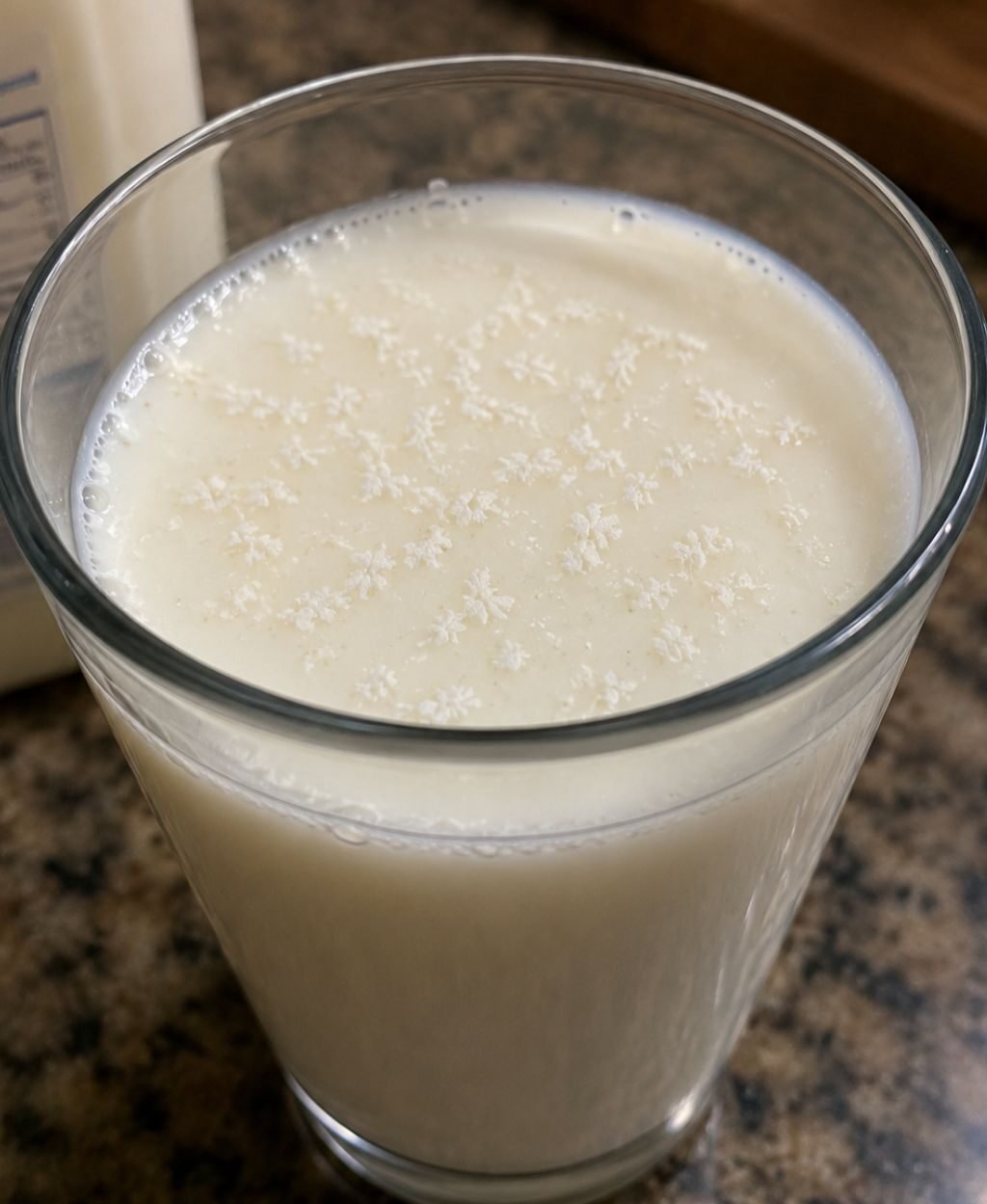
You pour a glass of milk expecting it to look completely smooth, but instead you notice something strange: tiny white flakes or little floating particles are suspended throughout the milk.
The first thought is usually, “But the date hasn’t passed yet. How can the milk already be bad?”
That question is more complicated than simply checking the date on the carton.
Milk can develop changes in texture, appearance, smell, or taste before the printed date, particularly if it hasn’t been kept consistently cold or has been exposed to conditions that affect its quality. And while tiny particles can sometimes have a harmless explanation, milk that looks noticeably curdled or smells sour should not be treated as normal simply because the expiration date hasn’t arrived.
Here’s what those little flakes can mean—and what you should do before drinking it.
What Are the Tiny Flakes Floating in Milk?
Those flakes may be small clumps of milk proteins and other milk components that have separated from the liquid.
Fresh milk normally contains proteins, fat, minerals, lactose, and water in a relatively stable mixture. Under certain conditions, the proteins can begin to aggregate, producing tiny particles or curd-like pieces.
This can happen as milk becomes acidic.
It can also happen when milk is exposed to temperatures or conditions that encourage quality deterioration.
The important point is that the date printed on the carton doesn’t guarantee that milk will look perfect every day until that date.
Storage conditions matter.
Can Milk Spoil Before the Expiration Date?
Yes.
The date on a milk container isn’t a magical safety switch that determines exactly when spoilage begins.
If milk is not kept cold enough, its quality can deteriorate faster.
The FDA recommends keeping refrigerators at 40°F (4°C) or below to slow the growth of harmful bacteria.
Milk can also spend time outside the refrigerator during grocery shopping, transportation, meal preparation, or while sitting on the kitchen counter.
Repeated temperature changes can affect perishable foods even when the printed date is still several days away.
That’s why the question shouldn’t be only:
“Is the milk expired?”
You should also ask:
“Has the milk been stored properly?”
Why Does Milk Become Flaky or Clumpy?
One common explanation is acidification.
As milk deteriorates, microorganisms can convert lactose into acids. As acidity increases, milk proteins become less stable and can begin to clump together.
That’s what creates the familiar curdled appearance.
The process is also why spoiled milk may develop:
- Small flakes
- Clumps
- Curd-like particles
- A thicker texture
- Separation
- An unpleasant sour smell
If your milk suddenly has a noticeable curdled texture along with a sour odor, that’s a much stronger warning sign than simply seeing a couple of tiny particles.
What If the Milk Doesn’t Smell Bad?
This is where things get tricky.
A strange appearance doesn’t always tell you whether a food is safe.
The FDA specifically warns that you cannot always rely on appearance or smell alone to determine food safety. Some harmful microorganisms don’t necessarily produce obvious changes in a food.
So don’t use the “sniff test” as the only safety check.
Instead, consider the entire situation:
- Was the milk continuously refrigerated?
- Is the carton still within its labeled date?
- Has the container been open for several days?
- Was it left sitting out?
- Does the milk look significantly different from normal?
- Is the carton damaged, swollen, or leaking?
- Does it have an obviously unpleasant odor?
The more warning signs you have, the less reason there is to take a chance.
Could It Just Be Milk Fat?
Sometimes visible particles can have a less alarming explanation.
Depending on the type of milk and how it has been stored, components can separate or behave differently, particularly after temperature changes.
This is one reason you shouldn’t automatically assume that every tiny particle means dangerous spoilage.
However, ordinary separation should not be confused with obvious curdling.
If the milk has become thick, lumpy, sour-smelling, or dramatically different in texture, that’s a different situation.
What Happens If Milk Gets Too Warm?
Temperature is one of the biggest factors in keeping milk fresh.
The FDA recommends keeping the refrigerator at or below 40°F (4°C).
If milk spends too much time at warmer temperatures, bacteria can multiply more rapidly.
This can happen without the carton ever reaching its printed expiration date.
For example, imagine buying milk and then:
- Leaving it in the car while running errands.
- Bringing it home but leaving it on the counter.
- Putting it back into the refrigerator.
- Repeating the process several times.
The date printed on the carton doesn’t account for all of those temperature changes.
That’s why proper refrigeration is so important.
How Long Can Milk Stay in the Refrigerator?
USDA’s Food Safety and Inspection Service provides a general guideline of about 7 days for refrigerated milk at 40°F.
But actual freshness can vary depending on the product, handling, packaging, and storage conditions.
Always follow the instructions on your specific product and keep it properly refrigerated.
If the milk has developed obvious signs of spoilage, don’t keep drinking it simply because you’re still within the date printed on the container.
Could the Refrigerator Be the Problem?
Absolutely.
Your refrigerator may feel cold without actually maintaining a safe temperature.
The FDA recommends using an appliance thermometer to verify that the refrigerator stays at 40°F or below.
This is particularly useful if you repeatedly notice dairy products spoiling earlier than expected.
Other things to check include:
An overcrowded refrigerator
If the refrigerator is packed too tightly, cold air may not circulate properly.
The refrigerator door
The door can experience more temperature fluctuations than the interior of the refrigerator.
Frequent opening
Repeatedly opening the refrigerator allows warmer air to enter.
Temperature settings
A refrigerator setting that isn’t actually keeping food at 40°F or below can shorten the useful life of perishable foods.
Should You Shake the Milk?
Shaking the carton may redistribute some components, but it isn’t a solution for spoiled milk.
If you notice a few harmless-looking particles and the milk otherwise appears normal, gently mixing it may change its appearance.
But if the milk is curdled, sour-smelling, unusually thick, or clearly spoiled, shaking it doesn’t make it safe.
You can’t “fix” spoiled milk by mixing it back together.
Should You Taste It to Find Out?
It’s better not to.
If the milk already looks suspicious, you don’t need to take a sip just to confirm your suspicion.
Food safety isn’t something you need to test with your tongue.
If there are multiple signs that the milk has deteriorated, throwing it away is the sensible option.
What If Only a Few Flakes Are Visible?
A few tiny particles don’t automatically tell you exactly what caused the change.
They could potentially result from separation or another quality issue, but if you’re seeing increasing amounts of flakes or curd-like pieces, that’s more concerning.
Pay attention to the overall condition of the milk.
If it is:
- Smooth
- Normal smelling
- Properly refrigerated
- Within its recommended storage period
- Free of obvious spoilage signs
then a small amount of separation may have a different explanation.
But if the milk is visibly curdled or smells sour, don’t drink it.
How to Keep Milk Fresh Longer
The best strategy is simple: keep it cold and minimize unnecessary temperature changes.
Keep your refrigerator at 40°F or below
Use a refrigerator thermometer rather than relying only on the refrigerator dial.
Return milk to the refrigerator quickly
Don’t leave milk sitting on the counter while you’re preparing breakfast or cleaning up the kitchen.
Keep the container closed
Close the carton immediately after pouring.
Don’t store milk for long periods after opening
Use it according to the product’s storage instructions and your household’s needs.
Keep the refrigerator clean
Spills and leaks can contribute to cross-contamination and should be cleaned promptly.
What About Milk That’s Still Within the Date?
This is probably the biggest lesson from this mystery.
The date isn’t the only factor.
A carton can still be within its printed date while having been mishandled or stored improperly.
Conversely, a date doesn’t necessarily mean that every visible change is automatically dangerous.
That’s why food safety involves more than simply looking at the calendar.
Storage temperature, handling, packaging, and the food’s condition all matter.
When Should You Throw the Milk Away?
If you’re seeing obvious curdling or multiple signs of spoilage, don’t try to rescue it.
Discard the milk if it has:
- A strong sour or unpleasant smell
- Obvious curds or large clumps
- A dramatically changed texture
- An unusual appearance that continues to worsen
- Been stored improperly or left too warm for too long
- A damaged or compromised container
And remember: harmful bacteria aren’t always detectable by sight or smell.
If you aren’t confident that the milk was stored safely, don’t take the risk just because the date hasn’t passed.
The Bottom Line
Finding tiny floating flakes in milk can be unsettling, especially when the carton says it isn’t expired.
Sometimes small particles can result from separation or changes in the milk’s components. But noticeable curdling, clumping, sour odors, or major texture changes can indicate spoilage.
The most important thing is to look beyond the printed date.
Keep milk refrigerated at 40°F (4°C) or below, return it to the refrigerator promptly, and don’t rely on appearance or smell alone to determine whether a questionable food is safe.
If your milk looks clearly curdled and smells wrong, there is really no reason to gamble over a carton of milk.
When you’re genuinely unsure about a perishable food, throwing it away is the safer choice.
Frequently Asked Questions
Why does my milk have tiny white flakes?
Tiny flakes can occur when milk components separate or when milk proteins begin to clump as acidity increases. If the milk is also sour-smelling or visibly curdled, it may be spoiled.
Can milk spoil before the expiration date?
Yes. Improper refrigeration or temperature abuse can cause perishable foods such as milk to deteriorate before the printed date.
What temperature should my refrigerator be?
The FDA recommends keeping the refrigerator at 40°F (4°C) or below.
Is slightly lumpy milk safe?
If milk is noticeably lumpy or curdled, particularly when accompanied by a sour odor, it is best to discard it.
Should I drink milk just because it isn’t expired?
No. The printed date isn’t the only factor to consider. Storage conditions and the condition of the food also matter.
How long does milk generally last in the refrigerator?
USDA’s guidance lists about 7 days for milk refrigerated at 40°F, although product instructions and storage conditions should also be considered.
Can I smell milk to determine whether it’s safe?
Smell can reveal spoilage, but it isn’t a perfect safety test. Some harmful microorganisms don’t necessarily change the appearance, smell, or taste of food.